
NEW
Font size
S
M
L
XL
 Worksheets
Chemical Bonding
Total questions: 25
Worksheet time: 31mins
Name
Class
Date
1.
Which of the following has a full valence shell?
a)
Oxygen
b)
Neon
c)
Barium
d)
Carbon
2.
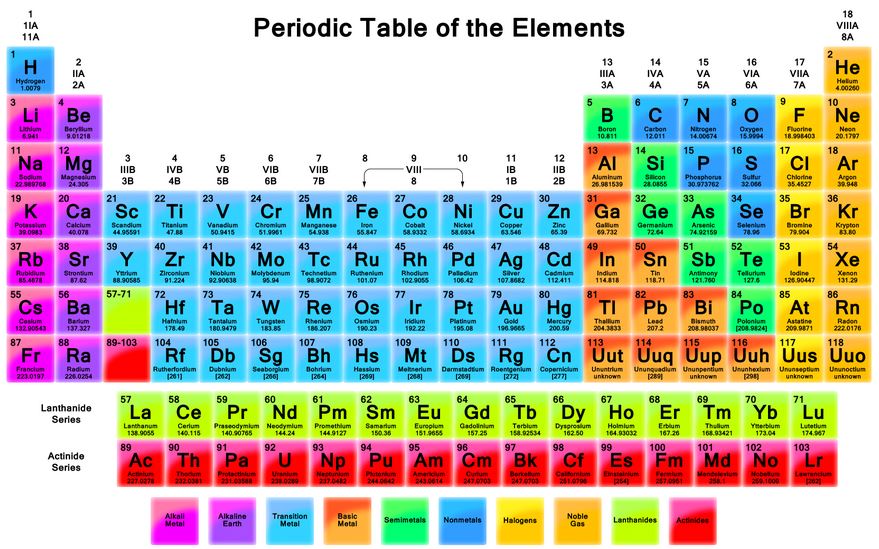
Elements on the LEFT side of the periodic table will most likely form:
a)
Positive ions
b)
Negative ions
c)
Neutral Ions
d)
None of these
3.
An ionic bond forms when atoms ___________ electrons.
a)
gain
b)
share
c)
increase
d)
transfer
4.
Which type of bond has an equal sharing of electrons?
a)
Polar Covalent
b)
Non Polar Covalent
c)
Ionic
d)
Metallic
5.
Which type of bond has an unequal sharing of electrons?
a)
Polar Covalent
b)
Non Polar Covalent
c)
Ionic
d)
Metallic
6.
Chemical bonds form when atoms
a)
combined nuclei
b)
give up neutrons
c)
gain protons
d)
share or transfer electrons
7.
If an atom loses two electrons what charge will it have?
a)
+ 2
b)
- 2
c)
+1
d)
-1
8.
If an atom gains one electron what charge will it have?
a)
-2
b)
-1
c)
+1
9.
Covalent compounds
a)
Share electrons
b)
transfer electrons
c)
contain a sea of electrons
d)
conduct electricity
10.
What is the number of valence electrons for Oxygen?
a)
8
b)
6
c)
2
d)
1
11.

How many valence electrons in this structure?
a)
6
b)
5
c)
4
d)
7
12.

This could be the dot diagram of
a)
Mg
b)
Cl
c)
C
d)
O
13.

This is a correct dot diagram for nitrogen (N)
a)
true
b)
false
14.
Which of these is incorrect?
a)
b)
15.
What are valence electrons?
a)
The total number of electrons in an atom
b)
The number of electrons in the outermost shell
c)
The number of electrons in the second shell
d)
The number of protons in the outermost shell
16.
What are the elements (Be, Mg, Ca,...) in Group 2 called?
a)
Alkali metals
b)
Alkaline earth metals
c)
Halogens
d)
Noble Gases
17.
Elements that have atoms with stable valence electron configurations in the ground state are
a)
Group 1
b)
Group 2
c)
Group 17
d)
Group 18
18.

This could be the dot diagram of
a)
P
b)
Ar
c)
Na
d)
B
19.

This could be the dot diagram of an element with the atomic number
a)
8
b)
31
c)
19
d)
36
20.
Most elements will gain or lose electrons so that they end up with _______ valence electrons.
a)
2
b)
6
c)
8
d)
10
21.
How do positive ions form?
a)
by gaining electrons
b)
getting compliments
c)
by losing electrons
d)
gaining more protons
22.
Which of these is correct?
a)
b)
c)
23.

This could be the dot diagram of
a)
Ne
b)
Si
c)
Al
d)
Be
24.
How do covalent bonds form?
a)
Donating & receiving valence e- between atoms.
b)
Opposite slight charges attract each other between compounds.
c)
Scientists are still not sure how they form.
d)
Sharing valence e- between atoms.
25.
What do we call a covalent bond where electrons are shared UNEVENLY or UNEQUALLY?
a)
Ionic
b)
Polar Covalent
c)
Nonpolar Covalent
d)
Van der Waals Force
Reset

