
 Worksheets
Unit 3 Topic 3.1-3.5
Total questions: 101
Worksheet time: 2hrs 17mins
They may be able to live in only one type of habitat, tolerate only a narrow range of climatic and other environmental conditions, or use only one type or a few types of food.
generalist species
specialist species
hey can live in many different places, eat a variety of foods, and tolerate a wide range of environmental conditions.
generalist species
specialist species


Smaller bodied animals have which type of reproductive strategy?
K - selected
r - selected
Large bodied animals have which reproductive strategy?
K - selected
r - selected
Type I survivorship curve
High death rate in post-reproductive years
Constant mortality rate throughout life span
Very high early mortality but the few survivors then live long (stay reproductive)
Type II survivorship curve
Very high early mortality but the few survivors then live long (stay reproductive)
Constant mortality rate throughout life span
High death rate in post-reproductive years
Type III survivorship curve
High death rate in post-reproductive years
Constant mortality rate throughout life span
Very high early mortality but the few survivors then live long (stay reproductive)
Few offspring
K - selected
r - selected
r - selected reproductive strategy
Little parental care
Invest a lot in raising their offspring
Density - Dependent Limiting Factors
disease
sunlight
temperature
rainfall
Oysters and Rabbits have which type of survivorship curve?
Type I
Type II
Type III
Plants have which type of survivorship curve?
Type I
Type II
Type III
Humans have which type of survivorship curve?
Type I
Type II
Type III


Which of the following describes the density of a population?
5 sloths dispersed randomly
100 people in the area
100 wolves per square mile
1 acre per family
Most large mammals have type 1 survivorship curves, which means they have
low infant mortality and high rates of survival into old age.
roughly equal survivorship rates at all ages.
high numbers of offspring so that a few will survive.
very high levels of predation and uniform dispersion.
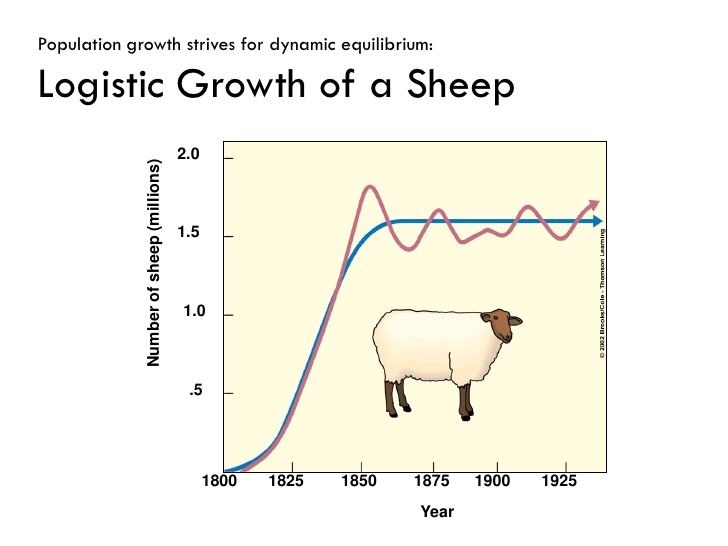
What pattern of growth will a population with limited resources show?
exponential
logistic
density-dependent
density-independent
The carrying capacity is most likely to change
if emigration takes place.
when resources remain the same.
for all species at the same time.
after a fire or flood.
Diseases may spread more rapidly when an area is crowded, so disease is considered to be a
type I survivorship curve.
population crasher.
density-dependent limiting factor
requirement for logistic growth.
Which of the following is an example of a density-independent limiting factor?
a parasite
a decrease in prey
a food shortage
a natural disaster
....... is one of the example showing type I survivorship pattern
Hermit Crab
Belding's ground squirrel
elephant
Hydra
which of the following is not a characteristic fot r-strategists?
small body size
short life span
many offspring
parental care of offspring
Which of the following is a characteristic for K-strategists?
good competitive ability
lacking defensive strategies
several reproduction per life time
high mortality
Which of the following is a example for r-strategists?
Humans
Owls
Cockcroaches
whales
Which of the following is a example for K-strategists?
weeds
annual plants
large trees
bacteria

What is the carrying capacity of the graph?
1000
8000
800
600

What happens if a population grows past its carrying capacity?
The population keeps growing
The population starts to die off
The entire species will go extinct
The carrying capacity just increases
This may cause a population to increase
increase of food supply
removal of predators
removal of disease
all of these

The largest number of individuals that an environment can support long term is...
carrying capacity
emigration
immigration
population density

Something that regulates the size of a population is called...
a limiting measure
a limiting factor
carrying capacity
biodiversity
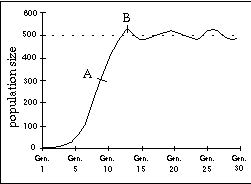
What is the carrying capacity of the graph?
around 500
more than 800
less than 300
around 700
When death rate is equal to birth rate...
population increases
population decreases
population stays the same.
population rapidly increases then becomes stable
When the death rate rises and the birth rate lowers...
population increases
population decreases
population stays the same
all of these
When birth rate is high and death rate is low...
population increases
population decreases
population stays the same
all of these




Scientists have been studying the size of three populations in a grassland. In this ecosystem, lizards eat fireflies, and fireflies eat gnats (a type of insect). The data showed that all three populations were stable. Then the lizard population decreased suddenly. What will most likely happen to the size of the firefly population as a result?
increase. The smaller lizard population will need fewer energy storage molecules so they will eat fewer fireflies. This will lead to fewer deaths than births in the firefly population.
increase. The smaller lizard population will leave more energy storage molecules available for the firefly population to reproduce more. This will lead to more births in the firefly population.
stay the same. The size of its resource population did not change, so the amount of energy storage molecules available for the fireflies did not change. There will be the same number of births and deaths in the firefly population.
decrease. A decrease in any population causes a decrease in the sizes of all other populations in the ecosystem.

In Australia, both opossums and foxes eat rats. The sizes of the populations have been stable for the last 12 years, but recently the size of the opossum population increased. What will likely happen to the fox population?
increase. An increase in the size of any population leads to an increase in the sizes of all other populations in an ecosystem.
stay the same. Opossums and foxes do not eat each other, so the number of births and deaths in the fox population will stay the same.
decrease. The larger opossum population will leave fewer energy storage molecules for all other populations in the ecosystem, so the fox population will reproduce less. This will lead to fewer births than deaths in the fox population.
decrease. Fewer energy storage molecules will be available to the fox population from the smaller rat population, so the fox population will reproduce less. This will lead to fewer births than deaths in the fox population.

A population of bluefish lives in the Gulf of Mexico. Over the last 50 years, the size of the bluefish population has decreased. What best explains the decrease in the size of the bluefish population?
A lot of bluefish died and no new bluefish were born.
More bluefish were born than died.
Fewer bluefish were born than died.
The bluefish population is always decreasing because bluefish are always being eaten.

Scientists have been studying the size of three populations in a region. In this ecosystem, lions eat wild pigs, and wild pigs eat frogs. The data showed that all three populations were stable. Then the frog population decreased suddenly. What will likely happen to the size of the wild pig population as a result?
increase. The smaller frog population will need fewer energy storage molecules so there will be more energy storage molecules available to the wild pig population. This will lead to more births in the wild pig population.
decrease. The smaller frog population will provide fewer energy storage molecules for the wild pig population, so the wild pig population will reproduce less. This will lead to fewer births than deaths in the wild pig population.
decrease. A decrease in any population causes a decrease in the sizes of all other populations in an ecosystem.
stay the same. The size of their consumer population did not change, so the number of deaths in the wild pig population did not change. There will be the same number of births and deaths in the wild pig population.

In the Arctic Ocean, sharks eat whales, and whales eat crabs. In the last 10 years, the sizes of the populations have been stable, but recently the size of the crab population increased. What will likely happen to the shark population?
decrease. The larger crab population will leave fewer energy storage molecules available in the ecosystem for the shark population, so there would be fewer births in the shark population.
increase. An increase in the size of any population leads to an increase in the sizes of all other populations in an ecosystem.
increase. More energy storage molecules will be available to the shark population from the larger whale population, so the shark population will reproduce more. This will lead to more births than deaths in the shark population.
stay the same. Sharks do not eat crabs, so the number of births and deaths in the shark population will stay the same.

What do organisms use energy for?
Digesting food
Reproduction
Moving around
Everything they do to survive

In the Arctic region, polar bears eat seals, and seals eat cod (a type of fish). In the last 7 years, the sizes of all the populations stayed stable, but recently the size of the polar bear population decreased. What will likely happen to the cod population?
decrease. A decrease in the size of one population leads to a decrease in the sizes of all other populations in an ecosystem.
decrease. The smaller polar bear population will lead to more seals. The larger seal population will need more energy storage molecules to reproduce, so they will eat more cod. This will lead to more deaths than births in the cod population.
stay the same. Polar bears do not eat cod, so the number of births and deaths in the cod population will stay the same.
increase. The smaller polar bear population will leave more energy storage molecules available in the ecosystem for the cod population, so there will be more births in the cod population.

Scientists have been studying the size of three populations in Peru. In this ecosystem, pumas (large wild cats) eat deer, and deer eat grass. The data showed that all three populations were stable. Then the puma population increased suddenly. What will most likely happen to the size of the deer population as a result?
stay the same. The size of their resource population did not change, so the amount of energy storage molecules available for the deer did not change. There will be the same number of births and deaths in the deer population.
increase. An increase in the size of one population leads to an increase in the sizes of all other populations in the ecosystem.
decrease. The larger puma population will leave fewer energy storage molecules available in the ecosystem for the deer. The deer population will reproduce less, leading to fewer births in the deer population.
decrease. The larger puma population will need more energy storage molecules, so they will eat more deer. This will lead to more deaths than births in the deer population.
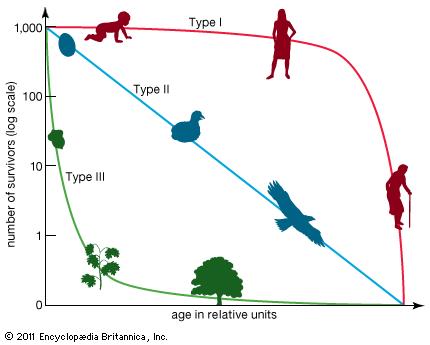
The mortality rate of organisms following a type I survivorship curve is __________.
fairly constant throughout life
higher in post-reproductive years
lower after the organisms become established
unrelated to age
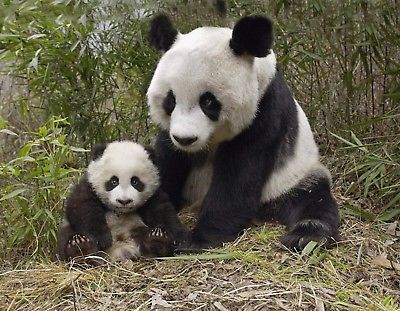
Animals such as pandas are long lived, mature slowly, and generally produce fewer offspring during their life spans but place a greater investment in each. What term is applied to this type of reproductive strategy?
K-strategy
r-strategy
Which contribute to a positive population growth?
immigration
positive birth rate
emigration
positive death rate
Which of the following is NOT an outcome of high population density?
mortality increase
predators tend to ignore prey that is overabundant
reduction in births
decreased resource availability

Which of the following describes the population of elephants in Kenya from 1973-1989?
(immigration + births) – (emigration + deaths) = 0
(immigration + births) – (emigration + deaths) = 1
(immigration + births) – (emigration + deaths) < 0
(immigration + births) – (emigration + deaths) > 0
A population’s emigration in one month totaled 2 individuals. During the same period, immigration was 12 individuals. Natality (births) was 8, and mortality was 15 due to a parasite infection. What was the net effect on the population size?
+5
+3
0
-4
Which of the following are density dependent factors?
competition for resources
predation
disease
natural disasters
Which of the following are examples of a density independent factors?
forest fire
seasonal cycles
storms
disease
Factors like predation can have a positive benefit to the population of prey organisms because predators tend to keep prey populations below their ___________.
carrying capacity
sustainibility number
exponential growth point
competition level
As a population of a species increases within a territory, which of the following most likely also increases?
Immigration
Food supply
Carrying capacity
Competition
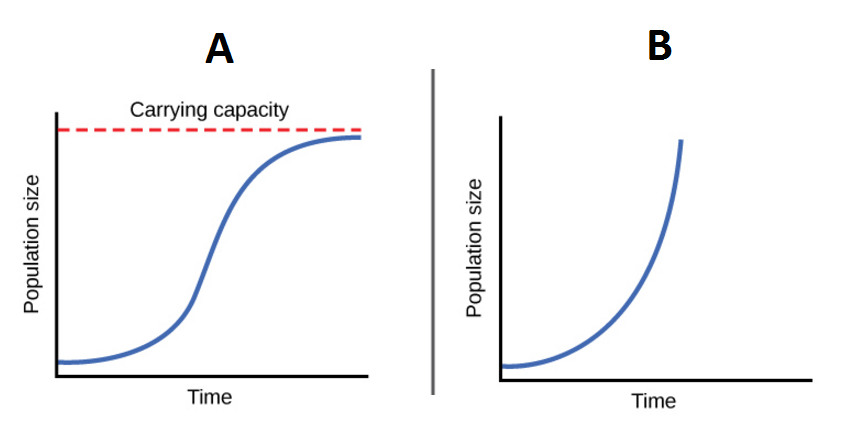
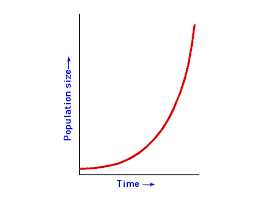
What type of growth model is shown in image A?
Exponential
Logistic
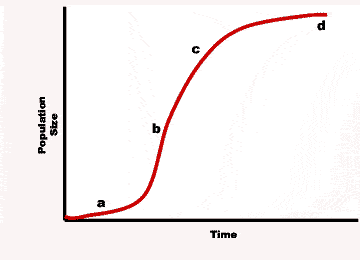
What point on the graph represents carrying capacity?
a
b
c
d
At carrying capacity, a population __________.
increases rapidly
increases slowly
decreases slowly
is in dynamic equilibrium
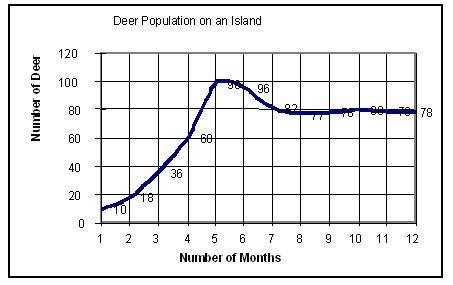
Which choice most closely approximates the deer population's carrying capacity based on the graph?
100
80
60
10
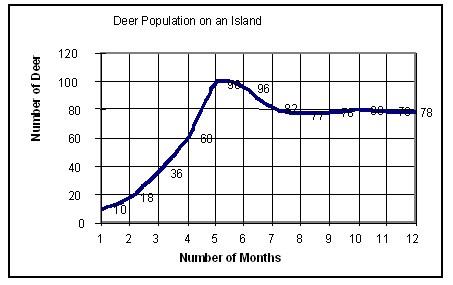
Which mathematical model most closely describes the population growth curve shown in deer population graph from the previous question?
logistic growth
exponential growth
Which of the following populations is most likely to go extinct?
a very small population in an unstable environment
a moderate-sized population of r strategists
a large population with lots of genetic variability
all would be equally likely to go extinct
What is the the closest approximation of the size of the human population today?
850 million
7.5 billion
20.8 billion
1.7 trillion

Which population growth model most closely describes the human population in the modern age?
logistic growth
exponential growth
upward growth
tumor growth

