wayground logo

Free Printable Worksheets

NEW

Font size

S
M
L
XL
Worksheets

Organic Molecules Review

Total questions: 60

Worksheet time: 1hrs 21mins

Name
Class
Date
1.
amino acids are what make up which organic molecule?
a)
Carbohydrates
b)
Lipids
c)
Proteins
d)
Nucleic Acids
2.
Which biological molecule is DNA considered?
a)
Carbohydrate
b)
Lipid
c)
Protein
d)
Nucleic Acid
3.

What are fats and oils made of?

a)
Monosaccharides
b)
Nucleotides
c)
Amino Acids
d)
Fatty Acid and Glycerol
4.
What is the monomer of a carbohydrate?
a)
Monosaccharide
b)
Nucleotide
c)
Amino Acid
d)
Fatty acid and Glycerol
5.
Which monomer is made up of a sugar, a phosphate and a nitrogen base?
a)
Monosaccharide
b)
Nucleotide
c)
Amino Acid
d)
Fatty acid and Glycerol
6.
Protein shape determines the _________________
a)
proteins function
b)
proteins temperature
c)
proteins sugar content
d)
proteins fat content
7.
Glycogen, Chitin and Cellulose are examples of:
a)
Carbohydrates (polysaccharides)
b)
Fats
c)
Proteins
d)
Nucleic Acids
8.
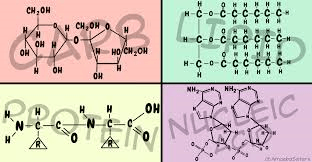
Identify the picture
a)
Carbohydrates
b)
Lipids
c)
Proteins
d)
Nucleic Acids
9.
Enzymes are examples of which biomolecule?
a)
Carbohydrates
b)
Lipids
c)
Proteins
d)
Nucleic acid
10.
Organic means
a)
It has carbon
b)
It is in living things
c)
It has carbon and is found in living things (both are right)
11.
What biological molecule provides short term energy?
a)
Carbohydrates
b)
Lipids
c)
Proteins
d)
Nucleic Acids
12.
Why are waxes important to living things?
a)
They prevent water loss from plants and are used for waterproofing in some organisms
b)
They make up chromosomes
c)
They make up bones and muscles
d)
They are used for short term energy
13.
Waterproofs, insulates, and stores energy long-term
a)
Carbohydrates
b)
Lipids
c)
Proteins
d)
Nucleic Acids
14.
Speed up chemical reactions, protects against infections, and structural component of hair, skin, and muscles
a)
Carbohydrates
b)
Lipids
c)
Proteins
d)
Nucleic Acids
15.
Stores genetic information and carries out protein synthesis
a)
Carbohydrates
b)
Lipids
c)
Proteins
d)
Nucleic Acids
16.

Which organic molecule contains carbon, oxygen and hydrogen, often in a 1:2:1 ratio?

a)

carbohydrates

b)

functional groups

c)

enyzme

d)

monosaccaride

17.

Which organic molecule contains the elements carbon, hydrogen, oxygen and nitrogen (CHON)?

a)

carbohydrates

b)

lipids

c)

proteins

d)

nucleic acids

18.
Glucose is an example of a:
a)
Carbohydrate
b)
Lipid
c)
Protein
d)
Nucleic Acid
19.
All organic molecules contain what element?
a)
helium
b)
sodium
c)
copper
d)
carbon
20.
You are analyzing a compound in the laboratory. You find that it is made up of carbon, hydrogen, and oxygen in a ratio of two hydrogen atoms for each carbon atom. How will you classify the compound?
a)
lipid
b)
protein
c)
carbohydrate
d)
nucleic acid
21.
A sugar, a phosphate group, and a nitrogen base form the building blocks of which organic compound?
a)
carbohydrates
b)
lipids
c)
nucleic acids
d)
proteins
22.
What is a peptide bond?
a)
Bond that holds two amino acids together.
b)
A bond that holds hydrogen and oxygen molecules together.
c)
A bond that holds the phosphate group of one nucleotide and a sugar of a neighboring nucleotide.
d)
A bond that is formed by the sharing of electrons.
23.
How many different amino acids are there?
a)
15
b)
20
c)
25
d)
30
24.
The diagram shows the structure of an amino acid. Which type of molecule is formed from amino acids?
a)
lipids
b)
proteins
c)
carbohydrates
d)
nucleic acids
25.
The diagram shows a bond forming between two amino acids. What is the name of this reaction?
a)
Dehydration Synthesis
b)
Hydrolysis
c)
Pepysis
d)
Oxidation
26.
When a protein unfolds, it is
a)
Denatured
b)
Building
c)
Adding amino acids
d)
Making food
27.

The quaternary structure of a protein is

a)

the simplest structure

b)

the most complex level

c)

is less complex than tertiary structure

d)

is less complex than primary structure

28.

Which protein structure is matched correctly?

a)

primary structure : folded amino acid chains due to hydrogen bonds

b)

secondary structure : interactions between more than one amino acid chain in a protein

c)

tertiary structure : 3D structure due to interactions of R groups on amino acids

d)

quaternary structure : chain of amino acids
29.
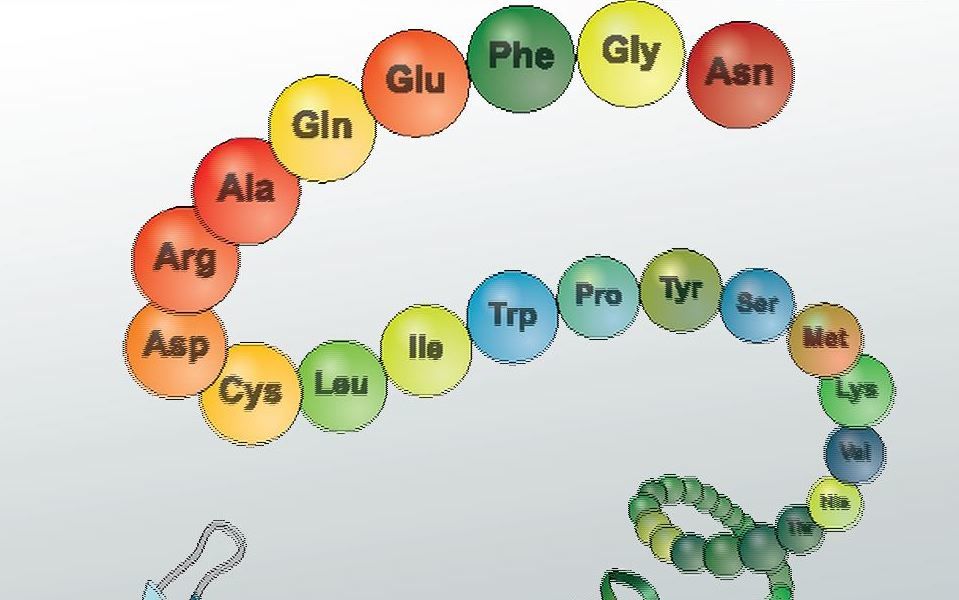
The two types of folding in the secondary structure are.....
a)
alpha-helix & beta-pleated sheets
b)
polypeptide & nucleotide
c)
globular & fibrous
30.
The name of the initial chain of monomers in a protein is called.....
a)
polypeptide
b)
polysaccharide
c)
polyester
d)
polynucleotide
31.
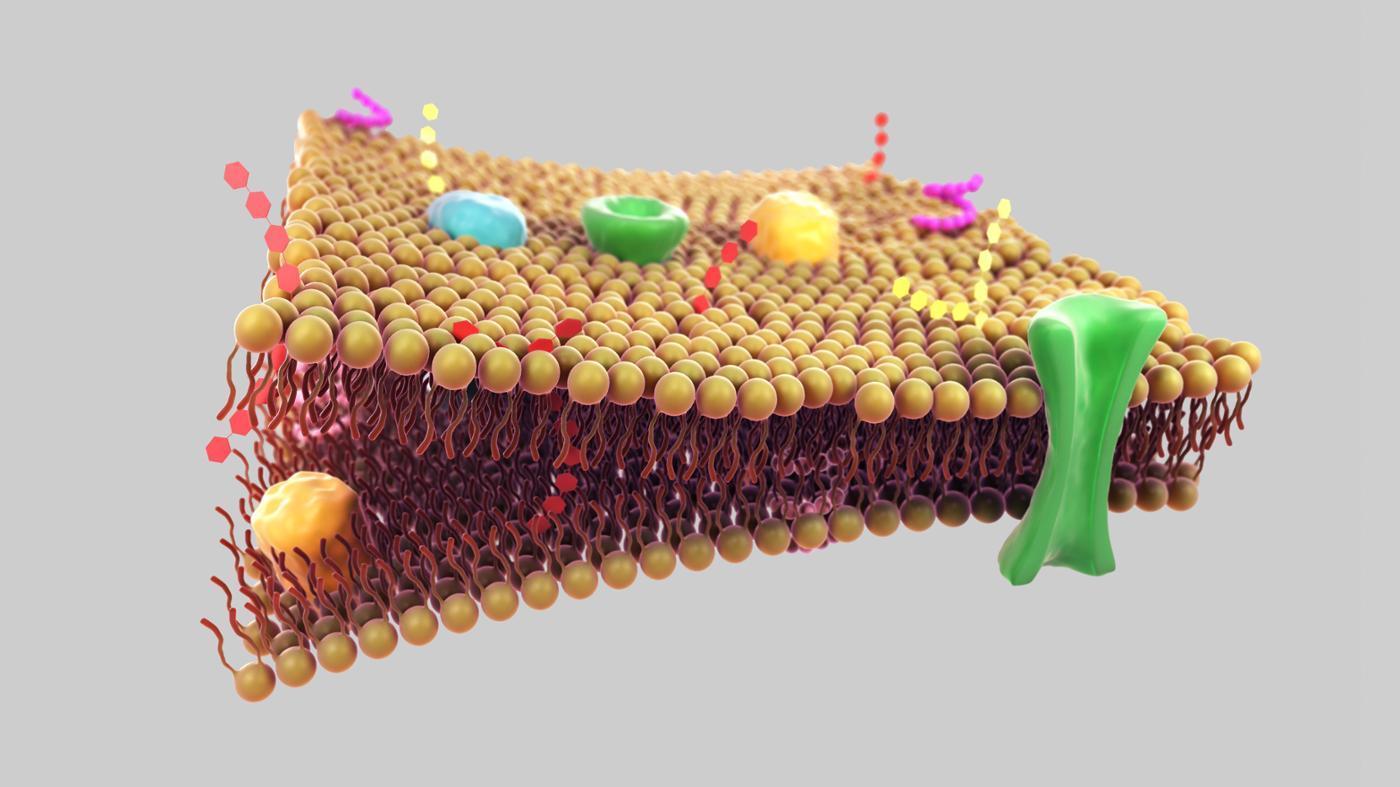
The phospholipid bilayer comprises what part of the cell?
a)
cytoplasm
b)
cell membrane
c)
cytoskeleton
d)
nuclear membrane
32.
In the phospholipid, the polar head is considered what type of structure?
a)
hydrophobic
b)
insoluble
c)
hydrophilic
33.
Saturated fats have _______________
a)
straight structure
b)
single bonds
c)
solidity at room temperature
d)
all of the above
34.
Unsaturated fats have _______________
a)
bent structure
b)
double bonds
c)
liqudity at room temperature
d)
all of the above
35.
Adenine, Thymine, Guanine and Cytosine are what?
a)
Phosphates
b)
Sugars
c)
Nucleotides
d)
Bases
36.
What sugar is found in DNA?
a)
Ribose
b)
Fructose
c)
Glucose
d)
Deoxyribose
37.
What sugar is found in RNA?
a)
Ribose
b)
Fructose
c)
Glucose
d)
Deoxyribose
38.

Nitrogen bases for RNA:

a)

Adenine, Guanine, Cytosine, and Uracil

b)

Adenine Guanine, Cytosine, and Sulfur

c)

Adenine, Guanine, Cytosine, and Thymine

d)

Adenine, Guanine, Cytosine, and Phosphate

39.
A sugar, a phosphate group, and a nitrogen base form the building blocks of which organic compound?
a)
carbohydrates
b)
lipids
c)
nucleic acids
d)
proteins
40.
What is the function of macromolecule subunit below?
a)
energy
b)
catalyst
c)
stores genetic information
d)
composes the majority of the cell membrane
41.
The following equation represents the digestion of a protein.
Peptide + Water  --->  Amino acid + Amino Acid 
What type of reaction does this demonstrate?
a)
dehydration synthesis
b)
combustion
c)
hydrolysis
d)
single replacement
42.
The equations below represent two biochemical processes, A and B. 
Equations
(A) glucose + glucose --> maltose + water
(B) amino acid + amino acid --> dipeptide + water

Which statement about processes A and B is correct?
a)
Processes A and B are examples of dehydration synthesis.
b)
Process A is an example of hydrolysis,  but process B is an example of dehydration synthesis.
c)
Process B requires enzymes, but process A does not.
d)
Processes A and B are examples of hydrolysis.
43.
Which biomolecule group includes fats, oils, and waxes?
a)
Proteins
b)
Nucleic Acid
c)
Lipids
d)
Carbohydrate
44.

Which of the following biological macromolecules contains phosphorous?

a)

Nucleic acids

b)

Carbohydrates

c)

Proteins

d)

Lipids

45.

Can more than one polypeptide chain link together?

a)

Yes

b)

No

46.

Y represents...

a)

Primary structure

b)

Secondary structure

c)

Tertiary structure

d)

Quaternary structure

47.

Which structure(s) are due to hydrogen bonding?

a)

Y & Z

b)

W & Y

c)

X & Y

d)

X & W

e)

A & Z

48.

What type of reaction breaks peptide bonds?

a)

Condensation reaction

b)

Hydrolysis reaction

c)

Anabolic reaction

d)

Denaturation reaction

49.

Pick the protein:

a)

sucrose

b)

keratin

c)

glucose

d)

starch

e)

cheese

50.

Which of the following is NOT a function of proteins?

a)

Catalysts

b)

Long term energy

c)

Transport

d)

Structure

51.

What happens when an enzyme is heated to a high temperature?

a)

The enzyme remains the same.

b)

The enzymes amino acid sequence changes.

c)

The shapes of the enzyme are altered or denatured.

d)

The enzyme dies.

52.
The primary sequence of a protein refers to the:
a)
Order of amino acids
b)
α-Helix or β-Pleated Sheet
c)
Interaction of subunits
d)
Hydrogen Bonding
53.
The two types of folding in the secondary structure are.....
a)
alpha-helix & beta-pleated sheets
b)
polypeptide & nucleotide
c)
globular & fibrous
54.
What elements are common to all 4 biomolecules?
a)
Carbon, hydrogen, nitrogen
b)
Carbon, Nitrogen, Phosphorus
c)
Carbon, Hydrogen, Oxygen
d)
Carbon, Hydrogen, Phosphorus
55.

monosaccharides, fatty acid and glycerol, amino acids, and nucleotides are examples of _____________.

a)

Elements

b)

Compounds

c)

Macromolecules

d)

Monomers

56.
Which of the following is the process used to bond the monomers together?
a)
Hydrolysis
b)
Water Removal
c)
Dehydration Synthesis
d)
Water Synthesis
57.
Building blocks of the body, hair , muscles etc.
a)
protein
b)
nucleic acid
c)
lipids
d)
carbohydrates
58.
Which of the 4 major macromolecules provides a quick burst of energy?
a)
Carbohydrates
b)
Lipids
c)
Proteins
d)
Nucleic Acids
59.
If someone is lactose intolerant, they lack the enzyme _____.
a)
lipase
b)
lactose
c)
lactase
d)
milk
60.
What statement best describes letter E in the diagram??
a)
This is a proteins tertiary structure.
b)
This is a protein that has formed an enzyme.
c)
This is more than one protein that have combined together.
d)
This is a protein that has been denatured.