
 Worksheets
Atomic Structure
Total questions: 42
Worksheet time: 1hrs 4mins
The number of neutrons in the nucleus of an atom can be calculated by
adding together the numbers of electrons and protons.
subtracting the number of protons from the number of electrons.
subtracting the number of protons from the mass number.
adding the mass number to the number of protons.
The sum of the protons and neutrons in an atom equals the
atomic number.
number of electrons.
atomic mass.
mass number.
All atoms of the same element have the same:
number of protons.
number of neutrons
mass number
mass
An atom of an element with atomic number 48 and mass number 120 contains
48 protons, 48 electrons, and 72 neutrons.
72 protons, 48 electrons, and 48 neutrons.
120 protons, 48 electrons, and 72 neutrons.
72 protons, 72 electrons, and 48 neutrons.
How do the isotopes hydrogen-2 and hydrogen-3 differ?
Hydrogen-3 has one more electron than hydrogen-2.
Hydrogen-3 has two neutrons.
Hydrogen-2 has three protons.
Hydrogen-2 has no protons.
The number 80 in the name bromine-80 represents
the atomic number.
the mass number.
the sum of protons and electrons.
none of the above
The identity of an element can be determined on the basis of which of the following?
the number of protons in an atom of the element
the number of neutrons in an atom of the element
the mass number of the element
the atomic mass of the element
An atom of hydrogen-2 contains
2 protons, 2 electrons, and 2 neutrons.
2 protons, 2 electrons, and 4 neutrons.
1 proton, 1 electron, and 1 neutron.
1 proton, 1 electron, and 2 neutrons.
Which of the following statements is correct?
Each vertical column of elements in the periodic table is called a period.
The elements in any group or vertical column of the periodic table have similar physical and chemical properties.
Group 1A contains the elements hydrogen and helium.
In the modern periodic table, elements are listed in order of increasing atomic mass.
Isotopes of the same element have
the same number of protons but different numbers of neutrons.
the same number of protons but different numbers of electrons.
the same number of neutrons but different numbers of protons.
the same number of neutrons but different numbers of electrons.
The relative abundance of each isotope of an element determines its
atomic number.
atomic mass.
number of electrons.
number of protons.


In a neutral atom,
protons = electrons
protons = neutrons
neutrons = electrons
protons = neutrons = electrons
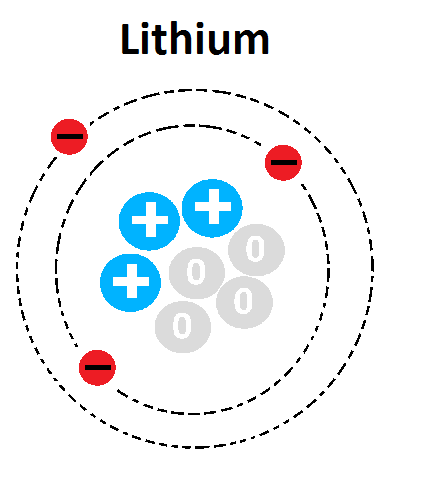
What is the atomic mass of this atom?
1
3
4
7
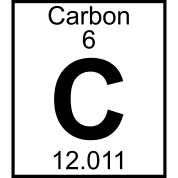


How many protons and electrons does this element have?
35
18
17
52

What is the atomic number?
35
18
17
52

What is the atomic mass of Neon?
10
20
30

How many neutrons does Chlorine have?
18
17
35
52

How many neutrons does calcium have?
20
40
60
0

What is the atomic mass of Arsenic?
33
107
75
If oxygen-17 has 8 protons, then how many neutrons does it have?
9
16
8
7
If oxygen-16 has 8 protons, then how many neutrons does it have?
9
16
8
7
1s22s22p63s2


This is a correct dot diagram for nitrogen (N)
true
false

This is a correct dot diagram for neon (Ne)
true
false
How many valence electrons should Magnesium have in its Lewis dot model?
1
2
3
4
Which of the following elements is the smallest
Sulfur
Chlorine
Aluminum
Sodium

Compute the average atomic mass for this element.
27.977
28.09
28.976
The average mass cannot be determined from provided information.

