wayground logo

Free Printable Worksheets

Font size

S
M
L
XL
Worksheets

Chemistry Chapter 1

Total questions: 51

Worksheet time: 25mins

Name
Class
Date
1.

Any sample of matter has mass and takes up space.

The main reason for this is because:

a)

a) All matter is heavy

b)

b) Matter can be a gas

c)

c) Matter is made up of tiny particles that have mass and take up space

d)

d) The Earth is made of matter

2.

Which of the following are a common phase of matter?

a)

solid

b)

liquid

c)

gas

d)

all of the them

3.

Chemistry is the study of:

a)

chemicals

b)

molecules

c)

matter

d)

life

4.
Which of the following is not a physical state of matter?
a)
solid 
b)
element
c)
gas 
d)
liquid
5.
In trying to identify a sample of a pure substance, we observe the following properties. Tell whether each one is a chemical property or a physical property.
Its mass is 124.3 g.
a)
chemical property
b)
physical property
6.
In trying to identify a sample of a pure substance, we observe the following properties. Tell whether each one is a chemical property or a physical property.
It is easily etched by nitric acid.
a)
chemical property
b)
physical property
7.
In trying to identify a sample of a pure substance, we observe the following properties. Tell whether each one is a chemical property or a physical property.
It melts when heated to 670°C.
a)
chemical property
b)
physical property
8.
In trying to identify a sample of a pure substance, we observe the following properties. Tell whether each one is a chemical property or a physical property.
It is 31.7 centimeters long.
a)
chemical property
b)
physical property
9.
In trying to identify a sample of a pure substance, we observe the following properties. Tell whether each one is a chemical property or a physical property.
It burns in air.
a)
chemical property
b)
physical property
10.
In trying to identify a sample of a pure substance, we observe the following properties. Tell whether each one is a chemical property or a physical property.
It is a good heat conductor.
a)
chemical property
b)
physical property
11.

Malleability is an example of a

a)

physical property

b)

chemical property

c)

physical change

d)

chemical change

12.

Souring milk is an example of a

a)

physical change

b)

chemical change

13.

Which physical property of matter describes the relationship between mass and volume?

a)

weight

b)

reactivity

c)

density

14.

Which of the following is NOT a common sign that a chemical change has take place?

a)

change in color or odor

b)

change in state

c)

foaming or bubbling

d)

production of heat or light

15.

The physical form in which a substance exists

a)

inertia

b)

state of matter

c)

reactivity

16.

Which activity could be a sign that a chemical change has occurred?

a)

a solid melts

b)

a substance dissolves

c)

a liquid changes color

d)

an object changes shape

17.

A ball is held 3 meters above the ground and has no velocity. Which type of Mechanical Energy does the ball have?

a)

Potential Energy

b)

Kinetic Energy

c)

Nuclear Energy

d)

Radiant Energy

18.

______________ energy is the type of energy related to how fast an object is moving.

a)

Potential

b)

Electrical

c)

Kinetic

d)

Nuclear

19.

What is potential energy?

a)

The energy an object has due to its position or condition.

b)

The energy an object has due to its chemical composition.

c)

The energy an object has due to its atomic structure.

20.

What is kinetic energy?

a)

The energy an object has due to its motion.

b)

The energy an object has due its chemical composition.

c)

The energy an object has due to its atomic structure.

21.

When does an object have NO kinetic energy?

a)

When it's at rest.

b)

When it's moving very slowly.

c)

When it has no electrical charge.

22.

Select all of the objects that have potential energy. (You may click more than one answer!)

a)
b)
c)
d)
23.

Select all of the objects that have kinetic energy. (You may click more than one object!)

a)
b)
c)
d)
24.
Energy due to motion is ____________ energy. 
a)
Potential 
b)
Energy
c)
Kinetic
d)
Friction
25.
The faster an object moves, the ________ kinetic energy it has. 
a)
more
b)
less
c)
none of the above
d)
all of the above 
26.
__________ is stored energy. 
a)
Potential
b)
Kinetic
c)
None of the above 
d)
All of the above 
27.
When you stretch a rubber band, you are storing __________ energy. 
a)
kinetic 
b)
potential
c)
none of the above
d)
all of the above 
28.
At which point is potential energy greatest?
a)
W
b)
X
c)
Y
d)
Z
29.
What kind of energy is in a moving skateboard?
a)
Potential
b)
Kinetic
c)
Both potential and kinetic energy
d)
none of the above
30.
What kind of energy is in a rock at the edge of a cliff?
a)
Potential
b)
Kinetic
c)
Both potential and kinetic energy
d)
none of the above
31.
Which is the best example that something has kinetic energy?
a)
a. a car parked on a steep hill 
b)
b. a tennis ball rolling across the court
c)
c. a picture hanging on the wall 
d)
d. a piece of coal before it's burned 
32.
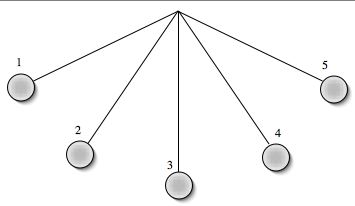
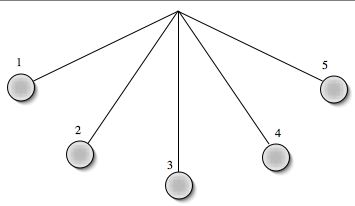
When a pendulum swings, at which point is kinetic energy highest?
a)
1
b)
2
c)
3
d)
4
33.
When a pendulum swings, at which point is potential energy at its greatest?
a)
1
b)
2
c)
3
d)
4
34.
Two like charges:
a)
 neutralize each other.
b)
repel each other. 
c)
must be neutrons. 
d)
attract each other.
35.
Electric charges that are alike _______ each other.
a)
Attract
b)
Repel
36.
What types of charges attract?
a)
Positive and Positive
b)
Positive and Neutral
c)
Negative and Neutral
d)
Positive and Negative
37.
Which lists metric units, in order, from smallest to largest?
a)
milligram, centigram, gram
b)
kilogram, gram, centigram
c)
decagram, hectogram, milligram
d)
kilogram, hectogram, decagram
38.
What is the SI unit for temperature?
a)
Celsius
b)
Fahrenheit
c)
liter
d)
thermometer
39.
How many millimeters are in a centimeter?
a)
10
b)
100
c)
1000
d)
0.001
40.

nano

a)

million

b)

millionth

c)

billion

d)

billionth

41.

nano

a)

106

b)

109

c)

10-9

d)

10-12

42.

kilo abbreviation

a)

kg

b)

K

c)

k

d)

km

43.

hecto abbreviation

a)

h

b)

H

c)

ht

d)

he

44.

deka abbreviation

a)

D

b)

Dk

c)

da

d)

de

45.

deci abbreviation

a)

da

b)

DA

c)

d

d)

di

46.

milli abbreviation

a)

mi

b)

M

c)

m

d)

ml

47.

hecto factor

a)

10

b)

1

c)

1000

d)

100

48.

deci factor

a)

10

b)

0.1

c)

100

d)

0.01

49.

What is the formula for converting Kelvin to Celsius?

a)

K = oC + 273

b)

C = K + 273

c)

They are the same

d)

F = ma

50.

What is this formula used to find?

F = (9/5) C + 32

a)

Degrees Celsius to degrees Fahrenheit

b)

Degrees Fahrenheit to degrees Celsius

c)

Area of a cirlce

d)
51.

The formula for converting fahrenheit to celsius is?

a)

T (in F) = 9/5 T(in C) + 32

b)

T (in C) = 9/5 (in F) +32

c)

T (in C) = [T (in f) -32] 5/9

d)

T (in F) = [ T (in c) -32] 5/9