

wayground logo

Free Printable Worksheets

Font size

S
M
L
XL
Worksheets

Periodic Table

Total questions: 40

Worksheet time: 8hrs 35mins
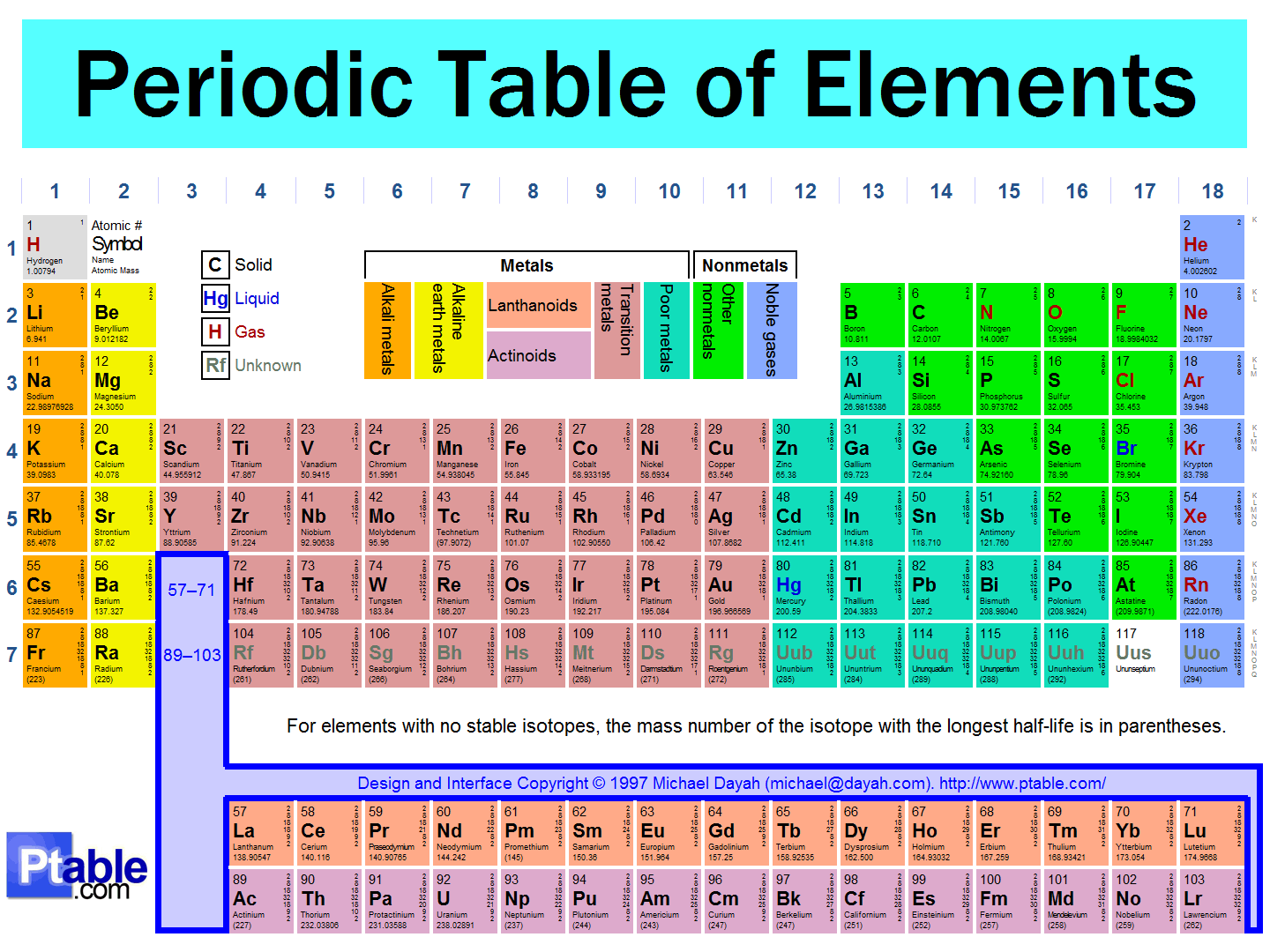
Name
Class
Date
1.

The vertical (up and down) columns in the Periodic Table are called

a)

groups

b)

towers

c)

periods

d)

atomic numbers

2.
The Modern Periodic Table of Elements is arranged by
a)
atomic mass
b)
atomic number
c)
valence electrons
d)
number of isotopes
3.

Found in group one of the periodic table; highly reactive metal

a)

Alkaline Earth Metals

b)

Transition Metals

c)

alkali metals

d)

metalloids

4.

Found in group two of the periodic table; very reactive

a)

Halogens

b)

Alkali Earth Metals

c)

metalloids (semimetals)

d)

alkali metals

5.

Elements that occur in vertical columns on the periodic table.

a)

periods

b)

metalloids (semimetals)

c)

groups

d)

Proton

6.

How many rows/periods are on the table?

a)

4

b)

5

c)

6

d)

7

7.

How many groups/families are on the table?

a)

15

b)

16

c)

17

d)

18

8.

What group number are the halogens? How many valence electrons do they have?

a)

18, 7

b)

1, 16

c)

2, 17

d)

17, 7

9.

What group number are the noble gases?

a)

17

b)

18

c)

14

d)

15

10.
An element's identity is determined by the number of
a)
electrons.
b)
protons.
c)
neutrons.
d)
valence.
11.

USE THE PERIODIC TABLE

How many valence electrons does carbon have?

a)

4

b)

12

c)

6

d)

14

12.

USE THE PERIODIC TABLE

How many valence electrons does Phosphorus have?

a)

31

b)

5

c)

15

d)

4

13.
Elements in the same column of the periodic table always have the same # of _______ as one another.
a)
Protons
b)
Neutrons
c)
Electrons
d)
Valence Electrons
14.

Which has the greater Electronegativity:

H or F?

a)

H

b)

F

15.
Which of the following will have a lower ionization energy than Scandium (Sc)?
a)
Helium (He)
b)
Titanium (Ti)
c)
Calcium (Ca)
d)
Magnesium (Mg)
16.
Which atom has the largest atomic radius?
a)
potassium
b)
rubidium 
c)
francium
d)
cesium
17.
As you move down the periodic table atoms get bigger.  This is because ____________.
a)
The atoms have more mass.
b)
The atoms have more protons.
c)
The atoms have more energy levels
d)
The atoms have more nuetrons
18.

Electronegativity is...

a)

attractions for another atom's electrons in a bond

b)

the ability of an atom to lose electrons

c)

the energy required to remove an electron from a specific atom

d)

how easy it is to make friends.

19.
Ionization energy is...
a)
the energy required to add an electron to a specific atom
b)
how much energy it takes to remove an electron from an atom
c)
the energy required to shield the outer electrons from the nucleus
d)
a measure of the ability of an atom to attract electrons
20.
Which statement correctly and completely identifies a trend?
a)
Atomic radius decreases across a period and increases down a group.
b)
Electronegativity decreases across a period and decreases down a group.
c)
Ionization energy increases across a period and increases down a group.
d)
Ionic radius increases across a period and increases down a group.
21.
The element with the largest electronegativity in the halogens is - 
a)
At
b)
F
c)
Cl
d)
Br
22.
Electronegativity __________ from left to right within a period and __________ from top to bottom within a group.
a)
decreases, increases 
b)
increases, increases
c)
increases, decreases 
d)
stays the same, increases
23.
Francium (Fr) has the lowest ionization energy in Group 1 because - 
a)
it has the smallest number of valence electrons
b)
it has the greatest atomic mass
c)
it has the greatest number of protons, so it attracts its electrons the strongest
d)
its 1 valence electron is very far from the nucleus, so little energy is needed to remove it
24.
Families all have similar 
a)
Names
b)
atomic numbers
c)
atomic masses
d)
properties
25.

How many electrons do the alkali metals have in their outer shell?

a)

1

b)

2

c)

8

d)

7

26.

How does a group 1 metal atom form an ion?

a)

lose 1 electron

b)

lose 2 electrons

c)

gain 1 electron

d)

gain 2 electrons

27.

What is the charge of a group 1 metal ion?

a)

1+

b)

2+

c)

1-

d)

2-

28.
How many valence electrons does a halogen have? 
a)
1
b)
2
c)
7
d)
8
29.
How many valence electrons does an alkaline earth metal have? 
a)
1
b)
2
c)
7
d)
8
30.

How many valence electrons do noble gases have?

a)

8

b)

7

c)

6

d)

18

31.
What atom matches this electron configuration?
1s22s22p63s23p64s23d10
a)
Zinc
b)
Copper
c)
Nickel
d)
Germanium
32.
The electron configuration of an atom is 1s22s22p6.  The number of electrons in the atom is 
a)
3
b)
6
c)
8
d)
10
33.
Which electron configuration belongs to Chlorine (Cl)?
a)
1s2s2p3s3p5
b)
1s2s2p3s3p6
c)
1s2s2p3s3p7
34.
What atom matches this electron configuration?
1s22s22p63s2
a)
Neon
b)
Magnesium
c)
Aluminum
d)
Potassium
35.

Choose the correct shortcut configuration for iodine.

a)

[Ar]4s24d104p5

b)

[Kr]5s24d105p5

c)

[Xe]5s25d105p5

d)

none of the above

36.

Each row on the periodic table represents:

a)

an energy level

b)

a sublevel

c)

an electron

d)

an orbital

37.

Which area on the periodic table represents the electrons in the "d" sublevel?

a)

representative elements

b)

columns 3-8

c)

rare earth elements

d)

transition elements

38.
Which periodic table family could have electrons filling orbitals in the s-block?
a)
Alkaine Earth 
b)
Halogens
c)
Noble Gases
d)
Transition Metals
39.

What is the charge of oxygen?

a)

+2

b)

+1

c)

-1

d)

-2

40.

What is the charge of sodium?

a)

+2

b)

+1

c)

-1

d)

-2
