wayground logo

Free Printable Worksheets

NEW

Font size

S
M
L
XL
Worksheets

Energy & Engineering

Total questions: 60

Worksheet time: 15hrs 0mins

Name
Class
Date
1.
WHICH ENERGY TRANSFORMATION OCCURS WHEN A TELEVISION SPEAKER PRODUCES MUSIC?
a)
ELECTRICAL TO SOUND
b)
ELASTIC TO SOUND
c)
THERMAL TO SOUND
d)
SOUND TO ELECTRICAL
2.
WHAT ANOTHER NAME FOR THERMAL ENERGY?
a)
HEAT ENERGY
b)
ITS SIZE
c)
ITS POTENTIAL ENERGY
d)
ITS MECHANICAL ENERGY
3.

What is energy?

a)

moving energy

b)

stored energy

c)

renewable energy

d)

The ability to do work.

4.

What is potential energy?

a)

moving energy

b)

stored energy

c)

renewable energy

d)

non renewable energy

5.

What is kinetic energy?

a)

moving energy

b)

potential energy

c)

stored energy

d)

renewable energy

6.

A computer uses what type of energy to operate?

a)

Mechanical

b)

Light

c)

Electric

d)

Sound

7.

Which is an example of light energy?

a)

lawn mower

b)

blender

c)

flash light

d)

speaker

8.

What is an example of sound energy?

a)

headphones

b)

traffic light

c)

sun

d)

bicycle

9.

Another name for stored energy is

a)

kinetic energy

b)

potential energy

c)

light energy

d)

sound energy

10.

The picture shows what type of transformation

a)

Electrical to mechanical

b)

light to electric

c)

electrical to light

d)

light to light

11.
What is energy transformation?
a)
a change of energy from one form to another
b)
when energy gets more energy added to it
c)
when energy gets destroyed
d)
a change in intensity
12.

What type of energy does a rock have when it is sitting at the edge of a cliff.

a)

Potential

b)

Kinetic

13.
As a pendulum swings from its highest to lowest position, what happens to its kinetic and potential energy? 
a)
Both the potential energy and kinetic energy decrease
b)
The potential energy decreases while the kinetic energy increases 
c)
The kinetic energy decreases while the potential energy increases 
d)
Bothe the potential energy and kinetic energy increase 
14.

What type of energy does a stationary bike have?

a)

Potential

b)

Kinetic

c)

Heat

15.

Drumming and playing the guitar are an example of:

a)

Thermal energy

b)

Light energy

c)

Sound energy

d)

Electrical energy

16.

All of the following are forms of energy EXCEPT

a)

Mechanical Energy

b)

Heat Energy

c)

Light Energy

d)

Rock Energy

17.

What type of energy transfer is showed in the image

a)

potential to kinetic

b)

electrical to potential

c)

electrical to heat

d)

heat to electrical

18.

This appliance dries clothes primarily by converting —

a)

electrical energy to heat and mechanical energy

b)

mechanical energy to heat and electrical energy

c)

electrical energy to heat and light

d)

mechanical energy to heat and vaporization

19.
Which is an example of sound energy?
a)
light energy
b)
plucking a guitar string
c)
turning the lights on
d)
splitting nuclei
20.
What is friction?
a)
a force that resists the sliding of two surfaces
b)
a force that lubricates the sliding of two surfaces
c)
a force that allows two surfaces to slide that are not touching each other
d)
a forces that transforms the sliding of two surfaces to make it easier.
21.
Can energy be created or destroyed?
a)
Yes
b)
No
22.
You have just turned on a fan.
What type of energy is this?
a)
Electric
b)
Radiant
c)
Nuclear
d)
Thermal
23.
Which energy transformation occurs in a toaster?
a)
chemical to electric
b)
electric to thermal
c)
kinetic to chemical
d)
thermal to potential
24.

Which would be the most environmentally friendly way to supplement electricity?

a)

solar panels on a roof

b)

hydroelectric power from a pond

c)

a nuclear power plant

d)

using a diesel powered generator

25.

What type of energy transformation occurs when using an electric pencil sharpener?

a)

electrical to mechanical

b)

sound to electrical

c)

mechanical to electrical

d)

potential to sound

26.

What energy transformation occurs when a crock pot is plugged into an outlet and then the control knob is turned "on"?

a)

thermal to electrical

b)

mechanical to thermal

c)

electrical to thermal

d)

electrical to sound

27.

Which of the following energy transformations occur when the lamp is plugged into the outlet and the bulb is inserted into the lamp?

a)

thermal - electrical - light

b)

electrical - light - thermal

c)

light - thermal - electrical

d)

electrical - thermal - light

28.

What type of energy is electrons flowing through a wire?

a)

Electrical energy

b)

Chemical energy

c)

Kinetic energy

d)

Mechanical energy

29.

Why electrical wiring usually are covered with a layer of plastic?

a)

To make it look pretty

b)

To help electricity flow along the wire

c)

To make it safe

d)

To add more energy

30.

Why is electrical wiring usually made from copper?

a)

Because copper is shiny

b)

Because copper conducts electricity

c)

Because copper is not magnetic

d)

Because copper insulate electricity

31.

What is a circuit with several paths for electricity to flow?

a)

conductor

b)

series circuit

c)

parallel circuit

d)

open circuit

32.

What is a circuit that only has ONE path for electricity to flow?

a)

series circuit

b)

closed circuit

c)

parallel circuit

d)

light bulb

33.
An incomplete circuit is shown.
To complete the circuit, a wire should be placed from —
a)
Point D to Point C
b)
Point B to Point C
c)
Point A to Point D
d)
Point B to Point D
34.
This circuit has a battery, buzzer, and switch.
When the switch is closed the buzzer will sound because -
a)
the switch gives energy to the battery
b)
the buzzer is made of special plastic
c)
the wires are cooled by the surrounding air
d)
electricity can flow in a complete path
35.
Which bulbs will light?
a)
1 and 2
b)
2 and 3
c)
3 and 4
d)
4 and 2
36.
Choose the correct sentence.
a)
This circuit will work because it is an open circuit.
b)
This circuit will work because it is a closed circuit.
c)
This circuit will NOT work because it is an open circuit.
d)
This circuit will NOT work because it is a closed circuit.
37.

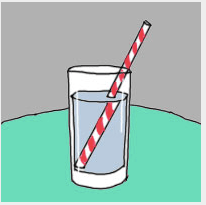
Why does the straw appear to be bent?

a)

light is reflected

b)

light is absorbed

c)

light is turned

d)

light is refracted

38.

What is the best explanation for Mickey seeing himself in the mirror?

a)

refraction

b)

absorbed

c)

reflection

d)

flipped

39.

What do we call a material that light can travel through?

a)

air

b)

water

c)

medium

d)

pathway

40.
When light bends it is ______
a)
Reflection
b)
Absorption
c)
refraction 
d)
optical density
41.
When light bounces back it is _____
a)
Reflected
b)
Refracted
c)
Absorbed
d)
Optical Density
42.
a)
Reflection
b)
Refraction
43.
a)
Reflection
b)
Refraction
44.
a)
Refraction
b)
Reflection
45.
a)
Reflection
b)
Refraction
46.
a)
Reflection
b)
Refraction
47.
a)
Reflection
b)
Refraction
48.
We see shadows because light travels in a __________________ line.
a)
curved
b)
straight
c)
rainbow
49.
a)
Reflection
b)
Refraction
50.
a)
Reflection
b)
Refraction
51.
Dan was sitting outside playing his new drum when his dog knocked some sand on it.  Afterwards, each time Dan thumped the drum, he noticed the sand on top of the drum bounced.  Which of the following is the best explanation for why this happened?  
a)
Sand moves easily on drums.
b)
Dan was thumping the drum too hard.
c)
Vibrations moved from the drum to the sand.
d)
Vibrations moved from the sand to the drum.
52.
What is needed for a sound to be made?
a)
discrimination
b)
pitch
c)
vibration
d)
volume
53.
Jane and Sophie were playing a game in the pool.  Jane would ask a question andthen both girls would go under the water where Sophie would say the answer.  The girls observed that the sound was different under water.  Why is the sound different?
a)
Sophie didn’t speak loudly enough.
b)
Sound doesn’t vibrate in the water.
c)
Ears don’t receive sound under water.
d)
Sound moves differently through the water than the air.
54.
Which of the following best describes volume?  
a)
how close or far the sound is
b)
how high or low the sound is
c)
how long or short the sound is
d)
how loud or soft the sound is
55.
Sound cannot travel through which of the following?
a)
empty space
b)
gas
c)
liquid
d)
solid
56.
How can you make the pitch of a sound higher?
a)
Turn up the volume
b)
increase the vibration
c)
Shorten the string
d)
hit the string harder
57.
Which of the following will NOT change the pitch of a sound?
a)
the distance from the object
b)
the length of the object
c)
the thickness of the object
d)
the tension of the object
58.
You stand outside a room that has the doors and windows closed. Why can you still hear sounds made inside the room?
a)
Vibrations are absorbed in the doors and windows
b)
Vibrations are reflected inside the room
c)
Vibrations travel through the door and the window
d)
Vibrations echo in the room
59.
If you change the frequency or wavelength of a sound wave, you change the sound
a)
Vibration
b)
Pitch
c)
Volume
d)
Amplitude
60.
If you change the amplitude, or height of a sound wave, you change the sound
a)
Frequency
b)
Pitch
c)
Vibration
d)
Volume