
 Worksheets
Biomolecules, Water, Enzymes
Total questions: 16
Worksheet time: 7mins
Name
Class
Date
1.
Which biomolecule contains pastas and breads?
a)
Lipid
b)
Protein
c)
Nucleic Acid
d)
Carbohydrate
2.
Which biomolecule is responsible for insulation and long term energy storage?
a)
Protein
b)
Nucleic Acid
c)
Lipid
d)
Carbohydrate
3.
Which biomolecule includes sugars, cellulose and starch?
a)
Lipids
b)
Proteins
c)
Carbohydrates
d)
Nucleic Acid
4.
Which biomolecule is made of the monomer amino acids?
a)
Nucleic Acid
b)
Carbohydrate
c)
Protein
d)
Lipid
5.
Which biomolecule contains fats, oils, and waxes?
a)
Proteins
b)
Nucleic Acid
c)
Lipids
d)
Carbohydrate
6.
What do monomers do?
a)
Bond to make a polymer
b)
Create essential proteins
c)
Stores energy
d)
Splits to make more cells
7.
Many monomers can be linked together to form ______________.
a)
building blocks
b)
chemical reactions
c)
polymers
d)
energy
8.
Enzymes are considered to be
a)
Lipids
b)
Carbohydrate
c)
Protein
d)
Nucleic Acid
9.
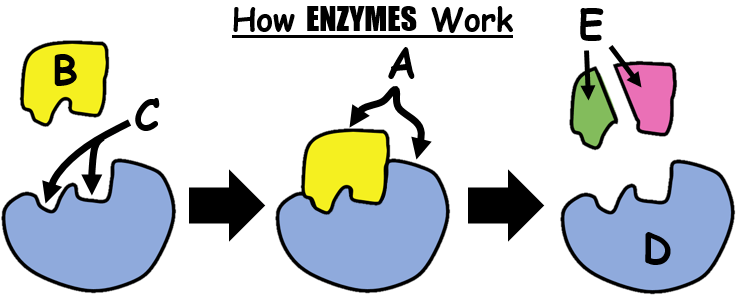
Letter D in the picture is...
a)
active site
b)
enzyme
c)
substrate
d)
products
10.
The part of the enzyme that the substrate bonds to is called the _____.
a)
active site
b)
activation energy
c)
bond site
d)
dehydration synthesis
11.
Enzymes need certain environmental conditions in order to function properly. What happens when enzymes are heated to a high temperature?
a)
they die
b)
they denature (change shape)
c)
they change their amino acid sequence
d)
they work better
12.
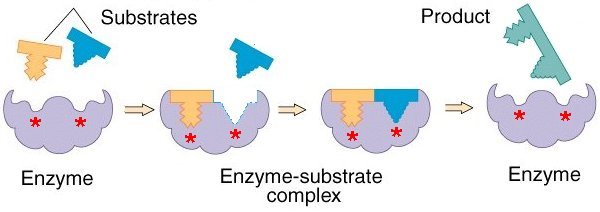
What type of enzyme is shown in the picture?
a)
Anabolic
b)
Catabolic
c)
There's no way to tell
13.
As temperature increases, the rate of reaction for enzymes will generally ______.
a)
increase
b)
decrease
c)
not be affected
14.
Fill in the blank: Enzymes act as __________ which speed up chemical reactions.
a)
Competitors
b)
Co enzymes
c)
Catalysts
d)
Tiny sumo wrestlers
15.
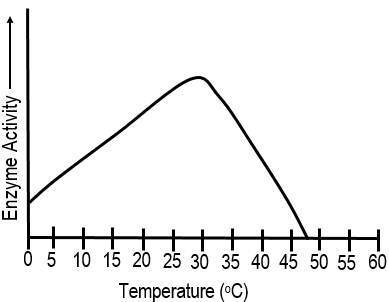
Based on the graph, what temperature does this enzyme work best?
a)
15 C
b)
40 C
c)
30 C
d)
47 C
16.

What effect does an inhibitor has on the enzyme-substrate reaction?
a)
inhibitor prevents substrate from binding the enzyme
b)
has no effect
c)
inhibitor increases the chance that the substrate will bind to the substrate
100 %

