wayground logo

Free Printable Worksheets

Font size

S
M
L
XL
Worksheets

Skeletal & Joints

Total questions: 76

Worksheet time: 51mins

Name
Class
Date
1.
The skull is an example of what type of joint?
a)
Cartilaginous
b)
Synovial
c)
Fibrous
2.
Name this joint
a)
pivot
b)
saddle
c)
gliding
d)
hinge
3.
Name this joint 
a)
gliding
b)
saddle
c)
hinge
d)
ball and socket
4.
The knee joint is
a)
Hinge
b)
Gliding
c)
Ball and socket
d)
Pivot
5.
What are joints
a)
A place where one bone meets 
b)
A place where  two  bones meet 
c)
Bones don't meet 
d)
A place where three bones meet 
6.
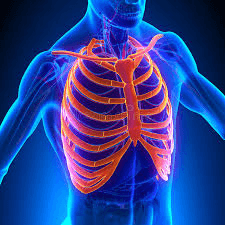
The human skeleton can be subdivided into two parts, what part is made up of the skull, sternum, vertebral column and rib cage?
a)
appendicular
b)
axial
7.
What type of bone is the scapula?
a)
long bone
b)
short bone
c)
flat bone
d)
sesamoid bone
8.
What type of bone is the femur?
a)
Long bone
b)
Short bone
c)
Flat bone
d)
Irregular bone
9.
Which one of the following is an irregular bone?
a)
humerus
b)
tibia
c)
temporal
d)
vertebrae
10.
What is the name of the collar bone?
a)
Clavicle
b)
Scapular
c)
Sternum
d)
Xiphoid
11.
What is the name of the long bone in the top part of the leg?
a)
Patella
b)
Femur
c)
Fibula
d)
Tibia
12.
Name the bone located at number  8.
a)
Humerus
b)
Radius
c)
Fibula
d)
Tibia
13.
Name the bone located at number 12.
a)
Patella
b)
Clavicle
c)
Sternum
d)
Scapula
14.
Name the bone located at number 16.
a)
Clavicle
b)
Humerus
c)
Radius
d)
Ulna
15.
Name the bone located at number 14.
a)
Femur
b)
Fibula
c)
Tibia
d)
Radius
16.
Name the bone located at number 3.
a)
Scapula
b)
Humerus
c)
Sternum
d)
Clavicle
17.
The ______________ is made up of arms, wrists, hands, fingers, legs, ankles, feet, and toes.
a)
Axial
b)
Appendicular
18.
One function of the skeletal system is _______ especially in regards to the vital organs, such as the brain, heart, and lungs.
a)
Protection
b)
Storage
c)
Synthesis
d)
Movement
19.
_________ is a function of the skeletal system that is completed by joints, ligaments, and tendons.
a)
Protection
b)
Storage
c)
Synthesis
d)
Movement
20.
The site of bone growth on a long bone is called
a)
Epiphyseal plate
b)
diaphysis
c)
periosteum
d)
meduary cavity
21.
The shaft of the long bone. 
a)
epphysis
b)
diaphysis
c)
epiphyseal line
d)
growth plate
22.
How many bones are in the adult human body?
a)
200
b)
206
c)
205
d)
204
23.
What does our skeleton help us do?
a)
Move
b)
Think
c)
Sleep
d)
None of these
24.

What are the main functions of the skeleton?

a)

Protection

b)

Body Shape

c)

Movement

d)

All Of These

25.
What mineral are bones made of?
a)
Vitamin C
b)
Calcium
c)
Zinc
d)
Vitamin B
26.

What food contain Calcium that helps our bones?

a)

Milk

b)

Oranges

c)

Mountain Dew

d)

Celery

27.

Bones are living things.

a)

True

b)

False

28.
The only bone in the human body that can not heal itself?
a)
Clavicle
b)
Sternum
c)
Teeth
d)
Knee Cap
29.
What connects bones together to help us move?
a)
Ribs
b)
Joints
c)
Toes
d)
Nerves
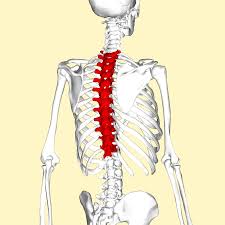
30.

What bone is highlighted?

a)

Ribs

b)

Vertebrae

c)

Clavicle

d)

Femur

31.

The bones in your back are made up of what?

a)

Fingers

b)

Phalanges

c)

Vertebrate

d)

Toes

32.

When do you have the most bones in your body?

a)

birth

b)

death

c)

teen years

d)

late 40's

33.

What process forms long bones?

a)

endochondral ossification

b)

intramembranous ossification

c)

osteoclasts

34.

What process forms flat bones?

a)

endochondral ossification

b)

intramembraneous ossification

c)

osteoclasts

35.

How many types of bones are there?

a)

1

b)

2

c)

4

d)

3

36.

Where would the compact bone be found in a long bone?

a)

diaphysis

b)

epiphysis

c)

metaphysis

37.

Where would the spongy bone be found in a long bone?

a)

diaphysis

b)

metaphysis

c)

epiphysis

38.

How many ribs does the average human have?

a)

12

b)

24

c)

14

d)

22

39.

How many layers of cartilage are found at a growth plate?

a)

1

b)

2

c)

3

d)

4

40.

At What age is the human skeleton completely hardened?

a)

16

b)

18

c)

25

d)

30

41.

Where do red blood cells form?

a)

red bone marrow

b)

yellow bone marrow

c)

periostium

42.

Which of the following is a structural classification of joints?

a)

synoival

b)

diarthritic

c)

amphiarthritic

d)

synarhtritic

43.

Which of the following is NOT a structural classification of joints?

a)

synovial

b)

cartilaginous

c)

fibrous

d)

amphiarthrotic

44.

What type of joint is the most common in the human body?

a)

synoival

b)

ball and socket

c)

cartilaginous

d)

fibrous

45.

What type of joint is found in the adult skull?

a)

suture

b)

synovial

c)

ball and socket

d)

hinge

46.

What type of bone is found in the skull

a)

flat

b)

long

c)

short

d)

irregular

47.
What are the 2 types of skeletons?
a)
spongy bone and compact bone
b)
marrow and blood vessels
c)
axial and appendicular
48.

What is the scientific name of the 'jaw bone'?

a)

Maxilla

b)

Mandible

49.

The bones at the end of our fingers and toes are known as _______________.

a)

Tarsals

b)

The phalanges

50.

The scientific name of the collar bone is the ____________.

a)

Scapula

b)

Clavicle

51.

The forearm bone closest to the thumb is the __________.

a)

Ulna

b)

Radius

52.

The cranium, ribs, scapula & pelvis are all classed as short bones.

a)

True

b)

False

53.

The patella is commonly known as your knee cap.

a)

True

b)

False

54.

The tibia is the bigger bone of the lower leg.

a)

True

b)

False

55.

The scapula is commonly known as your shoulder blade.

a)

True

b)

False

56.

Long bones are longer than they are wide.

a)

True

b)

False

57.

An example of a saddle joint can be found in the thumb.

a)

True

b)

False

58.

Which type of Synovial Joint provides the greatest 'range of motion'?

a)

Ball and Socket

b)

Hinge

c)

Saddle

d)

Ellipsoid

e)

Pivot

59.

What joins the bones of the human skull at birth?

a)

sutures

b)

fontanels

c)

synoival

60.
Which of the following is a joint that can freely move?
a)
fibrous
b)
cartilaginous
c)
synovial
61.
Moving a part forward (thrusting the head forward).
a)
protraction
b)
retraction
c)
elevation
d)
supination
62.
This type of joint allows the your first two vertebrate to rotate as in shaking your head no
a)
condyloid
b)
gliding
c)
pivot
d)
saddle
63.
Movement away from the mid-line is called _____________.
a)
abduction
b)
adduction
c)
internal rotation
d)
external rotation
64.
Turning the hand so that the palm is upward or facing anteriorly (in anatomical position).
a)
supination
b)
pronation
c)
flexion
d)
dorsiflexion
65.
Moving a part so that its end follows a circular path (moving a finger in a circular motion without the the hand).
a)
circumduction
b)
rotation
c)
opposition
d)
retraction
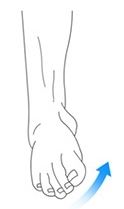
66.
Turning the foot so the plantar surfaces faces medially.
a)
plantar flexion
b)
eversion
c)
inversion
d)
dorsiflexion
67.

decrease the angle

a)

flexion

b)

extension

c)

inversion

d)

eversion

68.

increase the angle

a)

eversion

b)

extension

c)

inversion

d)

flexion

69.

Arm Flexion

a)
b)
c)
d)
70.

Arm Extension

a)
b)
c)
d)
71.

Head Flexion

a)
b)
72.

Head Extension

a)
b)
73.

Hip Extension

a)
b)
74.

Hip Flexion

a)
b)
75.

Abduction

a)
b)
76.

Adduction

a)
b)