
NEW
Font size
 Worksheets
BH Evolution
Total questions: 39
Worksheet time: 28mins
The wings of flightless birds, like the ostrich, are an example of ______. They are features that have lost or almost lost their original function/purpose.
Vestigial structures
Analogous structures
Homologous structures
Body structures that are similar in anatomical structure, but completely different in function due to organisms living in different environments. These come from a common ancestor.
Vestigial structure
Analogous structure
Homologous structure

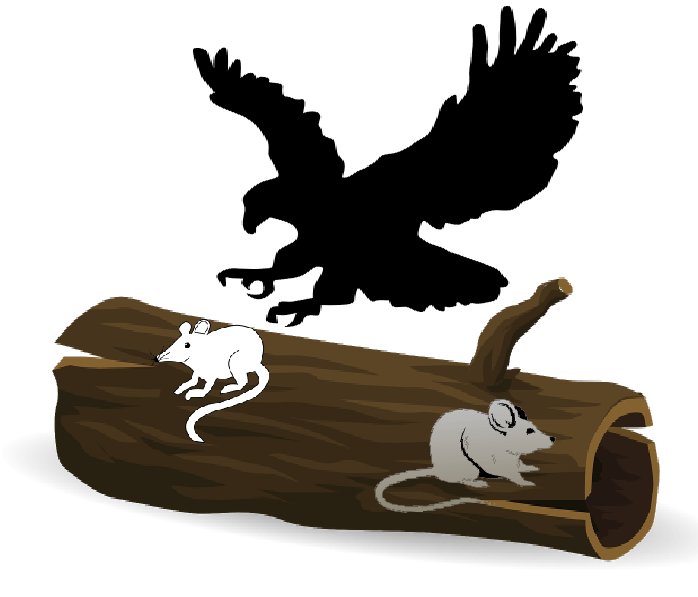
Over the years, white mice became extinct and darker mice survived. This is
stabilizing selection
directional selection
disruptive selection
due to exercise
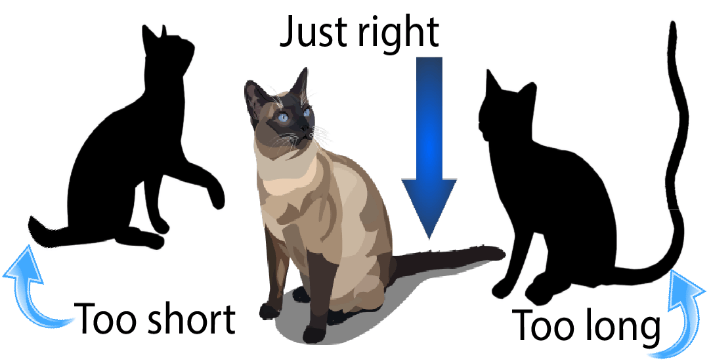
Average phenotypes are favored in the environment, while extremes have lower survival rates.
seasonal selection
distruptive selection
directional selection
stabilizing selection
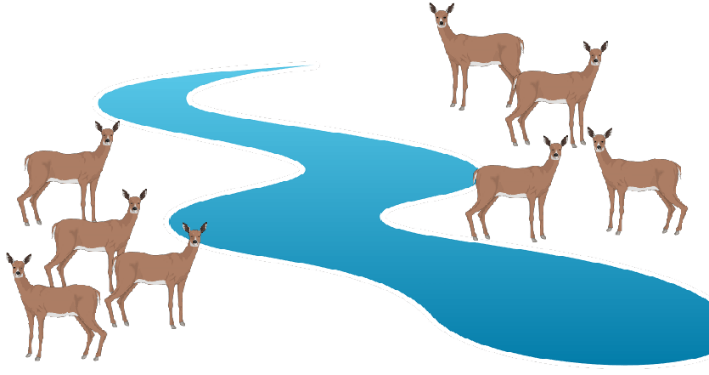
Two populations of the same species are separated by land barriers like rivers or mountains.
geographical isolation
temporal isolation
adaptive ratiation
behavioral isolaton

Two populations of the same species do not have the same mating rituals or signals.
geographical isolation
temporal isolation
adaptive ratiation
behavioral isolaton
In the Hardy-Weinberg Equation, q2 is the frequency of what?
The recessive allele
the dominant allele
the recessive genotype
the dominant genotype
What is an example of sexual selection?
One sex of an organism is preferred over the other
A small subgroup of a population leaves and forms a new population
Female birds prefer male birds with red feathers
Individuals move between two populations, exchanging genes

What type of selection is depicted in the picture?
stabilizing
directional
disruptive

The Founder Effect happens when
a chance disaster occurs that kills randomly kills some of the population.
a small group leaves their main population and starts a new population in a new area, like an island.
changes in allele frequency occur due to natural selection
Classifies organisms based on observable traits.
Biological species concept
Morphological species concept
Genealogical species concept
Ecological species concept
Reproductive barrier that exists prior to the formation of a zygote.
Pre-zygotic
Post-zygotic
Para-zygotic
Multi-zygotic
Reproductive barrier that exists after to the formation of a zygote.
Pre-zygotic
Post-zygotic
Para-zygotic
Multi-zygotic
Pre-zygotic barrier in which organisms mate at different times (seasons, times of day/year, etc.).
Temporal isolation
Habitat (geographic) isolation
Behavioral isolation
Mechanical isolation
Gametic isolation
A new river forms and splits two populations, causing ______________ speciation
Sympatric
Allopatric
Extreme
Convergent
Orcas occur in the same habitat but some are avoiding each other and do not interbreed. They have different diets, vocal behavior, and social structures. What type of speciation is this?
Allopatric
Sympatric
Complex
Covergent
Changes in allele frequencies within a population over time is
macroevolution
allopatric speciation
microevolution
postzygotic barrier


Evolution occurring gradually and slowly over long periods of time
Homeostasis
Stasis
Punctuated Equilibrium
Gradualism
These were the earliest fossils.
eukaryotes
RNA
Protein
prokaryotes
These types of cells were the first to form and lived in the ocean waters.
eukaryotes
lung cells
zooplankton
prokaryotes
These cells are complex, have membrane bound organelles and are newer.
eukaryotes
bacterial cells
prokaryotes
RNA
New layers of sediment cover older ones and compress them into layers of rock called
fossils
layerization
strata
Pangea

