wayground logo

Free Printable Worksheets

Font size

S
M
L
XL
Worksheets

Evolution/Classification

Total questions: 35

Worksheet time: 45mins

Name
Class
Date
1.
Which of the following is a term for a group of similar organisms that can reproduce fertile offspring?
a)
individual
b)
population
c)
species
d)
fossil
2.
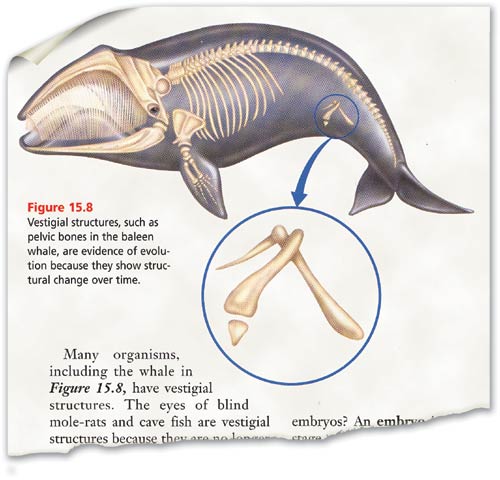
If an organism has a vestigial structure, that structure likely once had a function in a(n)
a)
close relative
b)
early ancestor
c)
unrelated organism
d)
embryological stage
3.
Mutations are important because they bring about
a)
death of the organism in which they develop
b)
genetic variation needed for a population to evolve
c)
benefits for the individual, not for the population
d)
Hardey-Weinberg equilibrium within a population
4.
Extinction can occur because of which of the following?
a)
All can be causes of extinction.
b)
Increased competition with other species
c)
New predators within the environment
d)
Loss of habitat and/or catastrophes
5.
Finches on the Galapagos Islands had different beaks in order to help them do what?
a)
Build nests
b)
Fight off predators
c)
Collect food sources
d)
Compete with rivals
6.
This scientist came up with the idea of natural selection.
a)
Jean Baptiste Lamarck
b)
Gregor Mendel
c)
Charles Darwin
d)
Thomas Malthus
7.
A remnant or trace of an organism from the past is called a _______.
a)
Ancestor
b)
Skeleton
c)
Fossil
d)
Imprints
8.
Inherited trait that helps an organism survive is a(n) __________.
a)
Fossil
b)
Adaptation
c)
Ancestor
d)
Natural selection
9.
Survival of the fittest or when favorable adaptations reproduce faster is called what?
a)
Evolution
b)
Adaptation
c)
Natural selection
d)
Fossilization
10.
This occurs when no more of a species is living.
a)
Fossilization
b)
Adaptation
c)
Extinction
d)
Natural selection
11.
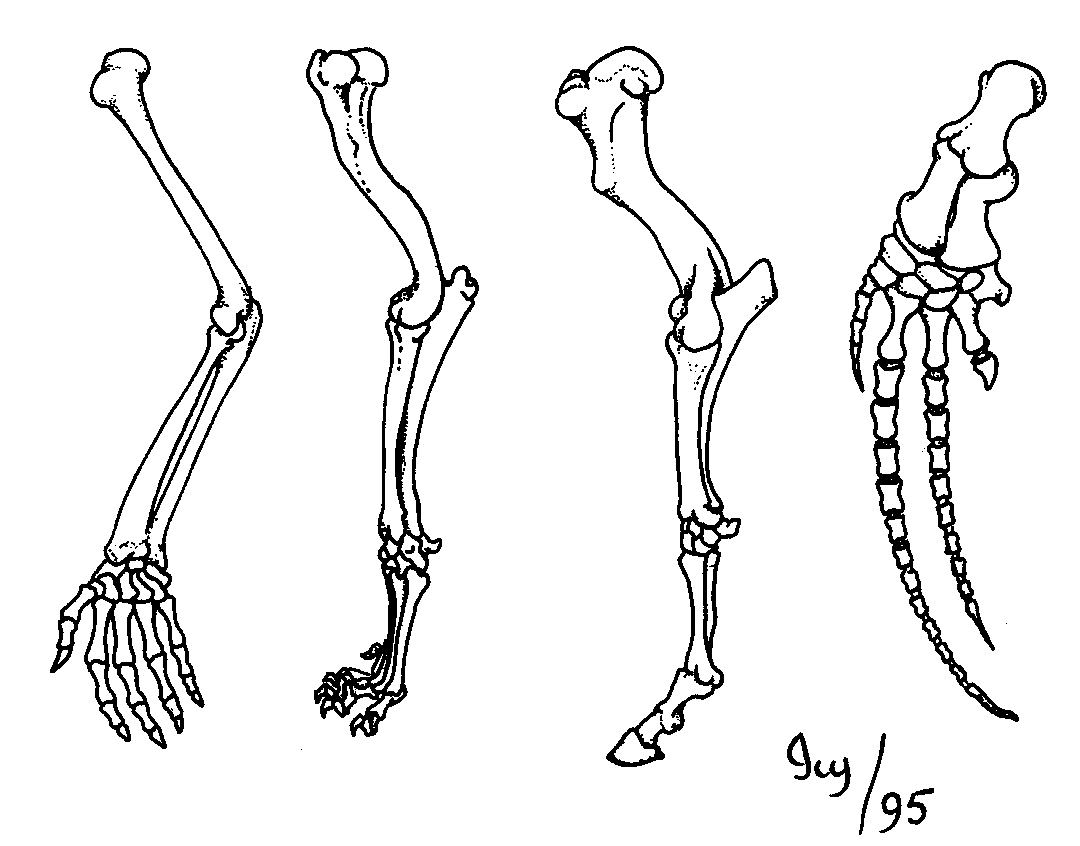
Structures with the same parts have different functions; suggests that organisms share a common ancestry
a)
vestigial structures
b)
homologous structures
c)
adaptive radiation
d)
fossil
12.
Which of the following is an example of a vestigial structure?
a)
the wings of a red-tailed hawk
b)
the hind limbs of a house cat
c)
the fins of sharks
d)
the tailbone of a human
13.
If species A and B have very similar genes and proteins, what is probably TRUE?
a)
species A and B share a relatively recent common ancestor
b)
species A evolved independently of species B for a long period
c)
species A is younger than species B
d)
species A is older than species B
14.
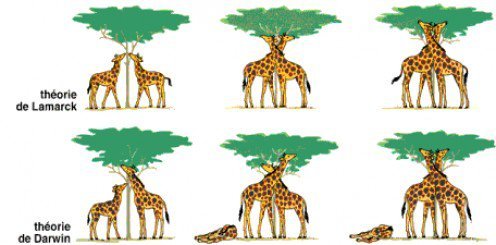
What would happen if the Giraffes never evolve?
a)
they would survive
b)
They would thrive
c)
They would become extinct
d)
They will find another source of food
15.
The ability of an organism to survive and reproduce in its specific environment 
a)
diversity.
b)
evolution
c)
adaptation
d)
 fitness
16.
Why are advantageous traits more likely to be passed onto offspring?
a)
Because they are more likely to survive and reproduce.
b)
Because they come from dominant alleles.
c)
Because they come from recessive alleles.
d)
Because the trait is an acquired phenotype.
17.

Which of the following is an example of a vertebrate animal?

a)

fly

b)

worm

c)

bird

d)

starfish

18.

Most fish have _________________ to protect their bodies.

a)

hair

b)

scales

c)

feathers

d)

skin

19.

Which of the following statements is true of reptiles?

a)

They are cold-blooded.

b)

They have gills.

c)

Their babies drink their mother's milk.

d)

They spend part of their lives in the water and part of their lives on land.

20.

Invertebrates do NOT have a

a)

brain.

b)

heart.

c)

stomach.

d)

backbone.

21.

Animals that are warm blooded, have body hair, and produce milk for their young are grouped into which of the following classes?

a)

amphibians

b)

mammal

c)

birds

d)

reptiles

22.

All of these animals are grouped together. What characteristics do the animals MOST likely have in common?

a)

eye color

b)

what they eat

c)

hair

d)

feathers

23.
Who organized living things by creating binomial nomenclature?
a)
Carolus Linnaeus
b)
Robert Hooke
c)
Anton van Leeuwenhoek
d)
James Watson
24.
What are the 8 levels of classification of living things from most general to most specific?
a)
domain, kingdom, phylum, class, order, family, genus, species
b)
domain, kingdom, phylum, class, order, family, genius, species
c)
domain, kingdom, phamily, class, order, family, genus, species
d)
domain, king, phillip, class, order, family, genus, species
25.
The scientific name for water bear is Hypsibius dujardini.  What is its genus?
a)
Hypsibius 
b)
dujardini
c)
water 
d)
tardigrade
26.
The scientific name for water bear is Hypsibius dujardini.  What is its species?
a)
Hypsibius 
b)
dujardini
c)
water 
d)
tardigrade
27.
How do scientists organize living things?
a)
by looks
b)
by shared characteristics
c)
by size
d)
by differences
28.
Who is the closest relative to the birds?
a)
crocodiles
b)
sharks
c)
fish
d)
amphibians
29.
Who is the closest relative to the sharks?
a)
crocodiles
b)
sharks
c)
ray-finned fish
d)
amphibians
30.
A __________ is a branching diagram that shows evolutionary relationships.
a)
cladogram
b)
table
c)
derived character
d)
relationship tree
31.
The scientific name for humans is _______ ____
a)
Homo sapiens
b)
Homo neandertal
c)
homo Sapiens
d)
homo sapiens
32.
______________ is the process by which populations change in response to their environment.
a)
natural selection
b)
adaptation
c)
reproductive isolation
d)
divergence
33.
Scientists DO NOT classify organisms based upon
a)
geographic isolation
b)
structure
c)
breeding patterns
d)
DNA
34.

True or false, evolution happens when an individual organism starts changing itself to adapt to its environment. For example, an adult polar bear might start swimming more so it can handle the melting of the polar ice caps.

a)

false, if it had a cub that could swim better due to longer legs or more buoyant bone structure, this could become a more common trait.

b)

True, evolution happens due to changing individuals

c)

maybe, if it chose to.

d)

I wish I had a pet penguin

35.

Cheetah's all have 99% identical DNA. Which is/are true?

a)

They are more likely to evolve into a new species than other cats due to gene flow.

b)

They are likely to go extinct because they have so little variation.

c)

They likely underwent a bottleneck in their history.

d)

The founder's effect made it so they have several different subspecies.

e)

Cheetahs never prosper and winners never cheat.