wayground logo

Free Printable Worksheets

Font size

S
M
L
XL
Worksheets

Matter 4-6 Test Review

Total questions: 52

Worksheet time: 45mins

Name
Class
Date
1.
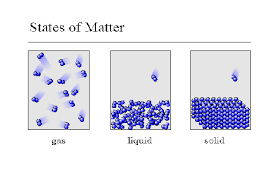
What does this picture represent? 
a)
solid
b)
liquid 
c)
gas
d)
plasma
2.
What does this picture represent? 
a)
solid
b)
liquid
c)
gas
d)
plasma
3.
If the tops were removed from the cylinders, the following would happen:
a)
The solid would fly out of the container
b)
The liquid would fly out of the container.
c)
The gas would fly out of the container.
d)
They ALL would fly out of the container.
4.
The molecules in the picture are tightly held together with little movement. They have shape and energy.  Therefore, the picture represents _________.
a)
solid
b)
liquid
c)
gas
d)
plasma
5.
What happens to the particles when I add heat?
a)
The particles get bigger
b)
The particles get smaller
c)
The particles get slower
d)
The particles get faster
6.
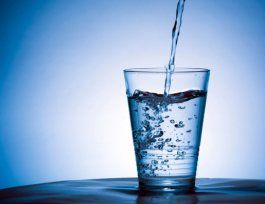
My glass of ice water is sitting in the sun and has droplets of water on the outside of the glass. What is happening?
a)
condensation
b)
evaporation
c)
melting
d)
freezing
7.
Which diagram best shows the results of removing heat from this sample until it freezes?
a)
1
b)
2
c)
3
d)
4
8.
All changes in the state of matter of a substance requires
a)
vibration
b)
water
c)
permission
d)
energy
9.
At higher temperatures
a)
particles in an object have less energy
b)
particles in an object move faster
c)
a gas contracts
10.
In a solid, the particles
a)
vibrate in place
b)
slide past one another
c)
overcome the strong attraction
11.

The reverse of condensation is

a)

sublimation

b)

vaporization

c)

deposition

d)

melting

12.
Balloons can be twisted into shapes because
a)
the force exerted changes the number of particles
b)
the volume of a gas is constant
c)
particles of gas can be compressed
13.
Which of the following occurs when a liquid becomes a gas?
a)
the particles slow down
b)
the particles beak away from one another
c)
the particles move closer together
14.
What term describes a solid changing to a liquid?
a)
Deposition
b)
Sublimation
c)
Freezing 
d)
Melting
15.
How is a solid defined?
a)
Indefinite shape and indefinite volume
b)
Definite shape and definite volume
c)
Found in the stars
d)
Definite volume, indefinite shape
16.
How is a gas defined?
a)
Indefinite shape, indefinite volume
b)
Definite shape, definite volume
c)
Found in stars
d)
Definite volume, indefinite shape
17.
Define a liquid.
a)
Indefinite shape, indefinite volume
b)
Definite shape, definite volume
c)
Found in stars
d)
Definite volume, indefinite shape
18.

What term describes a liquid changing to a gas?

a)

Deposition

b)

Sublimation

c)

Freezing

d)

vaporization

19.
What term describes a solid changing to a gas?
a)
Deposition
b)
Sublimation
c)
Evaporation
d)
Freezing
20.
What term describes a liquid changing to a solid?
a)
Deposition
b)
Sublimation
c)
Evaporation
d)
Freezing
21.
What term describes a gas changing to a liquid?
a)
Deposition
b)
Sublimation
c)
Evaporation
d)
Condensation
22.
What is vaporization?
a)
a gas becoming a liquid
b)
a liquid becoming a solid
c)
a gas becoming a solid
d)
a liquid becoming a gas
23.
7. All phase changes (changing states) requires energy to be added or taken away.
a)
True
b)
False
24.
Change from Gas to Solid is called........
a)
Sublimation
b)
Deposition
c)
Fusion
d)
condensation
25.
What is deposition?
a)
Phase change from gas to solid
b)
phase change from liquid to solid
c)
Phase change from solid to gas
d)
Phase change from liquid to gas
26.
What is sublimation?
a)
phase change between solid and liquid
b)
pahse change from gas to solid
c)
phase change from solid to gas
d)
phase change from solid to solid
27.
When Pressure increases then the Volume must...
a)
Increase
b)
decrease
28.
What happened to the volume between the two steps?
a)
volume increased
b)
volume decreased
c)
volume stayed the same
29.

Charles' Law States...

a)

As Pressure goes up volume goes down

b)

As Pressure goes up temperature goes up

c)

As temperature goes up volume goes up

d)

As Pressure goes down volume goes down

30.

Whose law states that as pressure goes down, the volume goes up?

a)

Charles

b)

Boyle

c)

Aglow

d)

Mazias

31.

Peeps in a microwave is an example of what Law?

a)

Charles

b)

Boyle

c)

Hooke

d)

Peter Pan

32.
A pure substance...
a)
is an element or a compound
b)
is an element or a mixture
c)
is a compound or a mixture
d)
is a mixture
33.

1 A substance made up of two or more chemically combined elements is —

a)

an element

b)

mixture

c)

compound

d)

solution

34.

What is an example of a mixture?

a)

Table salt (NaCl)

b)

Salt water (NaCl + H2O)

c)

Oxygen (O2)

d)

Carbon dioxide (CO2)

35.
NaHCO3 is an example of —
a)
an abbreviation
b)
a compound
c)
a mixture
d)
an element
36.
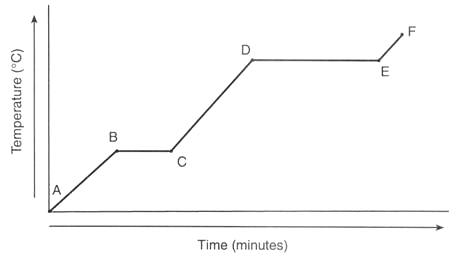
Which line segment demonstrates vaporization occurring?
a)
B-C
b)
C-D
c)
D-E
d)
E-F
37.
What phase change is occurring at line segment B-C if the graph is exothermic?
a)
melting
b)
freezing
c)
boiling
d)
condensation
38.
As substance goes from D to E what happens to the distance between the particles?
a)
particles get closer together
b)
particles disappear
c)
particles get far apart
39.
At what temperature is this substance melting?
a)
50C
b)
100C
c)
0C
40.
The temperature at which a substance in the liquid state freezes is the same as the temperature at which the substance_________- 
a)
melts
b)
sublimes
c)
boils
d)
condenses
41.
The graph shows a cooling curve for an unknown substance.  What is happening during segment DE?
a)
boiling
b)
condensation
c)
freezing
d)
melting
42.

Where on the graph are phase changes taking place?

a)

1

b)

2

c)

3

d)

4

e)

5

43.

What state/phase is the object likely from points A to B?

a)

Solid

b)

Liquid

c)

Gas

d)

Plasma

44.

What state/phase is the object likely from points C to D?

a)

Solid

b)

Liquid

c)

Gas

d)

Plasma

45.

What state/phase is the object likely from points E to F?

a)

Solid

b)

Liquid

c)

Gas

d)

Plasma

46.
Which law?
a)
Charles 
b)
Boyle
c)
Hunsecker
d)
Newton
47.

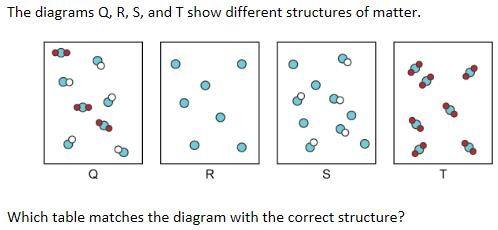
Which answer correctly matches the diagram with the correct description?

a)

Q- Multiple compounds R-A single element S-An element and a compound T- A single compound

b)

Q- A single element, R- An element and a compound S-A single compound T-Multiple compounds

c)

Q- A single compound, R- A single element, S- Multiple compounds, T- An element and a compound

d)

Q- An element and a compound, R- a single compound, S- a single element, T- multiple compounds

48.

This image is a model of...

a)

an element

b)

a compound

c)

a homogenous mixture

d)

a heterogeneous mixture

49.

This picture is a model of a...

a)

element

b)

compound

c)

homogeneous mixture

d)

heterogeneous mixture

50.
This picture represents which of the following?
a)
element
b)
compound
c)
mixture of elements
d)
mixture of compounds
51.

Which law?

a)

Charles

b)

Boyle

c)

Diegel

d)

Mitchell

52.
In an exothermic reaction, heat is ...
a)
taken in
b)
given out