
 Worksheets
Unit 3 Review
Total questions: 33
Worksheet time: 17mins
Ancient atomic models described the atom as a solid sphere with no charge. In the 1800's and 1900's, scientist discovered subatomic particles with charges inside the atoms.
Which statement most likely explains why the early models did not include the subatomic particles?
atoms changed over time to develop the subatomic particles
not all atoms contain subatomic particles
subatomic particles move and cannot be counted
subatomic particles could not be detected with the technology available.
Which statement correctly describes the mass of a proton?
the mass of a proton is about the same as the mass of a neutron
the mass of proton is about the same as the mass of an electron
the mass of a proton is about double the mass of a neutron
the mass of a proton is about half the mass of an electron.

A student makes an atomic model, as shown. How should the atomic model be corrected to represent an atom accurately?
electrons should not have any charges
neutron should not reside inside the nucleus
the nucleus should be located at the center of an atom
Protons and neutron should both have positive charges

The image show an incomplete model of an atom. Which particles should be placed inside the nucleus?
protons only
electrons only
electrons and protons
neutrons and protons
Using the periodic table as a reference, which pair of elements are nonmetals.
oxygen and sulfur
cobalt and zinc
mercury and lead
sodium and iodine
What is the significance of a column in the periodic table?
a column, better know as a group includes elements with similar
a column, better know as a period, includes elements with similar properties
a column, better known as a group, includes elements with the same number of electrons
a column, better known as a period, include elements with the same number of electrons.
How are elements organized into the periodic table?
elements are ordered by atomic weight
elements are ordered by atomic number
elements are arranged alphabetically
elements are grouped by color
What type of bond is frequently formed from reactions between metals and nonmetals?
covalent bonds
hydrogen bonds
ionic bonds
metallic bonds
Referring to the reference periodic table, what do the elements fluorine, chlorine, and bromine have in common?
all are located in the same period
all have metallic properties
all are halogens, so they are not very chemically active
all have the same number of valence electrons
What information can be used to infer an element's chemical reactivity?
physical properties of matter
states of matter
columns of the periodic table
row on the periodic table

The diagram shows a portion of the periodic table. Which statement about the elements is true?
They are the same period
they are in the same family
they have a wide range of properties
they are all nonmetals.

Select the phrase that best completes the sentence. Examine the periodic table. Select the phrase that identifies there metals are found on the periodic table.
on the left and right side of the zig zag
to the right side of the zig zag
on the left side of the zig zag
only touching
Which substance is comprised of more then one elements?
aluminum
helium
silver
steel
Potassium iodine can be decomposed by electrolysis (an electric current) into the elements potassium and iodine. Based on this information, how would potassium iodine be classified?
coumpound
heterogenous mixture
homogeneous mixture
solution
Ammonia is made up of two pure substances, nitrogen and hydrogen. What can be true for ammonia, nitrogen, and hydrogen?
ammonia is a mixture, nitrogen and hydrogen are elements
ammonia is a mixture, and nitrogen and hydrogen are compounds.
ammonia is a compound, and nitrogen and hydrogen are elements
ammonia is an elements, and nitrogen and hydrogen are compounds.

Where is the element's atomic NUMBER located?
the top
the bottom
the top + the bottom
the number of protons + the number of neutrons

Where is the element's atomic MASS located?
at the top
at the bottom
the top number + the bottom number
the number of protons + the number of neutrons
What are the 3 subatomic particles of an atom?
carbon atom, proton, electron
quarks, neutrons, protons
nucleus, protons, electrons
protons, neutrons, electrons
Generally, the number of neutrons ____ the number of protons in an atom.
=
<
>
Which subatomic particle has a negative charge?
proton
neutron
electron
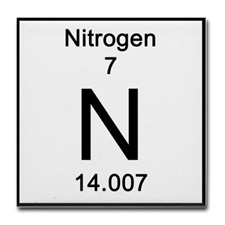
Valence electrons are the number of
protons in the atom
electrons in the atom
protons + neutrons in the nucleus
electrons in the outside shell of the atom
What distinguishes compounds from mixtures?
compounds are composed of elements that have been chemically combined
compounds must be physically separated back into their original substances.
Mixtures are composed of elements that have been chemically combined
mixtures must be chemically separated back into their original substances
The human body is composed primarily of water, sugar, proteins, and fat. How are each of those individual substances classified?
compounds
elements
heterogeneous mixtures
homogeneous mixtures
Which term refers to matter that could be heterogeneous?
compound
element
mixture
solution
Jamie poured a mixture of sand and salt water into a beaker through a funnel lined with filter paper. What will be found in the beaker after filtering?
salt only
sand only
salt and water
salt and sand
Table salt is a compound that is found almost everywhere. What is the correct chemical formula for table salt.
NaCl
NcCh
SoCl
SoCh
The chemical formula for ammonia is NH3. What composes the compound?
1 sodium and 3 helium atoms
3 sodium and 3 hydrogen atoms
3 nitrogen and 3 helium atoms
1 nitrogen and 3 hydrogen atoms
How many atoms are found in 9 molecules of nitrogen gas?
7
9
11
18
How many atoms are found in one molecule of Aluminum Phosphate which has a chemical formula AlPO4?
3
4
5
6
The chemical formula for glucose is C6H12O6. How many atoms are found in one molecules of glucose?
3
4
24
25
The chemical formula for glucose is C6H12O6. How many types of elements are found in glucose
3
4
24
25

