
 Worksheets
Chapter 21 The Roaring Life of the 1920's
Total questions: 69
Worksheet time: 25mins

This trumpet player's astounding sense of rhythm and ability to improvise has led many to consider him the single most important and influential musician in the history of jazz.
Louis Armstrong
James Weldon Johnson
Langston Hughes
Duke Ellington

This jazz pianist and composer won fame as one of America's greatest composers. He wrote such pieces as "Mood Indigo" and "Sophisticated Lady."
Duke Ellington
Claude McKay
Paul Robeson
Zora Neale Hurston

In many of her novels, books of folklore, poetry, and short stories, this writer portrayed the lives of poor, unschooled Southern African Americans.
Bessie Smith
Claude McKay
Zora Neale Hurston
W. E. B. Du Bois

This major dramatic actor 's performance in Shakespeare's Othello was widely acclaimed.
Paul Robeson
Langston Hughes
James Weldon Johnson
Claude McKay

It was difficult to enforce the laws governing prohibition for all of the following reasons EXCEPT:
many people were determined to break the laws.
insufficient funds were provided to pay for enforcement.
many law enforcement officials took bribes from smugglers and bootleggers.
prohibition banned only alcoholic beverages manufactured in the United States.

To obtain liquor illegally, drinkers went underground to hidden nightclubs known as
speakeasies
penthouses.
tenements
tea rooms.

The Harlem Renaissance refers to
a struggle for civil rights led by the NAACP.
a population increase in Harlem in the 1920s
a program to promote African-American owned businesses.
a celebration of African-American culture in literature and art.

John T. Scopes challenged a Tennessee law that forbade the teaching of
biology.
evolution.
creationism.
fundamentalism.

Fundamentalists believed that
evolution and creationism could coincide.
prohibition should be repealed.
the Bible should be taken literally.
drinking alcohol was acceptable.
"Double standard" refers to
stricter social and moral standards for women than for men in the 1920s.
lower wages women earned compared to those earned by men in the 1920s.
amount of work that women did both at home and outside the house in the 1920s.
unfair treatment of women in the workplace in the 1920s.

F. Scott Fitzgerald described the 1920s as the
Harlem Renaissance.
Jazz Age.
Prohibition Age.
Roaring Twenties.

Charles Lindbergh was famous as a(n)
politician.
composer.
inventor.
pilot.

The NAACP did all of the following EXCEPT
fight for legislation to protect African Americans.
work with anti-lynching organizations.
propose that African Americans move back to Africa.
publish The Crisis.

In 1927, this singer became the highest paid black artist in the world.
Bessie Smith
Claude McKay
Zora Neale Hurston
Duke Ellington

Among the founders of this association was W. E. B. Du Bois.
National Association for the Advancement of Colored People
Universal Negro Improvement Association
Southern Poverty Law Center
Harlem Academy

This was a literary and artistic movement that celebrated African-American culture
Harlem Renaissance
Great Migration
Niagara Movement
Woodstock

This black nationalist association was founded by Marcus Garvey.
Universal Negro Improvement Association
National Association for the Advancement of Colored People
The Southern Poverty Law Center
The Black Panthers

The first American to win a Nobel prize for literature, he used the character in Babbitt to mock Americans for their conformity and materialism.
Sinclair Lewis
Ernest Hemingway
F. Scott Fitzgerald
George Gershwin

Wounded in World War I, this writer criticized the glorification of war and introduced a tough, simplified style of writing that set a new literary standard.
Ernest Hemingway
Charles A. Lindbergh
Edna St. Vincent Millay
F. Scott Fitzgerald

In This Side of Paradise and The Great Gatsby, this novelist portrayed wealthy people leading hopelessly empty lives.
F. Scott Fitzgerald
Georgia O'Keefe
Edna St. Vincent Millay
Sinclair Lewis

This writer's poems celebrated youth and a life of independence and freedom from traditional restraints.
Edna St. Vincent Millay
Ernest Hemingway
Jack Dempsey
Georgia O'Keefe

This composer merged traditional elements of music with American Jazz.
George Gershwin
Sinclair Lewis
Charles A. Lindbergh
Ernest Hemingway

He was a small-town pilot who made the first nonstop solo flight across the Atlantic.
Charles A. Lindbergh
Jack Dempsey
F. Scott Fitzgerald
George Gershwin

Gene Tunney defeated this former heavyweight champion in what was called the "fight of the century."
Jack Dempsey
Sinclair Lewis
F. Scott Fitzgerald
George Gershwin

This artist produced intensely colored canvases that captured the grandeur of New York.
Georgia O'Keeffe
Edna St. Vincent Millay
Ernest Hemingway
F. Scott Fitzgerald

Jazz music was born in New Orleans and was spread to the North by such musicians as
Louis Armstrong.
Zora Neale Hurston.
Paul Robeson
Langston Hughes.

The people who most strongly supported prohibition tended to live in URBAN areas.
True
False
Both True and False
IDK

The "DOUBLE STANDARD" of the 1920s refers to the fact that women were judged by stricter standards than men were.
True
False
Both True an False
IDK

Fundamentalists in the 1920s supported a literal interpretation of the CONSTITUTION.
True
False
Both True and False
IDK

Prominent writers of the 1920s, both black and white, tended to hold a CRITICAL view of U.S. society.
True
False
Both True and False
IDK

The largest population increases during the 1920s occurred in America's SUBURBS.
True
False
Both True and False
IDK

WILLIAMS JENNINGS BRYAN defended John Scopes in the famous Scopes trial of 1925.
True
False
Both True and False
IDK

The NAACP was founded by Marcus Garvey.
True
False
Both True and False
IDK

Amelia Earhart was the first person to complete a non-stop solo flight across the Atlantic.
True
False
Both True and False
IDK

FLAPPERS were emancipated young women who embraced new fashions and urban attitudes of the day.
True
False
Both True and False
IDK

Sinclair Lewis, the first American to win a Nobel Prize in literature, wrote the novel Babbitt.
True
False
Both True and False
IDK

___________ marked the works of many famous writers of the 1920s, including the Lost Generation.
Fierce patriotism
Celebration of small-town life
Critical views of American culture
Deep respect for tradition

Except for ___, all of the following were likely to approve of prohibition in the 1920s and early 1930s.
recent immigrants
rural residents of the South
members of organized crime syndicates
the Women's Christian Temperance Union

___ increased during the 1920s.
Child labor
The birth rate
The school dropout rate
The crime rate

The "Great Migration" of 1910-1920 refers to the movement of ___.
immigrants from Europe to America
people from rural areas and towns to large cities
African Americans from the United States to Africa
African Americans from the South to northern cities

The main significance of the trial of John T. Scopes was that ___.
it ended the career of William Jennings Bryan, who was unable to defend fundamentalism
its outdoor setting allowed many Americans to witness the justice system in action
it highlighted the struggle between science and religion in American schools
led to the repeal of a law that made teaching evolution in schools illegal

Except for ___, alcohol caused all of the following, according to most fundamentalists.
urban slums
child abuse
crime
evangelism

Except for ___, all of the following allowed women to shed old roles in the 1920s.
work opportunities provided by the new industrial economy
equal wages paid to women and men
new managerial positions that were open to women
equality in the business world

Concert music composer ___ was influenced by both the music of ___ and traditional music.
Louis Armstrong, George Gershwin
Bessie Smith, Georgia O'Keeffe
George Gershwin, Louis Armstrong
Paul Robeson, Duke Ellington

Ernest Hemingway, author of The Sun Also Rises, introduced ___.
a simplified style of writing
an elaborate style of writing
a patriotic movement in literature
glorification of war in literature

The ___ fought for legislation to protect African-American rights under the leadership of ___.
NAACP, Marcus Garvey
UNIA, Langston Hughes
NAACP, James Weldon Johnson
UNIA, Claude McKay
This was defended at the Scopes trial.
fundamentalism
Prohibition
organized crime
women's rights

He was called as a witness in the Scopes trial.
Clarence Darrow
William Jennings Bryan
F. Scott Fitzgerald
Calvin Coolidge

This was someone who provided illegal alcohol.
bootlegger
fundamentalist
patron
patriot

One of the effects of this was a rise in organized crime.
Prohibition
Women's Suffrage
The Great Migration
Quota system

This describes the era after the Eighteenth Amendment went into effect.
Prohibition
The Era of Good Feeling
The Jazz Age
Industrial Revolution
The government failed to budget enough men and money to enforce this.
Prohibition
The Scopes Trail
The Great Migration
Civil Rights

The American Civil Liberties Union hired him to represent John T. Scopes.
Clarence Darrow
William Jennings Bryan
Calvin Coolidge
Louis Armstrong

This was an "underground" saloon or nightclub where liquor was sold illegally.
speakeasy
iron mill
underground railroad
Moe's Tavern
This Protestant movement was grounded in the literal, word for word, interpretation of the Bible.
fundamentalism
catholicism
judiasm
hinduism

The nativism of the 1920s caused

What was the Harlem Renaissance?

Which of the following is true about Harlem in the 1920s?
It was a center of artistic excellence.
Some of its residents faced issues like overcrowding and poverty.
It was the largest black urban community in the world.
All Answers are Correct

In the 1920s…
Most women maintained traditional gender roles, and the rest wanted to go back to a stricter and more conservative way of living.
Some women, known as “flappers,” began to reject traditional gender roles.
There was very little change in the way women lived.
Most women joined the workforce, and continued working for the rest of their lives.

The 19th Amendment, passed in 1920, was about voting rights. What did it include?

What was prohibition?
Prohibition was a legal ban on alcohol in the U.S. from 1920 to 1933.

During Prohibition…
Prohibition led to Organized criminals who profited, while the U.S. government lost significant revenue (money)..

The Great Migration took place from the 1910s to the 1970s. What was it?

Which of the following is a cause of the Great Migration?
Racial violence and persecution.
The need for jobs, due to racial discrimination.
Factories’ need for workers.
All Answers are Correct

During the 1920s, the Ku Klux Klan
The Ku Klux Klan Came back, mostly in the South.

Which of the following is an effect of the Great Migration?
Urban centers of black art and culture, like Harlem, developed.
A rise in white supremacist / nativist groups like the KKK.
Some people who migrated ended up in less-than-ideal situations (poverty, overcrowding, etc.)
All Answers are Correct

New political ideologies in the 1920s were…
Feared by many Americans.
Used as an excuse for nativism; many immigrants were targeted for alleged radical beliefs.
Targeted by the U.S. government.
All Answers are Correct
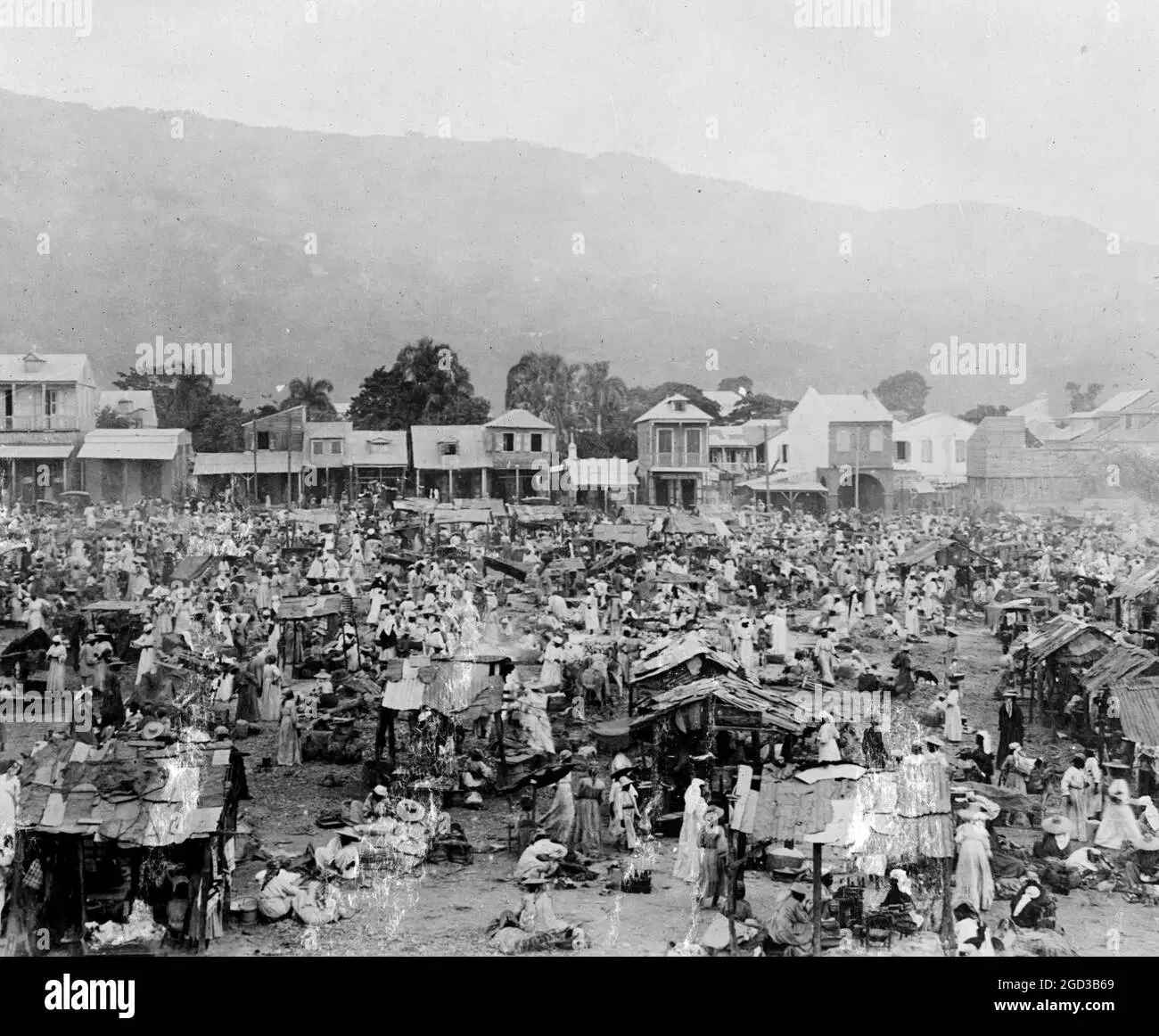
Why did the U.S. government occupy Haiti for 19 years?
So that American banks could continue to profit from the payments Haiti had been forced to make to France.

Which of the following is true about race in the U.S. in the 1920s?
Some steps were made toward racial equality in the 1920s, but these were met with backlash in the opposite direction.

