wayground logo

Free Printable Worksheets

Font size

S
M
L
XL
Worksheets

1st NWA Review

Total questions: 100

Worksheet time: 3hrs 24mins
Name
Class
Date
1.
Which of the following will have a higher electronegativity than arsenic (As)?
a)
Carbon (C)
b)
Neon (Ne)
c)
Antimony (Sb)
d)
Germanium (Ge)
2.
Which of the following will have a larger radius than Zinc?
a)
Gallium
b)
Aluminum
c)
Magnesium
d)
Strontium
3.
Which of the following will have a lower ionization energy than Scandium (Sc)?
a)
Helium (He)
b)
Titanium (Ti)
c)
Calcium (Ca)
d)
Magnesium (Mg)
4.
As you move down the periodic table atoms get bigger.  This is because ____________.
a)
The atoms have more mass.
b)
The atoms have more protons.
c)
The atoms have more energy levels
d)
The atoms have more nuetrons
5.
Electronegativity is...
a)
how good an atom is at attracting electrons
b)
the ability of an atom to lose electrons
c)
the energy required to remove an electron from a specific atom
d)
how easy it is to make friends. 
6.
Ionization energy is...
a)
the energy required to add an electron to a specific atom
b)
how much energy it takes to remove an electron from an atom
c)
the energy required to shield the outer electrons from the nucleus
d)
a measure of the ability of an atom to attract electrons
7.

The vertical (up and down) columns in the Periodic Table are called

a)

groups

b)

towers

c)

periods

d)

atomic numbers

8.
The Modern Periodic Table of Elements is arranged by
a)
atomic mass
b)
atomic number
c)
valence electrons
d)
number of isotopes
9.

What does the mass number tell you?

a)

The number of electrons and protons

b)

The number of neutrons

c)

The number of protons and neutrons

d)

The number of protons.

10.

The horizontal (side to side) rows in the Periodic Table are called

a)

groups

b)

families

c)

periods

d)

atomic numbers

11.
What's the difference between electronegativity and electron affinity?
a)
Electronegativity is a measured energy value and electron affinity is a man-made number.
b)
Electron affinity is a measured energy value and electronegativity is a man-made number.
12.
Valence electrons are the...
a)
Innermost electrons
b)
Middle electrons
c)
Outermost electrons
d)
Any electrons
13.

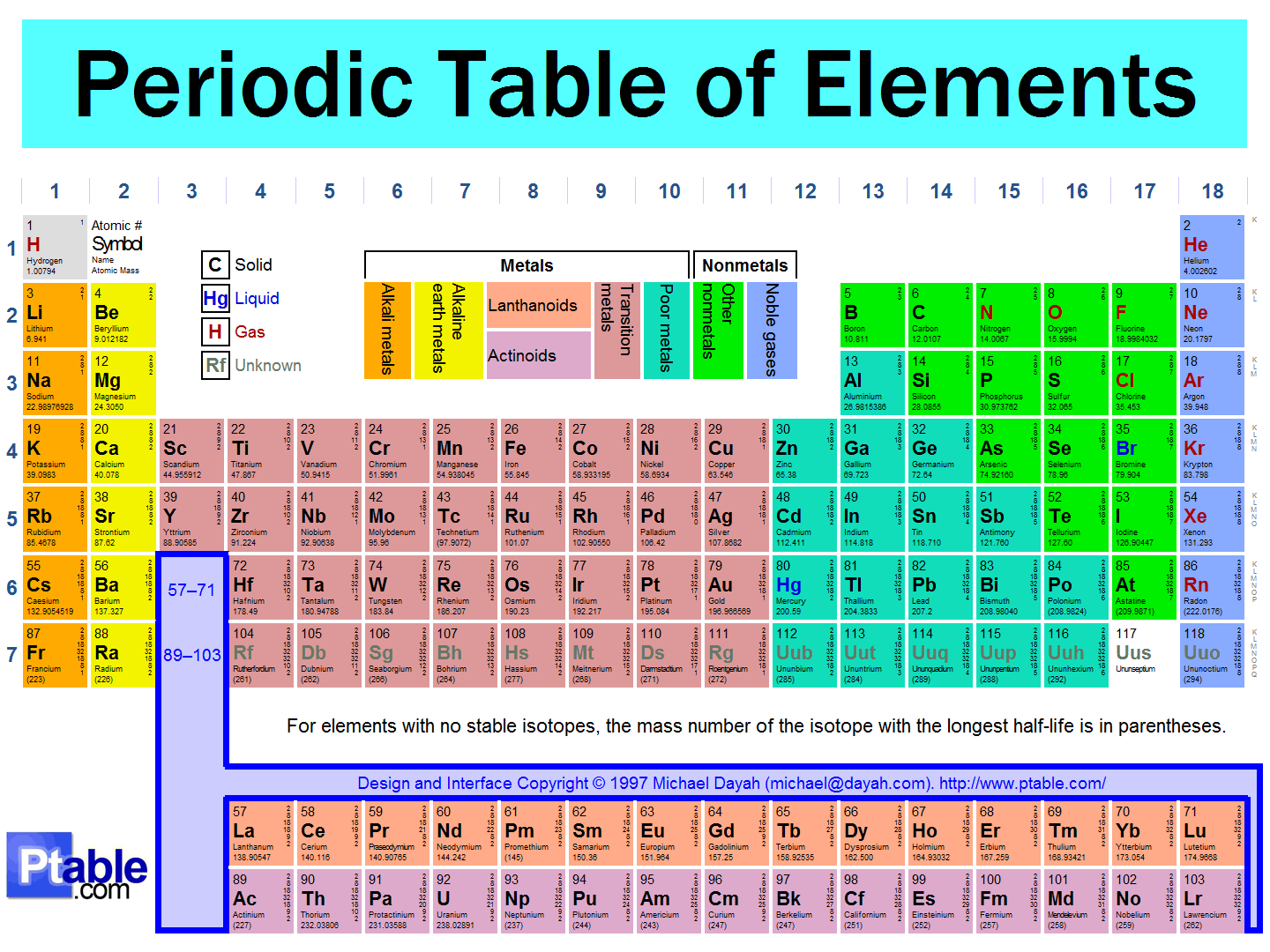
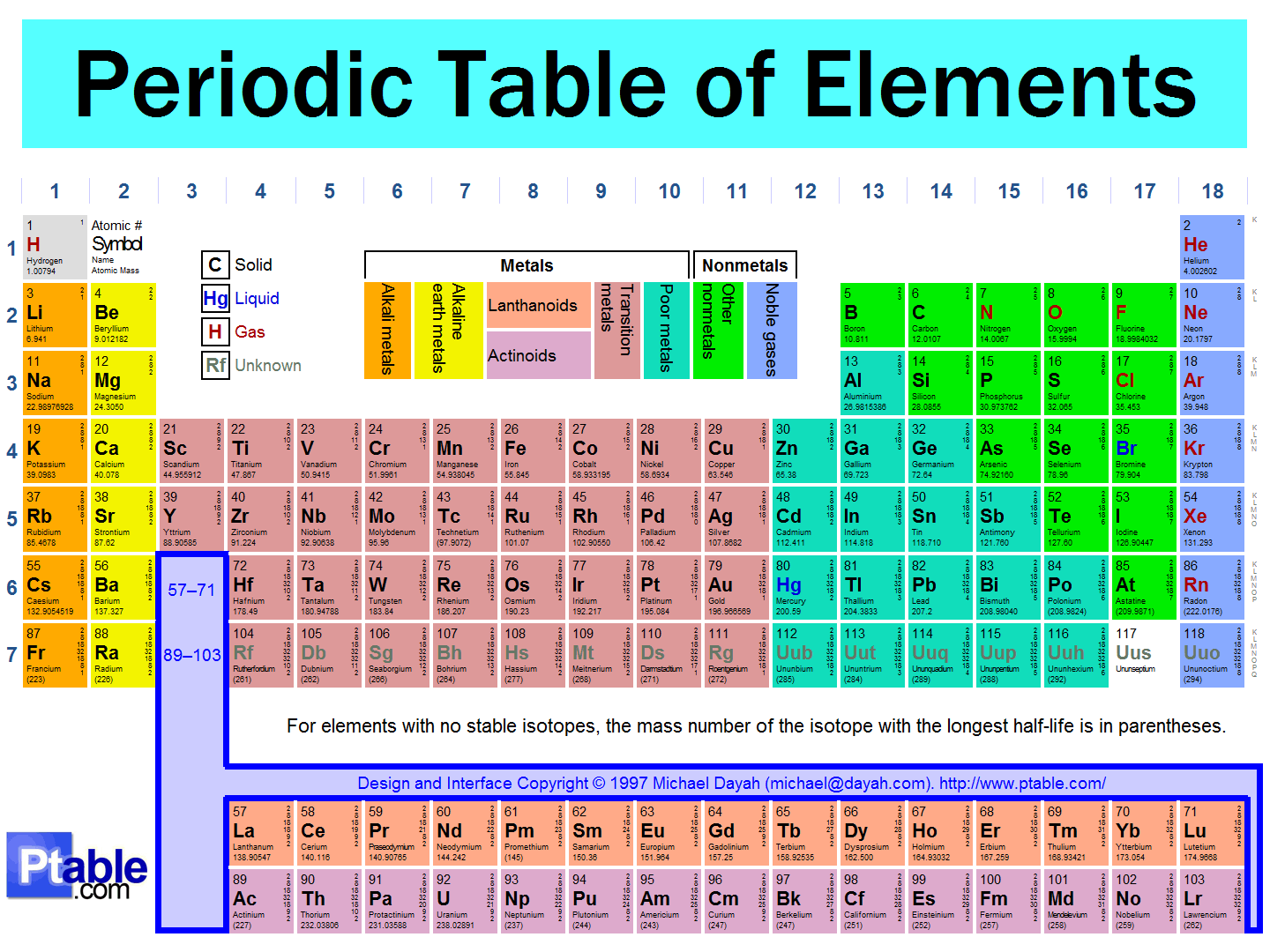
USE THE PERIODIC TABLE

How many valence electrons does carbon have?

a)

4

b)

12

c)

6

d)

14

14.

USE THE PERIODIC TABLE

How many valence electrons does sodium have?

a)

1

b)

2

c)

3

d)

4

15.

USE THE PERIODIC TABLE

How many valence electrons does Phosphorus have?

a)

31

b)

5

c)

15

d)

4

16.
Elements in the same column of the periodic table always have the same # of _______ as one another.
a)
Protons
b)
Neutrons
c)
Electrons
d)
Valence Electrons
17.
Which of these is a property of metals?
a)
It's malleable
b)
It can't conduct electricity
c)
They are used in food
d)
It's very brittle
18.
Which of these grouping of elements could have the characteristic of brittle?
a)
Metal
b)
Nonmetal
19.
If a material can easily be drawn into the shape of a wire, it is
a)
Ductile
b)
Magnetic
c)
Malleable
d)
Reactive
20.
Which elements are found on the left to middle of The Periodic Table? 
a)
Metals
b)
Nonmetals
c)
Metalloids
d)
Candles
21.
Silicon is a semiconductor and has properties of both metals and nonmetals. What type of element is Silicon? 
a)
Metal
b)
Nonmetal
c)
Metalloid
d)
Pretty
22.
Which elements are found on the right side of The Periodic Table?
a)
Metals
b)
Nonmetals
c)
Metalloids
d)
Water
23.
Iron is a good conductor, malleable and magnetic. What type of element is Iron? 
a)
Metal
b)
Nonmetal
c)
Metalloid
d)
Pretty
24.
Silicon is a semiconductor and has properties of both metals and nonmetals. What type of element is Silicon? 
a)
Metal
b)
Nonmetal
c)
Metalloid
d)
Pretty
25.

Elements in the same group have the same

a)

Properties

b)

Number of electrons

c)

Number of protons

d)

Nucleus

26.

Subatomic particles with a negative charge

a)

Electrons

b)

Neutrons

c)

Protons

d)

Quarks

27.
subatomic particles found on the outermost shell & responsible for the atom's reactivity
a)
neutrons
b)
valence electrons
c)
isotopes
d)
ions
28.
Subatomic particles with a positive charge
a)
neutrons
b)
atomic mass
c)
protons
d)
isotopes
29.
Subatomic particles that are neutral in charge
a)
Neutrons
b)
Protons
c)
Nucleus 
d)
Electrons
30.
A tiny but very dense, positively charged portion of the atom that holds most of the atomic mass
a)
Electron Shells
b)
Orbitals
c)
Electron Cloud
d)
Nucleus
31.

Whose model suggested that negative particles were mixed in with positively charged material - like seeds in a watermelon?

a)

J.J. Thomson

b)

Ernest Rutherford

c)

Niels Bohr

d)

Albert Einstein

32.

Who discovered that the atom had an small, dense, positively charged center?

a)

Ernest Rutherford

b)

J.J Thomson

c)

Robert Millikan

d)

John Dalton

33.
What can you conclude from the fact that scientists continue to update the atomic model?
a)
New information about atoms continues to be discovered
b)
Old information about atoms is completely useless
c)
Scientists did not have any information about atoms until a few years ago
d)
Scientists still have no idea what atoms look like
34.

Which scientists believed an atom was indivisible? (Choose all correct responses.)

a)

Democritus

b)

Dalton

c)

Thomson

d)

Rutherford

35.

Who proposed that electrons move around the nucleus in circular orbits?

a)

Dalton

b)

Thomson

c)

Rutherford

d)

Bohr

36.

What is the correct order of scientists in order of their work related to the atomic theory from earliest to most recent?

a)

Neils Bohr, Ernest Rutherford, JJ Thomson, John Dalton, & Democritus

b)

JJ Thomson, John Dalton, Neils Bohr, Ernest Rutherford, & Democritus

c)

Democritus, John Dalton, JJ Thomson, Ernest Rutherford, and Neils Bohr

d)

John Dalton, Neils Bohr, JJ Thomson, Democritus, & Ernest Rutherford

37.

What were John Dalton three contributions to atomic history?

a)

Created the atomic theory

b)

Discovered that the atom is mostly empty space

c)

Believed that atoms of a given element are identical

d)

Hypothesized that the atom is a tiny, hard sphere

e)

Believed that the universe was made of tiny "uncuttable" particles

38.

What were J. J. Thomson's three contributions to the atomic theory?

a)

Discovered the electron

b)

Discovered the nucleus -did the gold foil experiment

c)

Used the cathode ray tube in his discovery

d)

Created a model of the atom with electrons moving around the nucleus in fixed orbits

e)

Created the "plum pudding" model of the atom

39.

What are two facts about Democritus's?

a)

Greek philosopher

b)

Created the atomic theory

c)

Used the cathode ray tube in his discovery

d)

Believed that the universe was made of tiny "uncuttable" particles

e)

Discovered that the atom is mostly empty space

40.

What is Neils Bohr's contribution to the atomic theory?

a)

Created the atomic theory

b)

Created a model of the atom with electrons moving around the nucleus in a fixed orbits

c)

Discovered that the proton had a positive charge

d)

Believed that atoms of a given element are identical

e)

Discovered the electron

41.

What were Ernest Rutherford's three contributions to atomic theory?

a)

Discovered that the atom is mostly empty space

b)

Discovered the nucleus- did the gold foil experiment

c)

Used the cathode ray tube in his discovery

d)

Discovered the electron

e)

Discovered that the proton had a positive charge

42.

What model did Schrodinger create?

a)

The Electron Cloud Model

b)

The Billiard Ball Model

c)

The Rift Model

d)

The Gold Leaf Model

43.

Who is this?

a)

Neinsen

b)

Schrodinger

c)

Chadwick

d)

JJ Thomson

44.
What was James Chadwicks most notable discovery?
a)
The nucleus contains protons. 
b)
The nucleus contains neutrons.
c)
Electron are not fixed.
d)
Protons are positive.
45.
Rutherford's gold foil experiment provided evidence that...
a)
negative and positive charges are spread evenly throughout the atom.
b)
alpha particles have a positive charge.
c)
gold is not a dense as previously thought.
d)
there is a dense positively charged nucleus at the center of an atom.
46.
Most of the alpha particles went straight through the gold foil.  This suggested that....
a)
There is no interference between alpha and gold.
b)
Most of the atom is made up of empty space.
c)
The alpha particles were very tiny.
d)
None of the above
47.
Some of the alpha particles fired at the gold foil were deflected at angles.  This was due to...
a)
reflection of the alpha source when it it the fluorescent screen.
b)
The alpha particles hitting the gold nucleus.
c)
Repulsion forces between the positively charged nucleus and the positively charged alpha particles. 
d)
A mis-firing of the alpha source
48.
"Everything is composed of atoms" was stated by:
a)
Democritis
b)
Dalton
c)
Moseley
d)
Einstein
49.
John Dalton stated:
a)
elements are made of atoms
b)
atoms of a given element are identical
c)
atoms cannot be subdivided, created, nor destroyed
d)
all of the above
50.

The maximum number of electrons that saturates the principal energy level (n) is given from the rule

a)

2n

b)

n2

c)

2n2

d)

(2n)2

51.

Dimitri Mendeleev’s periodic table organized the elements based on their ________.

a)

Atomic Mass

b)

Density

c)

State of Matter

d)

Quarks

52.
All matter is made of...
a)
energy 
b)
atoms 
c)
electrons 
d)
compounds 
53.
The relative mass of an electron is...
a)
1
b)
2
c)
0
d)
3
54.
The relative mass of a proton/neutron is.....
a)
0
b)
1
c)
2
d)
3
55.
A neutral atom of Carbon-13 has ________ electrons and _________ neutrons
a)
13, 13
b)
6, 7
c)
7, 7
d)
6, 6
56.
Isotopes are atoms of the same element that have the same number of __________ but different number of __________ . Therefore, isotopes of the same element have different masses. 
a)
protons, neutrons
b)
protons, electrons
c)
neutrons, protons
d)
electrons, protons
57.
What is the atomic number?
a)
the number of protons
b)
the number of protons and neutrons
c)
the number of neutrons
d)
the number of protons and electrons
58.
What is the mass number defined as?
a)
the number of protons
b)
the number of protons and neutrons
c)
the number of neutrons
d)
the number of protons and electrons
59.
Nitrogen has three occurring isotopes: Nitrogen-13, Nitrogen-14, Nitrogen-15. Which isotope is the most abundant?
a)
Nitrogen-13
b)
Nitrogen-14
c)
Nitrogen-15
d)
Based on the information given, it cannot be determined
60.
What does the 1.00794 stand for?
a)
Hydrogen
b)
atomic number
c)
atomic mass
d)
atomic explosion
61.

The atomic mass of an element is the ___.

a)

average of the mass number and the atomic number for the element

b)

weighted average of the masses of the isotopes of the element

c)

total mass of the isotopes of the element

d)

total number of subatomic particles in the nucleus

62.
What is the location of the electron?
a)
the free floating negatively charged electron cloud
b)
the free floating positively charged electron cloud
c)
the very dense positively charged electron orbital
d)
the positively charged very dense nucleus
63.

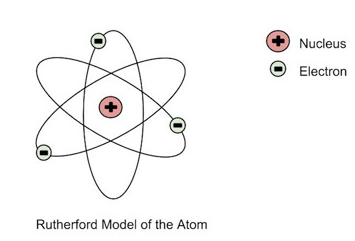
What does the Bohr Model represent?

a)

The structure of molecules

b)

The structure of the Solar System

c)

The structure of an atom

d)

The structure of East Hills

64.

Name this element.

a)

Argon

b)

Chlorine

c)

Aluminum

d)

Boron

65.
What is the name of this element?
a)
Lithium
b)
Boron
c)
Carbon
d)
Neon
66.

How many electrons does the first shell hold?

a)

1

b)

2

c)

4

d)

8

67.

How many electrons can be in the 2nd energy level hold?

a)

1

b)

2

c)

4

d)

8

68.

What are the elements in group 1 (the far left) of the periodic table called?

a)

Alkali metals

b)

Alkaline earth metals

c)

Halogens

d)

Noble gases

69.

What are the elements in group 2 of the periodic table called?

a)

Alkali metals

b)

Alkaline earth metals

c)

Halogens

d)

Noble gases

70.

What are the elements in group 18 (the far right) of the periodic table called?

a)

Alkali metals

b)

Alkaline earth metals

c)

Halogens

d)

Noble gases

71.

What are the elements in group 17 of the periodic table called?

a)

Alkali metals

b)

Alkaline earth metals

c)

Halogens

d)

Noble gases

72.

What are the elements in groups 3-12 of the periodic table called?

a)

Transition metals

b)

Non-metals

c)

Metalloids

d)

Metals

73.

What are the elements found along the "staircase" called? They have properties of both metals and non-metals.

a)

Metalloids

b)

Non-metals

c)

Transition metals

d)

Metals

74.

Hydrogen is a:

a)

Alkali metal

b)

Metalloid

c)

Non-metal

d)

Noble gas

75.

How many valence electrons does Helium have?

a)

8

b)

2

c)

4

d)

6

76.
What atom matches this electron configuration?
1s2s2p3s2
a)
Neon
b)
Magnesium
c)
Aluminum
d)
Potassium
77.
Which is the electron configuration for an oxygen atom?
a)
1s22s22p63s23p64s2
b)
1s22s22p4
c)
1s22s22p6
d)
1s22s22p63s23p6
78.
How many d orbitals are there in a given sublevel?
a)
1
b)
3
c)
5
d)
7
79.
How many p orbitals are there in a sublevel?
a)
2
b)
1
c)
4
d)
3
80.
How many electrons can the d sublevel hold?
a)
8
b)
10
c)
2
d)
4
81.
What is this element? 
1s22s22p63s23p6
4s23d104p6
a)
Argon
b)
Krypton
c)
Selenium
d)
Bromide
82.
What atom matches this electron configuration?
[Xe] 6s2 4f14 5d9
a)
Mercury
b)
Gold
c)
Platinum
d)
Thallium
83.
How many electrons can the first energy level hold?
a)
1
b)
2
c)
8
d)
0
84.
How many valence electrons does Chlorine have?
a)
5
b)
2
c)
7
d)
5
85.
Which element is pictured?
a)
neon
b)
fluorine
c)
magnesium
d)
argon
86.
Electron arrangement that uses arrows
a)
Electron configuration
b)
Shorthand configuration
c)
Lewis dot structure
d)
Orbital diagram
87.
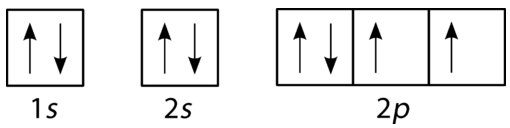
This orbital diagram represents:  
a)
C
b)
B
c)
N
d)
O
88.
What is incorrect about this orbital diagram?
a)
Both arrows in the 2p box should be pointing up
b)
There is nothing incorrect with this diagram
c)
In the there should only be 1 orbital in the first 2p box and one in the 2nd 2p box
d)
All the arrows should be pointing up.
89.
Which element is pictured?
a)
neon
b)
fluorine
c)
magnesium
d)
argon
90.

An atom that has gained energy beyond normal is said to be ...

a)

excited

b)

energized

c)

naturalized

d)

grounded

91.
The impossibility to know simultaneously the exact position and momentum of a particle is called the:
a)
Einstein Uncertainty Principle
b)
Moseley Uncertainty Principle
c)
Heisenburg Uncertainty Principle
d)
Bohr Uncertainty Principle
92.
When an atom has all of its electrons in the lowest energy orbitals available, the atom is  
a)
in ground state
b)
in excited state
c)
giving off light energy
d)
unstable
93.
The energy of an electron __________ as it moves further away from the nucleus
a)
increases
b)
decreases
94.
All orbitals of equal energy are occupied by one electron before any single orbital is occupied by a second electron.
a)
Aufbau principle
b)
Pauli exclusion principle
c)
Hund’s rule
d)
Core Notation
95.
An electron occupies the lowest energy orbital that can receive it.
a)
Hund’s rule
b)
Pauli exclusion principle
c)
Bohr model of the atom
d)
Aufbau principle
96.
No two electrons in the same atom can have the same four quantum numbers.
a)
Aufbau principle
b)
Pauli exclusion principle
c)
Hund’s rule
d)
Noble gas notation
97.

This could be the dot diagram of

a)

Mg

b)

Cl

c)

C

d)

O

98.

This is a correct dot diagram for carbon (C)

a)

true

b)

false

99.

Which of these is incorrect?

a)
b)
100.

Which of the following shows a correct Lewis dot structure?

a)
b)
c)
d)