wayground logo

Free Printable Worksheets

Font size

S
M
L
XL
Worksheets

Physical & Chemical Changes Test Review

Total questions: 90

Worksheet time: 1hrs 21mins

Name
Class
Date
1.
A copper penny turning greenish after a few years is an example of ...
a)
Chemical Change
b)
Physical Change
2.
A change in which NEW substances are formed.
a)
Chemical change
b)
Physical change
c)
Casual change
d)
Formal change
3.
Which of the following is NOT an example of chemical change?
a)
sour milk
b)
burning wood
c)
breaking a pencil
d)
rust
4.
Which of the following is NOT an example of a physical change?
a)
crumpled paper
b)
pencil sharpening
c)
shrunken clothing
d)
sour milk
5.
Is melting butter for popcorn a chemical or physical change?
a)
chemical
b)
physical
6.
Ripping up paper ...
a)
Chemical Change
b)
Physical Change
7.
A change in phase ...
a)
Chemical Change
b)
Physical Change
8.
Bubbles form when two or more substances are combined ...
a)
Chemical Change
b)
Physical Change
9.
An explosion occurs ...
a)
Chemical Change
b)
Physical Change
10.
Change in size ...
a)
Chemical Change
b)
Physical Change
11.
Evidence of Chemical Change.
a)
New Substance 
b)
Size change
c)
State change
d)
Mixture 
12.
Evidence of a physical change.
a)
New substance
b)
Shape Change
c)
Light produced
d)
Gas released.
13.
Your friend decides to toast a piece of bread, but leaves it in the toaster too long. The bread is black and the kitchen if full of smoke. 
a)
Physical Change
b)
Chemical Change
14.
In baking biscuits and other quick breads, the baking powder reacts to release carbon dioxide bubbles. The carbon dioxide bubbles cause the dough to rise. 
a)
Physical Change
b)
Chemical Change
15.
Chewing food to break it down into smaller particles represents a _________ change, but the changing of starch into sugars by enzymes in the digestive system represents a ___________change. 
a)
Chemical then Physical 
b)
Physical then Chemical
c)
Both Physical
d)
Both Chemical
16.
Anything that has mass and takes up space.
a)
mass
b)
volume
c)
matter
d)
melting point
17.
The temperature in which a substance changes from a solid to a liquid by the addition of heat.
a)
melting point
b)
boiling point
c)
freezing point
d)
temperature
18.
A combination of two or more substances that can be easily separated in some physical way.
a)
solution
b)
matter
c)
heat energy
d)
mixture
19.

properties of matter that can be observed, measured, or changed without changing the matter itself.

a)

physical properties

b)

density

c)

magnetism

d)

insulator

20.

When a gas changes to a liquid, it is called ________________.

a)

melting

b)

evaporation

c)

freezing

d)

condensation

21.
How could you turn solid metal into a liquid?
a)
You could freeze it
b)
By condensing it
c)
You could rub it with sandpaper
d)
You could heat it
22.
Which Law states that Matter cannot be created or destroyed during a Chemical Change/Reaction?
a)
Conservation of Energy
b)
Conservation of Matter (Mass)
c)
Conservation of Momentum
d)
Conservation of Thermodynamics
23.

Select ALL of the characteristics of a physical change

a)

changes in appearance only

b)

a new substance is not created

c)

burning and fire

d)

chemical bonds are not created or broken

24.

A heterogeneous mixture is

a)

a mixture in which individual substances are not evenly mixed

b)

a mixture in which multiple substances are mixed

c)

a mixture in which the individual substances are evenly mixed

25.

A homogeneous mixture is

a)

a mixture in which individual substances are not evenly mixed

b)

a mixture in which multiple substances are mixed

c)

a mixture in which the individual substances are evenly mixed

26.
Causes a change in odor ...
a)
Chemical Reaction 
b)
Physical Reaction
27.
Physical properties are
a)
properties that can be observed without changing the identity of the substance
b)
properties that describe how a substance changes into a completely different substance
28.
Which is an example of a solvent?
a)
Salt
b)
Egg whites
c)
Water
d)
Sugar
29.

What is a solvent

a)

A liquid that will dissolve a solid solute

b)

Another word for solution

c)

A thing that make drinks change colour

d)

Usually the solid about to be dissolved

30.

The ___ is the thing being dissolved.

a)

solute

b)

solvent

c)

mixture

d)

solution

31.

The substance in which a solute is dissolved is a?

a)

solution

b)

solvent

c)

alloy

d)

mixture

32.
Solutions are composed of __________ .
a)
salts and solutes
b)
solvents and salts
c)
solutes and alloys
d)
solutes and solvents
33.

If I dissolve carbon dioxide in water, what is the solvent?

a)

Carbon Dioxide

b)

There is no solvent

c)

Oxygen

d)

Water

34.

Is water the only solvent that can dissolve solutes?

a)

Yes

b)

No

35.

A homogeneous mixture is the same thing as...

a)

a solution

b)

a heterogeneous mixture

c)

a compound

d)

an element

36.

The prefix hetero means...

a)

same

b)

different

c)

together

d)

awesome

37.
What does it mean to dilute a solution?
a)
lower the concentration of solute per solvent
b)
increase the concentration of solute per solvent
38.
You can make a solution more concentrated by adding __________.
a)
solute
b)
solvent
c)
water
39.

Which of the following describes: Dissolved particles are distributed evenly and you can no longer see them.

a)

conductivity

b)

solution

c)

mixture

40.
You can make a solution more concentrated by adding __________.
a)
solute
b)
solvent
c)
water
41.
Describe a solute.
a)
part of solution present in largest amount
b)
gets dissolved
c)
water
d)
surrounds and breaks apart
42.
mixture of two or more substances; dissolved particles are spread evenly throughout the mixture
a)
solvent
b)
solute
c)
mixture
d)
solution
43.
Can you separate salt from water using filtration?
a)
yes
b)
no
44.

Two or more substances mingled together, but not chemically combined are known as a

a)

compound

b)

solution

c)

element

d)

mixture

45.
Filtration can separate a mixture because,,,
a)
the parts of the mixture have different density so they separate.
b)
some parts of the mixture are small enough to pass through the small holes in the filter paper and some don't.
c)
some of the particles in the mixture are attracted to the filter paper so it stays behind.
d)
some parts of the mixture boil faster than others so they evaporate first.
46.
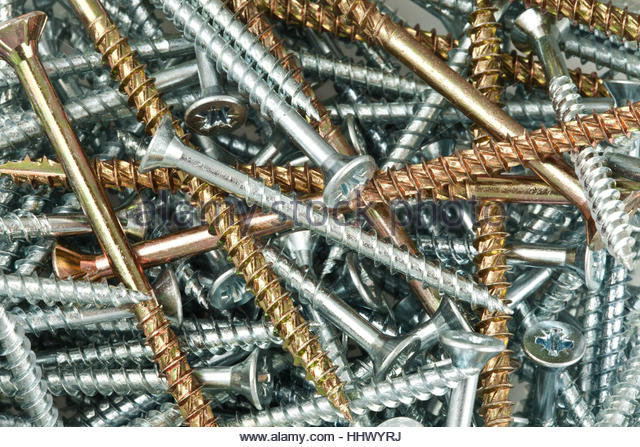
Iron and copper screws could be separated using a magnet because
a)
iron is magnetic, copper is not
b)
copper is magnetic, iron is not
c)
neither metal is magnetic
d)
copper screws are heavier than iron and fall off the magnet
47.
Which of the following mixture cannot be separated by using a magnet?
a)
a mixture of iron filings and table salt
b)
a mixture of steel powder and iron powder
c)
a mixture of aluminium powder and iron powder
d)
a mixture of steel powder and sulfur
48.

How will you separate a mixture of metal and non metal

a)

Evaporation

b)

Filtration

c)

separating funnel

d)

Magnet separation

49.
Which one of the following techniques would best be used to separate soil and water?
a)
Decanting
b)
distillation
c)
Filtration
d)
Chromatography
50.

The separation technique that involves heating a solution until the liquid changes into a gaseous state, leaving behind a solid is known as

a)

sifting

b)

evaporation

c)

floatation

d)

chromatography

51.

Which one of the following methods is used to separate the colors in food dyes?

a)

winnowing

b)

Threshing

c)

Crystallization

d)

chromatography

52.
To separate sand and iron filings you would use a  ___________.
a)
a screen strainer
b)
coffee filter paper
c)
a magnet
d)
your hands
53.
A salad is an example of which?
a)
element
b)
compound
c)
mixture
d)
solution
54.

This is an example of a

a)

Solution

b)

Mixture

55.

Which process would you use to separate solid particles from larger particles in a mixture with filter paper in a funnel to trap solids so that the liquids will pass through.

a)

Chromatography

b)

Magnetic Attraction

c)

Filtration

d)

Floatation

e)

Sifting

56.

Which process would you use to separate solids that float from the remaining solids and other items that remain in a liquid mixture. The solids float to the top on their own or when stirred, and are then skimmed off the surface of the liquid.

a)

Evaporation

b)

Magnetic Attraction

c)

Filtration

d)

Floatation

e)

Sifting

57.

Which process would you use to separate smaller solid particles from larger solid particles. A mixture of different sized solids is put into a container that has a screen material at the bottom with certain sized holes in it. The smaller particles go through the screen and the larger ones do not.

a)

Evaporation

b)

Magnetic Attraction

c)

Filtration

d)

Floatation

e)

Sifting

58.

Which is an example of a solution?

a)

trail mix

b)

cereal with milk and banannas

c)

a bag of candy

d)

tea

59.

This photo BEST describes (Select all that apply)

a)

Mixture

b)

Solution

c)

Homogeneous mixture

d)

Heterogeneous mixture

60.

According to the illustration, what type of substance did I create?

a)

Solution

b)

Mixture

61.

All of the following are chemical properties EXCEPT

a)

boiling point

b)

creating heat

c)

forming bubbles

d)

color change

62.

Bending a paper clip is an example of

a)

Physical change

b)

Chemical change

63.

Nan was studying how to separate mixtures for her upcoming science test. She decided to use a magnet to separate a group of metal items. She noticed that her magnet would not attract certain metal objects. Which object was she trying to attract but could not?

a)

iron nails

b)

Steel paper clips

c)

Aluminum foil

64.
Julia is looking for examples of substances that will dissolve in water. She experiments with some things she finds in her kitchen at home. Which of these will NOT dissolve in water?
a)
salt
b)
sugar
c)
pepper
d)
coffee
65.
Mark and Susan added salt to a flask of water at 9:05 A.M. 
   

What happened in the next 2 minutes?
 
a)
The salt disappeared
b)
the salt dissolved in the water
c)
The temperature of the water increased.
d)
The salt settled to the bottom of the flask
66.
Darla put some sugar in a pitcher of iced tea.
 

Why is Darla stirring the iced tea?
 
a)
Stirring makes the iced tea colder
b)
Stirring makes the sugar dissolve more quickly
c)
Stirring keeps the sugar from forming into larger pieces
d)
D - The sugar will not dissolve unless she stirs the iced tea
67.
Rey is making soup. He will dissolve cubes of instant soup mix in hot water.
How can Rey make the soup cubes dissolve more quickly in the water?
 
a)
use less water
b)
use more water
c)
add ice cubes to cool the water
d)
break the soup cubes into smaller pieces
68.
Sharla is using powdered mix to make hot chocolate. She will boil some water and then stir in the mix.
       

What is the best way to make the powdered mix dissolve more quickly?
 
a)
use cold water
b)
use more water
c)
stir the mix more quickly
d)
stir the mix for a longer time
69.
Ernesto and Amanda fill two cups with water. They use hot water in one cup and cold water in the other cup. Next, they will stir a spoon of salt into each cup.     

In which cup will the salt dissolve more slowly?
 
a)
The salt will not dissolve in either cup
b)
The salt dissolves more slowly in the hot water
c)
The salt dissolves more slowly in the cold water
d)
The salt dissolves at the same speed in both cups
70.
Aliria and Charlie each dropped a sugar cube into a beaker of water. Aliria’s sugar cube dissolved faster.
     
What could be a reason that Aliria’s sugar cube dissolved faster?
 
a)
Charlie used more water than Aliria
b)
Charlie stirred the water and Aliria did not
c)
Aliria used warmer water than Charlie
d)
Aliria used a larger cube of sugar than Charlie
71.
Hana put the same amount of salt into these two beakers of water. She stirred them into the same amount of water.
 
In which beaker does the salt dissolve more quickly?
 
a)
Beaker A because the temperature is lower
b)
Beaker B because the temperature is higher
c)
The salt dissolves at the same speed in both beakers
d)
The salt does not dissolve in either beaker. It sinks to the bottom
72.

When a solute can dissolve in a solvent we say it is

a)

solute

b)

dissolves

c)

soluble

d)

solution

73.

When we want the solute to dissolve more quickly we should … the solution.

a)

stir

b)

saturate

c)

dissolve

d)

solve

74.

Which of the following is not a chemical change?

a)

food coloring dissolving in water

b)

leaves turning color

c)

fruit ripening

d)

silver tarnishing

75.

How could you prove that dissolving table salt in water is a physical change, not a chemical change?

a)

The solution would taste salty so you would know the salt is still present

b)

Boiling the liquid would separate the water and salt.

c)

Freeze the solution to see if it turns blue.

d)

Poor the solution in a cup to see if bubbles form.

76.

The law of ______ of mass states that in any physical or chemical change, matter is neither created nor destroyed.

a)

conservation

b)

elimination

c)

creation

d)

combustion

77.

Which will dissolve faster crushed table salt or crystal of table salt?

a)

crushed table salt

b)

crystal of table salt

78.

What combination would dissolve a solid solute the fastest?

a)

high temperature, no stirring

b)

no heat, no stirring

c)

sugar cube, no heat

d)

high temperature, stirring

79.
A student filled the container shown with different beads to create a mixture. The beads are of various sizes and each one is made of either a light-weight plastic, glass, or iron. Which of the following best supports his claim that he created a mixture?
a)
The beads can be separated based on their properties
b)
The properties of the beads changed when they were mixed
c)
Once the beads were placed in the container they remained solid
d)
The beads were mixed so completely they became a solution
80.
A student made a solution of salt, sugar, and water. When she stirred the mixture and the salt and the sugar seemed to disappear. The clear liquid remained. She measured the masses and included them in the chart, What is the most likely mass of the resulting solution?
a)
5 grams
b)
10 grams
c)
50 grams
d)
65 grams
81.
A student performed the investigation below in which he dropped 2 alka-seltzer tablets into a glass of water. He weighed the tablets into a glass of water. He weighed the tablets and water before the investigation and the solution after the investigation. He found that the solution weighed less after the investigation than the tablets plus the water did before the investigation. What is the best explanation for his results?
a)
The solution weighed less because he did not weigh the gas that escaped
b)
The solution weighed less because some of the matter was destroyed
c)
The solution weighed less because some of the tablets dissolved
d)
The solution weighed less because some of the mass turned into energy
82.
A student was asked to design a model for a mixture. Which of the following diagrams would make the best model of a mixture?
a)
a
b)
b
c)
c
d)
none of the above
83.
A student made a solution by adding powdered drink mix to water. She tasted it and decided the solution was too concentrated. How could she make it less concentrated?
a)
add more drink mix
b)
add more water
c)
boil the solution
d)
freeze thee solution
84.
The diagram shown is a model of 2 different sugar and water solutions. The small circles represent particles of sugar. What is the best claim that can be made from the evidence in the models.
a)
Solution A is more concentrated because it contains more solute
b)
Solution A is more concentrated because it contains more solvent
c)
Solution B is more concentrated because it contains more solute
d)
Solution B is more concentrated because it contains more solvent
85.
A student developed a plan to separate a mixture of water, sand, salt, and gravel. The image shows his plan. What part of the mixture is separated in step 3?
a)
sand
b)
salt
c)
gravel
d)
iron filings
86.
The chart shown has the properties of various substances in a mixture that you can consider when separating the mixture. Which of the following processes would work best to separate the plastic beads in one step?
a)
sifting with a screen
b)
dissolving in water
c)
filtering with filter paper
d)
floatation on water
87.
One property of sugar is that it has a sweet taste. A student mixed sugar with water and made a clear solution. She tasted the solution, and it tasted like sugar. 
Which of the following is the best explanation of her observation?
a)
Dissolving the sugar did not change its taste properties.
b)
Dissolving the sugar created new taste properties.
c)
Dissolving the sugar made a new substance with different properties.
d)
Dissolving the sugar changed the total mass of the mixture. 
88.
Fireworks
a)
Physical Change
b)
Chemical Change
89.
Bleaching or dying your hair
a)
Physical Change
b)
Chemical Change
90.
Frying an egg
a)
Physical Change
b)
Chemical Change