wayground logo

Free Printable Worksheets

Font size

S
M
L
XL
Worksheets

Environmental IA2 review

Total questions: 91

Worksheet time: 3hrs 15mins

Name
Class
Date
1.
Which of these problems can be caused by air pollution?
a)
Respiratory problems
b)
Reduced food sources for humans
c)
Increased disease for humans
d)
Decrease in global temperatures
2.
What causes acid rain?
a)
High concentrations of sulfuric or nitric acid from pollution
b)
Fertilizer use
c)
Pesticide use
d)
CFCs
3.
Acid rain can damage
a)
Drinking water sources
b)
Aquatic life
c)
Architecture/buildings
d)
All options are correct
4.
The ozone layer protects us from
a)
UV rays
b)
CFCs
c)
Increased atmospheric heat
d)
Decreased atmospheric heat
5.
Global warming is due to 
a)
Greenhouse gases
b)
Nitric and sulfuric acids
c)
CFCs
d)
Ozone depletion
6.
The ozone layer is damaged by
a)
CFCs
b)
Increase in greenhouse gases
c)
Increased global temperatures
d)
Sulfuric and nitric acids
7.
Greenhouses gases
a)
Absorb and radiate heat
b)
Destroy the ozone layer
c)
Cause respiratory problems
d)
Create smog
8.
Increase in which gas is primarily responsible for increased global warming?
a)
Carbon dioxide
b)
Water vapor
c)
Methane
d)
Nitric oxides
9.
A colorless, odorless gas
a)
Nitrogen oxides
b)
Ground-level ozone
c)
Carbon monoxide
d)
Sulfur dioxide
10.
Dust, ash and pollen are examples of this air pollutant
a)
Lead
b)
Ground-level ozone
c)
Particulate matter
d)
Nitrogen oxides
11.
Combines with other pollutants to form acid rain
a)
Nitrogen oxides & sulfur dioxide
b)
Particulate matter & lead
c)
Nitrogen oxides & ground-level ozone
d)
Sulfur dioxide & ground-level ozone
12.
Which of the following is an example of a primary pollutant?
a)
Acid rain
b)
Sick building syndrome
c)
Carbon monoxide
d)
Asbestos
13.
Can cause burning of the skin
a)
Lead
b)
Particle matter
c)
Sulfur dioxide
d)
Nitrogen oxides
14.
Pollution hanging over urban areas that causes reduced visibility is called
a)
Air pollution
b)
Temperature inversion
c)
Light pollution
d)
Smog
15.

An inherited trait that helps those organisms that have it to survive

a)

niche

b)

structure

c)

characteristic

d)

adaptation

16.

What is the advantage of having different shaped beaks?

a)

To look different from other species.

b)

To be able to eat the food readily available in the environment.

c)

To protect itself against predators.

d)

To protect itself against prey.

17.

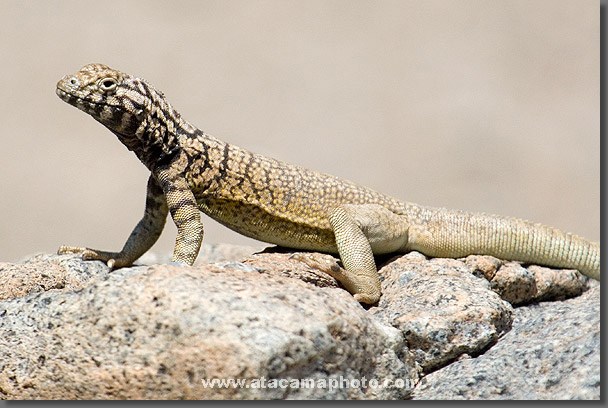
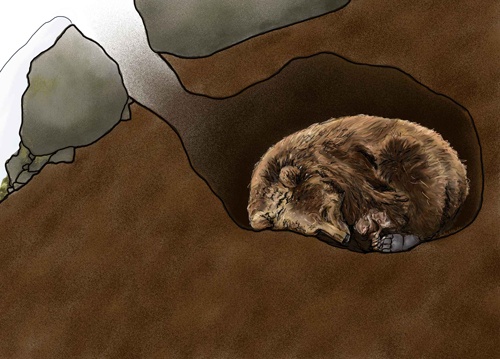
What adaptation is represented by the image?

a)

Dormancy

b)

Camouflage

c)

Hibernation

d)

Seed Dispersal

18.

A group of organisms that share similar characteristics and can reproduce among themselves to produce fertile offspring.

a)

Mutation

b)

Species

c)

Adaptation

d)

Variation

19.

This is the organisms with traits best suited to their environment are more likely to survive and reproduce.

a)

Variation

b)

Mutation

c)

Natural Selection

d)

Gradualism

20.

This is an inherited trait that makes an individual different from other members of its species.

a)

Variation

b)

Mutation

c)

Punctuated Equilibrium

d)

Embryology

21.

This is any variation that makes an organism better suited to its environment.

a)

Evolution

b)

Graduation

c)

Species

d)

Adaptation

22.
Which feature helps an animal hide from other animals?
a)
looking like a dangerous animal
b)
being the same color as the place it lives (camoflauge)
c)
having sharp claws or a strong shel
d)
having only a few young and caring for them
23.

A giraffe has a long neck in order to better reach leaves to eat. This is an example of _____.

a)

an adaptation

b)

environment

c)

response

d)

stimulus

24.

How do adaptations help animals?

a)

To escape animals

b)

to hunt for food

c)

to survive in their habitats

d)

All of these are correct

25.
The role an organism plays in its ecosystem
a)
niche
b)
behavior
c)
structure
d)
function
26.

A natural process in which new organisms are created and the species continues

a)

population

b)

niche

c)

reproduction

d)

behavior

27.
Which answer best describes macroevolution?
a)
Largest-scale evolutionary changes that occur over time
b)
A scientist who classifies organisms into groups and makes a hypothesis on whether they are a different species based on the evidence
c)
Identification of species by differences in their appearances
d)
AP biological trait evolves in two unrelated species as a result of exposure to similar environments
28.
What is Speciation?
a)
A barrier that prevents species from mating because they breed at different times
b)
When two organisms live in the same area but rarely encounter each other
c)
The formation of a new distinct species in the course of evolution
d)
Barriers that prevent species from producing a fertile offspring or producing an offspring at all
29.
What explains Reproductive isolation?
a)
A biological trait evolves in two unrelated species as a result of exposure to similar environments
b)
Barriers that prevent species from producing a fertile offspring or producing an offspring at all.
c)
Barriers that prevent the formation of a fertile offspring
d)
The mating between two species
30.
The efficiency of energy transfer from a lower trophic level to the next highest level is roughly
a)
1%
b)
10%
c)
100%
d)
1000%
31.
Trophic levels are represented by 
a)
squares
b)
circles
c)
pyramids
d)
lines
32.
Trophic levels are represented by 
a)
squares
b)
circles
c)
pyramids
d)
lines
33.
Which animal is the apex predator?
a)
hawk
b)
lizard
c)
snake
d)
grass
34.
Why is a shark a carnivore.
a)
because it eats seaweed
b)
because it eats dead animals
c)
because it eats sand 
d)
because it eats other animals
35.
In the energy pyramid here, how much of the energy in each level gets lost as heat or used by the organism for survival?
a)
80%
b)
90%
c)
10%
d)
20%
36.
The arrows in a food chain or web represents what?
a)
They point to the organism that is being eaten.
b)
It shows how sunlight flows within an ecosystem.
c)
They show what direction the energy is flowing between organisms. 
d)
They represent how water is transferred within a habitat.
37.
An organism that gets energy from breaking down dead organisms, non-living material or waste is a(an) ___________.
a)
producer
b)
consumer
c)
decomposer
d)
autotroph
38.
Organisms that create their own energy from sunlight or chemicals
a)
Herbivore
b)
Omnivore
c)
Autotroph
d)
Heterotroph 
39.
Eat primary consumers (can be carnivores and omnivores)
a)
Tertiary Consumers
b)
Secondary Consumers
c)
Quaternary Consumers 
d)
Top Predators 
40.
An organism that uses an outside source of energy like the sun to create energy-rich food molecules.
a)
Consumer
b)
Producer
c)
Decomposer
d)
Parasite 
41.
Biomass refers to
a)
Chemical Energy
b)
Light Energy
c)
Rank in the feeding heirarchy
d)
Amount of living tissue at the tropic level
42.
The process of plants using energy from the sun to create the first trophic level is called?
a)
Photosynthesis
b)
Chemosynthesis
c)
Cellular Respiratation
d)
Primary Producers
43.
All energy on Earth ultimately comes from what source?
a)
Water
b)
Sun
c)
Consumers
d)
Oxygen
44.
The image provided is an example of a(n):
a)
Producer
b)
Autotroph
c)
Consumer
d)
Insect
45.

If there is 1000 Kcal for the producers, how much energy would be transferred to the Primary Consumers?

a)

10 Kcal

b)

1 Kcal

c)

100 Kcal

d)

1000 Kcal

46.
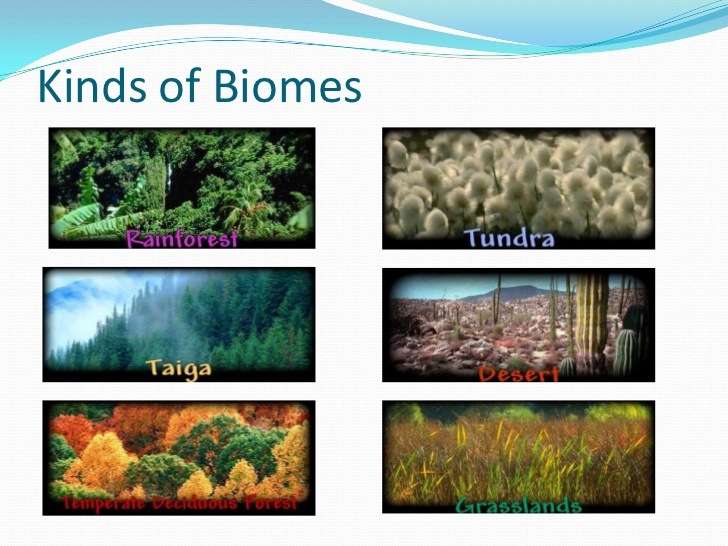
A large ecosystem is called a ______
a)
Ecosystem
b)
Habitat
c)
Biome
d)
Niche
47.
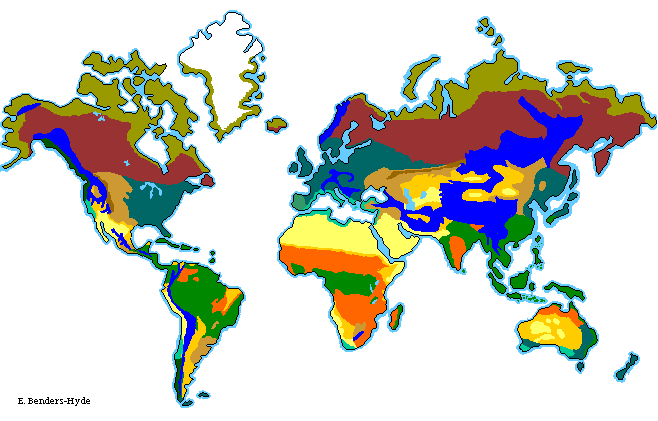
What is the main factor that separates the biomes?
a)
Land
b)
Water
c)
Climate
d)
Longitude
48.
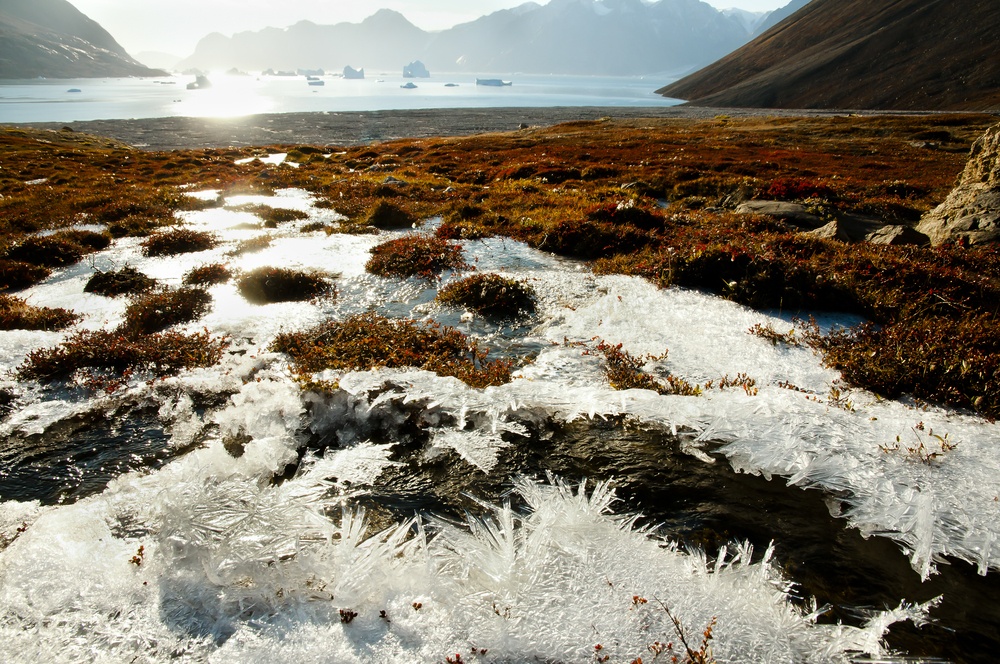
Which Biome has permafrost?
a)
Temperate Forest
b)
Rainforest
c)
Taiga
d)
Tundra
49.
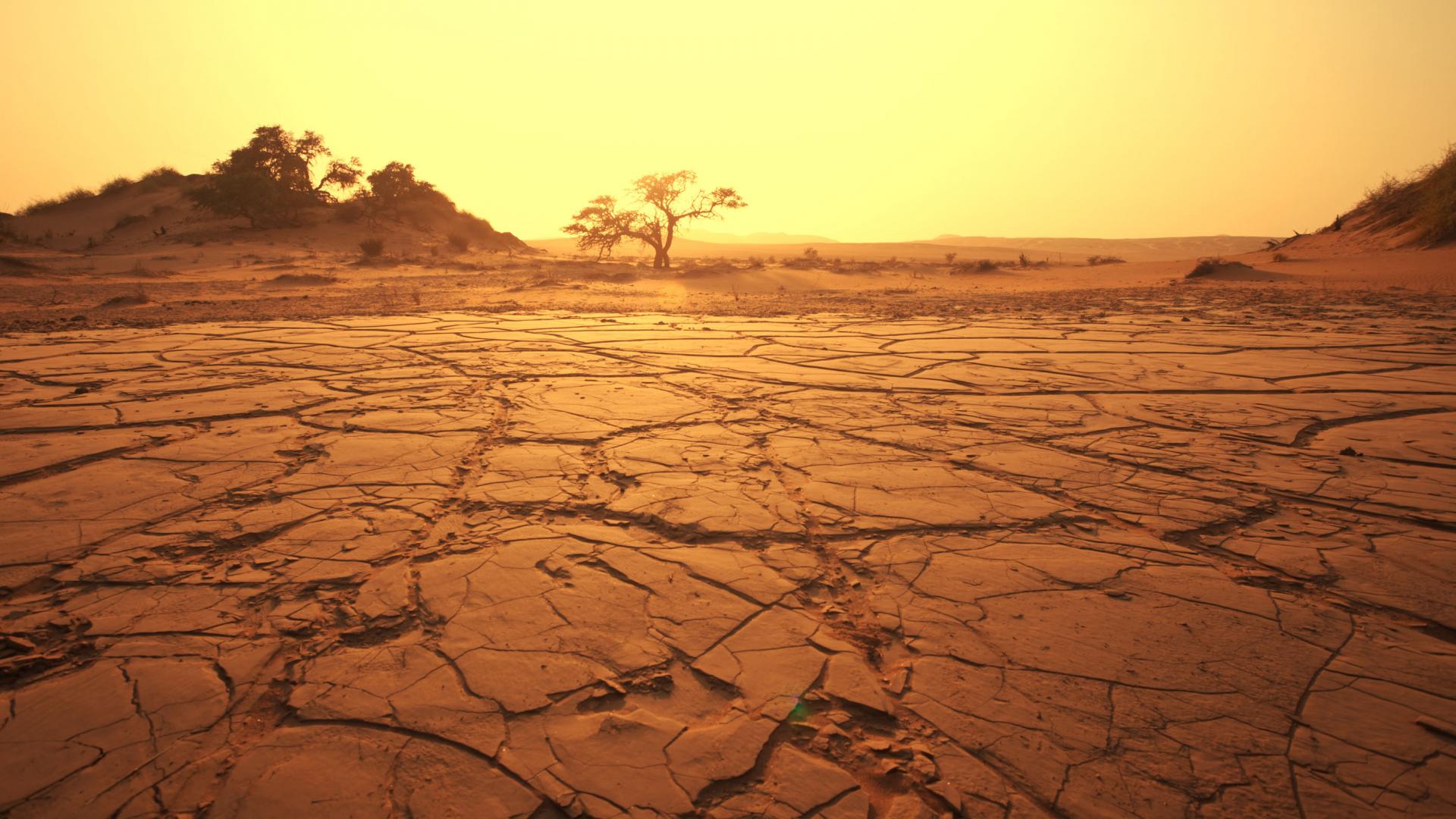
Which biome is the driest?
a)
Desert
b)
Tundra
c)
Taiga
d)
Rainforest
50.
Which biome has deciduous trees (which lose their leaves)?
a)
Temperate Forest
b)
Rainforest
c)
Grasslands
d)
Taiga
51.
Which biome has wide-open fields of grass?
a)
Taiga
b)
Grasslands
c)
Temperate Forest
d)
Rainforest
52.
Which biome has the most variety of plants and animals?
a)
Temperate Forest
b)
Rainforest
c)
Tundra
d)
Grasslands
53.
Which biome has 4 seasons?
a)
Taiga
b)
Tundra
c)
Grasslands
d)
Temperate Forest
54.

Which biome is Ohio in?

a)

Grasslands

b)

Taiga

c)

Rainforest

d)

Temperate Forest

55.
Which biome is home to cacti, scorpions, coyotes, kangaroo rats, and lizards?
a)
Desert
b)
Grasslands
c)
Temperate Forest
d)
Taiga
56.
Which biome could an animal who hibernates in the winter to survive the cold live in?
a)
Grasslands
b)
Taiga
c)
Desert
d)
Rainforest
57.

The largest bodies of standing water are called

a)

Rivers

b)

Ponds

c)

Lakes

d)

Streams

58.

What is the measure of dissolved salt in water?

a)

Saltiness

b)

Salinity

c)

Saline

d)

Salt water

59.

What two bodies of water transport nutrient-rich water to oceans?

a)

Ponds

b)

Rivers

c)

Lakes

d)

Streams

60.

A type of wetland dominated by trees

a)

Swamp

b)

Marsh

c)

Bog

d)

Pond

61.

Which biome is partly covered with water or is flooded at least part of the year?

a)

Rivers and Streams

b)

Ponds and Lakes

c)

Oceans

d)

Wetlands

62.

Located at the edges of estuaries, ____________________ helps protect inland areas from stormy ocean waves.

a)

Wetlands

b)

Salt Marshes

c)

Temperate Ocean

d)

Tropical Ocean

63.
Natural disasters such as flooding and tornadoes are linked to ________________.
a)
primary
b)
secondary
c)
old field
d)
ecosystem
64.
How do lichens contribute to primary succession?
a)
Lichens decompose organic matter from animals and plants
b)
Lichens begin to break down rock to form soil
c)
Lichens are nitrogen fixing bacteria
d)
Lichens convert carbohydrates into fossil fuels.
65.
The process of plants losing water through their leaves is called ____.
a)
condensation
b)
evaporation
c)
transpiration
d)
exhaling
66.
What is the most abundant gas in the atmosphere?
a)
hydrogen
b)
oxygen
c)
helium
d)
nitrogen
67.
Where are nitrogen-fixing bacteria found?
a)
In the soil
b)
Root nodules
c)
In dead things
d)
In the atmosphere
68.
What happens during the process of nitrogen-fixation?
a)
Nitrogen compounds turn into free nitrogen
b)
Free nitrogen turns into nitrogen compounds
69.
Which is NOT a way that nitrogen compounds are added to the soil?
a)
Decay of dead organisms
b)
Denitrification
c)
Animal waste
d)
Nitrogen-fixation
70.
What 3 things are made during cellular respiration?
a)
useable energy, water, glucose
b)
glucose, water, carbon dioxide
c)
oxygen, carbon dioxide, glucose
d)
carbon dioxide, water, useable energy
71.
What is this a picture of?
a)
Nitrogen cycle
b)
carbon cycle
c)
water cycle
d)
plant cycle
72.
Which process takes Carbon Dioxide from the air and converts it into a form of carbon used by living things?
a)
Precipitation
b)
Photosynthesis
c)
Respiration
d)
Bioremdiation
73.
Respiration is the process by which ____________ is consumed and _______________ is produced.
a)
Carbon, Oxygen
b)
Oxygen, Carbon dioxide
c)
H20, oxygen
d)
Carbon, H2O
74.
Which of the following describes the role of nitrogen-fixing bacteria in the nitrogen cycle? Nitrogen-fixing bacteria convert
a)
nitrates intro nitrogen gas
b)
ammonia into proteins
c)
nitrogen gas into ammonia
d)
proteins into nitrates
75.
The nitrogen cycle is a biogeochemical cycle because it moves ?
a)
only between living things (biosphere)
b)
only in the soil (geosphere)
c)
between the 4 different spheres
d)
only in the air (atmosphere)
76.
When nitrogen gas is turned in to a form that plants and animals can use is called 
a)
Combustion
b)
Photosynthesis
c)
Decomposition
d)
Nitrogen Fixation
77.
Carbon dioxide is added to the atmosphere by
a)
Burning fossil fuels 
b)
Cellular respiration
c)
Decomposing organic matter
d)
All answers are correct
78.

Denitrifying bacteria convert

a)

NH4+ to N2

b)

NH4+ to NO3

c)

N2 to NH4+

d)

none of these

79.
What 2 things does a plant make during photosynthesis?
a)
oxygen, glucose
b)
glucose, carbon dioxide
c)
useable energy, glucose
d)
oxygen, carbon dioxide
80.

Which is NOT an example of the Hydrosphere?

a)

lake

b)

glacier

c)

mountain

d)

Lake and Glacier

81.
Bats find shelter in caves
a)
Atmosphere-Biosphere
b)
Biosphere-Geosphere
c)
Geosphere-Hydrosphere
d)
Atmosphere-Hydrosphere
82.
You are best connected to the geosphere:
a)
by water you drink
b)
by minerals you use
c)
by plants you eat
d)
by air you breathe
83.
Mount Everest is:
a)
Atmosphere
b)
Biosphere
c)
Geosphere
d)
Hydrosphere
84.
A monkey is:
a)
Atmosphere
b)
Biosphere
c)
Geosphere
d)
Hydrosphere
85.
Polar Bears hunt seals on ice:
a)
Biosphere-Hydrosphere
b)
Biosphere-Atmosphere
c)
Hydrosphere-Atmosphere
d)
Hydrosphere-Geosphere
86.
A thunderstorm is a connection between:
a)
Biosphere-Atmosphere
b)
Atmosphere-Hydrosphere
c)
Hydrosphere-Geosphere
d)
Hydrosphere-Biosphere
87.
An example of a connection between HYDROsphere and GEOsphere is:
a)
waves eroding rocks on beach
b)
fish swimming in water
c)
water evaporating to make clouds
d)
boats transporting goods
88.
The Four Spheres of Earth
a)
are all connected
b)
have nothing to do with one another
c)
exist on Venus and Mars
d)
don't affect human life
89.
An example of BIOsphere connecting to ATMOsphere
a)
plants produce oxygen
b)
animals eat plants
c)
animals live in caves
d)
animals drink water
90.
This volcano is an example of something you would find in the:
a)
Atmosphere
b)
Biosphere
c)
Hydrosphere
d)
Geosphere
91.
All living things on earth are part of the....
a)
Biosphere
b)
Geosphere
c)
Hydrosphere
d)
Cryosphere