wayground logo

Free Printable Worksheets

NEW

Font size

S
M
L
XL
Worksheets

Q1 Common Assessment Review

Total questions: 42

Worksheet time: 33mins

Name
Class
Date
1.
What did Washington warn against in his Farewell Address ?
a)
The dangers of political parties
b)
Thomas Jefferson becoming president
c)
A national bank
2.
What was Washington's view on foreign policy?
a)
Set up permanent alliances  with other nations
b)
Do not set up permanent alliances with other countries
c)
Do not let foreign ships into harbors without paying taxes
d)
Letting ships freely enter U.S. waters will promote trade
3.
 President Jackson sent soldiers to remove the ____ to the Indian Territory.
a)
Cherokee
b)
Souix
4.
The Indian Removal Act of 1830 forced Indians to move
a)
to Florida
b)
to Oklahoma
5.

What was the trail called that the Native Americans were forced to walk?

a)

trail of tears

b)

the death walk

c)

The march of tears

d)

the trail of fear

6.

Who was the president that ordered the Indian removal act?

a)

Abraham Lincoln

b)

Andrew Jackson

c)

James Madison

d)

George Washington

7.
The Cherokee took the state of ____________ to the Supreme Court.
a)
Alabama
b)
Georgia
c)
Florida
d)
Lousiana
8.
Gold was discovered in the lands that belonged to
a)
Cherokee
b)
Andrew Jackson
c)
Seminole
d)
Alexander Hamilton
9.
Which of these is NOT a branch of government?
a)
Judicial
b)
Legislative
c)
Executive
d)
Senate
10.
The system of dividing powers and duties of government into different branches is called...
a)
Checks and balances
b)
Separation of powers
c)
Third amendment
d)
Constitutional rights
11.
Which branch of government has the power to make laws?
a)
Judicial
b)
Legislative
c)
Senate
d)
Executive
12.
Which branch of government decides if the laws are fair?
a)
Legislative
b)
Executive
c)
Judicial
13.
The constitutional principles were written to...
a)
Give lots of power
b)
Limit the power of government
c)
Make every citizen happy.
14.
Popular sovereignty means...
a)
The power of the government comes from the people (voting)
b)
The government is divided into 3 parts
c)
People have rights
d)
Checks and balances
15.

Which branch was responsible for the action stated in this headline?

a)

Legislative/Congress

b)

Executive/President

c)

Judicial/Courts

16.

Which branch was responsible for the action stated in this headline?

a)

Legislative/Congress

b)

Executive/President

c)

Judicial/Courts

17.

Which of the following is the highest court in our country?

a)

U.S. Supreme Court

b)

U.S. Court of Appeals

c)

U.S. District Court

18.
The Supreme Court settles disagreements between the states and the federal government
a)
True
b)
False
19.
The Supreme Court check Congress by determining whether the laws Congress passes are unconstitutional. 
a)
True
b)
False
20.
The Presidents power to reject a law
a)
Veto
b)
Cede
c)
Impeach
21.
To bring charges of wrong doing against the President
a)
Veto
b)
Cede
c)
Impeach
22.
What was the original purpose of the Constitutional Convention?
a)
to create a bill of rights
b)
to make changes to the Articles of Confederation
c)
 to declare independence from Great Britain
d)
 to create an entirely new governing document for the new nation
23.
How did Roger Sherman's compromise settled the differences between the large and small states ?
a)
giving slaves the right to vote
b)
dividing the Congress into two separate houses
c)
 charging larger states higher taxes than smaller states
d)
allowing the small states to control the courts
24.
to give up on something in order to come to an agreement
a)
compromise
b)
propose
c)
principle
d)
amend
25.
A word which means to change, correct or improve a law.
a)
amend
b)
propose
c)
principle
d)
compromise
26.
How does the system of Checks and Balance protect people?
a)
it keeps any of the branches from over powering the other so as not to destroy the rights of people
b)
it keeps any of the branches from fighting so the people are safe
c)
it keeps one branch in power and destroys the rights of people
d)
it keeps all branches in power so as to destroy the rights of  people
27.
How did cotton relate to slavery?
a)
The desire to grow cotton led to increased slavery
b)
It did not relate to slavery
c)
All slaves were required to grow cotton
d)
Cotton was traded for slaves in Africa
28.
How did the Industrial Revolution affect the cities?
a)
Made the crime rate decrease
b)
Led to an increase in farm workers
c)
Make the cities cleaner and safer
d)
Led to an increase in population in the cities
29.
During the Industrial Revolution, transportation was improved by having more:
a)
airplanes
b)
canals & paved roads
c)
taxi service
d)
time because there was no Netflix
30.
Who invented the cotton gin?
a)
Thomas Jefferson
b)
James Madison
c)
George Washington
d)
Eli Whitney
31.
How did the cotton gin change cotton production in the South?
a)
Cotton was made faster.
b)
Cotton became the most important cash crop in the United States.
c)
It could clean more cotton in minutes than a whole group of workers could clean in a day.
d)
all of the above
32.
Why did river travel improve during the 1800s?
a)
because of the invention of the steam engine
b)
because of the invention of stagecoaches
c)
because of the invention of the reaper
d)
because rivers were getting faster every year
33.
Look at the time line. What would be a good title for it?
a)
How the Cotton Gin Is Made
b)
How the Erie Canal Was Built
c)
Inventions from the Industrial Revolution
d)
Inventors of the Industrial Revolution
34.

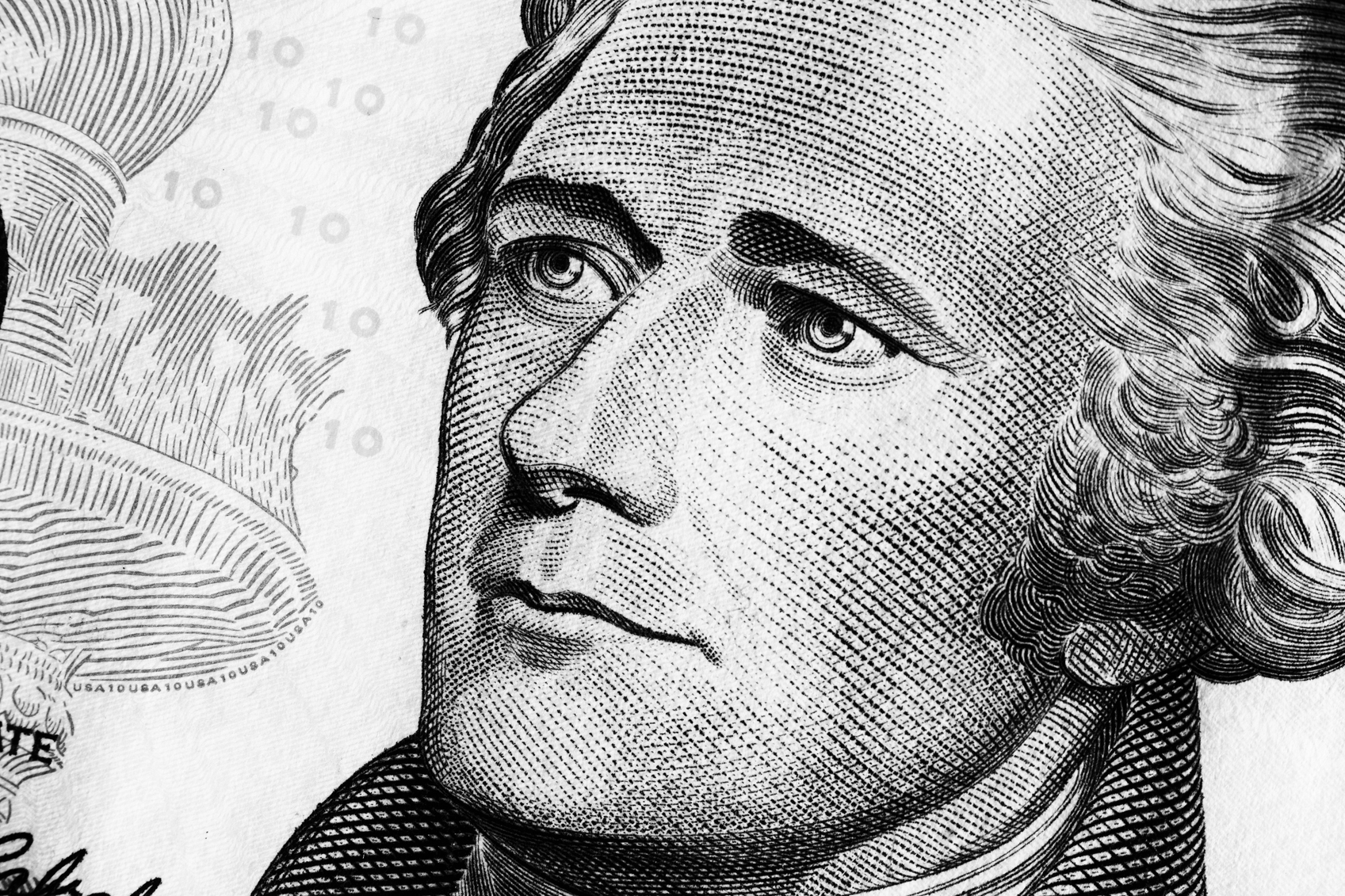
Who is known as the leader of the Federalists?

a)

Alexander Hamilton

b)

John Adams

c)

Patrick Henry

d)

Benjamin Franklin

35.

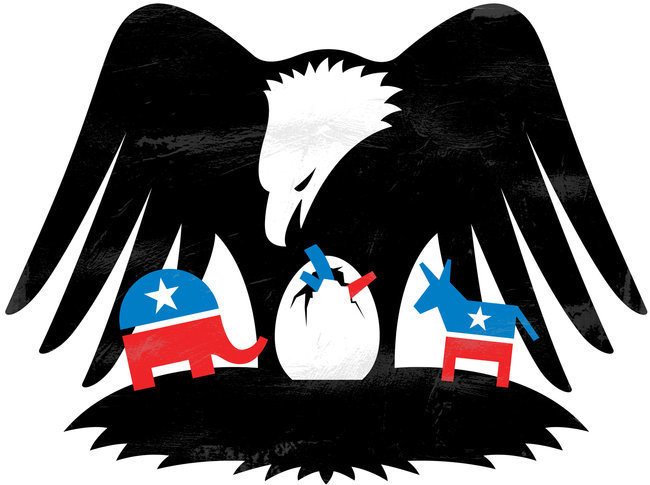
The Federalist and Anti-Federalists groups are known as _______________.

a)

Governing Groups.

b)

Political Parties.

c)

Militia's.

d)

Delegates.

36.

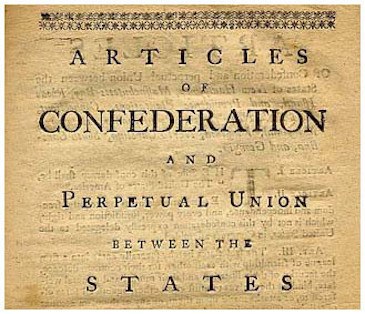
Federalists believed that the Articles of Confederation were a ________ and set up a ________ National Government.

a)

Success, Strong.

b)

Success, Weak.

c)

Failure, Weak.

d)

Failure, Strong.

37.

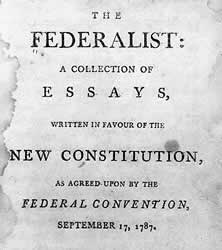
The "Federalist Papers" were written to:

a)

Explain and convince the people into supporting the new U.S Constitution.

b)

spark a new revolution among the American people against their government.

c)

oppose a strong centralized government.

d)

create a new monarchy.

38.

The ___________ are NOT for the ratification (approval) of the U.S Constitution.

a)

Anti-Federalists.

b)

Federalists.

c)

Whiggs.

d)

Supreme Court Justices.

39.

Anti-Federalists were in favor of:

a)

States Rights and the protection of individual rights.

b)

A strong Central Government.

c)

A Monarchy (King & Queen) to rule over the country.

d)

a powerful National Government

40.

How did the Federalists and Anti-Federalists "compromise" to ratify (approve) the U.S Constitution?

a)

The added the Bill of Rights (First 10 Amendments)

b)

They outlawed cruel and unusual punishment.

c)

Ensured due process of the law.

d)

The Federalists threatened the Anti-Federalists to war.
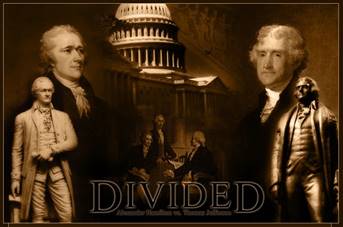
41.

The Anti-Federalists wanted to:

a)

ratify the new constitution and establish a powerful central government.

b)

fix the Articles of Confederation.

c)

Replace the Articles of Confederation.

d)

get rid of strong State governments.

42.

The Delegates (Representatives) who signed the U.S Constitution are known as:

a)

Free Masons.

b)

leaders of the New U.S.

c)

Founding Fathers.

d)

Anti-Federalists.