wayground logo

Free Printable Worksheets

Font size

S
M
L
XL
Worksheets

Cell Structure and Function: Ch. 2 Study Guide

Total questions: 90

Worksheet time: 59mins

Name
Class
Date
1.

The smallest unit of life is ____

a)

a protist

b)

an atom

c)

bacteria

d)

a cell

2.

Prokaryote ___

a)

contain simple cells

b)

are unicellular

c)

alway have a flagellum

d)

are a product of endosymbiosis

3.

An organelle involved in breaking down lipids, proteins, carbohydrates, damage organelles, and bacteria are ___

a)

Golgi Appaparatus

b)

Vesicles

c)

Vacule

d)

Lysosomes

4.

In diffusion

a)

water moves from a high concentration to a low concentration

b)

water moves from a low concentration to a high concentration

c)

molecules move from a high concentration to a low concentration

d)

molecules move from a low concentration to a high concentration

5.

A hypertonic solution is one where

a)

the concentration of a solution outside the cell is higher than the concentration than inside the cell

b)

the concentration of a solution outside the cell is lower than the concentration than inside the cell

c)

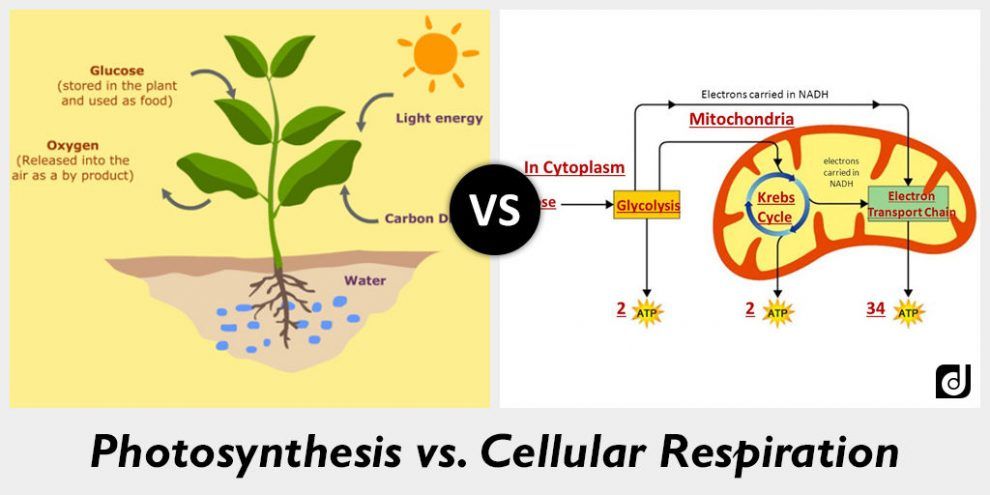
the concentration of a solution outside the cell is equal to the concentration than inside the cell

6.

Timmy places a freshwater amoeba on a wet mount slide with freshwater. Timmy examines the amoeba using a compound microscope using high power. What happens to the amoeba body?

a)

Hypertonic setting: the amoeba shrivels up as water in the amoeba moves across it's semi-permeable membrane into the jar of water.

b)

Hypotonic setting: the amoeba swells up as water in the jar moves across the amoeba's semi-permeable membrane into the amoeba's body.

c)

Isotonic setting: nothing happens as the concentration of the freshwater in the jar is equal to the concentration of freshwater in the amoeba's body

7.

The jelly like material found between the nucleus and the plasma membrane of a cell is called the____________.

a)

smooth endoplasmic reticulum

b)

ribosomes

c)

organelles

d)

cytoplasm

8.

The tiny structures within the cytoplasm that perform jobs just as organs do in the larger body are called_________.

a)

smooth endoplasmic reticulum

b)

ribosomes

c)

organelles

d)

cytoplasm

9.

The __________consists of RNA and protein, and function as factories where proteins are assembled.

a)

smooth endoplasmic reticulum

b)

ribosomes

c)

organelles

d)

cytoplasm

10.

The main site of fatty acid and phospholipid metabolism in the cell is the ____________________.

a)

smooth endoplasmic reticulum

b)

ribosomes

c)

organelles

d)

cytoplasm

11.

The______________functions principally as a protein processing and packaging plant.

a)

golgi complex

b)

mitochondria

c)

cytoskeleton

d)

nuclear membrane (envelope)

12.

The tiny power plants of a cell in which most of the reactions of cellular respiration take place are the_________.

a)

golgi complex

b)

mitochondria

c)

cytoskeleton

d)

nuclear membrane (envelope)

13.

The __________is the internal skeletal framework of the cell.

a)

golgi complex

b)

mitochondria

c)

cytoskeleton

d)

nuclear membrane (envelope)

14.

The nucleus is enclosed in a double membrane called the__________.

a)

golgi complex

b)

mitochondria

c)

cytoskeleton

d)

nuclear membrane (envelope)

15.

A specialized region in the nucleus where RNA components of ribosomes are assembled and some protein components are added as well is the__________.

a)

ribosomes

b)

cytoplasm

c)

nucleuolus

d)

lysosomes

16.

The cell ingests large solid particles such as bacteria and cell debris in a process called________.

a)

diffusion

b)

exocytosis

c)

endocytosis

d)

meiosis

17.

Ribosomes are located along the outer walls of the

a)

rough endoplasmic reticulum

b)

nuclear membrane

c)

smooth endoplasmic reticulum

d)

mitochondria

18.

Cytoplasmic vesicles of digestive enzymes are

a)

mitochondria

b)

lysosomes

c)

endoplasmic reticuli

d)

cilia

19.

The process by which water molecules pass through a selectively permeable membrane from a higher concentration of water molecules to a lesser one is

a)

osmosis

b)

diffusion

c)

facilitated diffusion

d)

active transport

20.

A solution that has a greater solute concentration than that within the cytoplasm is

a)

hypertonic

b)

isotonic

c)

hypotonic

d)

depolarized

21.

Cellular Resp. uses oxygen to process __________.

a)

Oxygen

b)

Carbon Dioxide

c)

Water

d)

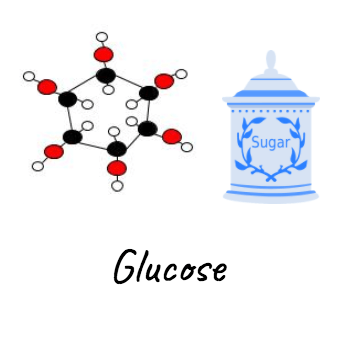
Glucose

22.

Look at the picture above is it endocytosis or exocytosis

a)

Endocytosis

b)

Exocytosis

c)

Inside

d)

Outside

23.

What Process do cells use to take in Large Particles?

a)

endocytosis

b)

exocytosis

c)

diffusion

d)

osmosis

24.
Osmosis is the diffusion of what substance through a cell membrane?
a)
Water
b)
Food Particles
c)
Oxygen
d)
Carbon Dioxide
25.
When particles move through a membrane from a region of low concentration to a region of high concentration, the process is called
a)
respiration
b)
fermentation
c)
active transport
d)
passive transport
26.
a)
Passive Transport
b)
Osmosis 
c)
Active Transport
d)
Diffusion
27.
Equal percentage of solutes inside and out. 
Concentration of substances is the same. 
a)
hypotonic
b)
isotonic
c)
nucleus
d)
hypertonic
28.
A cell in an isotonic solution will
a)
swell
b)
shrink
c)
stay the same size
d)
impossible to tell
29.
A cell in a hypotonic solution will
a)
swell
b)
shrink 
c)
stay the same size
d)
impossible to tell
30.
Permeable means
a)
things can pass through
b)
the concentration levels are different
c)
permanent
d)
things are stuck
31.
When a cell is placed in a hypertonic solution water
a)
moves from the inside of the cell to the solution
b)
moves from the solution to the inside of the cell
c)
moves equally in and out of the cell
d)
none of these
32.

Cells of organisms must replicate for?

a)

Growth

b)

Replacement of dying cells

c)

Repair of damaged cells

d)

All of the above

33.
What makes the endoplasmic reticulum rough?
a)
Vessicles
b)
Vacuoles
c)
Ribosomes
d)
Chromosomes
34.
The two kinds of cells are Prokaryotes and Eukaryotes. How are they different?
a)
Prokaryotes have a nucleus.
b)
Eukaryotes have a nucleus.
c)
Prokaryotes are plant cells.
d)
There is no difference.
35.
What is the name of the genetic material that is inside the nucleus?
a)
ER
b)
ATP
c)
YOLO
d)
DNA
36.
The picture above shows two types of cells labeled X & Y.  Using the picture, it can be determined that X is ---
a)
eukaryotic, and Y is eukaryotic.
b)
eukaryotic, and Y is prokaryotic.
c)
prokaryotic, and Y is prokaryotic.
d)
prokaryotic, and Y is eukaryotic.
37.
This structure supports and protects plant cells.
a)
Nucleus
b)
Cell Wall
c)
Cell membrane
d)
Cytoplasm
38.
This structure controls what can enter and leave a cell.
a)
Nucleus
b)
Cytoplasm
c)
Cell Membrane
d)
Golgi Body
39.
In plant cells, this structure captures energy from the sun to produce food.
a)
Ribosomes
b)
Cell Wall
c)
Vacuoles
d)
Chloroplasts
40.
This structure is a storage area for the cell.
a)
Lysosome
b)
Vacuole
c)
Ribosome
d)
Golgi Body
41.
This structure produces protein in the cell.
a)
Ribosomes
b)
Cytoplasm
c)
Nucleus
d)
Lysosomes
42.
This is a liquid region in which cell structures are found.
a)
Nucleus
b)
Cell Membrane
c)
Vacuoles
d)
Cytoplasm
43.
Cell membrane
a)
Eukaryote
b)
Prokaryote
c)
Both
44.
Prokaryotic cells
a)
more advanced cells, are specialized, have 4 main parts-cell membrane, cytoplasm, nucleus, and organelles
b)
very simple cells, does not contain a nucleus or membrane bound organelles
c)
centrioles and more mitochondria
45.
Which type of cell?
a)
Prokaryote
b)
Eukaryote
46.
Which type of cell?
a)
Prokaryote
b)
Eukaryote
47.
Plants and animal cells are examples of ___ cells 
a)
prokaryotic cells 
b)
eukaryotic cells 
48.
No membrane-bound organelles
a)
Prokaryote
b)
Eukaryote
49.
This picture represents what type of cell transport?
a)
endocytosis
b)
exocytosis
c)
osmosis
d)
passive transport
50.
Which is true about active transport?
a)
It requires energy
b)
it does not require energy
c)
It moves substances down the concentration gradient
d)
it moves material from high to low concentration
51.
Molecules diffusing with the concentration gradient through a protein channel is...
a)
Facilitated Diffusion
b)
Simple Diffusion
c)
Active Transport
d)
Osmosis
52.
The cell below is in a _________ solution.
a)
Hypotonic
b)
Hypertonic
c)
Isotonic
53.
The cell below is in a _____________ solution.
a)
Hypertonic
b)
Hypotonic
c)
Isotonic
54.
What type of transport is this?
a)
facilitated diffusion
b)
active transport
c)
diffusion
d)
osmosis
55.
When molecules are spread evenly across the cell membrane, ______________________ is reached.
a)
difference
b)
transportation
c)
equilibrium
d)
solution
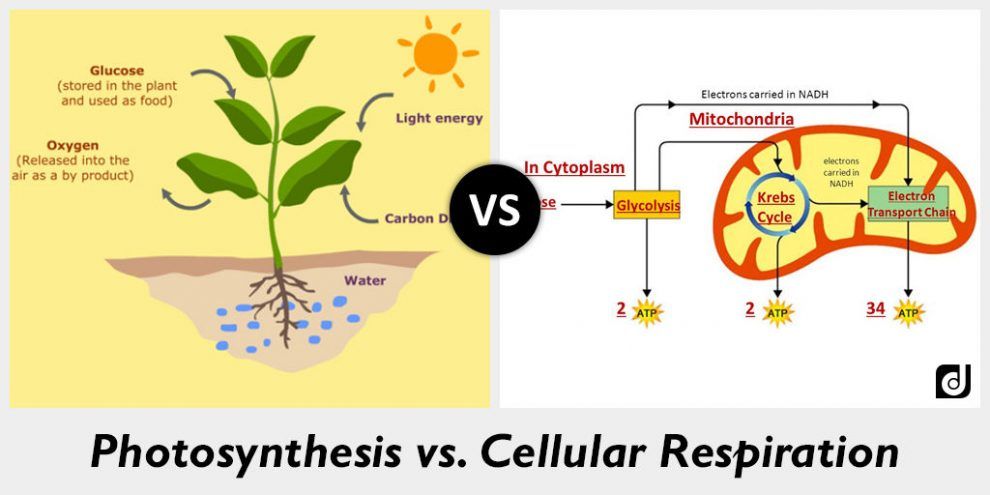
56.

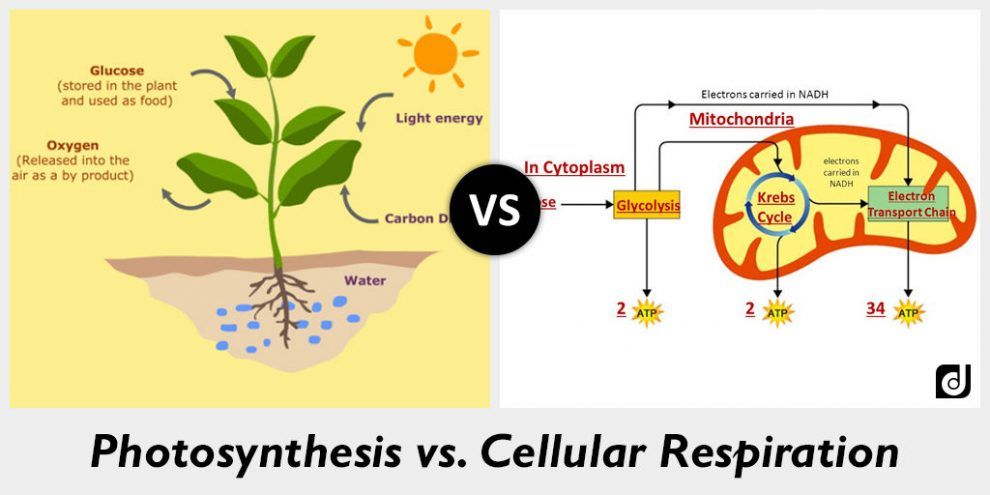
Which process is best illustrated by the diagram?

a)

homeostasis

b)

transpiration

c)

photosynthesis

d)

respiration

57.

Of the following cell types, which would likely have the greatest number of mitochondria per cell?

a)

Blood Cell

b)

Bone Cell

c)

Muscle Cell

d)

Skin Cell

58.

Proteins that act as biological catalyst to speed up chemical reactions without altering the reaction are known as

a)

Enzymes

b)

Reactants

c)

Products

d)

Lipids

59.

Before hibernation a bear must store large amounts of extra energy. Which type of macromolecule can store a large supply of energy that the bear will use over a period of several months

a)

Lipids

b)

Protein

c)

Cabohydrates

d)

Nucleic Acids

60.

which three features are found in both plant and animal cells

a)

cyctoplasm, mitochondria, ribosomes

b)

plasma membrane, a capsule, golgi apparatuses

c)

rough endoplasmic reticulum, nucleiod, centrioles

d)

plastids, cytoplasm, nucleus
61.
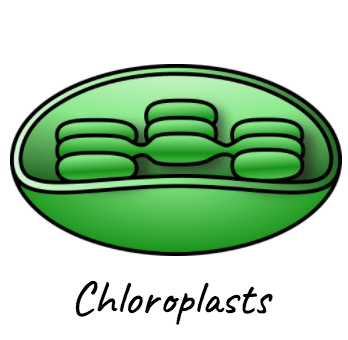
Chloroplasts are...
a)
A type of pigment used for photosynthesis
b)
The location inside a plant cell where photosynthesis happens
c)
The location where cellular respiration happens
d)
Green beans
62.
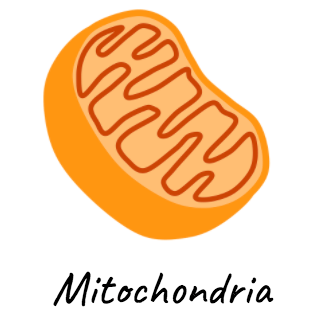
Mitochondria are...
a)
The location in cells where photosynthesis happens
b)
Kidney beans
c)
The location in cells where cellular respiration happens
d)
A type of pigment used for cellular respiration
63.
What is the purpose of cellular respiration?
a)
To turn energy from the sun into glucose
b)
To turn oxygen into glucose
c)
To turn ATP into glucose
d)
To turn glucose into energy in the form of ATP
64.
What is the purpose of photosynthesis?
a)
To use glucose to produce energy in the form of ATP
b)
To use energy from sunlight to produce glucose
c)
To use oxygen to produce glucose
d)
To produce energy for all cells in an animal's body
65.
Glucose is...
a)
A product of photosynthesis and cellular respiration
b)
A reactant of photosynthesis and cellular respiration
c)
A product of photosynthesis and a reactant of cellular respiration
d)
A reactant of photosynthesis and a product of cellular respiration
66.
Oxygen is...
a)
A product of photosynthesis and cellular respiration
b)
A reactant of photosynthesis and cellular respiration
c)
A product of photosynthesis and a reactant of cellular respiration
d)
A reactant of photosynthesis and a product of cellular respiration
67.
Carbon dioxide is...
a)
A product of photosynthesis and cellular respiration
b)
A reactant of photosynthesis and cellular respiration
c)
A product of photosynthesis and a reactant of cellular respiration
d)
A reactant of photosynthesis and a product of cellular respiration
68.
Water is...
a)
A product of photosynthesis and cellular respiration
b)
A reactant of photosynthesis and cellular respiration
c)
A product of photosynthesis and a reactant of cellular respiration
d)
A reactant of photosynthesis and a product of cellular respiration
69.
ATP is...
a)
A form of energy the cell can use that is produced by cellular respiration
b)
A kind of sugar produced in photosynthesis
c)
A battery
70.
Sunlight is...
a)
Needed for photosynthesis and cellular respiration
b)
Needed for photosynthesis to provide energy
c)
Needed for cellular respiration to provide oxygen
71.
Reactants are...
a)
Substances present at the beginning of a chemical reaction
b)
substances present at the end of a chemical reaction
72.
Products are...
a)
Substances present at the beginning of a chemical reaction
b)
substances present at the end of a chemical reaction
73.
Cellular respiration and photosynthesis are related because...
a)
They both make glucose
b)
They both require oxygen
c)
The products of one reaction are the reactants of the other reaction
d)
They both make carbon dioxide
74.
Which gas is removed from the atmosphere during photosynthesis?
a)
hydrogen
b)
oxygen
c)
nitrogen
d)
carbon dioxide
75.
Which of the following best describes photosynthesis?
a)
Photosynthesis converts radiant energy into chemical energy.
b)
Photosynthesis produces carbohydrates.
c)
Plants need sunlight, carbon dioxide, water, nutrients, and chlorophyll to complete photosynthesis.
d)
Plants use chlorophyll, water, and carbon dioxide to make sugar.
76.
What gas is released by plants during photosynthesis?
a)
sulfur
b)
carbon dioxide
c)
oxygen
d)
hydrogen
77.
What is another name for glucose?
a)
Chlorophyll
b)
Chloroplasts
c)
Stomata
d)
Sugar
78.
The main source of energy for all life comes from ____.
a)
the Earth
b)
the moon
c)
the sun
d)
the food we eat/make
79.

What is cellular respiration?

a)

the breakdown of glucose to release ATP

b)

the breakdown of glucose to release carbon

80.
What is the purpose of cellular respiration?
a)
to break down food
b)
to create energy in the body
c)
to release energy from food
d)
there is none; it's a waste of time
81.
What is the correct equation for cellular respiration?
a)
6O2 + C6H12O6 -> 6CO2 + 6H2O + Energy
b)
6O2 + C6H12O6 + Energy -> 6CO2 + 6H2O
c)
6CO2 + 6H2O -> 6O2 + C6H12O6 + Energy
d)
6CO2 + 6H2O + Energy -> 6O2 + C6H12O6
82.

Cellular respiration is different from fermentation in that respiration needs...

a)

oxygen

b)

carbon dioxide

83.
Fermentation involves
a)
aerobic respiration
b)
anaerobic respiration 
84.
What is a disadvantage of fermentation as a process? 
a)
It produces too much ATP
b)
It only produces 2 ATP
c)
It occurs in the absence of oxygen
d)
It is only for quick bursts of energy
85.
Fermentation is cellular respiration without which molecule?
a)
CO2
b)
O2
c)
C6H12O6
86.
How are lactic acid and alcoholic fermentation similar?
a)
They have the same products
b)
They have the same reactants
c)
They both require oxygen
d)
They occur in the same organisms
87.
After intense activity, your muscles feel sore because of 
a)
the accumulation of NAD+
b)
the accumulation of lactic acid 
c)
the accumulation of ATP
d)
the accumulation of carbon dioxide
88.
Lactic acid fermentation occurs in your muscles after a workout because your cells are struggling to get
a)
Glucose
b)
Sunlight
c)
Oxygen
d)
Water
89.

 6CO2+6H2O  Sunlight Energy  C6H12O6+6O26CO_2+6H_2O\ \ \overrightarrow{Sunlight\ Energy}\ \ C_6H_{12}O_6+6O_2  

a)

Fermentation

b)

Photosynthesis

c)

Cellular Respiration

90.

A metabolic process where a substance breaks down into a simpler substance due to chemical changes.

a)

Photosynthesis

b)

Cellular Respiration

c)

Fermentation

d)

Exocytosis