wayground logo

Free Printable Worksheets

Font size

S
M
L
XL
Worksheets

Quarter 1 revision G 8

Total questions: 122

Worksheet time: 4hrs 4mins

Name
Class
Date
1.
What a cell membrane is because it allows only certain substances to enter and leave a cell
a)
permanent
b)
plasma
c)
semipermeable
d)
flex wall
2.
The movement of substances through a cell membrane without using the cell's energy
a)
osmosis
b)
passive transport
c)
active transport
d)
diffusion
3.
The process during which a cell's vesicles release their contents outside the cell 
a)
Exocytosis
b)
Endocytosis 
c)
Osmosis 
4.
The process during which a cell takes in a substance by surrounding it with the cell membrane 
a)
Endocytosis 
b)
Exocytosis 
c)
Anaerobic Respiration 
5.
Which of the following describes a state of equilibrium?
a)
When water molecules have stopped moving or vibrating 
b)
When the concentration of water outside a cell is the same as the concentration of water inside a cell 
c)
When a cell with a lot of water in it continues to absorb water 
6.
What is the difference between active and passive transport?
a)
Active transport requires energy; passive transport does not
b)
Active transport moves molecules across cell membranes; passive transport does not 
c)
Active transport involves oxygen and water molecules; passive transport does not 
7.
The movement of substances from an area of higher concentration to an area of lower concentration
a)
diffusion
b)
osmosis
c)
cellular respiration
8.
The movement of substances through a cell membrane only by using the cell's energy 
a)
active transport
b)
passive transport
c)
endocytosis 
9.
The diffusion of water molecules only through a membrane 
a)
diffusion 
b)
osmosis
c)
facilitated diffusion 
10.
What process is shown in the image?
a)
endocytosis
b)
active transport
c)
facilitated diffusion
d)
exocytosis
11.
Passive transport requires energy.
a)
True
b)
False
12.
This type of transport is passive.  It uses a transport protein to help move materials across the cell membrane.
a)
diffusion
b)
osmosis
c)
facilitated diffusion
d)
pumping
13.
The movement of WATER across a selectively permeable without the use of energy is called
a)
active transport
b)
osmosis
c)
diffusion
d)
endocytosis
14.
What is the job of a channel protein?
a)
strengthen the outer boundary of the cell
b)
allow certain materials to enter or leave the cell
c)
exchange organelles or chromosomes between cells
15.
Which of the following are associated with movement across the cell membrane.
a)
diffusion and osmosis only
b)
active transport only
c)
facilitated diffusion only
d)
diffusion, osmosis, active transport, facilitated diffusion
16.
Perfume smell moving across a room is a type of __________________.
a)
osmosis
b)
diffusion 
c)
facilitated diffusion
d)
none of these answers
17.
This picture represents what type of cell transport?
a)
endocytosis
b)
exocytosis
c)
osmosis
d)
passive transport
18.
What type of transport is this?
a)
Diffusion
b)
Osmosis
c)
Facilitated Diffusion
d)
Active Transport
19.
Transport proteins that carry large molecules,such as sugar molecules, through a cell membrane
a)
carrier proteins 
b)
transport proteins
c)
channel proteins
20.
Transport proteins that carry large molecules,such as sugar molecules, through a cell membrane
a)
carrier proteins 
b)
transport proteins
c)
channel proteins
21.
What type of transport is this?
a)
Diffusion
b)
Osmosis
c)
Facilitated Diffusion
d)
Active Transport
22.
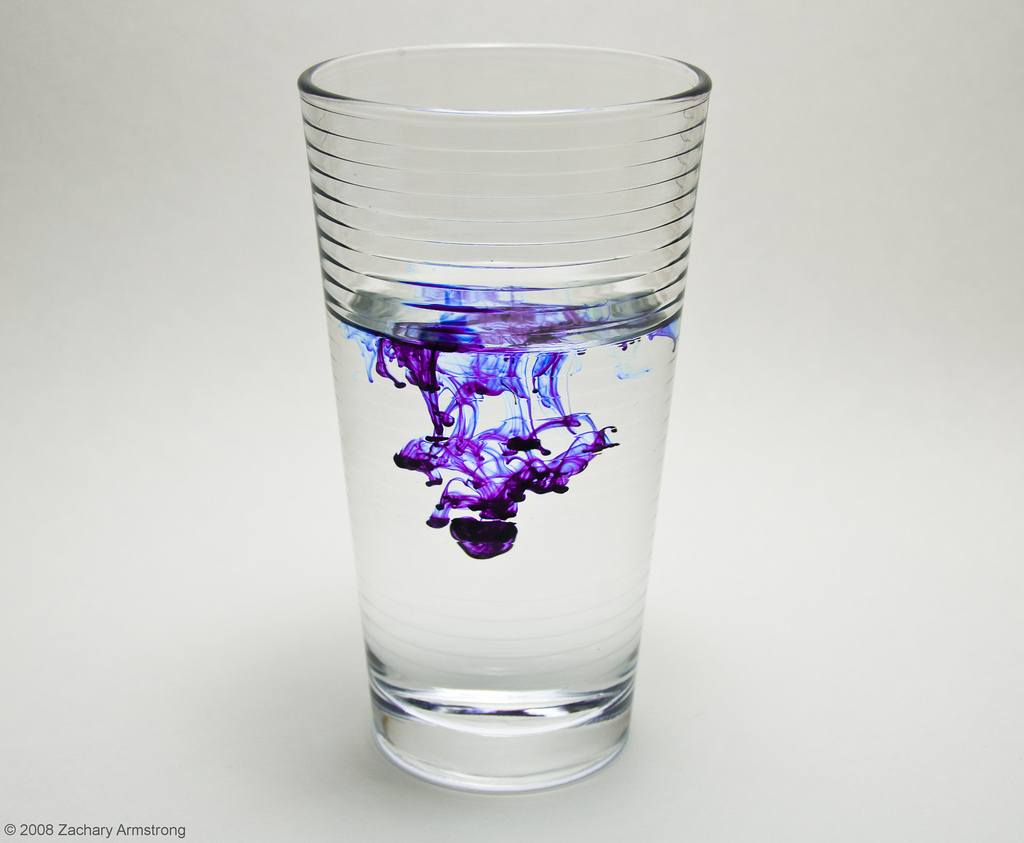
Where is there a low concentration of dye?
a)
at the bottom of cup
b)
in the color
c)
at the top of cup 
d)
no concenteraion gradient
23.
_______ regulates what enters and leaves a cell.  
a)
Cell Membrane
b)
Nucleus
c)
Mitochondria
24.
Which form of active transport is being shown?
a)
Facilitated Diffusion
b)
Exocytosis
c)
Endocytosis
d)
Protein Pumps
25.
Which form of active transport is being shown?
a)
Pinocytosis
b)
Endocytosis
c)
Exocytosis
d)
Osmosis
26.
During osmosis __________
a)
water moves from high to low concentration
b)
large or oddly shaped molecules move across a cell membrane
c)
water moves when energy is used
d)
water moves from low concentration to high concentration
27.
Which way will the water molecules in the image move during osmosis? (the mouse head is representing a molecule of water)
a)
Out of the cell, so the cell shrinks.
b)
Out of the cell, so the cell swells.
c)
Into the cell, so the cell shrinks.
d)
Into the cell, so the cell swells
28.

Movement of particles through the cell membrane

from high concentration to low concentration

a)

diffusion

b)

photosynthesis

c)

mitochandria

d)

osmosis

29.

Movement of particles through the cell membrane

from high concentration to low concentration

a)

diffusion

b)

photosynthesis

c)

mitochandria

d)

osmosis

30.
What organelle of the cell produces energy?
a)
Mitochondria 
b)
Golgi Body 
c)
Vesicle 
d)
Vacuole 
31.
What is facilitated diffusion?
a)
Transport that uses proteins to help move molecules across the membrane. 
b)
Movements of substances through a membrane. 
c)
When molecules spread from High to Low concentration on their own. 
d)
When pressure pushes something through a membrane. 
32.
All of the following statements are true about prokaryotic cells EXCEPT 
a)
No nucleus 
b)
They are simple and small 
c)
Have a cell wall 
d)
Have organelles 
33.
What is one of the reactants of cellular respiration?
a)
energy
b)
glucose
c)
carbon dioxide
d)
water
34.
______________ produces the most ATP.
a)
photosnthesis
b)
aerobic respiration
c)
anaerobic respiration
d)
glycolysis
35.
Where does glycolysis take place?
a)
Cytoplasm
b)
Stroma
c)
Thylakoid
d)
Mitochondria
36.
What is the name of the 1st step of cellular respiration?
a)
Glycolysis
b)
Kreb's Cycle
c)
ETC
d)
Anaerobic respiration
37.
Where does aerobic respiration take place?
a)
Cytoplasm
b)
Mitochondria
c)
Stroma
d)
Thylakoid
38.
Which type of respiration occurs in the presence of oxygen?
a)
Aerobic
b)
Anaerobic
39.
Which type of respiration occurs without the presence of oxygen?
a)
Aerobic 
b)
Anaerobic 
40.
What are the two reactants of cellular respiration?
a)
C6H12O6 & 6CO2
b)
6 CO2 & 6H2O
c)
C6H12O& 6O2
d)
6CO2 & 6O2
41.
Glucose is broken down during which process?
a)
Calvin cycle
b)
Glycolysis
c)
Krebs Cycle
d)
Photosynthesis 
42.
___ produces the most ATP.
a)
Aerobic respiration
b)
Anaerobic respriation
c)
Glycolysis
d)
Photosynthesis
43.
The overall goal of cellular respiration is to make:
a)
Glucose
b)
ATP
c)
Oxygen
d)
Water
44.
What is the name of the process that helps make beer and wine?
a)
Fermentation
b)
Alcoholic fermentation
c)
Lactic acid fermentation
d)
Glycolysis
45.
Which type of fermentation occurs in muscles?
a)
Alcoholic 
b)
Lactic acid
46.
In which way are photosynthesis and cellular respiration different?
a)
Cellular respiration stores ATP, while photosynthesis releases ATP.
b)
Cellular respiration produces oxygen, while photosynthesis uses oxygen.
c)
Photosynthesis releases energy, while cellular respiration stores energy.
d)
Photosynthesis used carbon dioxide, while cellular respiration produces carbon dioxide.
47.
What is the correct equation for cellular respiration?
a)
6O2 + C6H12O6 -> 6CO2 + 6H2O + Energy
b)
6O2 + C6H12O6 + Energy -> 6CO2 + 6H2O
c)
6CO2 + 6H2O -> 6O2 + C6H12O6 + Energy
d)
6CO2 + 6H2O + Energy -> 6O2 + C6H12O6
48.
What gas is released into the air during cellular respiration?
a)
oxygen
b)
carbon dioxide
c)
water 
d)
glucose
49.
What are the reactants in cellular respiration?
a)
glucose and oxygen
b)
glucose and carbon dioxide
c)
water and carbon dioxide
d)
oxygen and glucose
50.
What are the products in cellular respiration?
a)
water and carbon dioxide
b)
water and glucose
c)
carbon dioxide and oxygen
d)
glucose and oxygen
51.

The release in energy from the sugar that are in plant and animal cells is called...

a)

photosynthesis

b)

transpiration

c)

cellular respiration

d)

transition

52.

Which of the following equation explains cellular respiration?

a)

sugar+water -> salt+sunlight

b)

sugar+oxygen -> water+carbon dioxide+energy

c)

water+carbon dioxide+sunlight -> sugar+oxygen

d)

Sugar+energy -> water+carbon dioxide+oxygen

53.

Which of the following organelles is responsible for cellular respiration?

a)

Mitochondria

b)

Nucleus

c)

Endoplasmic Reticulum

d)

Ribosome

54.

How can energy from the sun be transferred to animals?

a)

The sun's energy is transformed into food by plants, animals eat plants as food so that they can transform that food into energy.

b)

Plants produced energy through photosynthesis, animals that eat that energy can produce food.

c)

Plants transformed energy of the sun into gases that animals can breath in to use as energy through respiration.

d)

Animals are able to use energy from the sun by eating the plants that provides energy for the animals.

55.

C6H12O6 is the chemical formula for

a)

Carbon Dioxide

b)

Water

c)

Oxygen

d)

Glucose

56.
Which process produces the most ATP per molecule of glucose?
a)
lactic acid fermentation
b)
aerobic respiration
c)
alcoholic fermentation
d)
all are about the same
57.
Yeast is a(n)
a)
animal
b)
plant
c)
fungus
d)
bacteria
58.
This is the first step of cellular respiration
a)
Glycolysis
b)
Lactic Acid Fermentation
c)
Alcoholic Fermentation
d)
Aerobic Respiration
59.
The ingredients of photosynthesis are
a)
sugar and water.
b)
sugar and oxygen.
c)
carbon dioxide and water.
d)
carbon dioxide and oxygen.
60.
What are the products of photosynthesis?
a)
Carbon dioxide and water
b)
Carbon dioxide and oxygen
c)
Glucose and oxygen
d)
Glucose and water
61.
Which of the following best describes photosynthesis?
a)
Photosynthesis converts radiant energy into chemical energy.
b)
Photosynthesis produces carbohydrates.
c)
Plants need sunlight, carbon dioxide, water, nutrients, and chlorophyll to complete photosynthesis.
d)
Plants use chlorophyll, water, and carbon dioxide to make sugar.
62.
How can photosynthesis be related to cellular respiration?
a)
What's produced by one is needed for the other
b)
They both produce the same products
c)
They both have the same reactants (need the same things)
d)
These 2 processes have nothing in common
63.
What is another name for glucose?
a)
Chlorophyll
b)
Chloroplasts
c)
Stomata
d)
Sugar
64.
In what part of the cell does photosynthesis occur?
a)
Nucleus
b)
Chloroplast
c)
Epidermis
d)
Vacuole
65.
The main source of energy for all life comes from ____.
a)
the Earth
b)
the moon
c)
the sun
d)
the food we eat/make
66.
After photosynthesis, plants store their energy as _________ .
a)
chlorophyll
b)
pigment
c)
glucose (sugar)
d)
Oxygen
67.

What is cellular respiration?

a)

the breakdown of glucose to release ATP

b)

the breakdown of glucose to release carbon

68.
What is the purpose of cellular respiration?
a)
to break down food
b)
to create energy in the body
c)
to release energy from food
d)
there is none; it's a waste of time
69.
During the ___ phase, DNA is replicated.
a)
G1
b)
S
c)
G2
d)
M
70.

Chromosomes are made up of two identical sister _____________.

a)

chloroplasts

b)

nuclei

c)

chromatids

d)

genes

71.
G1, S, and G2 phases are combined into one long phase called _____________.
a)
interphase
b)
mitosis
c)
cytokinesis
d)
cell cycle
72.
Sister chromatids are joined together at the ___________.
a)
equator
b)
chromosome
c)
centromere
d)
ends
73.
The phase that starts mitosis is ___________.
a)
prophase
b)
metaphase
c)
anaphase
d)
telophase
74.
What is this phase of mitosis?
a)
prophase
b)
metaphase
c)
anaphase
d)
telophase
75.
What is this phase of mitosis?
a)
prophase
b)
metaphase
c)
anaphase
d)
telophase
76.
This picture is an example of?
a)
prophase
b)
metaphase
c)
anaphase
d)
telophase
77.
The longest phase of the cell cycle 
a)
prophase
b)
interphase
c)
metaphase
d)
mitosis
78.
Identify the phase of mitosis
a)
prophase
b)
metaphase
c)
anaphase
d)
telophase
79.
Which phase comes NEXT?
a)
prophase
b)
metaphase
c)
anaphase
d)
telophase
80.
The first stage of the cell cycle during which the cell matures and prepares to divide and copies its DNA; The stage the cell stays in the most
a)
interphase
b)
prophase
c)
metaphase
d)
anaphase
81.
What is this phase of mitosis?
a)
prophase
b)
metaphase
c)
anaphase
d)
telophase
82.
Put the stages of mitosis in the correct order.
a)
prophase - metaphase - anaphase - telophase
b)
metaphase - anaphase - prophase - telophase
c)
anaphase - prophase - telophase - metaphase
d)
telophase - metaphase - prophase - anaphase
83.
Chromosomes are made up of two identical sister _____________.
a)
chloroplasts
b)
nuclei
c)
chromatids 
d)
gens
84.
How does cytokinesis differ in plant and animal cells?
a)
Cytokinesis only takes place in animal cells.
b)
Cytokinesis only takes place in plant cells.
c)
Plant cells form a cell plate, animal cells form a cleavage furrow.
d)
Animal cells form a cell plate, plant cells form a cleavage furrow.
85.
Which of the following describes the purpose of the mitosis cell cycle?
a)
To make more of the same cells.
b)
For growth and repair.
c)
To prevent the cell from becoming too large.
d)
All of the above.
86.
Which cell structure produces the spindle fibers?
a)
Centromeres
b)
Centrioles
c)
Chromatids
d)
Ribosomes
87.
What is the result of mitosis?
a)
1 cell
b)
2 genetically identical cells
c)
2 genetically different cells
d)
4 genetically identical cells
88.
During what phase of the cell cycle does the cell grow?
a)
G1 phase
b)
S phase
c)
M phase
d)
Cytokinesis
89.
During what phase of the cell cycle is DNA replicated?
a)
G1 phase
b)
S phase
c)
G2 phase
d)
M phase
90.
During which phase of the cell cycle does the cell spend the most time?
a)
Mitosis
b)
Cytokinesis
c)
Interphase
91.
During which part of the cell cycle does the cell divide?
a)
Interphase
b)
Mitosis
c)
S phase
92.
Which phase of mitosis is shown in the picture?
a)
Prophase
b)
Anaphase
c)
Telophase
93.
Which phase of mitosis is shown in the picture?
a)
Interphase
b)
Metaphase
c)
Telophase
94.
Which phase of mitosis is shown in the picture?
a)
Prophase
b)
Metaphase
c)
Anaphase
95.
Which phase of mitosis is shown in the picture?
a)
Prophase
b)
Telophase
c)
Metaphase
96.
What is shown in the picture?
a)
Mitosis
b)
Interphase
c)
Cytokinesis
97.
Cells of organism must replicate for ?
a)
growth
b)
repair of damaged cells
c)
replacement of dying cells.
d)
All of the above
98.
Neuron cells, like the one pictured, rarely replicate. Therefore, we consider them to be in the _____ phase.
a)
G0
b)
G1
c)
S
d)
Delay
99.

The three stages of the cell cycle are __________, mitosis, and

cytokinesis.

a)

interphase

b)

anaphase

c)

metaphase

d)

prophase

100.

Identical cells formed during cell division are called:

a)

daughter organelles

b)

daughter cycles

c)

daughter nucleus

d)

daughter cells

101.
Which of the following is the correct order of organization in living things from most basic (simple) to most complex?
a)
a.  Organism, cell, tissue, organ, organ system
b)
a.  Organ system, organ, tissue, cell, organism
c)
a.  Cell, tissue, organ, organ system, organism
d)
a.  Cell, organ, tissue, organ, organism, organ system
102.
Anything that can perform life processes by itself is a/an
a)
cell
b)
organ
c)
organism
d)
organ system
103.
The smallest level of organization of life in an organism
a)
tissue
b)
cell
c)
organ
d)
organ system
104.
What is the difference between a cell and a tissue?
a)
cell is basic unit of life; tissue is group of cells that work as one
b)
cell is group of tissues; tissue is basic unit of life
c)
cell is basic unit of life; tissue is groups of different cells
d)
cell is group of organs; tissue is group of different cells
105.
Which of the following is not one of the four basic types of tissue?
a)
epithelial
b)
connective
c)
muscle
d)
avascular
106.
What is the function of epithelial cells?
a)
Act as barriers between the external environment, or between organs and fluidfilled cavities
b)
Provide movement by pulling on bones
c)
Provide secretions which help to digest food
d)
Act as the messaging pathway between different areas of the body
107.
Define tissue with regards to anatomy
a)
A group of structurally and functionally related cells that come together to perform common functions
b)
Multiple sheets of thin paper used to clean your nose
c)
A series of different cells in the same area
d)
The smallest structural and functional unit of an organism
108.
What type of tissue SIGNALS the intestines to move food along?
a)
Nervous Tissue
b)
Blood Tissue
c)
Smooth muscle tissue
d)
Skeletal Muscle Tissue
109.
Which type of plant tissue covers the outer surface of the plant and acts as a protective layer?
a)
Dermal
b)
Vascular
c)
Ground
d)
Connective
110.
What type of vascular tissue is responsible for transporting water from the roots to the leaves?
a)
Cuticle
b)
Phloem
c)
Stomata
d)
Xylem
111.
An unspecialized cell that can develop into many different cell types is called a/an _____.
a)
tissue
b)
organ
c)
stem cell
d)
organ system
112.
Which is true of unicellular organisms?
a)
they lack cells
b)
they all are eukaryotic
c)
they lack cell differentiation
113.
Which organelle is in charge of creating the energy that the cell uses?
a)
Nucleus
b)
Endoplasmic Reticulum
c)
Mitochondria
d)
Lisosome
114.
All of the following are types of animal tissue except:
a)
Muscle
b)
Skin
c)
Epithelial
d)
Connective
115.
The sum of all the Earth's ecosystems is called
a)
Community
b)
Ecosystem
c)
Biosphere
d)
Biome
116.
What is the name for all populations of species within an area
a)
Community
b)
Ecosystem
c)
Biosphere
d)
Biome
117.
What is the name for a group of individuals of one species.
a)
Community
b)
Ecosystem
c)
Population
d)
Biome
118.
What is the name for areas with the same kind of biotic and abiotic factors spread over a large area. 
a)
Community
b)
Ecosystem
c)
Biosphere
d)
Biome
119.
The term abiotic means;-
a)
Not a robot or robotic
b)
Living Things
c)
Water based environments
d)
Non-living things
120.
The term biotic means;-
a)
Not a robot or robotic
b)
Living Things
c)
Water based environments
d)
Non-living things
121.
Which biome has a climate that is extremely cold and dry?
a)
forest
b)
tundra
c)
grassland
d)
freshwater
122.
Which biome usually contains orchids, ferns, and other plants that live on the branches of trees?
a)
tundra
b)
temperate deciduous rainforest
c)
rainforest
d)
marine