
Font size
 Worksheets
Planetary Science Final Review
Total questions: 73
Worksheet time: 36mins
What causes the moon's phases
The rotation of Earth
The revolution (orbit) of the moon around Earth changes our field of view, which means that we see different amounts of the 1/2 illuminated moon.
The tilt of Earth
How fast the moon is moving

Define Waxing
Area of the moon is increasing (getting more light from the right)
Completely illuminated
Dark side is facing earth
Moon is decreasing and light part appears to be shrinking (from the right)
Define Gibbous
Light is less than quarter moon (but more than a new moon)
Light is more than quarter moon (but less than a full moon)
All of moon visible
None of moon visible
Define Quarter Moon
None of the visible moon has light
Less than Half the visible moon has light
More than half of the visible moon has light
Half of the visible moon has light


The phase of the moon that occurs when the moon is between Earth and the sun
Full moon
Waxing crescent
Waning Crescent
New Moon
What is meant by Waning
The moon gets bigger (more light)
Full moon
The moon gets smaller (less light)
New moon
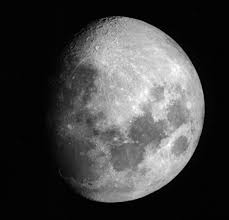
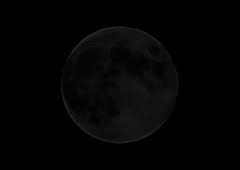
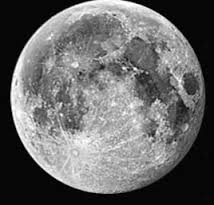
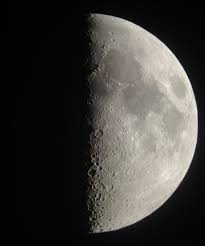
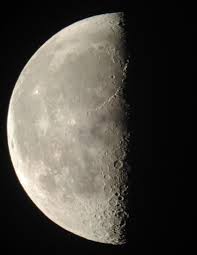
Name this moon phase
First Quarter
Third Quarter
New Moon
Full Moon

What are the reasons for the season?
Earth's tilt & rotation & Solar Angle
Earth's tilt & revolution & Solar Angle
Earth's rotation & revolution & Solar angle
Earth's tilt & resolution & Solar Angle

What moon phase is shown?
Waxing Crescent
Waning Crescent
Waxing Gibbous
Waning Gibbous
At any time, how much of the moon is lit up?
1/4
1/2
3/4
all of the moon
What is meant by Waxing
The moon gets bigger (more light)
Full moon
The moon gets smaller (less light)
New moon
Day and Night are caused by...
Earth's Rotation
Earth's Revolution
Solar Angle
Earth's Tilt
The Moon
Revolves around the Earth
Rotates around the Earth
Increases the Solar Angle of the Sun
Is made of cheese

Which shows a greater solar angle?
Top image
Bottom Image
Which shows a greater solar concentration?
Top image
Bottom Image
Which looks more like the solar angle in the Northern Hemisphere during summer?
Top image
Bottom Image
Which looks more like the solar angle in the Northern Hemisphere during Winter?
Top image
Bottom Image
Which would NOT support the theory that the Earth is Round?
People have sailed around the world
Satellite images show that the Earth is round
Many people believe that the Earth revolves around the sun
The shape we see on the moon during a lunar eclipse is an oval

What phase is shown at #1?
New Moon
Full Moon
First Quarter Moon
Waxing Crescent Moon
What phase is shown at #2?
New Moon
Waning Crescent Moon
First Quarter Moon
Waxing Crescent Moon
What phase is shown at #3?
New Moon
3rd Quarter Moon
First Quarter Moon
Half Moon
What phase is shown at #4?
Waning Crescent
Waxing Crescent
Waning Gibbous
Waxing Gibbous
What phase is shown at #5?
Full Moon
New Moon
Quarter Moon
Half Moon
What phase is shown at #6?
Waxing Crescent
Waning Crescent
Waxing Gibbous
Waning Gibbous
What phase is shown at #7?
First Quarter
Third Quarter
Half
Full
What phase is shown at #8?
Waxing Crescent
Waning Crescent
Waxing Gibbous
Waning Gibbous
Images 2, 3, and 4 are ...
Waxing
Waning
Images 6, 7, and 8 are ...
Waxing
Waning

What season is it at #1in the NORTHER hemisphere
Summer
Winter
Spring
Fall
What season is it at #2 in the NORTHER hemisphere
Summer
Winter
Spring
Fall
What season is it at #3 in the NORTHER hemisphere
Summer
Winter
Spring
Fall
What season is it at #4 in the NORTHER hemisphere
Summer
Winter
Spring
Fall
What season is it at #1in the SOUTHERN hemisphere
Summer
Winter
Spring
Fall
What season is it at #2in the SOUTHERN hemisphere
Summer
Winter
Spring
Fall
What season is it at #3 in the SOUTHERN hemisphere
Summer
Winter
Spring
Fall
What season is it at #4 in the SOUTHERN hemisphere
Summer
Winter
Spring
Fall
Why do we have night and day?
Earth's Tilt
Earth's Revolution
Earth's Rotation
The Moon
Which shows the least concentration of solar energy?
Top image
Bottom Image
When do we see the most daylight in the United States?
Summer (June 21)
Winter (Dec 21)
Spring (March 21)
Fall (September 21)
What does not affect sunrise and sunset times?
Rotation
Tilt
Latitude
About how many months does it take to revolve 1/4 of the way around the sun?
3
6
9
12
Which 2 factors contribute the most to warm weather in the summer
High Solar Angle and Longer Hours of daylight
Low Solar Angle and Longer Hours of daylight
High Solar angle and Fewer Hours of daylight
Low Solar Angle and Greater hours of daylight
Alaska has more hours of daylight in the summer than Florida, but Florida is hotter, why?
Florida has more intense sunlight
Florida has more hours of daylight
Florida is in the southern hemisphere
Florida has less intense sunlight
Which is true?
Galaxies are in Stars an Stars are in the Universe
Stars are in Galaxies and Galaxies are in the Universe
Stars are in Universes and Universes are in Galaxies
If the Earth didn't rotate, what would be true?
One "day" would take a year
We would only have 1 season
We would never have night
We would never have day
Why does the moon shine?
It's a star
It has water
It reflects light from the sun
It is self illuminated
Why don't we have eclipses every month?
The Moon and Earth are on 2 different planes
The Moon has phases
The Earth orbits the Moon
Nebular law only allows for 1 eclipse every 7 years
a meteor...
Is rock that orbits Earth
Is rock that enters our atmosphere
Is rock that has hit Earth
The main reason that tilt gives us seasons is..
It affects solar angle
It affects day length
It affects time it takes to revolve
It affects the distance to the moon
A controlled experiment has...(click all that apply)
1 Independent variable
Dependent Variable(s)
Multiple Independent Variables
Multiple Constant Variables
Constant Variables are ...
What we keep the same
What we change (the Cause, the solution to a problem)
What is affected by the Independent Variable (the effect or problem)
Independent Variables are ...
What we keep the same
What we change (the Cause, the solution to a problem)
What is affected by the Independent Variable (the effect or problem)
Dependent Variables are ...
What we keep the same
What we change (the Cause, the solution to a problem)
What is affected by the Independent Variable (the effect or problem)
Why would we use a Model (choose all that apply)
Our subject (object/thing of study) is too big
Our subject (object/thing of study) is too small
Our subject (object/thing of study) is too dangerous
Our subject (object/thing of study) can't be directly studied
The North Pole always points toward the...
Moon
Sun
North Star
South pole
Having a Scale model ensures...
Accuracy
Safety
Plausibility
If Earth was 12 inches in diameter, the Moon would be...
2 In
3 In
4 In
6 In
If Earth was 36 inches in diameter, the Moon would be...
8 In
9 In
12 In
18 In
Which of the following is in the correct order
Nebula, Contracting, Sun Turns on, Accretion
Contracting, Nebula, Accretion, Sun Turns on
Sun turns on, Nebula, Contracting, Accretion
Nebula, Sun Turns on, Contracting, Accretion
What is thought to be the driving force behind the creation of the solar system
Dark Magic
Dark Energy
Gravity
We don't know
Gravity made the nebula smaller, caused particles to come together, increased density, increased temperature, basically did it all
True
False

