
 Worksheets
Diseases
Total questions: 31
Worksheet time: 16mins
Name
Class
Date
1.

Which is NOT a common communicable disease?
a)
Colds
b)
AIDS
c)
Diabetes
d)
Strep throat
2.
are tiny, one-celled creatures that get nutrients from their environments in order to live.
a)
bacteria
b)
virus
c)
parasite
d)
fungus
3.
are multi-celled (made of many cells), plant-like organisms.
a)
bacteria
b)
virus
c)
parasite
d)
fungus
4.
A doctor would most likely prescribe an antibiotic to treat what type of pathogen?
a)
fungus
b)
bacteria
c)
virus
d)
parasite
5.
is an organism that lives on or in a host organism and gets its food from or at the expense of its host.
a)
parasite
b)
bacteria
c)
fungus
d)
virus
6.
Salmonella which can be found in contaminated food or beverages is what type of disease?
a)
virus
b)
bacteria
c)
fungus
d)
food posion
7.
there is no such thing as "good" bacteria
a)
true
b)
false
8.
A virus such as a cold can be cured and treated by taking medications
a)
true
b)
false
9.
bacteria diseases can be cured with antibiotics
a)
true
b)
false
10.
You can get ringworm of the skin by sharing contaminated towels, clothing, and sports equipment, and by direct contact with an infected person. Ringworm is what type of disease?
a)
virus
b)
bacteria
c)
fungus
d)
parasite
11.
is the body's defense against infectious organisms and other invaders.
a)
respiratory system
b)
endocrine system
c)
immune system
d)
circulatory system
12.
What is one of the ways that antibiotics work?
a)
They can stop bacteria from reproducing
b)
They can stop viruses from reproducing
c)
They stop toxins from poisoning the tissues of hosts
d)
They engulf the pathogens
13.
What sort of pathogen causes influenza (flu)?
a)
A bacterium
b)
A virus
c)
A fungus
d)
A protist
14.
Disease-causing microorganism, such as a bacterium or fungus.
a)
antigen
b)
prion
c)
pathogen
d)
allergen
15.
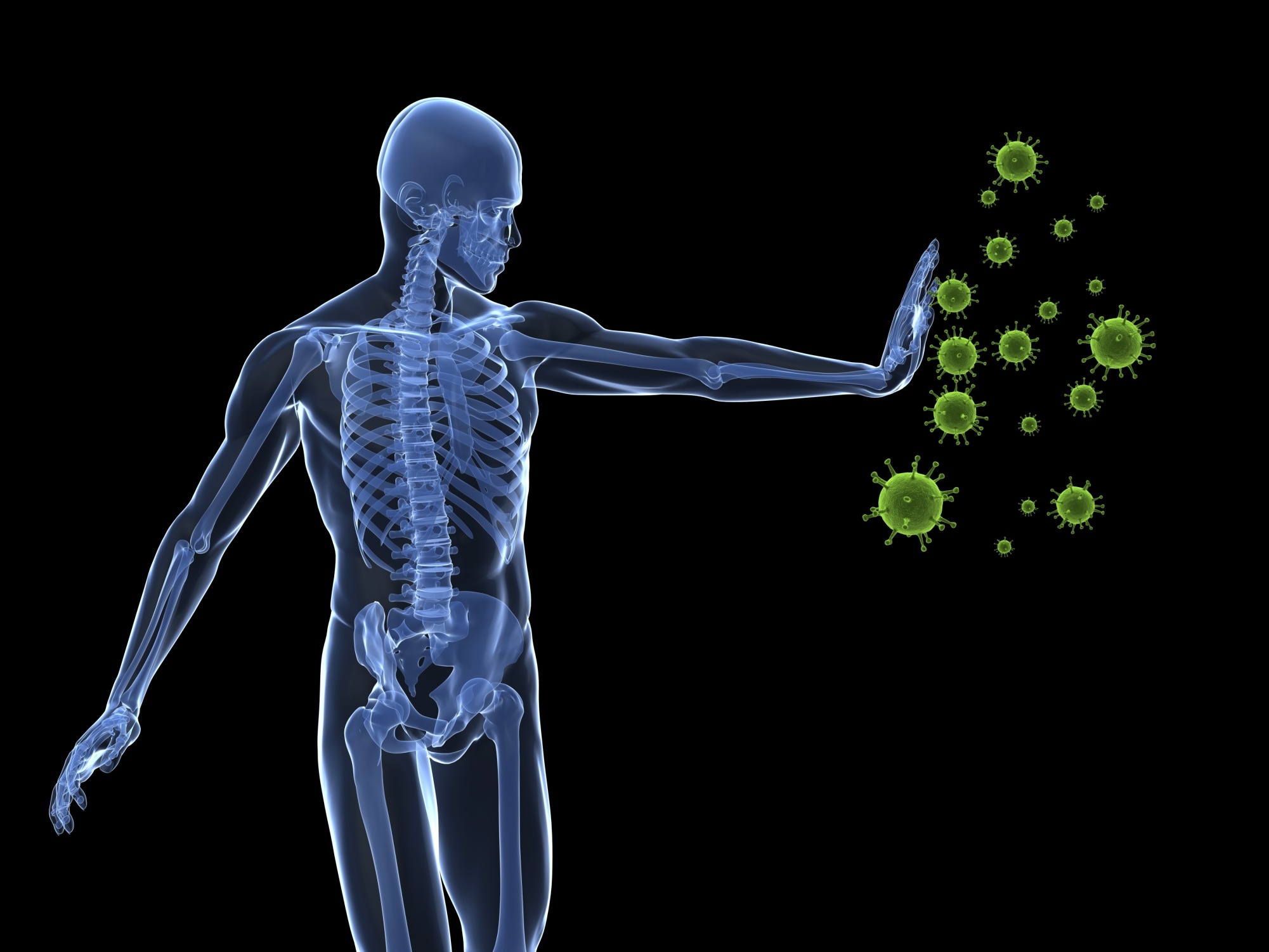
What is one MAJOR organ of the Immune System?
a)
Spinal Cord
b)
Brain
c)
Skin
d)
Heart
16.
Strep throat is caused by
a)
bacteria
b)
virus
17.
The flu is caused by
a)
bacteria
b)
virus
18.
Bacteria can only be spread through coughing
a)
False
b)
True
19.
a tiny, non-living particle that invades and then multiplies inside a living cell is called
a)
bacteria
b)
a virus
c)
a fungi
d)
ha protist
20.
a single-celled organism that lacks a nucleus is called
a)
a bacteriophage
b)
a virus
c)
a protist
d)
bacteria
21.
What is athlete's foot?
a)
Virus
b)
Bacteria
c)
Fungi
d)
Protist
22.
What is ring worm?
a)
Virus
b)
Bacteria
c)
Fungi
d)
Parasite
23.

Sharing items with someone who is sick is a form of:
a)
direct contact
b)
germs
c)
indirect contact
d)
sharing
24.

Hugging is a form of:
a)
indirect contact
b)
sharing
c)
food/water
d)
direct contact
25.

The body's first line of defense is:
a)
nails
b)
skin
c)
vaccines
d)
band aids
26.

We can prevent germs from spreading by:
a)
drinking water
b)
playing sports
c)
being hygenic
d)
sleeping
27.

Eating raw chicken is a form of:
a)
sharing food
b)
direct contact
c)
food/water contact
d)
contaminated water
28.

Examples of non-communicable diseases are:
a)
pink eye, HIV
b)
HIV, asthma
c)
allergies, cancer
d)
diabetes, sneezing
29.
STI's are what kind of disease?
a)
Non-Communicable
b)
Communicable
c)
Both
d)
Neither
30.
Which is the most effective defense against the chicken pox virus?
a)
antibiotics
b)
diet
c)
exercise
d)
vaccine
31.
For which disease would a doctor most likely prescribe an antibiotic?
a)
flu
b)
cold
c)
athletes food
d)
strep throat
100 %

