wayground logo

Free Printable Worksheets

Font size

S
M
L
XL
Worksheets

Waves Unit 1 - Lesson 1, 2, & 3

Total questions: 40

Worksheet time: 38mins
Name
Class
Date
1.
Which type of wave has a wave perpedicular to the disturbance?
a)
surface
b)
mechanical
c)
transverse
d)
longitudinal
2.
What happens when a mechanical wave travels through a medium?
a)
Waves are transferred
b)
Energy is transferred
c)
Mass is transferred
d)
Particles are transferred
3.
Which of these waves cannot travel in a vacuum?
a)
light wave
b)
sound wave
c)
electromagnetic wave
d)
microwave
4.
A disturbance that travels through a medium as a longitudinal wave
a)
sound
b)
wavelength
c)
pitch
d)
frequency
5.
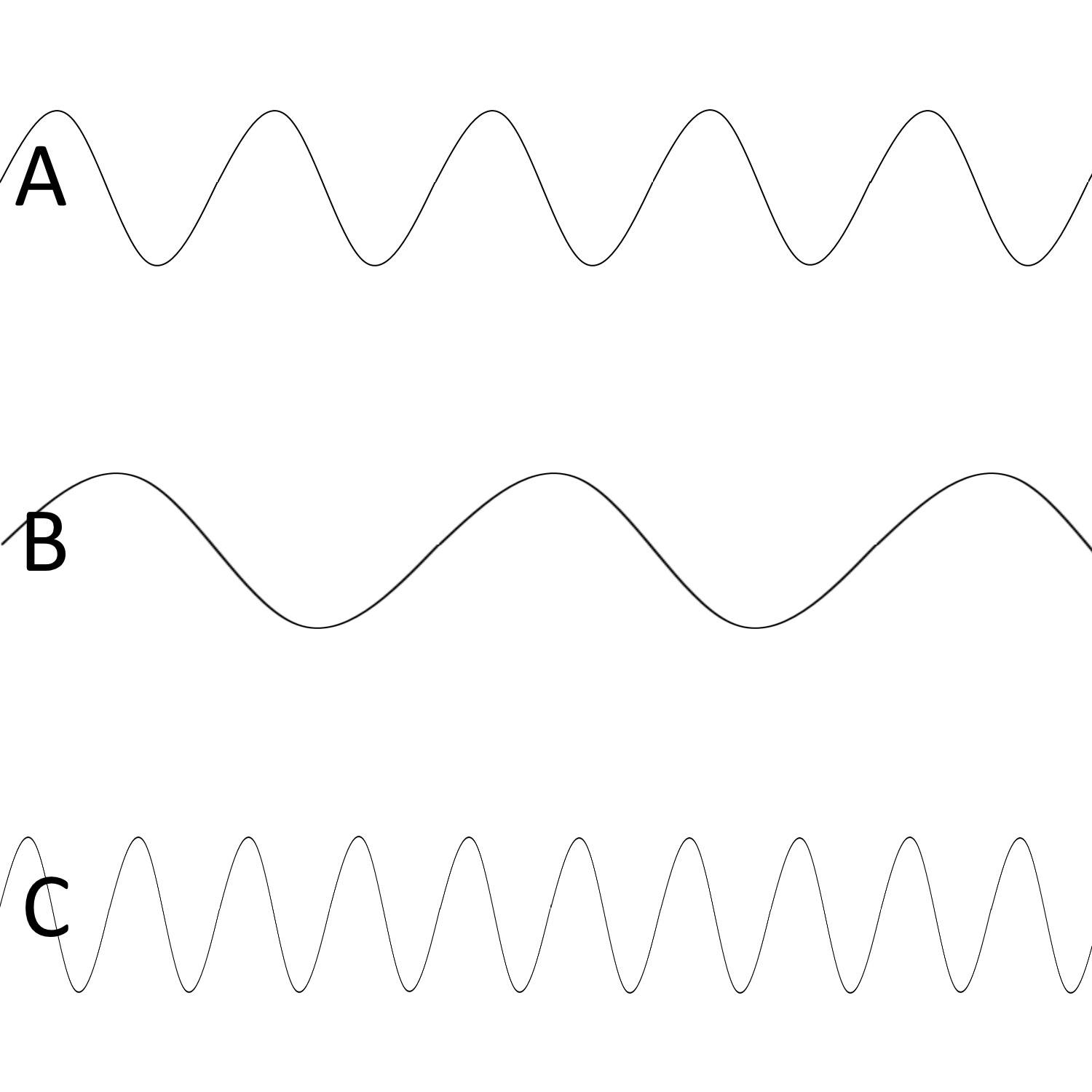
Which wave has the largest wavelength?
a)
A
b)
B
c)
C
d)
None (same wavelength)
6.

What is white light?

a)

The type of light that is found in x-rays

b)

The type of light given off by the sun and light bulbs

c)

The type of light that is used in microwave ovens

d)

The type of light that makes up radio waves

7.

What can you use to see all the different colors in white light?

a)

A flashlight

b)

A shadow

c)

A camera

d)

A prism

8.

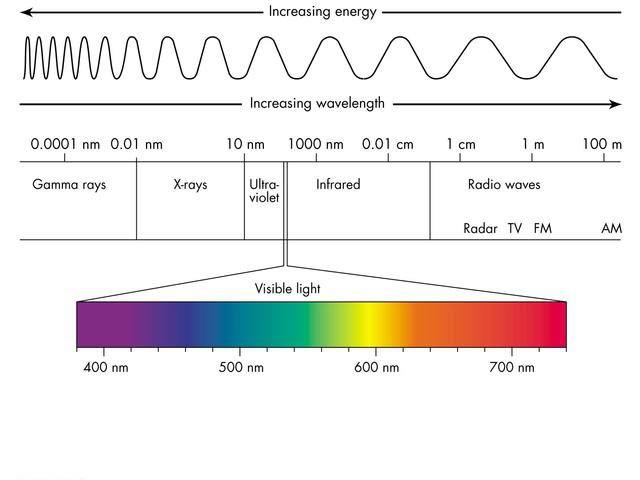
What type of wavelengths do ultraviolet rays have?

a)

Short

b)

Long

c)

Alternating short and long

d)

None

9.

A leaf is green. What does this tell you about the light that is being absorbed?

a)

The light is a UV ray.

b)

The light is not a part of the light spectrum.

c)

All colors are reflected except green.

d)

All colors are absorbed except green
10.
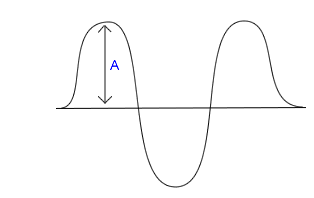
#1 is labeling what part of the wave?
a)
Wavelength
b)
crest
c)
Trough
d)
Amplitude
11.
As the fire truck approached Mary, the pitch of the siren got higher. Once the fire truck passed and moved away, the siren's pitch got lower. This change in pitch is because of a change in the sound wave's
a)
concussion. 
b)
amplitude. 
c)
reflection.
d)
frequency. 
12.
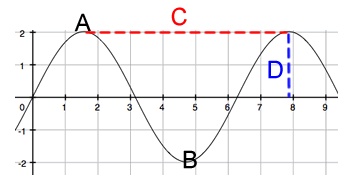
If the distance represented by the letter A were increased, how would it change the way the sound was heard?
a)
The sound would be higher. 
b)
The sound would be lower. 
c)
The sound would be softer. 
d)
The sound would be louder. 
13.
What does pitch depend on?
a)
amplitude 
b)
frequency
c)
intensity 
d)
volume of sound
14.
A wave with a large wavelength will have a ______ frequency and _____ energy
a)
high, low
b)
high, high
c)
low, high
d)
low, low
15.
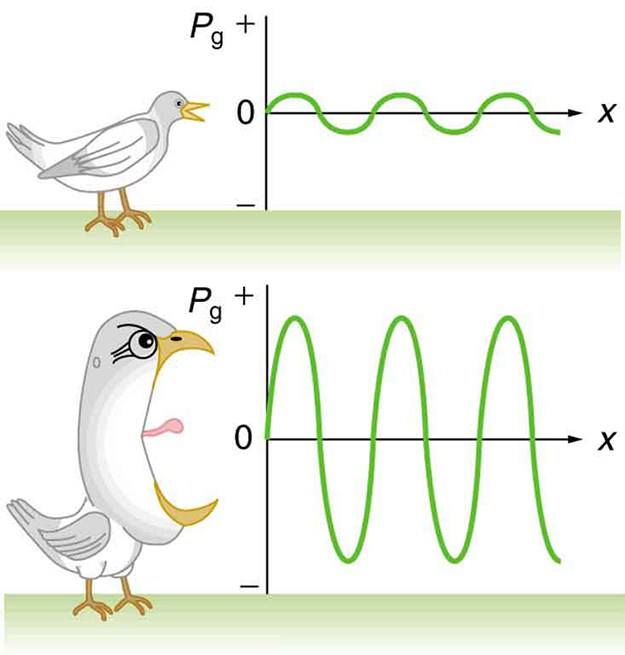
When a sound is louder what measurement gets bigger?
a)
Frequency 
b)
Amplitude 
c)
Wavelength 
d)
Crest
16.
Highest point of a wave
a)
crest
b)
trough
c)
wavelength
d)
frequency
17.
The number of wavelengths that pass a point each second
a)
crest
b)
amplitude
c)
frequency
d)
pitch
18.
Sound is produced by
a)
music
b)
vibrations of molecules
c)
Electromagnetic Waves 
d)
Transverse Waves 
19.
The lowest part of the wave is?
a)
crest
b)
trough
c)
rarefaction
d)
wavelength
20.

When light shines through a prism it creates ________________

a)

visible light

b)

infrared radiation

c)

ultraviolet rays

d)

electromagnetic wave

21.

The larger the amplitude, the less energy

a)

true

b)

false

22.
Light is a form of 
a)
energy
b)
radiation
c)
reflection
23.

Compressions are...

a)

associated with transverse waves

b)

associated with longitudinal waves

c)

light waves

d)

visible light

24.

Mechanical waves can be transverse or longitudinal waves

a)

True

b)

False

25.

What is the correct order of the visible light spectrum starting with the longer wavelength?

a)

Red, yellow, orange, blue, violet, indigo

b)

Violet, indigo, blue, green, yellow, orange, red

c)

Green, yellow, blue, indigo, red, orange

d)

Red, orange, yellow, green, blue, indigo, violet

26.

Which color has the longest wavelength?

a)

Yellow

b)

Red

c)

Green

d)

Purple

27.
Sound moves in a _________.
a)
Transverse wave
b)
Longitudinal wave
28.
How is sound produced?
a)
By the vibration of particles
b)
By the transfer of particles 
29.
Area of a longitudinal wave where particles are CLOSE together.
a)
Compression
b)
Rarefaction
30.
Area of a longitudinal wave where particles are APART. 
a)
Compression
b)
Rarefaction
31.
The reflection of sound waves off of a hard surface can create ______.
a)
A wave
b)
An echo 
32.
Soft surfaces _______ sound waves. 
a)
Reflect
b)
Absorb
33.
A reflected sound wave
a)
frequency
b)
pitch
c)
echo
d)
rarefaction
34.
A wave that requires a medium through which to travel
a)
mechanical wave
b)
chemical wave
c)
electromagnetic wave
d)
pitch
35.
Which statement about sound waves is true? 
a)
Air travels with them
b)
They travel through a vacuum
c)
They exist only if heard
d)
They can be reflected. 
36.
If distance C on the diagram decreased, what would happen to the pitch? 
a)
The volume would be louder. 
b)
The volume would be softer. 
c)
The pitch would be higher. 
d)
The pitch would be lower. 
37.
A medium is...
a)
a substance that transmits waves.
b)
a requirement for transmission of light waves.
c)
the movement of material in front of a sound wave.
d)
the density of air in a particular setting.
38.
True or False: Sound travels faster through solids than through liquids
a)
True 
b)
False
39.
Which medium will transmit sound the fastest?
a)
ocean water
b)
solid iron
c)
perfumed air
d)
a sponge
40.

What happens to a mechanical wave that is partially reflected AND partially transmitted?

a)

The wave stays the same.

b)

The energy is split between the two new waves.

c)

The energy increases.

d)

The energy is dissolved.