Wayground logo

Free Printable Worksheets

Font size

S
M
L
XL
Worksheets

2nd 9 week Spiral Assessment

Total questions: 42

Worksheet time: 1hrs 24mins

Name
Class
Date
1.

The inner core is the thickest layer of Earth?

a)

True

b)

False

2.

Earth is made up of how many layers?

a)

1

b)

2

c)

3

d)

4

e)

5

3.

Earth's atmosphere is made up mostly of ______________?

a)

Oxygen

b)

Nitrogen

c)

Helium

d)

Iron

4.

How many moons does Earth have?

a)

13

b)

7

c)

3

d)

1

e)

2

5.

Moving rock and soil

a)

Erode

b)

Weathering

c)

Deposition

d)

Erosion

6.

What type of erosion moves the most rock

and soil on the Earth?

a)

Wind

b)

Snow

c)

People

d)

Water

7.

Thick layers of ice.

a)

Cube

b)

Glacier

c)

Sheet

d)

Iceberg

8.

A river that goes back and forth.

a)

San Juan River flowing through the Goose Necks

b)

Colorado River

c)

Meander

9.
Which era is the longest?
a)
Cenozoic
b)
Cambrian
c)
Precambrian
d)
Phanerozoic
10.
What is the movement of soil from one place to another?
a)
weathering
b)
deposition
c)
discharge
d)
erosion
11.
Soil formation begins with the weathering of_______.
a)
Humus
b)
Subsoil
c)
Litter
d)
Rock
12.
What is the first step of soil formation?
a)
humus decomposing
b)
nitrates being absorbed by the plant roots
c)
weathering of parent rock
d)
climate changing
13.
Rock that forms when sediment from older rocks get pressed and cemented together.
a)
Sedimentary Rock
b)
Metamorphic Rock
c)
Igneous Rock
14.
The process by which igneous rocks are formed...
a)
heat and pressure
b)
melting and cooling
c)
weathering and erosion
15.
The process by which metamorphic rocks are formed...
a)
heat and pressure
b)
erosion and deposition
c)
melting and cooling
16.
_______ rock forms from magma/lava
a)
Metamorphic
b)
Sedimentary
c)
Igneous
17.
What are the 3 major types of rocks?
a)
Igneous, Metamorphic, Sedimentary
b)
Metamorphic, Igneous, Cementation
c)
magma, lava, crystals
18.

Fossils are found in ____________ rocks.

a)

metamorphic

b)

magma

c)

igneous

d)

sedimentary

19.
Bobby observed that a metal trash can was covered with rust.  What type of weathering caused the rust on the trash can?
a)
Mechanical weathering 
b)
Wind weathering
c)
Chemical weathering
d)
Erosion weathering
20.
What is the weathering process in which rocks are broken down into smaller pieces (sediments) and do not change the rock composition?
a)
Acid weathering 
b)
Gravity weathering
c)
Chemical weathering
d)
Mechanical weathering
21.

Which of the following is an example of deposition?

a)

A tree root lifting up a section of sidewalk

b)

Potholes caused by melting and freezing of water

c)

The formation of caves

d)

A pile of rocks at the bottom of a hill after a landslide

22.

Wind erosion of soil can be reduced by

a)

Planting trees along the edges of fields

b)

Planting crop rows parallel to the land contours

c)

Flattening hill slopes into terraces

d)

Building dams in streams

23.
Carbon dioxide (CO2) combines with water as raindrops fall through the atmosphere. This makes a weak acid, called carbonic acid. Carbonic acid is a very common in nature, where it works to dissolve rock. Pollutants, such as sulfur and nitrogen from fossil fuel burning, create sulfuric and nitric acid. Sulfuric and nitric acids are the two main components of acid rain, which speeds up chemical weathering.
This statue was probably destroyed by _____.
a)
Wind
b)
Humans
c)
Acid Rain
d)
Animals
24.
Chemical weathering is the other important type of weathering. Chemical weathering may change the size of pieces of rock materials, but definitely changes the composition. So one type of mineral changes into a different mineral. Chemical weathering works through chemical reactions that cause changes in the minerals.
True or false: chemical weathering causes rocks to change into new types of rocks.
a)
True
b)
False
25.
How does freezing water cause the weathering of rocks?  The freezing water—
a)
keeps the rocks in place
b)
makes the rocks last longer
c)
expands cracks and breaks rocks
d)
causes rocks to fall in landslides
26.
How does wind abrasion work?
a)
Sediment is blown off a surface from wind.
b)
Wind-blown sediment strikes a surface.
c)
Wind blows large chunks of rock off a surface.
d)
Sediment falls off of a surface on its own.
27.

Which layer contains the gases we breathe?

a)

atmosphere

b)

lithosphere

c)

hydrosphere

d)

mesosphere

28.

Which layer contains the ground we walk on?

a)

atmosphere

b)

lithosphere

c)

hydrosphere

d)

mesosphere

29.

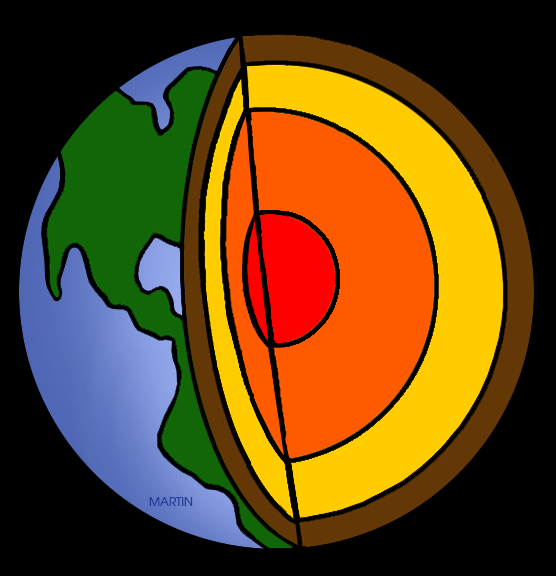
Which layer is shown in red?

a)

crust

b)

mantle

c)

outer core

d)

inner core

30.

Which layer is shown in orange?

a)

crust

b)

mantle

c)

outer core

d)

inner core

31.

Which layer is shown in yellow?

a)

crust

b)

mantle

c)

outer core

d)

inner core

33.

Which layer is shown in brown?

a)

crust

b)

mantle

c)

outer core

d)

inner core

33.

Which layer is shown in brown?

a)

crust

b)

mantle

c)

outer core

d)

inner core

34.

Which shows the order of the layers from COOLEST to HOTTEST?

a)

crust, mantle, outer core, inner core

b)

inner core, outer core, mantle, crust

c)

crust, outer core, inner core, mantle

d)

Trick question! All of the layers are the same temperature!
35.

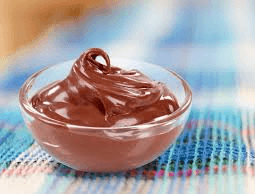
Which layer is made of "flowing" solid rock (think clay or pudding)?

a)

crust

b)

mantle

c)

outer core

d)

inner core

36.

Which layer is made (mostly) of LIQUID iron and nickel?

a)

crust

b)

mantle

c)

outer core

d)

inner core

38.

Which layer is made (mostly) of SOLID iron and nickel?

a)

crust

b)

mantle

c)

outer core

d)

inner core

38.

Which layer is made (mostly) of SOLID iron and nickel?

a)

crust

b)

mantle

c)

outer core

d)

inner core

39.

Which layer of the Earth is the THINNEST?

a)

crust

b)

mantle

c)

outer core

d)

inner core

40.

Which layer of the Earth is the THICKEST?

a)

crust

b)

mantle

c)

outer core

d)

inner core

41.

Which layer is the coolest?

a)

crust

b)

mantle

c)

outer core

d)

inner core

42.
The continuous movement of the continents.
a)
geoscience
b)
rain
c)
wind
d)
plate tectonics