wayground logo

Free Printable Worksheets

Font size

S
M
L
XL
Worksheets

Natural Selection & Evolution Quiz Review

Total questions: 75

Worksheet time: 54mins

Name
Class
Date
1.
Who was the naturalist that traveled the world to study plants and animals?
a)
Albert Einstein
b)
Charles Darwin
c)
Charles Barkley
d)
Isaac Newton
2.
The gradual change in species over time is...
a)
Evolution
b)
Nucleotide 
c)
Adaptation
d)
Natural Selection
3.
Darwin wrote that organisms with traits that are best suited to the environment will ________________
a)
increase in number
b)
become extinct
4.
To adjust to a changing environment
a)
Mutation
b)
Adapt
5.
Another word for adapt is ____________.
a)
change
b)
create
6.
Which term refers to the process by which individuals that are better suited to the environment survive and reproduce therefore passing down their genes to their offspring? 
a)
Evolution 
b)
Variation 
c)
Adaptation
d)
Natural Selection 
7.
When an organism completely dies out, it is called.....
a)
Adaption
b)
Extinction
c)
Fossilization
d)
Mutation
8.
The white feathers of a snowy owl allow it to blend in with its environment during the winter months (snow). This is an example of ________________
a)
Species
b)
Environmental Change
c)
Adaptation
d)
Variation
9.
Genetic differences between organisms of the same species
a)
Variation
b)
Adaptation
c)
Behavior
d)
Environment
10.
What is the advantage of having different shaped beaks?
a)
To look different from other species.
b)
To be able to eat the food readily available in the environment.
c)
To protect itself against predators.
d)
To protect itself against prey.
11.
The struggle for existence against other members of an organisms species is
a)
Competition
b)
Natural Selection
c)
gene flow
d)
genetic drift
12.
Remains of ancient organisms are called
a)
Extinctions
b)
Fossils
c)
Mutations
d)
Variations
13.
A well-tested concept that explains a wide range of observations is called a(an):
a)
hypothesis
b)
experiment
c)
cause and effect
d)
scientific theory
14.
What is another name for natural selection?
a)
survival of the smartest
b)
survival of the fastest
c)
survival of the biggest
d)
survival of the fittest
15.
What is a change in an organism that allows for it to survive in its environment?
a)
homologous
b)
vestigial
c)
variation
d)
adaptation
16.
What is this an example of?
a)
diversity of species
b)
variation
c)
vestigial structures
d)
DNA studies
17.
Inherited trait that helps an organism survive is a(n) __________.
a)
Fossil
b)
Adaptation
c)
Ancestor
d)
Natural selection
18.
Which term refers to the process by which individuals that are better suited to the environment survive and reproduce therefore passing down their genes to their offspring? 
a)
Evolution 
b)
Variation 
c)
Adaptation
d)
Natural Selection 
19.
You look at two species and see very similar DNA. What does this likely tell you?
a)
These are the same animal.
b)
These animals have a common ancestor.
c)
These animals are not likely related.
d)
These animals are likely becoming one species.
20.
Horse breeding for specific desired traits is an example of which type of evolutionary evidence?
a)
Artificial selection
b)
Embryology
c)
Fossils
d)
Biochemical molecules
21.
According to the theory of natural selection, some individuals more likely than others to survive and reproduce because they:
a)
pass on to their offspring their newly acquired traits.
b)
are better adapted to their environment than others and will pass on those adaptations to future offspring.
c)
do not pass on newly acquired traits.
d)
produce fewer offspring than others in the same environment.
22.
Which of the following is a term for a group of similar organisms that can reproduce fertile offspring?
a)
individual
b)
population
c)
species
d)
fossil
23.

What is gradual change in a species over time

a)

evolution

b)

natural selection

c)

diversity

d)

extinct

24.

The variety of organisms that inhabit the Earth

a)

diversity

b)

mutation

c)

evolution

d)

natural selection

25.
Which layer is the oldest?
a)
1
b)
2
c)
3
d)
4
26.
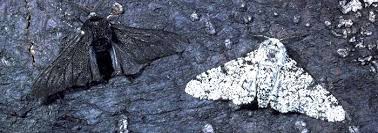
Predict which moth would increase in population
a)
light 
b)
dark
27.
This picture is an example of
a)
homologous structures
b)
embryological similarities
c)
analogous structures
d)
vestigial structures
28.
What does these image depict? 
a)
Vestigial Structures 
b)
Fossils 
c)
Adaptations
d)
Species 
29.
These animals are examples of what?
a)
Plush Toys 
b)
Selective Breeding 
c)
Adaptation 
d)
Extinction 
30.
What does this image suggest? 
a)
Law of Superposition 
b)
Specations 
c)
Common Descent 
d)
Five Finger Discount 
31.
The process by which organisms with favorable traits survive and reproduce at a higher rate
a)
Natural Selection 
b)
Adaptation 
c)
Evolution 
d)
Speciation 
32.
An original species from which all other species evolved.
a)
Fossil
b)
Natural Selection
c)
Descendant
d)
Common Ancestor
33.
The information provided by fossils about the Earth's history.
a)
Fossil Record
b)
Extinction
c)
Evolution
d)
Genetic Variation
34.
Which of the following means "change over time"
a)
natural selection
b)
speciation
c)
evolution
d)
isolation
35.
The differences among a species, like different bird beaks, are called
a)
theories
b)
variations
c)
adaptations
d)
genes
36.
Any inherited trait that gives an organism an advantage in its environment is called ___.
a)
a mutation
b)
an adaptation
c)
evolution
d)
natural selection
37.
Definition: homologous structures
a)
remains of dead organisms
b)
related organisms have the same bone makeup
c)
in the early stages of development dogs, pigs, and humans resemble one another
38.
Definition: embryology
a)
remains of dead organisms
b)
related organisms have the same bone makeup
c)
in the early stages of development dogs, pigs, and humans resemble one another
39.

Which statement about fossils is evidence of natural selection occurring over millions of years?

a)

Fossils found in upper layers are older than those found in bottom layers.

b)

Fossils found in lower layers of rocks are more complex than those found in top layers.

c)

Fossils of current species have been found in all rock layers.

d)

Fossils of species that are no longer in existence but are common ancestors are found in lower rock layers.

40.

In a habitat, there are red bugs and green bugs. The birds prefer the taste of the red bugs, so soon there are many green bugs and few red bugs. The green bugs reproduce and make more green bugs and eventually there are no more red bugs. Which statement best explains this?

a)

Red color in bugs are controlled by the environment.

b)

The bugs chose to be green to avoid being eaten.

c)

Green bugs survived better and reproduced more than red bugs.

d)

The increased number of birds increased the mutation rate in the bugs.

41.

Super bacteria with the power to resist most antibiotics are popping up across the U.S. In terms of natural selection, which best explains this?

a)

Bacteria interbreed with other bacteria to produce super bacteria.

b)

Only bacteria that is resistant to the antibiotics survive and pass on their immunity.

c)

Some of the bacteria learn to survive even though they are weakened by the antibiotics.

d)

The bacteria were able to have more offspring by changing the way they reproduced.

42.

Which structure most likely evolved to live only on water?

a)

A

b)

B

c)

C

d)

D

43.

Deer mice that migrated to the sand hills of Nebraska changed from dark brown to light brown to better hide from predators in the sand. Which statement explains how they changed colors?

a)

More of the light colored mice survived long enough to reproduce.

b)

The light colored mice began eating the offspring of the dark colored mice.

c)

The light colored mice mated with mice that were already there.

d)

The light colored mice changed the color of their fur.

44.

Where would a scientist expect to find evidence of common ancestors and shared traits?

a)

current observation

b)

recently excavated bones

c)

fossil record

d)

textbooks on the species

45.

What is true about scientific laws and theories?

a)

laws state and theories explain

b)

theories state and laws explain

c)

theories eventually become laws

d)

theories are just random guesses

46.

Sand Hill Cranes have a long beak to reach their food, what would happen if it was short?

a)

It would eat different food

b)

it would share food with other birds

c)

it would have a hard time getting food and possible die

d)

it would attract more mates

47.

Why can the fossil record be used as evidence of the scientific theory of evolution?

a)

it shows every known life form

b)

It shows how an organism has changed over time

c)

It shows the process of reproduction

d)

it shows the variety of different species

48.

What evidence do we have that different species may have once shared common ancestors?

a)

shared environments

b)

similarities in the fossil record

c)

similar life cycles

d)

shared food sources

49.

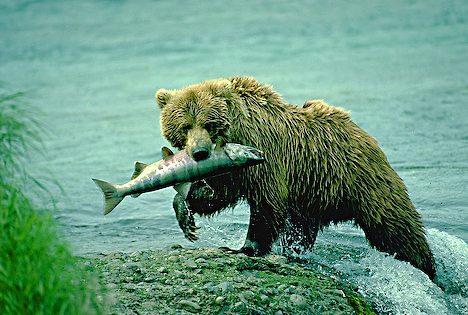
A grizzly bear survives because he is well-adapted to his environment. When he reproduces he passes on those traits to his offspring. this process is called

a)

Natural Selection

b)

Selective Breeding

c)

Random mutations

d)

Variations in a species

50.

Why might it be helpful for a species to have a lot of variations?

a)

They can't be seen by predators

b)

If the environment changes, they might be better able to adapt

c)

It is helpful in asexual reproduction

d)

They don't recognize each other

51.

Changes in inherited characteristics can cause a species to change into a new one. This change over time is called?

a)

Graduation

b)

Selective Breeding

c)

Revolution

d)

Evolution

52.
Which is the most accurate method of dating fossils?
a)
radioactive
b)
relative
c)
studying layers in the earth
53.
Evolution typically happens...
a)
in a few weeks
b)
over millions of years
c)
never
d)
in 100 years
54.
If an organism can't adapt fast enough, this might happen.
a)
hibernate
b)
stay the same
c)
live longer
d)
become extinct
55.
Darwin said that within a species there will be _________________________
a)
nothing different
b)
variation/differences
56.
What do the similar embryos of human and chickens tell us?
a)
We both use our bones for the same things, leading to similar structures.
b)
They had a common ancestor.
c)
Humans are descendants of wolves.
d)
It is impossible to tell.
57.
Which of the following can scientists use as evidence to support the theory of evolution?
a)
Vestigial Structures
b)
Environment
c)
Charles Darwin
d)
Extinction
58.
All of the following can be used as evidence for evolution except 
a)
Fossils
b)
Vestigial Structures
c)
Fossil Record
d)
Life Forms
59.
Darwin suggested that we could never "watch" evolution in action. Why did he believe this?
a)
Because we cannot see evolution in other species.
b)
Because evolution is just a theory and not a fact.
c)
Because evolution takes several generations to occur.
d)
Because evolution would be boring to watch.
60.

The figure shows the wings of a bat and an insect. Which term describes these structures?

a)

homologous

b)

analogous

c)

vestigial

61.

The chart shows that species B and C have the fewest amino acid differences for a protein among four species. What does this suggest about their evolutionary relationship?

a)

They are more closely related to each other than to the other species

b)

They evolved at a faster rate compared to other species

c)

They share a developmental similarity not observed in the other species

d)

They do not share a common ancestor with the other species

62.

Which of the following statements best explains the similarity between the bone structures in the structures in the picture?

a)

All organisms evolve following the same basic pattern.

b)

All animal parts used for motion evolve in the same way.

c)

Both animals evolved from a common ancestor.

d)

Organisms that flew evolved into organisms that swim.

63.

The figure shows the limbs of several different organisms. Which term describes these structures?

a)

homologous

b)

analogous

c)

vestigial

64.

The small bones at the end of the human tailbone have no use today, although they may once have been useful. They are called __________.

a)

Vestigial structures

b)

Mutation

65.
A remnant or trace of an organism from the past is called a _______.
a)
Ancestor
b)
Skeleton
c)
Fossil
d)
Imprints
66.
The diagram shows fossils in different rock layers. Which of these statements about the age of these fossils is most likely correct?
a)
Fossil A and C are the same age
b)
Fossil B is older than fossil C
c)
Fossils A is older than fossil B
d)
Fossil D is older than fossil C
67.

What is suggested by the similary of early embryos of different species of vertebrates?

a)

No evolutionary relationship between the groups

b)

A recent common ancestry

c)

Similar environments in the past

d)

Evolution from a distant common ancestor

68.
Do organisms "decide" to evolve and change?
a)
Yes, they know they need to change to survive 
b)
No, they change because of natural selection
69.
Evolution can best be described as which type of change?
a)
absolute change
b)
extreme change
c)
gradual change
70.
How is genetic variation related to an organism's ability to adapt to its environment?
a)
When genetic variation is low, the ability to adapt is high
b)
When genetic variation is high, the ability to adapt is low
c)
When genetic variation is low, the ability to adapt is low
d)
Genetic variation is unrealted to the ability to adapt
71.
Which would best allow a species to survive environmental changes?
a)
similar physical features
b)
low mutation rate
c)
small population
d)
genetic diversity
72.

The larger amount of variation among species the ______________ the chance that at least some species will survive a natural disaster.

a)

lesser

b)

greater

73.

Natural selection acts on an organisms

a)

Genotype

b)

Personality

c)

Phenotype

d)

Alleles

74.
Bird wings and butterfly wings are an example of
a)
Homologous structure
b)
Analogous structure
c)
Mimicry
d)
Camoflague
75.
The famous scientist who came up with the theory of natural selection
a)
Jacobson
b)
Skubal
Einstein
c)
Darwin
d)
Curie