wayground logo

Free Printable Worksheets

NEW

Font size

S
M
L
XL
Worksheets

Newton's Laws of Motion Review

Total questions: 50

Worksheet time: 45mins

Name
Class
Date
1.
Pushing a child on a swing is easier than pushing an adult on the same swing, because the adult has more inertia.
a)
Newton's 1st Law
b)
Newton's 2nd Law
c)
Newton's 3rd Law
2.
This person bought coffee and put it on the seat next to them. If they stopped quickly and the coffee spilled which law would that represent?
a)
Newton's 1st Law
b)
Newton's 2nd Law
c)
Newton's 3rd Law
3.
Force = Mass x Acceleration
a)
Newton's 1st Law
b)
Newton's 2nd Law
c)
Newton's 3rd Law
d)
Newton's 4th Law
4.

Gina and Mike are dragging a toy box across the floor. Gina's toy box has a mass of 10 kg and Mike's toy box has a mass of 12 kg. If both Gina and Mike exert the same force on each toy box, which one will accelerate more SLOWLY according to Newton's 2nd Law?

a)

Gina's toy box

b)

Mike's toy box

5.

Julie's foot was the unbalanced force that put a soccer ball at rest into motion. Once the soccer ball is in motion across a flat soccer field, what is the unbalanced force that stops the soccer ball and puts it at rest again?

a)

The wind coming across the field causes the ball to slow down and come to rest.

b)

The friction between the soccer ball and field causes the ball to slow down and come to rest.

c)

Gravity causes the ball to slow down as it climbs the hill and come to a rest at the bottom of the hill.

6.
A net force of 15 N is exerted on an encyclopedia to cause it to accelerate at a rate of 5 m/s2. Determine the mass of the encyclopedia?
a)
 m = 3.0 kg
b)
m = 4.0 kg 
c)
m = 3.0 ml 
d)
m = 30.0 g
7.
Which of Newton's Laws gives the reason for why you can feel things that you touch?
a)
Newtons 1st law 
b)
Newtons law of touch 
c)
Newtons 2nd law 
d)
Newtons 3rd law
8.
A(n) __________ is a push or pull.
a)
newton
b)
acceleration
c)
force
d)
momentum
9.
If a 10 kilogram object accelerates suddenly at 15 m/s2, how much force was applied to the object?
a)
150 Newtons
b)
15 Newtons
c)
150 kilograms
d)
100 kilograms
10.
One object has twice as much mass as another object. The first object also has also twice as much...
a)
velocity
b)
gravitational acceleration
c)
inertia
d)
all of these
11.
What is the net force of this object? 
a)
10 N, no direction
b)
10 N left
c)
5 N right
d)
0 N no direction
12.
Find the net force: 15 N to the right, and another 15 newtons to the right.
a)
0 N Right
b)
0 N Left
c)
30 N Left
d)
30 N Right
13.
8 N to the left , and 4 N to the right. Find the net force. Is this balanced 
a)
12 N Right  No
b)
4 N Left  No
c)
12 N Right  Yes
d)
4 N Left  Yes
14.
With unbalanced forces, the object will move in the direction of the _______ force.
a)
larger 
b)
smaller 
c)
equal 
15.
If a force of 26 N is exerted on two balls, one with a mass of 0.52 kg and the other with a mass of 0.78 kg, which ball will have the greater acceleration?  (F=ma)
a)
The one with a mass of .78 kg will have the greatest acceleration.
b)
The one with a mass of .52 kg will have the greatest acceleration.
c)
They will both accelerate at the same rate.
16.
If a dog weighs 115 N on Earth, what is his mass? 
a)
0.115kg
b)
115kg
c)
11.5kg
17.
What is the acceleration of an object that has 55kg of mass and a 333N force is acting on it?
a)
6.05 m/s2
b)
60.5 m/s2
c)
605 m/s2
18.

The Law of Inertia applies to

a)

Objects at rest

b)

Accelerating objects only

c)

Moving Objects

d)

Both moving and non moving objects

19.

All of the following are examples of forces except.

a)

Tension

b)

Applied

c)

Weight

d)

Mass

20.

If the acceleration of a certain object is 8 m/s2 and the force being applied is tripled, what is the new acceleration?

a)

2.3 m/s2

b)

4 m/s2

c)

24 m/s2

21.

An unbalanced force must be applied to an object to do all of the following except

a)

Accelerate

b)

Slow Down

c)

Stop Moving

d)

Maintain a constant speed

22.
Which force produces a change in motion?
a)
unbalanced force
b)
balanced force
c)
gravitational force
d)
frictional force
23.
Which one needs a greater net force to move, a kilogram of feathers or a kilogram of iron? 
a)
feathers 
b)
iron
c)
same
d)
depends on their friction
24.
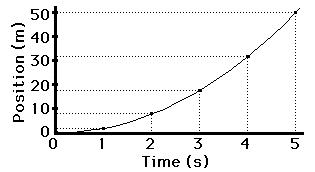
The picture of the position vs. time graph shows an object that is...
a)
accelerating/speeding up
b)
moving at a constant speed 
c)
not moving 
d)
accelerating/slowing down. 
25.
According to Newton's second law, if you increase the force applied to an object :
a)
it accelerates more
b)
it doesn't move
c)
you get more inertia
d)
it decelerates
26.
What is the net force?
a)
30 N 
b)
25 N 
c)
5 N 
d)
55 N 
27.
Balanced or Unbalanced?
a)
Balanced 
b)
Unbalanced
28.
What force does a parachute use to slow things down before hitting the ground?
a)
Friction
b)
Air resistance
c)
Water resistance
d)
Wind
29.
When two objects rub together, what force do they produce
a)
Gravity
b)
Air resistance
c)
Friction
d)
Water resistance
30.

A big boulder requires more force to move than a small rock. Which newtons law applies here

a)

1st

b)

2nd

c)

3rd

d)

no laws apply

31.

An unbalanced force is when objects accelerate in one direction because the force is greater from that direction.

a)

true

b)

false

32.
A 20 kg bike accelerates at 10 m/s2.  what was the force?
a)
25 Newtons
b)
20 Newtons
c)
200 Newtons
d)
10 Newtons
33.

A horse pulls a wagon with a mass of 1000 kg. Starting from rest , they reach a velocity of 8 m/s in 4 seconds. What is the acceleration and the force the wagon is pulled with?

a)

32 m/s2 , 32,000 N

b)

32 m/s2 , 3,200 N

c)

2 m/s2 , 2,0000 N

34.
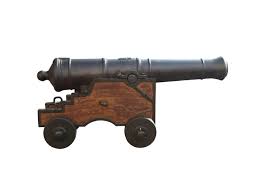
When a cannon fires a cannonball we observe Newton's third law. Which force is the reaction force?
a)
The cannon moving forward
b)
The cannonball moving forward
c)
The cannon moving backward
d)
The cannonball moving backward
35.

Which of these best states Newton's Second Law?

a)

The greater the mass of an object the greater the force needed to change its motion.

b)

The greater the mass of an object the less force needed to change its motion.

c)

The mass of an object does not effect the force needed to change its motion

36.

Find how much force the man will need to exert to move the car.

a)

5000 N

b)

50 N

c)

20,000 N

d)

500 N

37.
You push on a tree with 20 N of force. If the tree doesn't move, the tree is pushing back on you with _____of force.
a)
20N 
b)
40N 
c)
10N 
d)
70N
38.
If a ball of cheese is fired into frictionless space, the amount of force needed to keep it going equals
a)
twice the force with which it was fired
b)
the same amount of force with which it was fired
c)
1/2 the force with which it was fired
d)
zero, since no force is requires to keep it moving. 
39.
Which has more Inertia? 
a)
Truck
b)
Ant
c)
A cat
d)
A skateboard
40.
Suppose that a sled is accelerating at a rate of 2 m/s2. If the net force is tripled then what is the new acceleration of the sled?
a)
12 m/s/s
b)
6 m/s/s
c)
12 in/s/s
d)
120 m/s/s
41.
Which type of force(s) will cause a change in an object's motion?
a)
gravity
b)
zero net force
c)
balanced forces
d)
unbalanced forces
42.
The masses of four vehicles and the net forces acting on them as they enter a highway are recorded in the table below. Which vehicle has the greatest acceleration as it enters the highway?
a)
Sedan
b)
Coupe
c)
SUV
d)
Truck
43.

A student lets a toy car roll four times down a ramp. Each time the student covers the surface of the ramp with a different material. The student measures and records the time it takes the car to roll down the ramp. Which of these would be the best conclusion based on the data in the table?

a)

Different surfaces affect how fast a toy car accelerates.

b)

Different toy cars travel at different speeds.

c)

Gravity has little effect on the speed of toy cars on different surfaces.

d)

Air resistance is the greatest factor in limiting the acceleration of different toy cars.

44.
Safety belts protect people in cars in the event of an accident because, according to Newton’s Laws of Motion, when an impact causes the car to suddenly change its motion, -
a)
the people in the car will continue to move in the same direction and at the same speed as before the impact.
b)
the speed of the car always increases, giving it greater force since the mass will remain the same.
c)
the speed of the people always increases, since now they have, not one, but two forces acting on them.
d)
the car now has a greater overall mass - its own mass plus the mass of the object by which it has been struck.
45.
A ball thrown into the air starts out with an initial upward velocity, but eventually slows and stops before falling back to the ground. Which of the following contributes the most to the change in motion of the ball?
a)
The initial force with which the ball is thrown
b)
The downward force of gravity
c)
The resistance against the atmosphere
d)
The increase of inertia
46.
A bowling ball is rolled with a certain speed and strikes a bowling pin with a force indicated by the arrow in this illustration. When the bowling ball strikes the bowling pin, the force applied by the pin to the ball -
a)
depends on the mass of the bowling pin.
b)
is equal to the force applied by the ball.
c)
must be zero, since the pin is not moving.
d)
is equal to the force of gravity on both.
47.
An object is moving to the right at a constant velocity. What will happen if a force of 20N starts acting on it in the opposite direction?
a)
The object’s velocity will increase.
b)
The object’s velocity will decrease.
c)
The object will come to a stop.
d)
The object will move at the same velocity.
48.
Newton’s first law of motion, applied to a book sitting on a table, would explain that the book will not move until which of the following conditions is met?
a)
Gravity on the book can be reduced to zero
b)
Unbalanced forces act on the book
c)
Balanced forces act on the book
d)
Friction being exerted on the book
49.
A rising hot air balloon is acted on by a force pulling it upward and by the force of gravity pulling it downward. Based on Newton’s Law of Inertia, what will happen to the balloon when the force of gravity equals the upward force?
a)
It will stop moving.
b)
It will rise faster.
c)
Its motion will be constant.
d)
It will move toward the ground.
50.

What is the unit to MEASURE force?

a)

Kilogram

b)

Meter

c)

Pounds

d)

Newton