
 Worksheets
Mollusks Review
Total questions: 57
Worksheet time: 29mins
Which part of the Mollusk body is specialized for burrowing, feeding, and movement?
trochophores
visceral mass
mantle
muscular foot
Which class of Mollusks include clams, oysters, and mussels?
Gastropoda
Bivalvia
Cephalopoda
Which part of the Mollusk body is the tissue covering the body?
Mantle
Trochophore
Muscular Foot
Visceral Mass
Which class of Mollusks include organisms that have camera-like eyes similar to humans?
Gastropoda
Bivalvia
Cephalopoda
Which class of Mollusks all have tentacles?
Gastropoda
Bivalvia
Cephalopoda
Which class of Mollusks have the most advanced nervous system?
Gastropoda
Bivalvia
Cephalopoda

What type of mollusk is this?
Bivalve
Cephalopod
Gastropod
Segmented worm
Which class of Mollusks have a closed circulatory system?
Gastropoda
Bivalvia
Cephalopoda
All of the classes
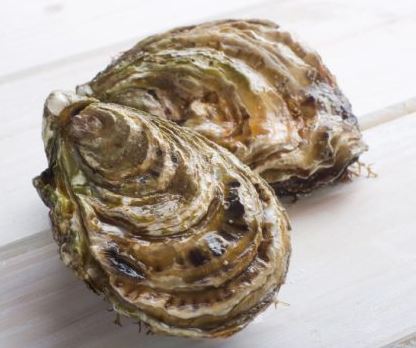
Which group of Mollusks does the picture belong to?
Gastropoda
Bivalvia
Cephalopoda
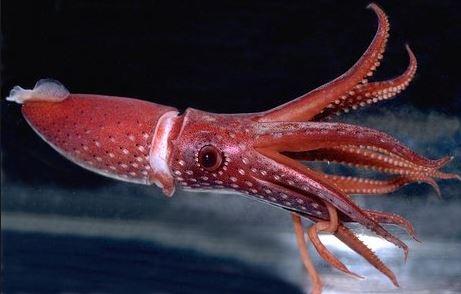
What Mollusk group does the picture belong to?
Gastropoda
Bivalvia
Cephalopoda
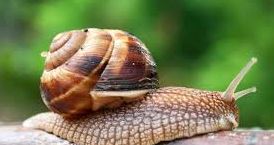
What Mollusk group does the picture belong to?
Gastropoda
Bivalvia
Cephalopoda
What is the meaning of the term Mollusk?
Soft-bodied
Filter feeder
Porus
Stomach foot
Mollusks are vertebrates.
True
False
What produces the shell of a Mollusk?
Stomach
Radula
Mantle
Muscular foot
What method/structure do bivalves utilize to eat?
Filter feeding
Radula
Tentacles
Baiting
Squids are invertebrates and are part of the phylum _________________?
Mammalia
Annelida
Mollusca
Bivalvia
Squid belong to the Class ________________________, which literally means "head-foot".
Arthropoda
Cephalopoda
Gastropoda
Bivalvia

This is the "toothed tongue" on some mollusks. It is used to scrape food.
Ossicle
Radula
Parapodia
Osculum
Which class of Mollusks include organisms that all have two shells?
Gastropoda
Bivalvia
Cephalopoda
What method/structure do gastropods utilize in order to eat?
Tentacles
Radula
Mantle
Filter feeding
Which part of the mollusk body plan contains organs?
Muscular Foot
Visceral Mass
Trochophore
Mantle
Which of the following is the organ used by mollusks for excretion?
Gills
Nephridia
Mantle
Visceral mass
Which of the following is the correct description of the body cavity of mollusks?
They are protostome acoelomates
They are protostome coelomates
They are deuterostome coelomates
They are protostome pseudocoelomates
Which class of Mollusks have many species that are sessile?
Gastropoda
Bivalvia
Cephalopoda
Arthropoda
Which part of the mollusk contains the heart, digestive and reproductive organs?
Radula
Head-foot
Visceral mass
Trochopore
Organs that are in contact with blood supply and specialized for gas exchange
Trochopore
Radulas
Bivalves
Gills

What is #16?
Excurrent siphon
Incurrent siphon
Intestines
Muscular foot
Ciliated free swimming larva found in the most aquatic mollusks and some annelids are called:
Diptera
Pupae
Trochophore
Nymph
Digestive organ which passes through the pericardial cavity and collects feces.
Crop
Esophagus
Stomach
Intestine
The umbo is closest to the ______ end of a clam.
Anterior
Posterior
Deep
The “bump” on the dorsal surface of a clam shell is called the _______.
Palp
Muscular foot
Umbo
Radula
The fleshy opening that pushes water out of the posterior end of a clam is called the __________.
Excretory pore
Excurrent siphon
Anus
Incurrent siphon
The posterior opening of the digestive tract through which digestive waste is released is called the:
Excretory pore
Anus
Excurrent siphon
Incurrent siphon
The mantle of a clam will coat an irritating grain of sand with the same smooth material that coats the inner shell causing a(n) ________ to form.
Pearl
Cyst
Tumor
Abscess
Cephalopods can release a cloud of ____ into the water to distract predators.
Feces
Urine
Milk
Ink
The nervous system of a clam consists of 3 pairs of ___________ and 2 pairs of nerve cords.
Spinal nerves
Hearts
Brains
Ganglia
Gastropods undergo a process called ___________ in which the visceral mass twists 180° bringing the gills, anus, and mantle cavity up to the front of the animal.
Radial development
Torison
Spiral development
Metamorphosis
Products from the digestive, excretory, and reproductive systems all empty into the _______ before leaving through excurrent siphon.
Mantle cavity
Visceral mass
Hemocoel
Liver
The __________ muscle is located towards the rear of a clam and helps to hold the shell closed.
Gluteus maximus
Posterior adductor
Quadriceps
Abdominal
The shell of a clam is also called a(n):
Endoskeleton
Valve
Scale
Keratin covering
Pigment cells called __________located in the outer mantle layer allows cephalopods to change color and blend in with their surroundings.
Melanocytes
Pigmocytes
Chromatophores
Keratinocytes
Fan-like structures that wave to move food up from the gills to the mouth are called:
Muscular feet
Filters fans
Gills
Palps
This pattern can be seen on the outer shell of bivalves and shows the “age” of the animal.
Shell pattern
Chromatophores
Age spots
Growth rings
The ____________ open(s) and close(s) the clam's shell.
Palyps
Visceral mass
Adductor muscles
Muscular foot
Organisms with a “true” body cavity are:
Pseudocoeolmates
Eucoelomates
Acoelomates
One advantage of having a true coelom instead of a pseudocoelom or acoelom is that body wall muscles can contract without interfering with:
Respiration
Digestion
Urination
Circulation
Mollusk “blood” is called:
Hemofluid
Hemolymph
Mollublood
Gastrolymph
How many shells do cephalopods have (excluding the nautilus)?
0
1
2
Varying amounts
The incurrent and excurrent siphons keep ________ moving over the gills.
Oxygen
Water
Blood
Carbon dioxide
Type of circulatory system found in bivalves and gastropods.
Open
Closed
Semi-closed
Semi-open
This organ pumps hemolymph around in the hemocoel.
Excurrent siphon
Incurrent siphon
Heart
Lungs
This fleshy opening brings water in at the posterior end of a clam.
Excurrent siphon
Incurrent siphon
Mouth
Incoming pore
Mollusks are _________because their embryonic blastopore becomes their mouth.
Protostomes
Deuterostomes
____ is a greenish digestive enzyme made by the digestive gland that helps digest fat in food.
Lipase
Protease
Bile
Synthase

