wayground logo

Free Printable Worksheets

Font size

S
M
L
XL
Worksheets

Science Review 2

Total questions: 101

Worksheet time: 2hrs 50mins

Name
Class
Date
1.

To increase the volume you must increase the ____________.

a)

force

b)

tension

c)

matter

d)

volume

2.

Sound travels SLOWEST through which medium?

a)

water

b)

metal

c)

gas

d)

wood

3.

Sound travels FASTEST through solids because ______________.

a)

The molecules are spread further apart.

b)

The molecules are packed tightly together.

c)

The molecules do not vibrate.

d)

The molecules do not touch one another.

4.

Mrs. Bowyer's guitar is out of tune. One of her strings is making too high of a pitch. What does she need to do to the guitar string?

a)

tighten the string

b)

loosen the string

c)

cut the string

d)

pluck it harder

5.

The drum section is playing too loud and the teacher cannot hear the other instruments. The drummers should ______________.

a)

strike the drums harder

b)

tighten the drum skin

c)

strike the drums lightly

d)

loosen the drum skin

6.

Sound is a form of _______________.

a)

energy

b)

volume

c)

pitch

d)

light

7.

The lowest pitch is made by the ____________ instrument.

a)

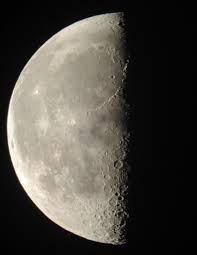
biggest

b)

smallest

c)

wooden

d)

shortest

8.

Which of the following would have the highest pitch?

a)

a lion roaring

b)

the rumble of a truck

c)

a man's voice

d)

a bird chirping

9.

Megan was listening to her favorite song on the radio. She wanted to hear the song louder but knew she shouldn't turn up the volume. What could Megan do to hear the song louder?

a)

Closer her eyes and focus on the music.

b)

Move the radio closer to her.

c)

Move the radio further away from her.

d)

Tap on the radio.

10.

Astronauts must use radios inside their helmets to communicate with one another in space. Why?

a)

The jets from the rockets are too loud to hear each other clearly.

b)

Space is a vacuum and does not contain matter.

c)

The molecules are not packed together closely enough in space.

d)

The molecules are packed together too tightly in space.

11.

To make the pitch of a rubber band higher you should __________.

a)

pluck it harder

b)

increase the tension

c)

decrease the tension

d)

pluck it softly

12.

A slower vibrating string will make a ________________ pitch.

a)

lower

b)

higher

c)

louder

d)

softer

13.

You stand outside of a room that has the doors and windows closed. Why can you still hear sound from inside the room?

a)

Vibrations are absorbed n the doors and windows.

b)

Vibrations travel through the door and window.

c)

Vibrations are reflected inside the room.

d)

Vibrations echo in the room.

14.

To stop a sound you must ___________________.

a)

decrease the frequency of the vibrations

b)

increase the frequency of the vibrations

c)

stop the vibration

d)

strike the object harder

15.
When a rainbow is formed outside naturally, what causes the light to refract?
a)
A. Small raindrops
b)
B. Sunlight rays
c)
C. Tiny mirrors
d)
D. Glass prisms
16.
Allows light to pass through but the light is scattered so that whatever is behind it cannot be clearly seen.
a)
Transparent
b)
Translucent
c)
Opaque
d)
None of the above
17.
Does not allow light to pass through it
a)
Transparent
b)
Translucent
c)
Opaque
d)
None of the above
18.
Allows light to pass through so whatever is behind it can be clearly seen
a)
Transparent
b)
Translucent
c)

Opaque

d)
None of the above
19.
To take in
a)
reflect
b)
absorb
c)
transmit
20.
To pass through
a)
Transmit
b)
Absorb
c)
Reflect
21.
To bounce back
a)
Transmit
b)
Absorb
c)
Reflect
22.
Why would an object be white?
a)
All of the colors of the rainbow reflected off of the object
b)
All of the colors of the rainbow were absorbed into the object
23.
Why would an object be black?
a)
All of the colors of the rainbow reflected off of the object
b)
All of the colors of the rainbow were absorbed into the object
24.
Why can you see a reflection in the mirror?
a)
Light rays reflect off of the mirror in different directions
b)
Light rays reflect off of the mirror in the same direction
25.
Why does light bend?
a)
It ran into a wall
b)
It reflects off of a wall and hits another object
c)
It must travel through more than one object so it changes its speed and direction
d)
Sometimes it feels like stretching
26.
Which letter shows reflection? 
a)
Pathway A
b)
Pathway B
c)
Pathway C
d)
Pathway D
27.

A prism could best be described as which of the following?

a)

An object that does not allow light to pass through.

b)

A triangular object that allows light to enter and be refracted out into colors

c)

A pyramid shaped object that reflects the rainbow

d)

A triangular object that absorbs the light from a rainbow

28.
This variable in an experiment is the one being deliberately changed by the scientist. 
a)
dependent variable
b)
independent variable
c)
data
d)
control group
29.
What step does every scientific experiment begin with?
a)
hypothesis
b)
question/problem
c)
procedures
d)
conclusion
30.
An experiment is performed on plants to see how different liquids affect plant growth. Each plant in the experiment is given a different liquid; water, apple juice, or milk. Each plant has the same amount of soil, sunlight, and listens to the same music. In this investigation, the independent variable is ...
a)
The type of plant
b)
The amount of sunlight
c)
The type of music
d)
The type of liquid
31.
The summary at the end of an experiment that explains the results. 
a)
conclusion
b)
procedures
c)
materials
d)
responding variable
32.
Testing a hypothesis often involves a(n):
a)
answer
b)
experiment
c)
problem
d)
safety check
33.
A student wants to test the effects of type of exercise on heart rate.  What is the dependent variable?
a)
heart rate
b)
type of exercise
c)
amount of exercise
d)
time of day exercise occurs
34.
Observations made during an experiment are called:
a)
data
b)
problems
c)
conclusions
d)
questions
35.
An experiment is performed on plants to see how different liquids affect plant growth. Each plant in the experiment is given a different liquid; water, apple juice, or milk. Each plant has the same amount of soil, sunlight, and listens to the same music. In this investigation, what are the controlled variables?
a)
Type of plant, amount of music, and sunlight
b)
Water, apple juice, milk
c)
Plant growth
36.
An experiment is performed on plants to see how different liquids affect plant growth. Each plant in the experiment is given a different liquid; water, apple juice, or milk. Each plant has the same amount of soil, sunlight, and listens to the same music. In this investigation, the independent variable is ...
a)
The type of plant
b)
The amount of sunlight
c)
The type of music
d)
The type of liquid
37.

A person that studies, reports and forecast weather conditions is a

a)

radiologist

b)

geologist

c)

astronomer

d)

meteorologist

38.

What is the mixture of gases surrounding our planet called?

a)

atmosphere

b)

trees

c)

planet

d)

equator

39.
Select the best answer- What is weather?
a)
Weather is what is happening in the atmosphere in a certain place at a certain time.
b)
Weather is the atmosphere.
c)
Weather is precipitation.
d)
Weather is wind.
40.
What is a hurricane?
a)
A severe storm with lightning, thunder, heavy rain and strong winds
b)
A small, funnel-shaped cloud that comes down from a storm cloud with high speed winds
c)
A storms that forms over cold water and blows in a triangle pattern
d)
A large storm that forms over warm ocean waters with strong winds
41.
Which is an effect of a tornado?
a)
High wind damage, destroys buildings, power lines, and crops
b)
There is no effect
c)
Storm waves flood beaches and damage the coastal zones
d)
Tornadoes are mild storms.
42.
Which of the following is an effect of a hurricane?
a)
heavy rain, flooding, strong winds blow over power lines, lightning can start fires
b)
high wind damage, destroy buildings trees, power lines, and crops
c)
Winds can blow over trees and buildings, storm waves rise and cause massive flooding in the coastal zone
d)
There are no effects
43.
During _____________ stay inside if possible, stay out of the water, and do not stand under trees.
a)
rain Storm
b)
hurricane
c)
tornado
d)
thunderstorm
44.
During a __________ it is important that you board up all windows and stay away from windows.  Also, move further inland if you are near the coast.
a)
hurricane
b)
rain storm
c)
thunderstorm
d)
tornado
45.
During a __________ find a safe place away from a window.  If you are outside and can not find a shelter, lie flat in a ditch or other low place; do not stay in your car. 
a)
thunderstorm
b)
tornado
c)
hurricane
d)
rain storm
46.
During this type of severe weather, hail may also form.
a)
hurricane
b)
tornado
c)
thunderstorm
d)
rain storm
47.

What are tornadoes?

a)

a storm with thunder and lighting and typically also heavy rain or hail

b)

a storm that can be the same as thunderstorms, but can be even more dangerous

c)

a mobile, destructive force of rotating winds having the appearance of a funnel shaped cloud and beneath a large storm system.

d)

a huge storm with strong winds and storm surges

48.
The powerful spiral wind action carries water a couple of feet high and lashes it ashore?
a)
Storm Surge
b)
Hurricane
c)
Tropical Wave
d)
Tropical storm
49.
What occurs when water flows or collects over land that is usually dry.
a)
dam
b)
flood
c)
floodway
d)
levee
50.

A tornado begins as a ___________ cloud that pokes through the bottom of a cumulonimbus cloud.

a)

cirrus

b)

cumulus

c)

funnel

d)

stratus

51.

Winds are generated when air flows from a high pressure area into a ____.

a)

region of intense moisture

b)

cold front

c)

low pressure area

d)

storm that is already in progress

52.
The order of the planets is:
a)
Mars,Venus,Earth,
Mercury,Saturn
Jupiter, Uranus, Neptune
b)
Earth,Venus,Mars
Jupiter, Neptune,
Mercury,Saturn,
Uranus
c)
Mercury,Venus,Earth
Mars,Jupiter,
Saturn,Uranus
Neptune
53.
Which planet is the largest?
a)
Jupiter
b)
Saturn
c)
Uranus
d)
Neptune
54.
Which planet is fifth from the sun?
a)
Saturn
b)
Jupiter
c)
Mars
d)
Earth
55.
Which planet is seventh from the sun?
a)
Saturn
b)
Earth
c)
Venus
d)
Uranus
56.
which planet is the third from the sun?
a)
Mercury 
b)
Neptune 
c)
Pluto 
d)
Earth 
57.
Which is the fourth planet from the sun?
a)
Mars
b)
Saturn
c)
Earth
d)
Jupiter
58.
Which is the second closest planet to the sun?
a)
Earth
b)
Saturn
c)
Venus
d)
Mercury
59.
Which Planet comes after Earth in the solar system?
a)
Mercury
b)
Mars 
c)
Venus 
d)
Eros
60.
Which Planet comes after Earth in the solar system?
a)
Mercury
b)
Mars 
c)
Venus 
d)
Eros
61.
Earth spins on its ________.
a)
revolution
b)
axis
c)
rotation
d)
phase
62.
Earth makes one complete ________ every 24 hours.
a)
turn
b)
revolution
c)
spin
d)
rotation
63.
Earth makes one complete ________ around the Sun every year. 
a)
turn
b)
revolution
c)
rotation
d)
circle
64.

Which answer correctly orders the planets from the sun?

a)

Mercury, Earth, Mars, Jupiter, Venus, Saturn, Uranus, Neptune

b)

Jupiter, Saturn, Uranus, Neptune, Earth, Venus, Mars, Mercury

c)

Mercury, Venus, Earth, Mars, Jupiter, Saturn, Uranus, Neptune

d)

Mercury, Venus, Earth, Mars, Saturn, Jupiter, Uranus, Neptune

65.

Which planets are the gas giants?

a)

Mercury, Venus, Earth, Mars

b)

Jupiter, Saturn, Uranus, Neptune

c)

Mercury, Venus, Earth, Saturn

d)

Jupiter, Mercury, Venus, Earth

66.

Why does the sun look bigger than all the other stars in our Solar System?

a)

It is the closest star to Earth.

b)

It is the biggest star in the Solar System.

c)

It is farthest star from Earth.

d)

It is the hottest star in our Solar System.

67.

Why do most stars look so small in the sky?

a)

They are close to us.

b)

They are far away from us.

c)

They are running out of gas.

d)

They are new stars.

68.

The different shapes that the moon seems to have.

a)

revolutions

b)

phases

c)

rotations

69.

How long does it take the Moon to make a revolution around the Earth?

a)

12 hours

b)

27 Earth days

c)

One year

d)

Three months

70.

The star at the center of the solar system that provides heat and light to Earth

a)

Moon

b)

Sun

c)

Mrs. Solis

d)

Earth

71.

What causes the moon's phases

a)

Where you are standing on Earth

b)

the amount of sunlight reflected onto the moon from the sun

c)

The tilt of Earth

d)

how fast the moon is moving

72.
Define Waxing
a)
Moon is increasing and light part appears to be growing
b)
Completely illuminated
c)
dark side is facing earth
d)
Moon is decreasing and light part appears to be shrinking
73.
How many phases does the moon go through?
a)
4
b)
8
c)
10
d)
16
74.
As the moon's shape appears to get smaller, we say that the moon is _.
a)
swelling
b)
waxing
c)
waning
d)
disappearing
75.

The spinning of the earth on its axis that causes day and night is called

a)

orbit.

b)

axis.

c)

rotation.

d)

revolution.

76.
If the last full moon was on April 4th, when can you expect to see the next full moon? 
a)
April 29th
b)
July 4th
c)
May 4th
d)
September 12th
77.
What moon phase came right BEFORE this one?
a)
First Quarter
b)
Last Quarter
c)
New Moon
d)
Full Moon
78.
Name the moon phase
a)
waning crescent
b)
first quarter
c)
waning gibbous
d)
waxing gibbous
79.
Name the moon phase
a)
Waning Crescent
b)
Last Quarter or (third quarter)
c)
New Moon
d)
Full Moon
80.
Imaginary line that runes through Earth. 
a)
orbit
b)
day
c)
tilt
d)
axis
81.
If its ____ in the Northern hemisphere, then its fall in the Southern hemisphere. 
a)
spring
b)
summer
c)
fall
d)
winter
82.
The hemisphere where you live
a)
northern
b)
southern
83.
Which of the following best describes the tilt of the earth when it is summer in the southern hemisphere?
a)
The northern hemisphere is tilted toward the sun
b)
The northern hemisphere is tilted away from the sun
c)
The norther hemisphere is tilted neither toward or away from the sun
d)
Why are you talking about the northern hemisphere when you asked about the southern hemisphere?
84.
What does the earth's tilt cause?
a)
The seasons
b)
Day and Night
c)
Tsunamis
d)
Earthquakes
85.
What would seasons be like if Earth's axis were straight up and down?
a)
Seasons would be the same.
b)
Seasons would be more extreme.
c)
There would be no seasons.
86.
What happens when the area in which you live tilts away from the sun?
a)
It is summer.
b)
It is spring.
c)
It is winter.
d)
It is fall.
87.
What season is letter A in the northern hemisphere?
a)
Winter
b)
Summer
c)
Spring
d)
Fall
88.

What is the first stage of the plant life cycle?

a)

seedling

b)

seed

c)

adult plant

d)

germination

89.

Seeds can move from one place to another by

a)

wind

b)

water

c)

animals

d)

wind, water, and animals

90.

This part of the plant holds the plant in the ground and gets water and nutrients from the soil.

a)

stem

b)

leaves

c)

flower

d)

roots

91.

This part of the plant produces seeds and creates pollen.

a)

roots

b)

flower

c)

stem

d)

leaves

92.

What is it called when seeds move from one place to another?

a)

germination

b)

seed dispersal

c)

life cycle

d)

seedling

93.

The _________ helps hold the plant up and carries water and nutrients to the rest of the plant from the roots.

a)

leaves

b)

roots

c)

stem

d)

seed

94.
Which is a function of the roots?
a)
absorb sunlight
b)
start photosynthesis
c)
pull nutrients from the soil
d)
turn gray when they get old
95.
Which is a function of the leaves?
a)
to provide shade
b)
to attract pollinators
c)
to make food through photosynthesis
d)
to absorb nutrients
96.
What is plant germination?
a)
a place where plants get sick
b)
planting a seed
c)
When  a seed grows into a plant
d)
the way a plant makes food
97.
Why do trees grow so tall?
a)
They are naturally big plants.
b)
They are competing for sunlight.
c)
Their roots can soak up lots of water to make them grow tall.
98.

Mosses and ferns reproduce by ____________.

a)

seeds

b)

spores

99.

Certain body parts or behaviors that allow or help an organism to survive/thrive in their environment.

a)

Adaptations

b)

Function

c)

Offspring

d)

Webbed Feet

100.

the way an organism reacts, things organisms do

a)

trait

b)

behavior

c)

hibernation

d)

migration

101.

What is a habitat?

a)

a role an organism plays in its ecosystem

b)

the body part

c)

a place in which an organism lives

d)

the living and nonliving things around an organism