wayground logo

Free Printable Worksheets

Font size

S
M
L
XL
Worksheets

Giant Quarter 1 Quiz

Total questions: 100

Worksheet time: 25hrs 0mins

Name
Class
Date
1.
These kind of observation use your senses to observe results.
a)
Qualitative
b)
Quantitative
c)
Scientific
2.
These kind of observations are made using instruments such as rulers, balances and thermometers.
a)
Qualitative
b)
Quantitative
c)
Scientific
3.
The temperature of the room is decreasing by 4 degrees Celsius.
a)
Qualitative
b)
Quantitative
4.
It makes a loud crackling sound.
a)
Qualitative
b)
Quantitative
5.
What is buoyant force?
a)
An upward force exerted by fluids on an object.
b)
An downward force exerted by fluids on an object.
6.

What is density?

a)

The ability to float

b)

Degree of compactness of a substance

c)

The moving of something from its place or position

7.
The water is ______ dense than the boat
a)
more
b)
less
8.

A bobber floats on the water because it is....

a)

more dense than the water

b)

less dense than the water

c)

the same density as the water

d)

to show you when you have a bite

9.
What is the definition of CONDUCTION?
a)
When heat is transferred from objects like rays of light or electromagnetically.
b)
a  hot liquid or air that  expands, becomes less dense, and rises or becomes more dense, and sinks.
c)
When heat transfers from objects that are touching.
d)
When heat transfers through the heater or AC in your house.
10.
What is the definition of CONVECTION
a)
When heat transfers through waves.
b)
When heat transfers from objects that are touching.
c)
a  hot liquid or air that  expands, becomes less dense, and rises or becomes more dense, and sinks.
d)
Heat traveling from the sun
11.
A group of friends gather around a fire to stay warm.
a)
conduction
b)
convection
c)
radiation
12.

A huge rock at the state park gets so hot during the day because of

a)

conduction

b)

convection

c)

radiation

13.

In heat transfer, heat always flows from the _______________ substance to the _______________ substance.

a)

Hotter to colder

b)

Colder to hotter

c)

Hotter to hotter

d)

Colder to colder

14.

The handle of a metal spoon warms up when it is placed in a hot bowl of soup because of

a)

Convection

b)

Conduction

c)

Radiation

d)

insulation.

15.

Near the ceiling of a room the air is warmer. The warm air rises because of

a)

conduction

b)

convection

c)

radiation

16.
The kind of heat transfer that travels through space in electromagnetic waves is ______________________.
a)
insulation.
b)
Radiation
c)
Conduction
d)
Convection
17.
The type of heat transfer that happens through direct contact of molecules or particles with each other is ___________________.
a)
Convection
b)
Conduction
c)
Radiation
d)
insulation.
18.
Which statement is true?
a)
The quicker a molecule moves, the colder it is.
b)
The slower a molecule moves, the warmer it is.
c)
The quicker a molecule moves, the warmer it is
d)
The movement on molecule don�t affect its temperature
19.
What is the energy source for the water cycle?
a)
the sun
b)
the earth
c)
water
d)
the moon
20.
What is evaporation?
a)
The part of the water cycle when the sun heats up water, turning it from a liquid into water vapor or steam. It rises from the ground into the air.
b)
The part of the water cycle when the water vapor in the air gets cold. The water turns back into a liquid and forms clouds.
c)
The part of the water cycle when clouds get heavy and can no longer hold the liquid water. This causes the water to fall from the sky to the earth as rain, snow, sleet, or hail.
21.
What is condensation?
a)
The part of the water cycle when the sun heats up water, turning it from a liquid into water vapor or steam. It rises from the ground into the air.
b)
The part of the water cycle when the water vapor in the air gets cold. The water turns back into a liquid and forms clouds.
c)
The part of the water cycle when clouds get heavy and can no longer hold the liquid water. This causes the water to fall from the sky to the earth as rain, snow, sleet, or hail.
22.
What is precipitation?
a)
The part of the water cycle when the sun heats up water, turning it from a liquid into water vapor or steam. It rises from the ground into the air.
b)
The part of the water cycle when the water vapor in the air gets cold. The water turns back into a liquid and forms clouds.
c)
The part of the water cycle when clouds get heavy and can no longer hold the liquid water. This causes the water to fall from the sky to the earth as rain, snow, sleet, or hail.
23.
When water condenses, the water vapor in the air gets ___________ and changes back into liquid.
a)
cold
b)
hot
c)
warm
d)
solid
24.
Which is the opposite of condensation?
a)
runoff
b)
evaporation
c)
precipitation
d)
transpiration
25.
What is it called when plants give off water vapor as a waste product?
a)
condensation
b)
evaporation
c)
sublimation
d)
transpiration
26.
How much of our planet is estimated to be covered with water?
a)
68%
b)
50%
c)
97%
d)
75%
27.
Water from rain or snow that flows over the surface of the land into streams, rivers, and lakes is called...
a)
accumulation
b)
runoff
c)
ground water
d)
surface water
28.

The mixture of gases that surround the earth. ____________________

a)

Landforms

b)

Sun

c)

Atmosphere

d)

Weathering

29.
Which of these is an example of precipitation?
a)
snow
b)
air
c)
clouds
d)
vapor
30.
What is water that flows in rivers and streams into the oceans and lakes?
a)
evaporating
b)
condensing
c)
precipitating
d)
runoff
31.
What happens to water after it falls from clouds as rain?
a)
forms a puddle
b)
soaks into the ground
c)
All of the above
d)
runs off mountains and hills in bodies of water
32.
The North and South Poles are usually cold and dry.
a)
Weather
b)
Climate
33.
What is going on with the atmosphere at any particular time.
a)
Weather
b)
Climate
34.

What climate zone is the white area in the picture?

a)

Polar zone

b)

Temperate zone

c)

Tropical zone

35.

What climate zone is the green area in the picture?

a)

Polar zone

b)

Temperate zone

c)

Tropical zone

36.

Temperatures in the POLAR ZONES are...

a)

cold all year

b)

always warm

c)

warm in summer and cold in winter

37.

Temperatures in the TEMPERATE ZONES are...

a)

cold all year

b)

always warm

c)

warm in summer and cold in winter

38.

Temperatures in the TROPICAL ZONES are...

a)

cold all year

b)

always warm

c)

warm in summer and cold in winter

39.
They are highest clouds in the sky. They look curly, white and feathery. Usually mean good weather.
a)
Cumulus
b)
Cumulonimbus
c)
Cirrus
d)
Stratus
40.
what type of cloud is shown?
a)
cumulus
b)
cirrus
c)
stratus
41.
These clouds are the closest to the ground. Their name means layer- or sheet like. They bring rain or snow and cover most of the sky. 
a)
Cirrus
b)
Stratus
c)
Cumulonimbus
d)
Cumulus
42.
what type of cloud is shown?
a)
cumulus
b)
cirrus
c)
stratus
43.
How do clouds form?
a)
Liquid water is heated and evaporates and becomes water vapor in the atmosphere.
b)
Water vapor in the atmosphere cools and condenses to become tiny liquid water droplets in the atmosphere.
c)
Tiny liquid water droplets float upwards and gather together in the atmosphere to form a cloud.
44.
Cirrus clouds mean ...
a)
fair weather (nice)
b)
thunderstorms
c)
rain/storms coming
d)
long periods of rain
45.
These clouds appear in blanket-like layers.
a)
cumulus
b)
cumulonimbus
c)
cirrus
d)
stratus
46.
When are you most likely to see cumulus clouds?
a)
On a foggy day
b)
On a rainy day
c)
Before a thunderstorm
d)
On a sunny day
47.
These clouds can bring thunderstorms, heavy rain, lightening, and sometimes hail.
a)
cumulus
b)
cumulonimbus
c)
cirrus
d)
stratus
48.
Which cloud is this?
a)
cumulus
b)
cumulonimbus
c)
cirrus
d)
stratus
49.
This weather instrument is a...
a)
anemometer
b)
Christmas ornament
c)
wind vane
d)
barometer
50.
This weather instrument is a...
a)
anemometer
b)
barometer
c)
wind vane
d)
thermometer
51.
A rain gauge measures what?
a)
Air pressure
b)
Wind speed
wind speed
c)
Amount of rain fall
d)
Wind direction
52.
This weather instrument is an...
a)
wind vane
b)
anemometer
c)
barometer
d)
thermometer
53.
The weather forecast tomorrow says there will be a 15 mph northeast wind and a high temperature of 52 degrees. What three instruments will a meteorologist use to make this prediction?
a)
anemometer, wind vane, thermometer
b)
barometer, hygrometer, wind vane
c)
thermometer, satellite image, hygrometer
d)
wind vane, satellite image, barometer
54.
A high pressure system means we might have this weather.
a)
Snow blizzard
b)
Sunny and dry
c)
Rain storm
d)
Tornado
55.
A low pressure system means we might have this weather.
a)
Sunny 
b)
A clear sky
c)
Dry day
d)
Stormy or wet
56.
What is the name of a person who forescast weather?
a)
weather man
b)
geologist
c)
meteorlogist
d)
scientist
57.
What happens to air pressure as it moves upward into the atmosphere?
a)
increases
b)
decreases
c)
stays the same
58.
What tool do we use to measure temperature?
a)
Thermometer
b)
Ruler
c)
Balance
d)
Magnifying Glass
59.
Which tool measures humidity or the amount of moisture in the air?
a)
wind vane
b)
barometer
c)
anemometer
d)
hygrometer
60.
High pressure will usually bring what kind of weather?
a)
Good
b)
Bad
c)
Both Good and Bad
61.
Low pressure will usually bring what kind of weather?
a)
Sunny
b)
Calm
c)
Stormy
62.
As you climb up a mountain what happens to the air pressure?
a)
decreases
b)
increases
c)
stays the same
63.
Convection takes place because
a)
warm air is more dense than humid air
b)
warm and cold air have the same density
c)
cold air is less dense than warm air
d)
cold air is more dense than warm air
64.
Winds are caused by differences in
a)
precipitation
b)
humidity
c)
air pressure
d)
turbulence
65.
At the seashore late in the afternoon on a hot, sunny day, a person often feels a strong breeze coming in from the ocean.  Which of the following is the reason for the breeze?
a)
pounding waves generate air currents
b)
warm air over the ocean rushes in to replace the cool air that rises over land
c)
there are no clouds to block wind coming in
d)
heavy cool air over the ocean rushes in to replace warm air that rises over the land
66.
On a cold, cloudy day, the local weather forecaster predicts that a high-pressure system will be moving into the area in the next 24 hours. Which weather conditions will this system most likely bring to the area?
a)
stormy
b)
sunny
c)
snowy
d)
hot
67.
Do sea breezes typically happen during the day or night?
a)
Day
b)
Night
68.
Do land breezes typically happen during the day or night?
a)
Day
b)
Night
69.
During a land breeze which way does the wind blow?
a)
from the sea to the land
b)
from the land to the sea
70.
During a sea breeze which way does the wind blow?
a)
from the land to the sea
b)
from the sea to the land
71.
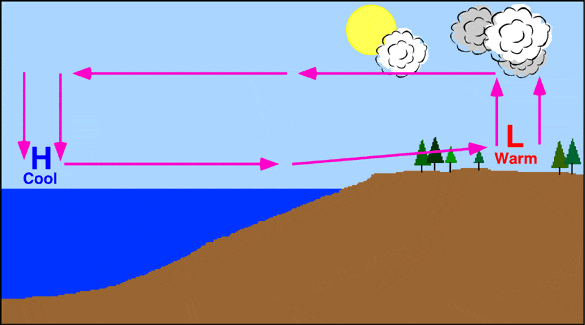
Is this a land or a sea breeze?
a)
land breeze
b)
sea breeze
72.
When warm air rises, ______ pressure forms at the surface of the land or sea.
a)
high
b)
some
c)
low
d)
none
73.
Why do land breezes occur at night?
a)
Land cools off slower than water, so the air above water is cooler.
b)
Water cools off faster than land, so the air above land is warmer.
c)
Land heats up slower than water, so the air stays cooler during the day.
d)
Water cools off slower than land, so the air above water is warmer.
74.

The ____ of tropical oceans make hurricanes stronger.

a)

cold water

b)

warm water

c)

ocean life

75.

How are hurricanes categorized?

a)

based on their destination

b)

based on their wind speed

c)

based on where they form

76.
What type of front brings cool, cold weather to an area?
a)
cold front
b)
warm front
c)
stationary front
d)
occluded front
77.
What type of front brings warm and humid weather to an area?
a)
cold front
b)
warm front
c)
stationary front
d)
occluded front
78.
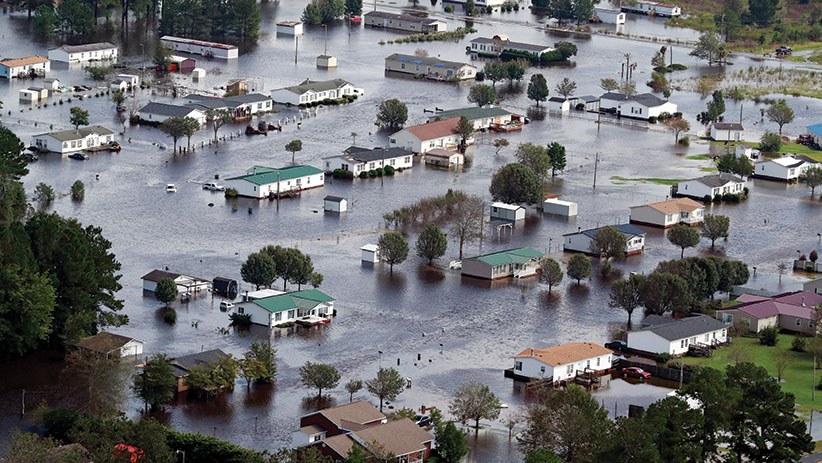
This event can best be identified as what?
a)
cold front
b)
warm front
c)
stationary front
d)
occluded front
79.
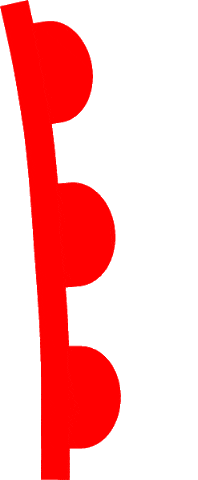
This symbol represents what type of front?
a)
cold front
b)
warm front
c)
stationary front
d)
occluded front
80.
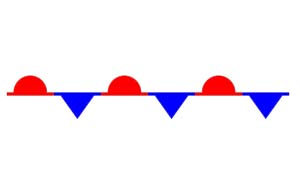
This symbol represents what type of front?
a)
cold front
b)
warm front
c)
stationary front
d)
occluded front
81.
This symbol represents what type of front?
a)
cold front
b)
warm front
c)
stationary front
d)
occluded front
82.
The boundary that forms between two air masses when they meet is called a...
a)
front
b)
storm line
c)
squall line
d)
midaltitude
83.
Which type of weather is associated with a cold front?
a)
heavy rain, snow, thunderstorms, and snow for short periods of time 
b)
Steady, light rain or snow can occur for longer periods of time 
84.

What type of front occurs when a warm air mass and a cold air mass do not have enough energy to move the other one out of the way?

a)

Warm front

b)

Cold front

c)

Stationary front

d)

Occluded front

85.

Which is the correct symbol for an occluded front?

a)
b)
c)
d)
86.

What type of front occurs when a warm air mass gets cut-off from the ground by two cool air masses?

a)

Cold front

b)

Warm front

c)

Occluded front

d)

Stationary front

87.

Which is the correct symbol for a stationary front?

a)
b)
c)
d)
88.

Which is the correct symbol for a warm front?

a)
b)
c)
d)
89.

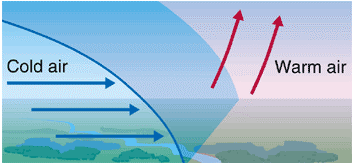
What type of front is being shown in the picture?

a)

Warm front

b)

Cold front

c)

Stationary front

d)

Occluded front

90.
The Coriolis Effect is caused by
a)
Earth rotating around the sun
b)
Earth rotating on its axis
c)
The tides
d)
Gravity
91.

What is the jet stream?

a)

Precipitation in North Carolina

b)

Weather over a long period of time

c)

Strong winds above the Earth's surface

d)

Football flying over the Earth

92.

What will most likely result when the jet stream moves south of North

Carolina?

a)

North Carolina will experience tropical weather conditions.

b)

North Carolina will experience hot, dry weather.

c)

North Carolina will experience mild weather.

d)

North Carolina will experience cold weather.

93.

Which best explains what type of weather the Gulf Stream usually brings

to North Carolina?

a)

increased wind speed

b)

increased air pressure

c)

increased temperature

d)

increased evaporation

94.
How does the Gulf Stream affect weather conditions along the eastern coast of the United States?
a)
The Gulf Stream causes temperatures to decrease.
b)
The Gulf Stream causes temperatures to increase.
c)
The Gulf Stream causes more overcast skies.
95.

How does the Gulf Stream impact hurricane development off the coast of the southeastern United States?

a)

Colder water from the Gulf Stream increases the speed and intensity of the hurricane.

b)

Colder water from the Gulf Stream decreases the speed and intensity of the hurricane.

c)

Warmer water from the Gulf Stream increases the speed and intensity of the hurricane.

d)

Warmer water from the Gulf Stream decreases the speed and intensity of the hurricane.

96.
How could La Niña affect weather during the summer in North Carolina?
a)
It could decrease wind.
b)
It could increase rainfall. 
c)
It could decrease rainfall. 
97.
Which lists some effects of El Niño?
a)
warmer temperatures and more rain
b)
warmer temperatures and less rain
c)
cooler temperatures and less rain
98.
Which causes North Carolina to experience an increase in winter precipitation?
a)
El Niño
b)
La Niña
c)
trade winds
d)
prevailing westerlies
99.
Which is an effect of La Niña on North Carolina’s summer weather?
a)
decreased winds
b)
decreased rainfall
c)
increased humidity
d)
increased temperature
100.
Which weather conditions are associated with El Niño?
a)
increased temperature, increased precipitation
b)
decreased temperature, increased precipitation
c)
increased temperature, decreased precipitation
d)
decreased temperature, decreased precipitation