wayground logo

Free Printable Worksheets

NEW

Font size

S
M
L
XL
Worksheets

Science Review 3

Total questions: 40

Worksheet time: 32mins

Name
Class
Date
1.

A prism could best be described as which of the following?

a)

An object that does not allow light to pass through.

b)

A triangular object that allows light to enter and be refracted out into colors

c)

A pyramid shaped object that reflects the rainbow

d)

A triangular object that absorbs the light from a rainbow

2.

How does light travel?

a)

in a wavy path

b)

in a straight path forever

c)

in a zig zag path

d)

in a straight path until it hits an object

3.

Smooth, shiny surfaces _______ a lot of light.

a)

reflect

b)

bend

c)

absorb

d)

produce

4.
This is used to separate white light into colors. 
a)
prism
b)
reflection
c)
sunlight
d)
spectrum
5.
By passing light through a prism, you can tell ____________.
a)
that white light is made of different colors
b)
the weight of the prism
c)
the original source of light
d)
that blue light is brighter than white light
6.
What does light do when it hits an object that it cannot pass through?
a)
It creates a shadow
b)
It passes through anyway
7.
Light is a kind of.....
a)
reflection
b)
energy
c)
heat
d)
matter
8.
Squidward found new reeds to tryout for his clarinet.  He used an APPLAUSOMETER to measure applause after playing  Under the Sea with each reed.  The results were put in the table.
What was controlled?
a)
The Song
b)
The Reed
c)
The Applause
9.
Squidward found new reeds to tryout for his clarinet.  He used an APPLAUSOMETER to measure applause after playing  Under the Sea with each reed.  The results were put in the table.
What was the independent variable?
a)
The Song
b)
The Reed
c)
The Applause
10.
Squidward found new reeds to tryout for his clarinet.  He used an APPLAUSOMETER to measure applause after playing  Under the Sea with each reed.  The results were put in the table.
What was the dependent variable?
a)
The Song
b)
The Reed
c)
The Applause
11.
The data collected supports which of the following questions that Squidward could have tested?
a)
Which song does the audience prefer?
b)
Which instrument does the audience like best?
c)
Which reed length creates the best sound?
d)
How do applause affect performance?
12.
Sound waves are all of the following EXCEPT
a)
it requires a medium
b)
 high and low
c)
soft or loud
d)
only high frequency
13.
The more_______ a sound has, the greater its _________ is. 
a)
pitch, volume
b)
energy, sound
c)
frequency, vibration
d)
energy, volume
14.
_________ is a form of energy that travels through the air. 
a)
sound
b)
volume
c)
energy
d)
wave
15.
___________ is made when something vibrates
a)
light
b)
sound
c)
drum
d)
pounding
16.
The volume of a sound is measured in units called ________
a)
decibels
b)
liters
c)
sound waves
d)
inches per minute
17.
A sound with a high frequency has a _____ pitch. A sound with a ____ frequency has a low pitch.
a)
high, low
b)
low, high
c)
medium, high
d)
high, medium
18.
A sound that bounces off a surface is called an ________.
a)
loud sound
b)
echo
c)
repeat
d)
quiet sound
19.
The ______ of a sound depends on the medium through which it's moving.
a)
pitch
b)
vibration
c)
speed
d)
sound
20.
A back and forth movement of matter
a)
volume
b)
vibration
c)
pitch
d)
frequency
21.
how high or low a sound is
a)
frequency
b)
volume
c)
vibration
d)
pitch
22.
the loudness of a sound
a)
vibration
b)
pitch
c)
volume
d)
frequency
23.

Thunderstorm clouds are known as _____.

a)

cirrus clouds

b)

stratus clouds

c)

cumulonimbus clouds

d)

cumulus clouds

24.

The calm area in the center of a hurricane is called the _____.

a)

draft

b)

funnel

c)

eye

d)

squall

25.

This type of cloud is thin, wispy, and is found high in the atmosphere.

a)

cumulus cloud

b)

stratus cloud

c)

cirrus cloud

d)

cumulonimbus cloud

26.
This type of cloud is thin and flat, and the edges are not clearly defined
a)
cirrus cloud
b)
cumulus cloud
c)
stratus cloud
d)
cumulonimbus cloud
27.
This type of cloud is thick and puffy on top, and generally flat on the bottom. It has well-defined edges and can change shape rapidly.
a)
cumulus cloud
b)
stratus cloud
c)
cirrus cloud
d)
cloud 9
28.

Stratus and cumulonimbus clouds can signal what type of upcoming weather?

a)

fair skies

b)

hot, sunny weather

c)

windy weather

d)

rainy weather

29.
Cumulus and cirrus clouds can signal what type of upcoming weather?
a)
fair skies
b)
hot, sunny weather
c)
windy weather
d)
rainy weather
30.
These clouds are the closest to the ground. Their name means layer- or sheet like. They bring rain or snow and cover most of the sky. 
a)
Cirrus
b)
Stratus
c)
Cumulonimbus
d)
Cumulus
31.
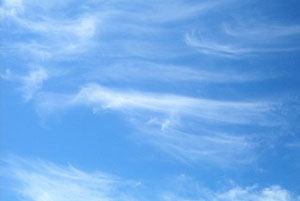
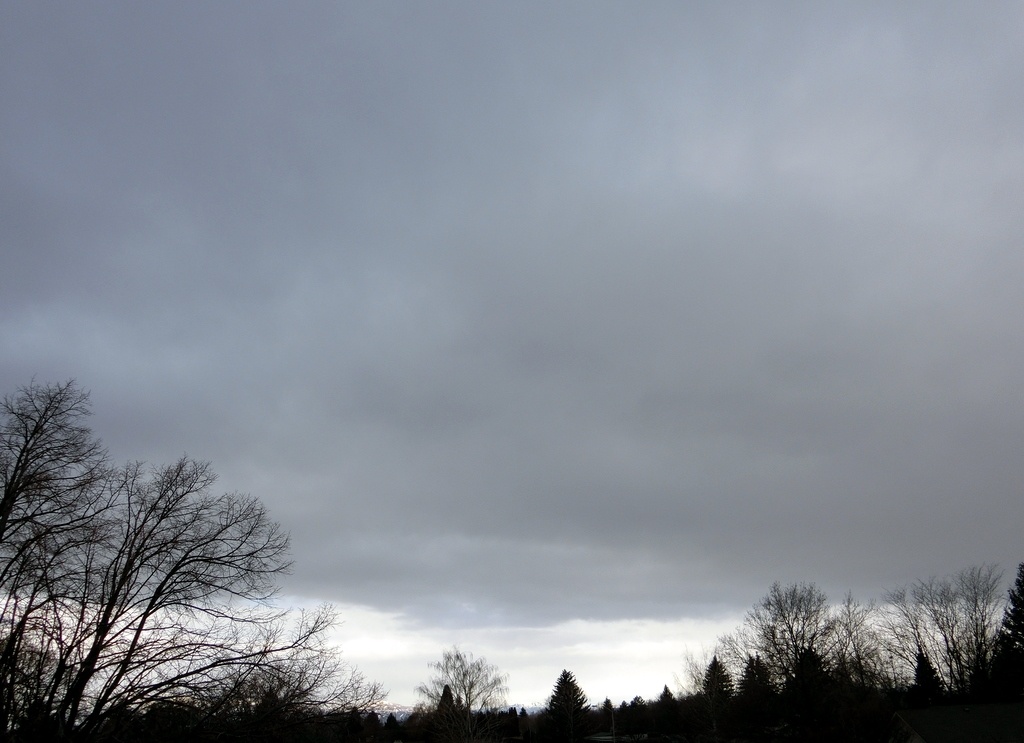
what type of cloud is shown?
a)
cumulus
b)
cirrus
c)
stratus
32.
How do clouds form?
a)
Liquid water is heated and evaporates and becomes water vapor in the atmosphere.
b)
Water vapor in the atmosphere cools and condenses to become tiny liquid water droplets in the atmosphere.
c)
Tiny liquid water droplets float upwards and gather together in the atmosphere to form a cloud.
33.

Characteristics of a Cumulonimbus cloud are...

a)

Low-level clouds, form in layers, and usually bring rain

b)

Thin clouds, look like feathers, made of ice crystals

c)

Very tall, flat on top, may cause thunderstorms

d)

Small, white and puffy, mid level

34.

What is fog?

a)

clouds that form high in the sky

b)

clouds that form close to the ground

c)

clouds that form around the sun

d)

clouds that produce snow

35.

How do clouds help meteorologists?

a)

they let them know how hot it is going to be

b)

they tell them how cold it is going to be

c)

they help them predict the weather

d)

they don't help them at all

36.
What are the reasons for the seasons?
a)
Earth's tilt and rotation.
b)
Earth's rotation and revolution.
c)
Earth's tilt and revolution.
d)
Earth's tilt and resolution
37.
When the Northern Hemisphere of Earth is Leaning away from the Sun, What season is the Southern Hemisphere experiencing?
a)
Summer
b)
Winter
c)
Spring
d)
Fall
38.
How long does it take the Earth to make one REVOLUTION around the Sun?
a)
12 hours
b)
24 hours
c)
365 days
d)
29.5 days
39.
How long does it take the Earth to make one REVOLUTION around the Sun?
a)
12 hours
b)
24 hours
c)
365 days
d)
29.5 days
40.
How long does it take for Earth to complete on full rotation?
a)
365 days
b)
23 hours
c)
24 hours
d)
1 month