
 Worksheets
HB Ch.8 Part B Challenge Work
Total questions: 80
Worksheet time: 44mins
If oxygen is not present what process will occur in yeast cells?
Alcoholic fermentation
Respiration
pyruvate oxidation
Lactic acid fermentation
During fermentation, yeast produces CO2 and
lactic acid
ethanol
hydrogen
water
Which of these is a product of cellular respiration?
ATP
Carbon dioxide
Water
All of these are a product of cellular respiration
Which process produces the most ATP per molecule of glucose?
lactic acid fermentation
aerobic respiration
alcoholic fermentation
glycolysis + lactic acid fermentation
In cellular respiration, the electron transport chain takes place in
the outer membrane of the mitochondrion
the folds of the inner membrane of the mitochondrion
the cytoplasm
the matrix of the mitochondria
the thylakoid membrane

When a phosphate group is removed from an ATP molecule,
a substantial amount of energy is released
a bond is formed
energy is stored
activation energy is increased
When glycolysis occurs,
the mitochondria produces 2 ATP NET
two pyruvate are made
8 NADH are produced
2 FADH2 are produced
Cells produce ATP from food most efficiently in the presence of
water
carbon dioxide
oxygen
Rubisco
Fermentation enables glycolysis to continue
under anaerobic conditions
under aerobic conditions
photosynthetic conditions
in the mitochondria

After a day of intense activity, your muscles feel sore because of
the accumulation of ethanol in muscle tissue
the accumulation of lactic acid
the accumulation of ATP
the accumulation of carbon dioxide
Because of microtears in the muscle tissue
You feel a burning in muscles or muscle fatigue after rigorous exercise. This due to ___
lactate or lactic acid build up
CO2 build up
ATP production
microtears in muscle tissue

Why is yeast used to bake bread?
the yeast break down sugar and produce waste gas, CO2 that makes bread rise
The yeast break down sugar and produce alcohol that makes bread rise.
The yeast consumes O2, causing bread to rise
The yeast does aerobic respiration and creates O2 to make the bread rise
How are lactic acid and alcoholic fermentation similar?
They have the same products
They have the same reactants
They both require oxygen
They occur in the same organisms
both processes use the same enzymes
Glycolysis results in the total production (gross) of:
2 ATP
4 ATP
4 NADH
2 Acetyl CoA
Which of the following is not a requirement for glycolysis?
Oxygen
ATP
NAD+
Glucose
ADP
Which of the following is not a product of glycolysis?
FADH2
NADH
ATP
Pyruvate
ADP
In Glycolysis, NADH is produced by the oxidation of:
G3P
Acetyl Coa
Pyruvate
NAD
At the END of Glycolysis, Glucose is broken down to 2 molecules of what?
pyruvic acid
lactic acid
NADH
ATP
The energy in ATP is stored
in the bond between the second and third phosphate
in the bond between the first and second phosphate
in the bond between the adenosine and the first phosphate
bonds between the ribose and adenine
The fate of pyruvate in anaerobic yeast cells is...
alcoholic fermentation, by oxidizing NADH and producing CO2 and ethanol.
Lactic acid Fermentation, by oxidising NADH and producing lacate.
alcoholic fermentation, by reducing NAD and producing ethanol and CO2
Lactic acid Fermentation,by reducing NADH and producing lactate
Which molecule isn't an energy carrier?
FADH2
NADH
CO2
ATP

What is modeled by letter B?
Glucose
Pyruvic Acids (Pyruvates)
2 ATP
Carbon Dioxide (CO2)
What is modeled by letter C?
NADPH
Pyruvic Acids (Pyruvates)
2 ATP
Carbon Dioxide (CO2)
What is modeled by letter E?
NADPH (Loaded electron carrier.)
Pyruvic Acids (Pyruvates)
2 ATP
Carbon Dioxide (CO2)
What does "J" represent?
carbon dioxide
oxygen
water
ATP
What is modeled by J?
Oxygen
Water
32 ATP
What is modeled by G?
Oxygen
Water
32 ATP
carbon dioxide
How many ATP does the electron transport chain produce by oxidative phosphorylation?
32
34
36
30
Which of the following does the Kreb's cycle produce more of per turn?
citric acid
NADH
CO2
ATP
The Kreb's cycle is cyclic reaction chain in the business of the ______of intermediate organic compounds like citric acid, malate, succinate..ect
oxidation
reduction
Most of the NADH in the aerobic respiration pathway is worth ___ATP while FADH2 is worth ___ ATP
3,2
2,3
2,2
3,3
The final electron acceptor for the cellular respiration pathway is ____
oxygen
ATP synthase
NADPH
NADH
The largest electron donor to the cellular respiration ETC would be ___
ATP
NADH
FADH2
Oxygen
Most energy store in the chemical bonds of glucose goes...
into making waste heat (dag gone 2nd LAW!)
into making ATP (Hooray for cells everywhere!)
into making NADH
into making pyruvate
In animal cells, when pyruvate is oxidized it is converted into _____ when it is reduced it is converted into ____
acetyl Coa, lactate
lactate, acetyl Coa
ATP, lactate
G3P, acetyl Coa
When oxygen is present, this part of the mitochondria gets quite acidic.
inner membrane space
matrix
the outer membrane
the inner membrane
During aerobic cellular respiration, where would you expect to find the highest concentration of carbon dioxide?
the matrix
the inner membrane space
the inner folded membrane
the cytoplasm
Both fermentation pathways exists to
oxidize NADH and produce NAD
reduce NAD and produce NADH
to oxidize pyruvate to make ATP
to oxidize pyruvate into lactate
The Kreb's cycle take place in the ____of the mitochondria.
matrix
inner membrane space
inner membrane
outer membrane
How many carbon dioxide molecules are produced per molecule of glucose in the cellular respiration pathway?
6
8
2
4
What molecule actually enters the Kreb cycle to be converted to citric acid?
acetyl Coa
pyruvate
lactate
glucose
yogurt and sour cream are made by bacteria doing....
lactic acid fermentation
alcoholic fermentation
aerobic cellular respiration
glycolysis
How many NADH are made in the Kreb's cycle?
8
6
2
10
Hydrogen ions that accumulate in the inner membrane space come from what source?
NADH, FADH2
water
oxygen
ATP
What are the two oxidizing agents in glycolysis?
NAD and FAD
NAD and ADP
NAD and ATP
NADH and ATP
What is the only molecule NOT to be directly oxidized in the aerobic cellular respiration pathway?
glucose
pyruvate
citric acid
ATP

Who is this?
Dwight D. Eisenhower
Gerald Ford
George H. W. Bush
Harry S. Truman

Who is this?
George H. W. Bush
Ronald Reagan
Richard Nixon
George W. Bush

Who is this?
Thomas Jefferson
John F. Kennedy
Herbert Hubert
Gerald Ford

Who is this?
Jimmy Carter
Ronald Reagan
Bill Clinton
William Howard Taft

Whose face is on the half dollar?
Lyndon B. Johnson
George Washington
Thomas Jefferson
John F. Kennedy
Pyruvate
Glucose
Acetyl CoA
CO2
NADH & FADH2
ATP & ADP
NAD and FAD
acetyl CoA
Which President was not assassinated?
Abraham Lincoln
James Garfield
Harry Truman
John F. Kennedy
Which president served only 30 days in office because he died of pneumonia? He got pneumonia because he gave a rather long inauguration speech without a coat.
William Henry Harrison
Howard Taft
Andrew Johnson
Andrew Jackson
Which one of these characters were not part of the original "Dukes of Hazard" T.V. show?
Boss Hog
Cooter
Roscoe P. Coltrane
Kelly Duke

What famous national park is this?
Yosemite
Yellowstone
The Grand Canyon
Rocky Mt. National Park
What is the longest river in the U.S.?
The Mississippi
The Missouri
The Colorado
The Rio Grande
What is the longest river in the world?
The Nile
The Mississpi
The Volga
The Amazon
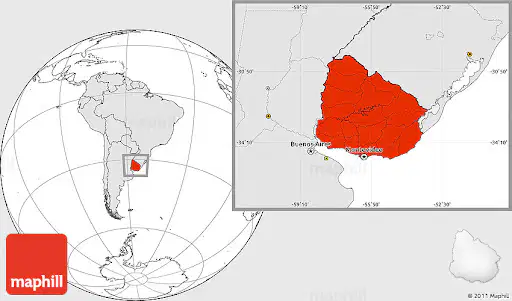
What is this country's name?
Brazil
Columbia
Paraguay
Uruguay

