
Font size
 Worksheets
Investigation 3 I-Check
Total questions: 54
Worksheet time: 1hrs 13mins


Which side of the hill would you climb a greater elevation to get to the top?
left
right
both sides are the same elevation
there is no way to know unless you climb it
Which side of the hill has a steeper slope?
left
right
both sides are the same elevation
there is no way to know unless you climb it

Which side has a steeper slope?
A
B
They are both the same.
There is no way to know.
Which side has a gradual slope?
A
B
They are both the same.
There is no way to know.

Which map would a hiker need to measure elevation?
A
B
Which map is a topographic map?
A
B
Which letter in Map B is on the steepest part of the trail?
F
G
H
J

What is the elevation of point A, the peak?
about 700 meters
about 200 meters
about 400 meters
about 90 meters
Which letter shows the lowest elevation on the map?
D
A
B
C
What is the distance between the Park Entrance and the Lookout?
100 meters
200 meters
90 meters
400 meters

Which rapid change does this picture show?
landslide
earthquake
volcanic eruption
heavy snowfall
Volcanic eruptions are a slow or rapid change?
rapid
slow
Growing tree roots are a slow or rapid change?
rapid
slow
Chemical weathering is a slow or rapid change?
rapid
slow
Physical weathering is a slow or rapid change?
rapid
slow
Landslides are a slow or rapid change?
rapid
slow
Earthquakes are a slow or rapid change?
rapid
slow
Flash floods are a slow or rapid change?
rapid
slow
Volcanic eruptions create new land by adding ____.
new rock to Earth's surface
gases to the air
heat to the soil on Earth's surface
water vapor to the air

Where do the A and B side of the hill go on the profile?
A on the left and B on the right
A on the right and B on the left
A and B both go on the right
A and B both go on the left

Is this picture a slow or rapid change?
Rapid
Slow
what is this .A place where Lava,Cinders,Ash and Gases pour out through openings in earths Surface
Volcano
Caldera
Cinder Cone
Composite Volcano
Select all the answers that are landforms.
volcanoes
mountains
canyons
valleys
What causes rapid changes to Earth's surface? Select all that apply.
floods
earthquakes
landslides
volcanoes
weathering
Select examples that cause slow changes to Earth's surface.
Hurricanes
weathering
tornadoes
erosion
What natural event causes sudden changes to the Earth's surface?
global warming
glaciers
solar flares
earthquakes
Kendall said that all changes to the Earth's surface happen slowly over time. Is Kendall correct?
Yes, he is correct, all changes happen slowly through erosion.
No he is not correct, the changes happen suddenly.
No, he is not correct, the changes happen through deposition.
No, he is not correct, changes can happen rapidly or over time.


|
A rapid change is a change that happens...
slowly.
hot.
cold.
quickly.


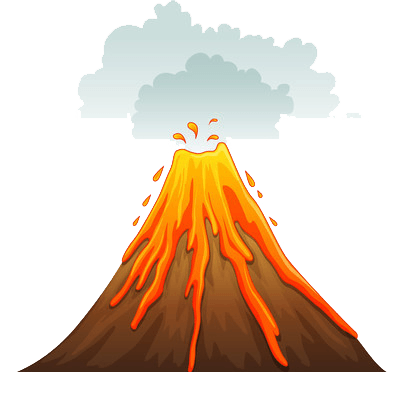
Volcanoes create new land on the Earth’s surface when –
lava flows then cools and hardens to form rock.
an eruption destroys the side of a mountain.
magma forms giant underground chambers.
saltwater touches lava and changes into steam.
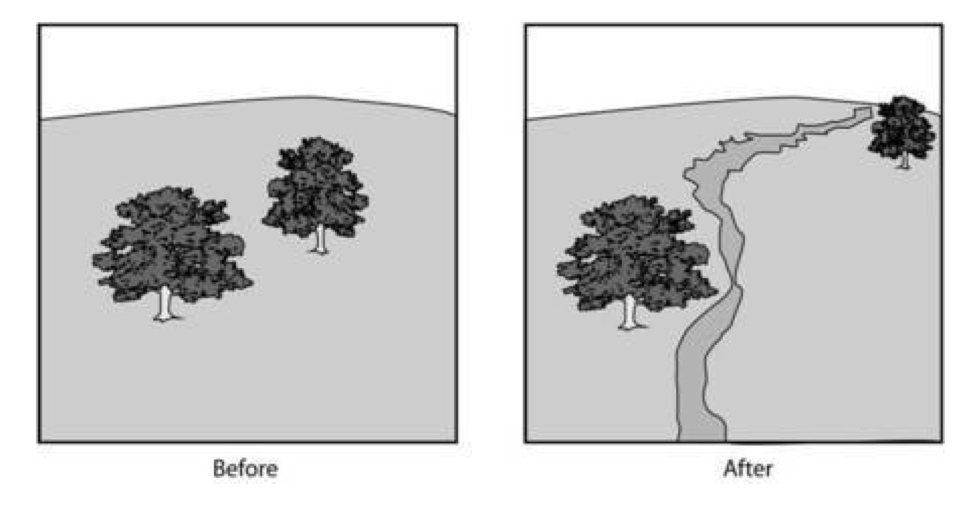
Which of the following most likely caused the change to the Earth's surface illustrated?
landslide
thunderstorm
sinkhole
earthquake
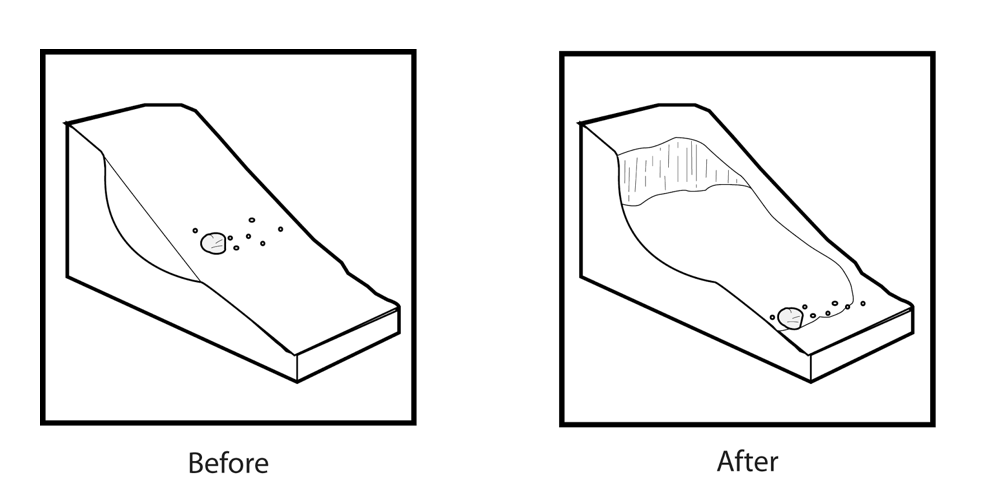
Which of these most likely caused the rapid change to the Earth's surface illustrated here?
landslide
volcanic eruption
mountain building
sandstorm
A landslide is most likely to be caused by –
strong winds
breaking rocks
heavy rains
cold weather
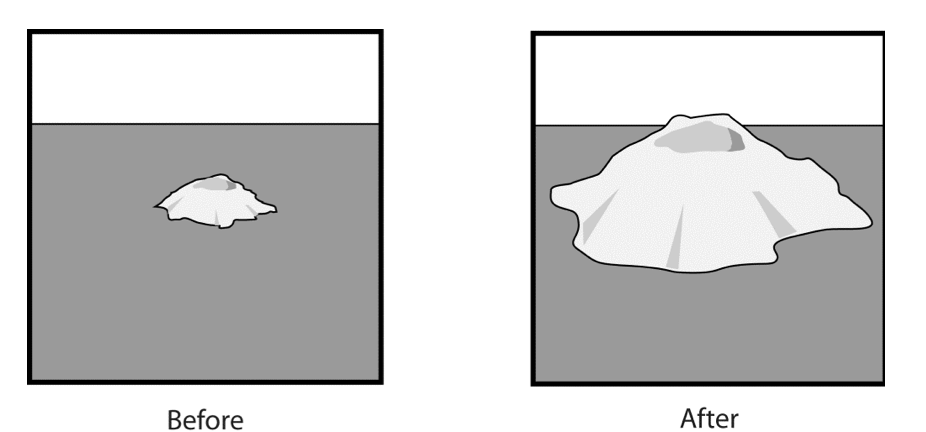
The picture shows an island in the middle of the ocean that increased in size in only a few weeks.
Which of the following most likely caused this rapid change in the island?
Earthquake shaking the water
Movement of waves
Eruptions of a volcano
Piling up of sand

