Wayground logo

Free Printable Worksheets

Font size

S
M
L
XL
Worksheets

Waste Distribution, Pollution and treatment APES

Total questions: 64

Worksheet time: 1hrs 3mins

Name
Class
Date
1.
All of the following are ways to disinfect wastewater EXCEPT:
a)
Chloroform
b)
Chlorine
c)
UV rays
d)
Ozone
2.

This law sets standards on pollutants for community water supplies.

a)

Clean Water Act (CWA)

b)

Safe Drinking Water Act (SDWA)

c)

National Environmental Policy Act (NEPA)

d)

Oil Pollution Act

e)

Coastal Zone Management Act

3.

Which of the following is a persistent inorganic pollutant that can impair neurological functioning?

a)

Lead

b)

DDT

c)

PCB's

d)

Atrazine

e)

Arsenic

4.

What is it called when a persistent pollutant (like mercury or PCBs) builds up in the tissues of an organism as they continue to eat something that contains the pollutant

a)

Subsidence

b)

Biomagnification

c)

Tragedy of the commons

d)

Bioaccumulation

e)

Cultural eutrophication

5.

This law regulates the discharges of pollutants into all waters that have a significant connection with navigable waterways. Also, must have a permit to dump these pollutants. Also, requires certain steps in sewage treatment.

a)

Safe Drinking Water Act (SDWA)

b)

Clean Water Act (CWA)

c)

Oil Pollution Act

d)

National Environmental Policy Act (NEPA)

e)

Coastal zone management Act

6.

Strategies used to clean up oil spills include all of the following EXCEPT:

a)

Floating booms and boats to skim floating oil toward collectors

b)

Skimmers to absorb oil from the water

c)

Giant vacuums suck up as much oil as they can

d)

Chemical dispersants that break up the oil and help it to sink.

e)

Addition of limestone to neutralize the acidic water

7.

What is the main source of mercury in the Great Lakes?

a)

Leaky landfills

b)

Coal-burning power plants

c)

Sewage effluent

d)

Automobile emissions

e)

bio hazardous waste from hospital

8.

Which of the following is an indicator species whose presence in a river or stream indicates excellent water quality?

a)

Crayfish

b)

Leech

c)

Left-handed snails

d)

Dobsonfly larva

e)

Snails

9.

Which pollutant or pollutants are most likely to create eutrophic areas?

a)

nitrates and phosphates

b)

heavy metals

c)

synthetic organic compounds

d)

pharmaceuticals

e)

Acid deposition

10.

Fecal coliform bacteria

a)

is used as an indicator of water quality

b)

is the cause of water bourne diseases

c)

usually causes diarrhea

d)

is rarely found in sewage

e)

can become flesh eating

11.
The issue of water ownership is complicated by
a)
the irregularity of precipitation
b)
the distance rivers can travel
c)
increased demand for water
d)
all of the above
12.
How would cutting down trees affect water quality in a watershed?
a)
There would be no affect on water quality.
b)
Rivers and streams might become clogged with silt.
c)
Water levels would be reduced.
d)
The watershed divide would change.
13.
What is the first step in the water treatment process?
a)
coagulation
b)
filtration
c)
flocs
d)
concentation
14.
What forms in the second step of water treatment?
a)
flocs
b)
alum
c)
aeration
d)
clorine
15.
What happens after second filtration?
a)
coagulation
b)
first filtration
c)
flocs
d)
chlorination
16.
What does the chloriform count measure?
a)
e. coli
b)
hardness of water
c)
pH
17.
an underground tank containing bacteria that treat waste water is a
a)
septic tank
b)
leach field
c)
water treatment plant
18.

Select the correct order for the water treatment process.

a)

Sedimentation - Chlorination - Filtration

b)

Sedimentation - Filtration - Chlorination

c)

Filtration - Chlorination - Sedimentation

d)

Filtration - Sedimentation - Chlorination

19.
What does chlorination do to the water?
a)
Removes microorganisms
b)
Cleans the water
c)
Makes the water taste nice
d)
Removes twigs and sediment
20.
The biochemical oxygen demand (BOD) is defined as:
a)
the amount of oxygen required by humans who use a water supply
b)
the amount of oxygen required for biochemical decomposition processes
c)
the amount of oxygen needed by plants growing in a water source
d)
the amount of oxygen given off by a specific water source
21.
Which of the following is not usually associated with eutrophication?
a)
algal blooms
b)
reduced photosynthesis in the water column
c)
increased heavy metal concentrations
d)
reduced dissolved oxygen  
22.
By weight, the most abundant water pollutant is:  
a)
toxic chemicals
b)
organic waste
c)
heavy metals
d)
sediments
23.
Use of bacteria to clean up a pollutant such as gasoline is known as:
a)
Primary treatment
b)
Secondary treatment
c)
nanotechnology
d)
bioremediation
24.
The “dead zone” in the northern Gulf of Mexico consists of a large ocean area depleted in ___. This problem appears to be caused by ___.
a)
oxygen; nitrogen from agricultural runoff
b)
marine microorganisms; ozone depletion
c)
carbon; industrial pollutants 
d)
oxygen; global warming
25.
Which of the following are sources of groundwater pollution?  
I landfills
II saltwater intrusion
 III subsurface gasoline tanks
a)
I only
b)
I and III
c)
I, II and III
d)
II, and III
26.
What is cultural eutrophication?
a)
large scale oil spills in environmentally sensitive areas
b)
addition of fecal coliform bacteria to a body of water
c)
anthropogenic addition of nutrients to a body of water
d)
active decomposition of dissolved oxygen
27.

Requires maximum level of contaminants (MCLs) to meet safety regulations for community tap water supplies

a)

Clean Water Act

b)

Kyoto Protocol

c)

Montreal Protocol

d)

Safe Drinking Water Act

28.

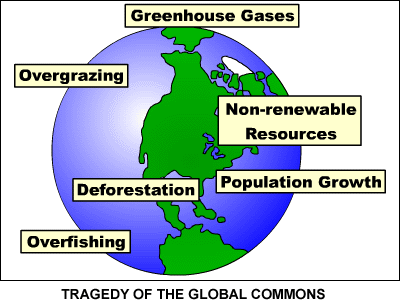
Which of the following is the best illustration of the 'Tragedy of the Commons?'

a)

Agreements among western ranchers to jointly manage common grazing land

b)

Depletion of fishing stocks in the North Atlantic

c)

Removing fish from the ocean up to the maximum yield.

d)

Using sustainable fishing techniques like a pole or spear.
29.

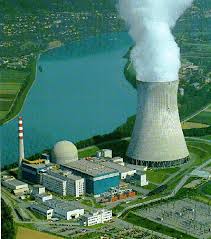
The primary use for water in industry

a)

aquaculture

b)

cooling nuclear power plants

c)

hydroponics

d)

the food and drink industry

30.

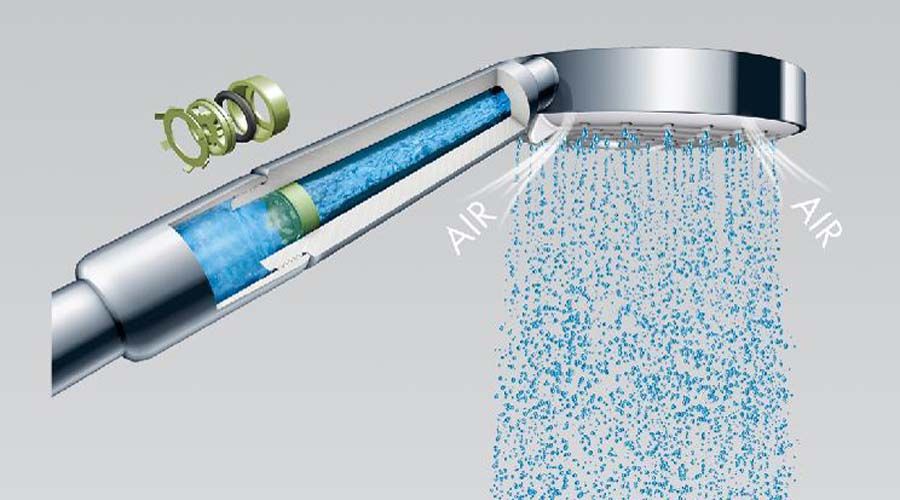
A family of five recently replaced its 7-gallon-per-minute showerheads with water-saving 3-gallon-per-minute showerheads. Each member of the family averages 10 minutes in the shower per day. How many fewer gallons of water will the family use each day with the new showerheads?

a)

40 gallons per day

b)

200 gallons per day

c)

1,000 gallons per day

d)

2,100 gallons per day

31.

Presence of fecal coliform bacteria suggests that

a)

a factory polluted the river

b)

a nearby treatment plant added chlorine to the waste water

c)

the water is safe for drinking

d)

untreated animal waste contaminated the water

32.

Which of the following describe the relationship between D.O. and B.O.D.?

a)

When D.O. decreases, the B.O.D. decreases

b)

When D.O. decreases, the B.O.D. increases

c)

When B.O.D. decreases, the D.O. decreases

d)

When B.O.D. increases, the D.O. decreases

33.
Mine site drainage can often cause this:
a)
Cultural eutrophication
b)
Acidic runoff
c)
Land subsidence
d)
Saltwater intrusion
34.
Increased use of inorganic (lab-made) fertilizers on crops contributes to:
a)
Hypoxia in the Gulf of Mexico
b)
Increase in storm severity in southeastern U.S.
c)
Water shortages in California
d)
Saltwater intrusion on the East Coast.
35.
What is the main source of mercury in the Great Lakes?
a)
Leaky landfills
b)
Coal-burning power plants
c)
Sewage effluent
d)
Automobile emissions
36.
Which of the following is an indicator species whose presence in a river or stream indicates excellent water quality?
a)
Crayfish
b)
Leech
c)
Left-handed snails
d)
Dobsonfly larva
37.
Which of the following is a known endocrine disruptor that is found in many of our waterways in the U.S.?
a)
Atrazine
b)
Mercury
c)
Nitrate
d)
BOD
38.

These are the physical parameters of water quality except

a)

turbidity

b)

salinity

c)

temperature

d)

BOD (biochemical oxygen demand)

39.

These are the parameters used to calculate WQI (Water Quality Index) except...

a)

BOD

b)

DO

c)

Phosphorus

d)

Ammoniacal nitrogen

e)

Total Suspended solid

40.

improved water quality can be achieved by

a)

appropriate use of water

b)

careful water storage and handling

c)

proper land management

d)

all of the above

41.
What 2 important nutrients are tested for in a body of water to check for eutrophication levels?
a)
nitrates and phosphates
b)
dissolved oxygen and pH
c)
CO2 and O2
d)
nitrates and dissolved oxygen
42.
pollutants entering waterways from a general area, such as runoff from farmland or suburban communities
a)
Pollution
b)
Point Source Pollution
c)
Non-point Source Pollution
d)
Turbidity
43.
Water that has been used by humans, but doesn't contain sanitary waste is called ________________.
a)
gray water
b)
septic water
c)
potable water
d)
none of these
44.
"Turbidity" is the measure of a body of water's ____________________________.
a)
cloudiness
b)
eutrophication
c)
temperature change
d)
flocculation
45.
What is fecal coliform a measure of?
a)
A direct measurement of feces concentration.
b)
Number of bacteria (like E. coli) commonly found in sewage.
c)
The ability of water to transmit viruses such as influenza.
d)
The brownness of the water.
46.
How could pesticides get into lakes and streams?
a)
too much could be used
b)
it could be sprayed too close to a stream
c)
rain could wash pesticides into a stream
d)
all of the above
47.

What are two goals that our water treatment plant fulfill?

a)

Clean and disinfect the water

b)

Boil and evaporate the water

c)

Remove the animals and plants

d)

Add chemicals and remove pesticides

48.

The water treatment plant operates

a)

24 hours a day, 5 days a week

b)

all the time

c)

every day, but not at night

d)

not on holidays

49.
Where is most of the freshwater found on Earth?
a)
lakes
b)
glaciers
c)
oceans
d)
rivers
50.
Approximately what percentage of Earth's water is SALT water?
a)
97 %
b)
71%
c)
30%
d)
3%
51.

In a wastewater treatment plant, what gas must be maintained at precise levels in the aeration tank?

a)

CO2

b)

O2

c)

H2

d)

CO

52.

A series of underground pipes that carry used water to a treatment plant is called what?

a)

Filtration system

b)

Sewer system

c)

Septic System

d)

Drainage system

53.
Our planet (Earth) is covered with....
a)
35% of water
b)
95% of Water
c)
75 % of water
d)
80% of Water
54.
Found in old plumbing pipes and ceramic glazes
a)
Asbestos
b)
Radon
c)
Lead
d)
Formaldehyde
55.

What makes hard water?

a)

Silver and Sodium

b)

Calcium and Magnesium

c)

Gold

d)

Sodium

56.
What is the main reason why water is not desalinated?
a)
don't know how
b)
too expensive
c)
difficult to transport
d)
inaccessible
57.
How much water on Earth is actually fresh water that humans can drink, use for heating and cooling, transportation, and industry?
a)
2%
b)
Less than 0.01 %
c)
Less than 10%
d)
Less than 1%
58.
Which of the following is a chemical added to our water to help make it safe to drink?
a)
Caffeine
b)
Acid
c)
Base
d)
Chlorine
59.

To make muddy particles in water stick together and sink, we add ____ to the water.

a)

alum (aluminum sulfate)

b)

chlorine and ammonia

c)

activated carbon

d)

ozone

60.

To remove odors, tastes, and colors from water we add ____ to it.

a)

alum (aluminum sulfate)

b)

chlorine and ammonia

c)

activated carbon

d)

ozone

61.

To kill (disinfect) germs in water in the U.S., we usually add ____ to the water.

a)

alum (aluminum sulfate)

b)

chlorine and ammonia (chloramines)

c)

activated carbon

d)

sulfuric acid

62.

Surface water is water that comes from

a)

the ocean

b)

the air

c)

under the ground

d)

lakes and streams

63.

To adjust pH for protecting the insides of our pipes, we usually add ___ to the water.

a)

alum (aluminum sulfate)

b)

chlorine and ammonia (chloramines)

c)

activated carbon

d)

an acid or a base

64.
Which of these are important sources of drinking water in the US?
a)
Rivers
b)
Lakes
c)
Reservoirs
d)
All options are correct