Wayground logo

Free Printable Worksheets

Font size

S
M
L
XL
Worksheets

PS Final Exam Review

Total questions: 90

Worksheet time: 3hrs 54mins

Name
Class
Date
1.
Which state of matter has closely packed and organized particles?
a)
Solid
b)
Liquid
c)
Gas
d)
Plasma
2.

Particles in this state of matter slide past each other and take the shape of their container.

a)

Solid

b)

Liquid

c)

Gas

d)

Plasma

3.
5. What is it called when a solid turns directly into a gas?
a)
Sublimation
b)
Condensation
c)
Liquid
4.

7. All phase changes (changing states) require energy to be added or taken away.

a)

True

b)

False

5.
What happens to particles when they are heated?
a)
They speed up and spread out
b)
They slow down and compress
c)
They stop moving
d)
They move closer together and speed up
6.

An element's identity is determined by the number of _____.

a)

electrons.

b)

protons.

c)

neutrons.

d)

valence.

7.
Most of the mass of an atom is found it its _____.
a)
electron cloud
b)
nucleus
c)
atomic number
d)
empty space
8.

Each column in the periodic table is called a _______.

a)

period

b)

group

c)

cluster

d)

unit

9.
Which group of the periodic table is composed of inert (not reactive)  gases?
a)
alkali metals
b)
alkaline earth metals
c)
halogens
d)
noble gases
10.
An atom becomes _______ when it loses electrons.
a)
Positive
b)
Negative
c)
Neutral
d)
Invinsible
11.
An atom becomes _________ when it gains electrons.
a)
Positive
b)
Negative
c)
Neutral
d)
Invinsible
12.
How many F atoms are in this compound?
6MgF2 
a)
2
b)
6
c)
8
d)
12
13.
Covalent bonds are between...
a)
Metal and Non-metal
b)
Non-metal and Non-metal
c)
Metal and Metal
14.
Ionic bonds are between...
a)
Metal and Non-metal
b)
Non-metal and Non-metal
c)
Metal and Metal
15.
How many valence electrons?
a)
2
b)
3
c)
5
d)
10
16.

Name the ionic compound, LiCl

a)

lithium chlorine

b)

lithium chloride

c)

lithium chlorate

d)

lithium monochloride

17.
K20 - name?
a)
potassium dioxide
b)
potassium oxide
c)
potassium oxygen
d)
dipotassium dioxide
18.
The pH scale is a range from:
a)
1-7
b)
0-14
c)
1-5
d)
1-20
19.
How far will a person go if they jog for 2 hours at a speed of 12 km/hr?
a)
6 km
b)
0.5 km
c)
10 km
d)
24 km
20.
If a cheetah runs 180 miles in 3 hours, what is its average speed?
a)
60 hours
b)
60 miles
c)
60 miles/hour
d)
60 miles/second/second
21.

Velocity is ______.

a)

speed

b)

direction

c)

speed with a direction

22.

Acceleration of an object happens when things ________.

a)

slow down

b)

go faster

c)

change direction (turn)

d)

All of the above

23.

The Law of Inertia is_____.

a)

Newton's

1st

Law of Motion

b)

Newton's

2nd

Law of Motion

c)

Newton's

3rd

Law of Motion

24.
F=ma
a)
Newton's
1st
Law of Motion
b)
Newton's
2nd
Law of Motion
c)
Newton's
3rd
Law of Motion
25.
For every action, there is an equal and opposite reaction.
a)
Newton's
1st
Law of Motion
b)
Newton's
2nd
Law of Motion
c)
Newton's
3rd
Law of Motion
26.
A ____________ is a push or a pull on an object.
a)
friction
b)
force
c)
magnet
d)
gravity
27.

The tendency of an object to resist a change in its motion is ____.

a)

acceleration

b)

inertia

c)

mass

d)

frame of reference

28.

A force that opposes motion between any surfaces that are touching is _____.

a)

velocity

b)

friction

c)

inertia

d)

position

29.

The two factors that determine work are _____.

a)

size of the force, and distance

b)

size of the force, and type of force

c)

mass, and distance

30.

The amount of work done in a certain amount of time is known as __________.

a)

work

b)

effort force

c)

resistance force

d)

power

31.
Energy due to motion is ____________ energy. 
a)
Potential 
b)
Energy
c)
Kinetic
d)
Friction
32.
__________ is stored energy. 
a)
Potential
b)
Kinetic
c)
None of the above 
d)
All of the above 
33.
The Law of Conservation of Energy states:
a)
Energy can created or destroyed but not transformed 
b)
Energy cannot be created or destroyed, it can only transformed
c)
Energy can't be created, destroyed or transformed
34.
At which point is potential energy greatest?
a)
W
b)
X
c)
Y
d)
Z
35.
What are the two major forces involved with nuclear energy? 
a)
Fission and Fusion
b)
Alpha and Beta particles
c)
Gamma and Fission
d)
Radioactivity and Alpha Decay
36.

The person in the picture below will continue moving forward if the outside force of the seatbelt didn’t stop him. Which law of motion does the following picture represent?

a)

Newtons 1st Law

b)

Newtons 2nd Law

c)

Newtons 3rd Law

37.
Gravity attracts all objects towards one another.
a)
False
b)
True
c)
It depends
38.

Iron rusting is an example of a...

a)

Physical Property

b)

Chemical Property

39.
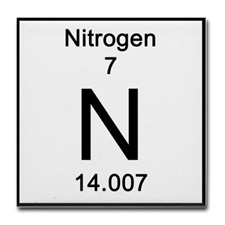
What is the number of protons that the element in this image contain?
a)
14
b)
7
c)
15
d)
18
40.

How many valence electrons does lithium have?

a)

8

b)

3

c)

4

d)

1

41.

Holly has an unknown substance in a beaker. She wants to determine the relative pH of the unknown substance. She places a piece of red litmus paper into the substance, and the litmus paper turns blue. The substance feel slipper like soap. The substance in the beaker

a)

is a base.

b)

has a neutral pH.

c)

is an acid.

d)

does not have a pH.

42.

Four different liquids will be separately poured into a single beaker. The liquids are ethanol, milk, oil, and water. The density for each liquid at room temperature is listed in the table below. How will the liquids be arranged from bottom to top in the beaker?

a)

milk, water, oil, ethanol

b)

milk, water, ethanol, oil

c)

water, milk, oil, ethanol

d)

water, oil, ethanol, milk

43.

Electrons are being shared between atoms in a certain compound. Which elements could most likely form this compound?

a)

lithium (Li) and fluorine (F)

b)

aluminum (Al) and iodine (I)

c)

sulfur (S) and oxygen (O)

d)

iron (Fe) and chlorine (Cl)

44.

In this formula: 2C3H7O, what term is used to describe the "3"?

a)

product

b)

coefficient

c)

subscript

d)

reactant

45.

In this formula: 2C3H7O, what term is used to describe the "2"?

a)

product

b)

coefficient

c)

subscript

d)

reactant

46.

Identify the PHYSICAL change:

a)

rusting nail

b)

burning paper

c)

melting ice

d)

rotting apple

47.

Identify the CHEMICAL change:

a)

firecracker exploding

b)

hair being cut

c)

a room being painted

d)

water boiling

48.

Identify evidence of a CHEMICAL change:

a)

milk tastes sour

b)

condensation on a window

c)

a piece of clay is deformed

d)

water is dyed green

49.

Ammonia has a pH of 11, so it is classified as:

a)

neutral

b)

acidic

c)

basic

d)

an indicator

50.

Water has a pH of 7, so it is classified as:

a)

neutral

b)

acidic

c)

basic

d)

an indicator

51.

Lemon juice has a pH of 2, so it is classified as:

a)

neutral

b)

acidic

c)

basic

d)

an indicator

52.

What can be done to ensure that an experiment tests only one variable?

a)

record all observations

b)

run one trial

c)

keep as many variables constant as possible

d)

run many trials

53.

In the following question, identify the INDEPENDENT variable: Which color lights enable sunflowers to grow tallest?

a)

light color

b)

flower type

c)

flower height

d)

soil brand

54.

In the following question, identify the DEPENDENT variable: Which color lights enable sunflowers to grow tallest?

a)

light color

b)

flower type

c)

flower height

d)

soil brand

55.
A material in which electrons are able to move easily
a)
Circuit
b)
Insulator 
c)
Resistance 
d)
Conductor 
56.
The force that opposes motion between two surfaces in contact with each other.
a)
inertia
b)
friction
c)
momentum
d)
gravity
57.

What are the 3 ways to speed up the rate of something dissolving?

a)

Stirring, decrease size, increase temperature

b)

Stirring, turning off the heat, dissolving before adding in more

c)

Decrease size, decrease temperature, make solution equal

d)

Increase temperature, increase size, dont dilute solution

58.

True or False.

Bases and Acids are both corrosive

a)

True

b)

False

59.
Which substance is most likely classified as a colloid?
a)
soft drink
b)
oxygen gas
c)
water
d)
fog
60.
What is the charge on an Aluminium ion?
a)
3
b)
+3
c)
+2
d)
+1
61.
How many neutrons in C-14?
a)
6
b)
7
c)
14
d)
8
62.
Magnesium bromide is an ionic compound with the chemical formula MgBr₂.  What does the "2" tell you?
a)
There are 2 bromide ions for every magnesium ion
b)
Bromide has a 2- charge
c)
Bromide has a 2+ charge
d)
There are 2 magnesium ions to every bromide ion
63.
What happens when an atom gain an electron?
a)
Neutral(no charge)
b)
Positive charge
c)
Negative charge
64.
The speed you read on a speedometer is ____.
a)
instantaneous speed
b)
constant speed
c)
average speed
d)
velocity 
65.
3 m/s north is an example of a(n) ____.
a)
speed
b)
velocity 
c)
position 
d)
acceleration
66.

When an object moves in a circular path, it accelerates toward the center of the circle as a result of ____.

a)

centripetal force

b)

frictional force

c)

gravitational force

d)

momentum

67.

A material that reduces the flow of heat by conduction, convection, and radiation is ____.

a)

a conductor

b)

condensation

c)

an insulator

d)

a solar collector

68.

The amount by which a machine multiplies an effort force is called the ____.

a)

efficiency factor

b)

fulcrum

c)

resistance force

d)

mechanical advantage

69.

When two or more simple machines work together, they are called a(n) ____.

a)

simple machine

b)

compound machine

c)

screw

d)

effort machine

70.

A bar that is free to pivot about a fixed point is called a ______.

a)

lever

b)

fulcrum

c)

screw

d)

ramp

71.
What is is called when water turns into a vapor?
a)
EVAPORATION
b)
PRECIPITATION
c)
TRANSPIRATION
72.
Takes two small nuclei and combines them into a larger nucleus
a)
fission
b)
fusion
73.
Takes two small nuclei and combines them into a larger nucleus
a)
fission
b)
fusion
74.
What types of charges attract?
a)
Positive and Positive
b)
Positive and Neutral
c)
Negative and Neutral
d)
Positive and Negative
75.
If a substance has a higher number of electrons than protons on its surface, what type of charge does it have?
a)
A positive charge.
b)
A negative charge.
c)
A neutral charge
d)
No charge at all
76.
Matter can be defined as anything that 
a)
A.  Can be weighed
b)
A.  Has mass and takes up space
c)
A.  Can be seen and touched
d)
A.  Has kinetic energy
77.
What has definite volume, but takes the shape of the container?
a)
Solid
b)
Condensation
c)
Liquid
d)
Gas
78.
The number of valence electrons in an atom determines 
a)
An atom’s mass
b)
How an atom will react with other atoms
c)
In which period the atom is located
d)
The number of orbitals the atom has
79.
An element’s mass number equals the number of
a)
Neutrons 
b)
Protons
c)
Protons plus electrons
d)
Protons plus neutrons
80.
Which element should react similarly to Sodium (Na)?
a)
Li
b)
Si
c)
Br
d)
Ne
81.
Atom that has gained or lost electrons
a)
Anion
b)
Cation
c)
Mixture
d)
Ion
82.

Most elements on the periodic table are ____.

a)

metals

b)

nonmetals

c)

metalloids

d)

semimetals

83.

Mixtures of metals are called ____.

a)

alloys

b)

halogens

c)

gold

d)

silver

84.

What simple machine holds things together?

a)

Wedge

b)

Screw

c)

Lever

d)

Pulley

85.
What simple machine can be used to split things apart and also it can hold open a door?
a)
Lever
b)
Pulley
c)
Wedge
d)
Screw
86.
Stairs
a)
wedge
b)
pulley
c)
inclined plane
d)
wheel and axle
87.
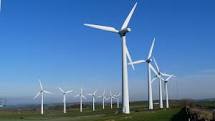
What type of energy resource is wind?
a)
Nonrenewable
b)
Renewable
c)
Exhaustible 
88.
These are examples of a Fossil fuel - fuels produced by deposits of ancient plants and animals 
a)
wind,solar,geothermal
b)
oil,coal,natural gas
c)
wind,biofuels,geothermal
89.
What type of renewable resource am I? Waste products like trees, plants, grains, algae, manure, garbage, sewage, and paper can be converted into energy by burning.
a)
Nonrenewable
b)
Geothermal 
c)
Biomass
d)
Solar energy 
90.
This energy source requires the movement of water
a)
hydro
b)
biomass
c)
geothermal
d)
solar