wayground logo

Free Printable Worksheets

Font size

S
M
L
XL
Worksheets

Honors Biology S1 Final Exam Review

Total questions: 118

Worksheet time: 59mins

Name
Class
Date
1.

Living things are made up of units called

a)

DNA

b)

Cells

c)

Homeostasis

d)

Seeds

2.

Identify the characteristic of life: A camel has eyelashes that work to keep the dust and sand out of its eyes.

a)

All living things adapt/respond to their environment

b)

All living things grow

c)

All living things have cells

d)

All living things use energy

3.
Which of the following is NOT a characteristic shared by all living organisms?
a)
Ability to move
b)
Ability to grow and develop
c)
Made up of one or more cells
d)
Responds to stimuli
4.

When writing you hypothesis, what information follows IF?

a)

dependent variable

b)

how you know it will happen

c)

independent variable

d)

anything

5.

When writing a hypothesis, what information do you fill in after THEN?

a)

dependent variable

b)

independent variable

c)

how you know it will happen

d)

anything good

6.
Which step of the scientific method is AFTER writing a hypothesis?
a)
Test hypothesis
b)
Draw conclusions
c)
Ask questions
7.
How does changing to Tide laundry detergent affect the number of stains left on my clothes?
a)
Testable Question
b)
Not a Testable Question
8.

A drug company is testing a new medicine. They give one group of test subjects the new medicine in a tablet. They give the other group an identical tablet with no medicine.


What is the best reason that one group gets a matching tablet with no medicine?

a)

to find out how long it takes people to get well with no medicine

b)

to find out whether people really get well or if they are just pretending

c)

to be sure it is the medicine that makes people well and not anything else

d)

to find out whether the new medicine makes people more sick than people who get no medicine

9.

Martin is doing an experiment to see the way plants grow without soil. He is growing the plants in different solutions of water and nutrients. In this experiment, what is a plant

that gets no nutrients called?

a)

condition

b)

control

c)

mixture

d)

variable

10.

Asmee is doing an t investigation using four of her brother’s baby teeth that are about the same size. She put one tooth in a cup of cola, one in a cup of apple juice, one in a

cup of orange juice, and one in a cup of distilled water. In a month, she will see what has happened to each of the teeth.


What is the control in this experiment?

a)

cola and tooth

b)

apple juice and tooth

c)

orange juice and tooth

d)

distilled water and tooth

11.
Mr. McNiece wanted to see how different types of music affected students' pulse rates. She played different types of music: heavy metal, rap, R&B, alternative, pop, country, and classical music. Identify the independent variable.
a)
classical music resulted in the highest pulse rate
b)
high pulse rate
c)
pulse rate
d)
types of music
12.
Nick wanted to see how high an ice cube would float in different temperatures of water. Identify the independent variable.
a)
amount of water
b)
height of ice cube
c)
temperature of water
d)
size of ice cube
13.
Tiffany was investing how fast it took Hayden to react to different sounds. Identify the dependent variable. 
a)
different sounds
b)
how much time it took Hayden to react
c)
Hayden
d)
the trumpet playing over and over
14.
Nick wanted to see how high an ice cube would float in different temperatures of water. Identify the dependent variable.
a)
amount of water
b)
temperature of water
c)
height of ice cube
d)
temperature the ice cube was at its' highest height
15.
How does a scientist confirm data? 
a)
 by consulting with an expert in the field
b)
by making sure that technicians follow procedures properly
c)
 by checking calculations for errors
d)
by observing that repeating the experiment yields similar results
16.
Scientists conduct multiple trials of experiments... 
a)
to ensure experiments always have the same results
b)
to make the results more reliable
c)
to save money
d)
because it's more fun...duh!
17.
A hypothesis must be:
 
a)
proven correct
b)
 testable
c)
 observed
d)
 experimental
18.
Which of the following is an observation of the picture?
a)
The person is wearing a T-shirt
b)
It is a sunny day
c)
The person is going to a birthday party
d)
The gift is a DVD player
19.
What is an inference? 
a)
Just a guess.
b)
A statement based off of your observations. 
c)
The same as an observation. 
d)
Examples of something. 
20.
Which statement is an inference about this picture?
a)
The van is tan.
b)
The  van ran into KFC. 
c)
The driver was hungry. 
d)
An ambulance may be on the way. 
21.
She is holding an umbrella
a)
observation
b)
inference
22.
It is raining outside
a)
observation
b)
inference
23.
How are covalent bonds formed?
a)
Sharing of electrons
b)
Transfer of electrons
24.
How are ionic bonds formed?
a)
Transfer of electrons
b)
Sharing of electrons
25.
Ionic compounds form because _______ charges attract.
a)
opposite
b)
like
26.
What is a substance called if it speeds up a chemical reaction?
a)
reusable
b)
catalyst
c)
specific
d)
fragile
27.
Any substance that is acted upon by an enzyme is called a(n)?
a)
Coenzyme
b)
Substrate
c)
Vitamin
d)
Polypeptide
28.
Enzymes are...
a)
nucleic acids
b)
proteins
c)
lipids
d)
carbohydrates
29.
What is the function of an enzyme?
a)
enzymes break themselves into small pieces
b)
enzymes slow down chemical reactions
c)
enzymes speed up chemical reactions
d)
enzymes combine products to form reactants 
30.
The process of removing water in order to form a bond between monomers is called....
a)
Dehydration Synthesis
b)
Hydrolysis
31.
The process of adding water in order to break bonds within a polymer....
a)
Dehydration Synthesis
b)
Hydrolysis
32.
The following figure is illustrating
a)
Dehydration Synthesis
b)
Hydrolysis
33.

An acid has a pH

a)

higher than 7

b)

lower than 7

c)

7

d)

greater than 14

34.

a base has a pH of

a)

lower than 7

b)

higher than 7

c)

7

d)

it only has a pOH

35.
Buffer is defined as
a)
ability to resist pH change
b)
ability to prevent pH from decreasing
c)
ability to resist a pH increase
d)
ability to resist pH change when small amount of acid added
36.
When dissolved in water, acids produce:
a)
bases
b)
salts
c)
hydrogen ions
d)
hydroxide ions
37.
What is the function of a carbohydrate?
a)
Stores energy
b)
Movement
c)
Stores genetic information
d)
Speeds up reactions
38.
Amino Acids:
a)
are a type of marinade.
b)
help transport fats in the body.
c)
are the building blocks from which proteins are made.
d)
are only found in plants.
39.
What is a protein: 
a)
A polymer composed of many sugars.
b)
A polymer composed of many amino acids. 
c)
A polymer composed of fatty acids. 
d)
A polymer composed of nucleotides. 
40.

Proteins differ from one another because

a)

the peptide bonds linking amino acids differ from protein to protein

b)

the sequence of amino acids in the polypeptide chains differ from protein to protein

41.
What are different examples of lipids?
a)
monosaccahrides, disaccharides, starch, cellulose
b)
dipetide, polypeptide, amino acids
c)
DNA, RNA, ATP
d)
triglycerides, waxes, steroids, phospholipds
42.
How do lipids function for cells?
a)
store information
b)
store energy
c)
breakdown wastes
d)
join with substrates
43.
Which of these is a lipid?
a)
triglycerides
b)
steroids
c)
fatty acids
d)
all of the above
44.

Which of the following is NOT a function of lipids?

a)

long term energy

b)

provides flavor in food

c)

used to make hormones

d)

used to speed up reactions

45.
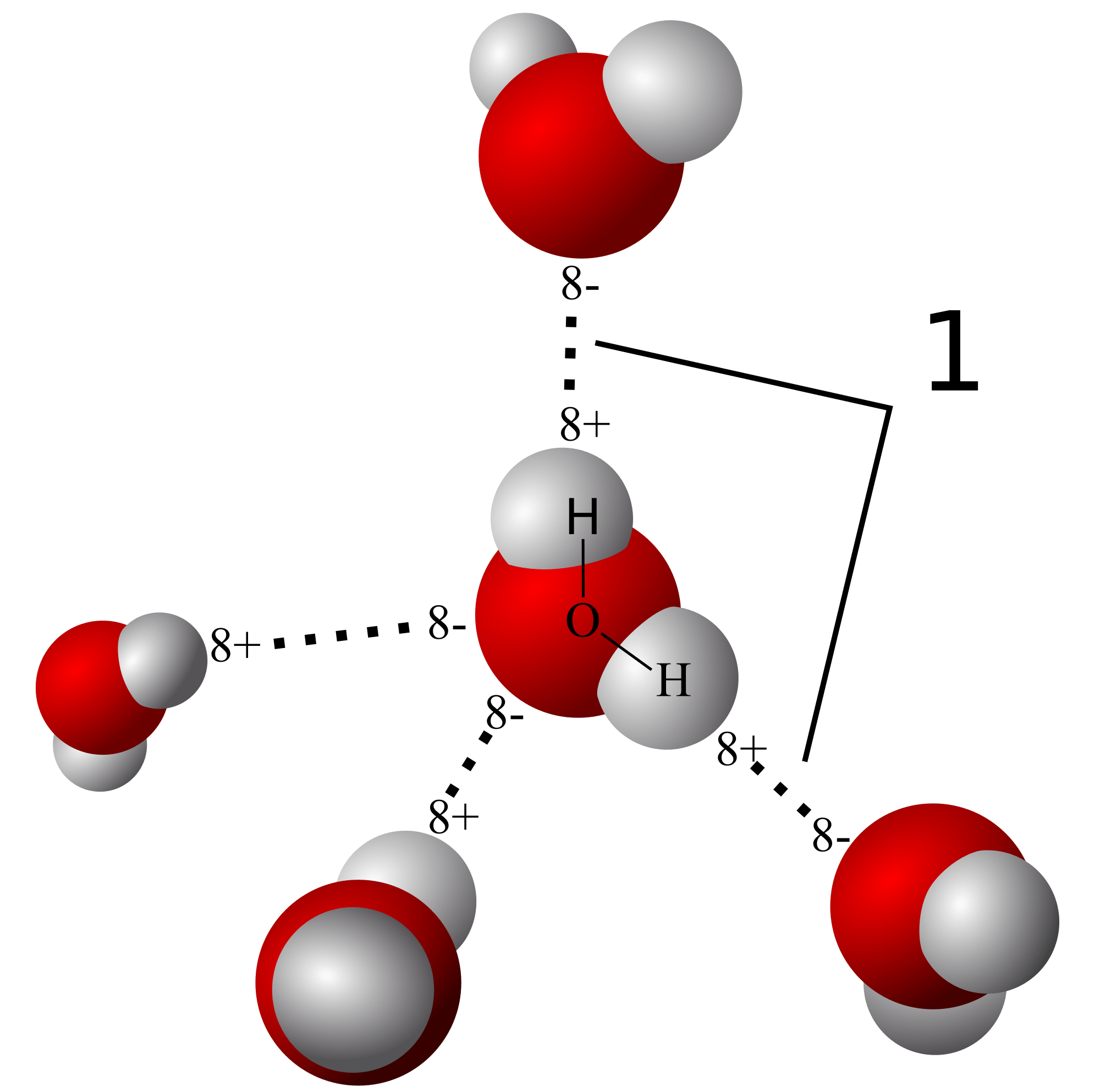
Attractions between water molecules are called
a)
Covalent bonds
b)
Ionic bonds
c)
Polar bonds
d)
Hydrogen bonds
46.
molecule in which opposite ends have opposite electric charges
a)
cohesion
b)
polar molecule
c)
hydrogen bond
d)
solution
47.
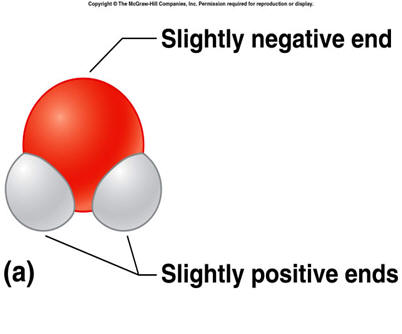
Water is polar because...
a)
The unequal sharing of electrons gives the water molecule a slight negative charge near its oxygen atom and a slight positive charge near its hydrogen atoms.
b)
The molecule has two poles, at which the it is colder than other regions of the molecule.
c)
The unequal sharing of electrons gives the water molecule a slight negative charge near its hydrogen atoms and a slight positive charge near its oxygen atom.
d)
The water molecule is neutral.
48.
Which types of compounds dissolve easily in water?
a)
Polar and Nonpolar
b)
Polar and Ionic
c)
Nonpolar and Ionic
d)
Covalent and Nonpolar
49.
The process of digesting a polysaccharide into individual monosaccharides is called....
a)
Dehydration Synthesis
b)
Hydrolysis
50.
The following figure is illustrating
a)
Dehydration Synthesis
b)
Hydrolysis
51.
Why does ice float?
a)
As water freezes, it expands and its density decreases.
b)
As water freezes, it takes up more hydrogen from the atmosphere, causing it to have a greater buoyancy.
c)
As water freezes, air becomes trapped between the hydrogen bonds of water molecules.
d)
As water freezes, it takes up more oxygen from the atmosphere, causing it to have a greater buoyancy.
52.
Which end of the water molecule has a slightly positive charge?
a)
the oxygen end
b)
the hydrogen end
c)
both ends are slightly positive
d)
neither end is positive
53.
What is mean by homeostasis?
a)
Controls and coordinates body activities through chemical 
b)
controls and coordinates body activities through electrical impulses
c)
For maintenance of a steady state in the internal environment
d)
remove metabolic waste products from the cel
54.

Maintaining homeostasis (balance): What cooling function does our body use to keep our temperature from getting too high.

a)

Shivering

b)

Sweating

c)

Water filtration from the blood

d)

Insulin secreted by the pancreas

55.
Which terms best describe heterotrophs?
a)
Plants; producers
b)
Animals; producers
c)
Plants; consumers
d)
Animals; consumers
56.
Which terms best describe autotrophs?
a)
Plants; producers
b)
Animals; producers
c)
Plants; consumers
d)
Animals; consumers
57.
From where do autotrophs obtain their energy?
a)
The sun
b)
Other organisms
58.

According to the laws of thermodynamics and rule of 10%, the amount of energy obtained by a heterotroph consuming organic molecules is ________________ the amount present in the molecules themselves

a)

equal to

b)

lower than

c)

greater than

d)

not directly related to

59.
Cattle egrets forage (feed) in fields among cattle. The egret gets easy access to flying insects stirred up by the cattle, and the cattle don't care if they are there or not.
a)
mutualism
b)
commensalism
c)
competition
d)
parasitism
60.
A relationship between two organisms in which one organism benefits and the other is unharmed...
a)
Mutualism 
b)
Competition
c)
Parasitsm 
d)
Commensalism 
61.
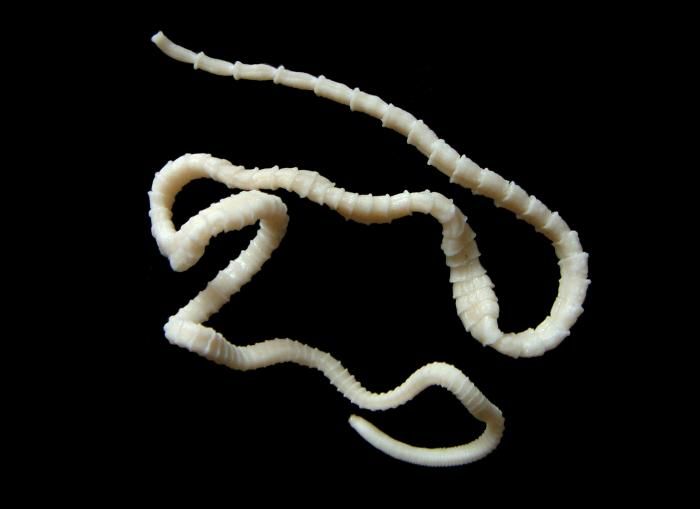
A tapeworm and a cat have this type of relationship.
a)
mutualism
b)
parasitism
c)
commensalism
d)
competition
62.
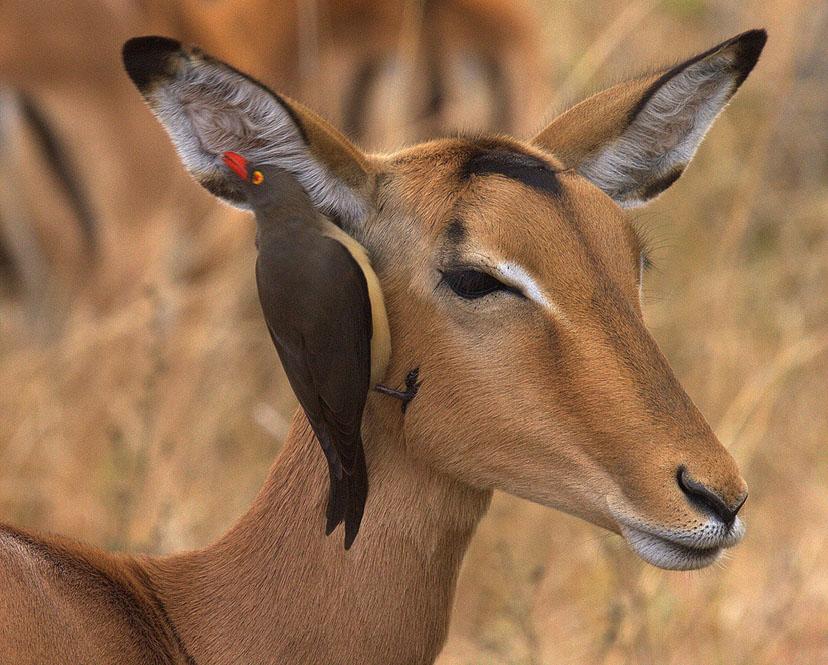
Red-billed oxpeckers are birds that often feed on parasites that infest impala.  This is an example of _______.
a)
commensalism
b)
mutualism
c)
neutralism
d)
competition
63.
A relationship between two organisms in which both organisms benefit. 
a)
Mutualism 
b)
Competition
c)
Parasitsm 
d)
Commensalism 
64.
A decomposer?
a)
Eats dead plants or animals and breaks down to put nutrients in the soil
b)
Eats plants or other animals for food
c)
Makes its own food
d)
Machine that gathers trash
65.
a)
Producer
b)
Consumer
c)
Decomposer
66.

What happens to an enzyme when it denatures?

a)

The activation energy of the reaction is doubled.

b)

The activation energy of the reaction is lowered.

c)

It's optimal conditions for temperature of the enzyme are doubled.

d)

The shape of the enzyme molecule is changed.
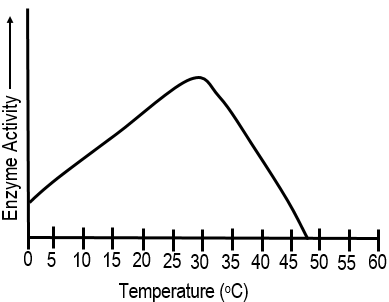
67.
Based on the graph, what is the optimal temperature for this enzyme? 
a)
15oC
b)
40oC
c)
30oC
d)
35oC
68.
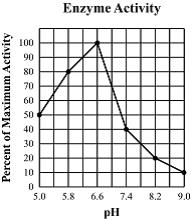
Which of the following conclusions can be drawn from this graph?
a)
The optimum pH of the enzyme is 6.6.
b)
The optimum pH of the enzyme is 5.8
c)
The enzyme’s activity increases as pH increases 5.0 to 9.0
d)
The enzyme’s activity is greater around pH of 8.0 .
69.
What is one of the reactants of cellular respiration?
a)
energy
b)
glucose
c)
carbon dioxide
d)
water
70.
Cellular Respiration's goal is to
a)
make water
b)
make ATP
c)
make glucose
d)
make  oxygen
71.
Which of the following results in the storage of energy in terms of the ATP/ADP cycle?
a)
The breaking of the bond between the 5-carbon sugar and the 1st phosphate group
b)
The addition of a phosphate group
c)
The removal of a phosphate group
d)
The addition of glucose 
72.
Which bond of the ATP molecule is broken in order to release energy?
a)
A
b)
B
c)
C
d)
D
73.
Which structures shown in the Figure make up the ADP molecule?
a)
A and B
b)
A, B and C
c)
A, B, C, and D
d)
C and D
74.
Energy is released from ATP when
a)
a phosphate group is added
b)
adenine bonds to ribose
c)
ATP is exposed to sunlight
d)
a phosphate group is removed
75.
In the energy pyramid here, which organisms have the most energy available?
a)
Producers
b)
Carnivores
c)
Herbivores
d)
Top Predator
76.
In the energy pyramid, which organism has the least amount of energy available?
a)
Producers
b)
Herbivores
c)
Carnivores
d)
Top Predator
77.
What is the name for the organism that eats the producer?
a)
primary consumer
b)
secondary consumer
c)
tertiary consumer
d)
producer
78.
What is the name for the organism that eats the primary consumer?
a)
secondary consumer
b)
tertiary consumer
c)
producer
d)
decomposer
79.
Which of the following lists the levels of organization in an ecosystem from the smallest unit to the largest?
a)
population, organism, community, ecosystem
b)
organism, population, ecosystem, community
c)
organism, community, population, ecosystem
d)
organism, population, community, ecosystem
80.
All the different populations that live together in an area make up a(n)
a)
ecosystem
b)
community
c)
habitat
d)
organism
81.
All the living and nonliving things that interact in a particular area make up a(n)
a)
ecosystem
b)
population
c)
community
d)
biome
82.

ATP energizes a cellular process by _________.

a)

providing free energy to reactions that require it.

b)

releasing heat when the bond is broken.

83.

What is the carrying capacity of the graph?

a)

1000

b)

8000

c)

800

d)

600

84.

When a population grows past the ecosystem's carrying capacity, what happens to the population?

a)

It continues to grow higher and higher.

b)

The population starts to die off and returns to the carrying capacity.

c)

The population will go extinct due to lack of resources.
85.
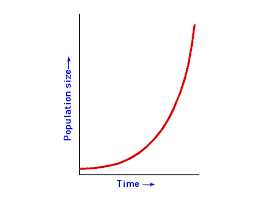
What type of growth is shown in the diagram?
a)
exponential growth
b)
logistic growth 
c)
predator-prey cycle
d)
boom-bust curve
86.
Which limiting factor is density independent?
a)
competition
b)
disease
c)
natural disasters
87.
Food, water, sunlight, shelter, and space are resources that are  __________.
a)
limiting factors
b)
wet
c)
messy
d)
found in rocks
88.

Limiting Factors: Due to severe overcrowding in an Asian village, many children do not survive to reach adulthood.

a)

Density-Dependent: Disease

b)

Density-Independent: Disease

89.

Which of the following is true about nutrients and energy in ecosystems?

a)

nutrients are recycled but energy is not

b)

energy is recycled but nutrients are not

c)

organisms always need energy, but they do not always need nutrients

90.
When humans burn fossil fuels, most of the carbon quickly enters the                       as carbon dioxide.
a)
Water
b)
Atmosphere
c)
Sun
d)
Air
91.
How do living organisms return carbon to the atmosphere in the carbon cycle?
a)
respiration and photosynthesis
b)
 decomposition and respiration
92.
What is the process of combining nitrogen gas with other elements to make nitrogen into usable compounds?
a)
nitrogen composition
b)
ammonia 
c)
nitrogen fixation
d)
denitrification
93.
Plants and animals cannot use nitrogen directly from the air.
a)
True
b)
False
94.

A process that is part of the light-independent reaction. It uses CO2 and energy to make sugar.

a)

photosynthesis

b)

Light-dependent reaction

c)

Calvin Cycle

d)

electron transport chain

95.

The oxygen released during photosynthesis comes from

a)

water

b)

ATP

c)

carbon dioxide

96.
___ produces the most ATP.
a)
Aerobic respiration
b)
Anaerobic respriation
c)
Glycolysis
d)
Photosynthesis
97.

What is found in both cellular respiration and photosynthesis?

a)

The electron transport chain (chemiosmosis)

b)

hydrolysis of glucose

c)

production of carbon dioxide

98.
The mitochondria is responsible for ...
a)
photosynthesis
b)
anaerobic respiration
c)
aerobic respiration
d)
fermentation
99.
a small grain shaped organelle found in the cytoplasm of a cell or on the R-ER that produced proteins
a)
cytoplasm
b)
ribosome
c)
cell membrane
d)
mitochondria
100.
In cells a large oval organelle that contains the cells genetic material in the form of DNA and controls many of the cells activities
a)
organelle
b)
ribosome
c)
cell wall
d)
nucleus
101.
Bacteria are prokaryotes.
a)
True
b)
False
102.
In the phospholipid, the polar head is considered what type of structure?
a)
hydrophobic
b)
insoluble
c)
hydrophilic
103.
Which of the following molecules make up the basic structure of a cell membrane?
a)
waxes
b)
steroids
c)
fatty acids
d)
phospholipids
104.
A phospholipid has 2 parts. What are they called? 
a)
Hydrophilic Head, Hydrophobic Tail 
b)
Hydrophobic Head, Hydrophilic Tail 
105.
What type of transport is this?
a)
facilitated diffusion
b)
active transport
c)
diffusion
d)
osmosis
106.
This process is known as ________ transport.
a)
passive
b)
active
c)
protein
d)
temporary
107.
Against the concentration gradient, from low to high, uses ATP; this decribes.....
a)
facilitated diffusion
b)
osmosis
c)
active transport
d)
simple diffusion
108.
You put a cell into a solution, the cell grows. Is the solution hypotonic or hypertonic to the cell? 
a)
hypertonic
b)
hypotonic
c)
isotonic
d)
not enough information
109.
The cell below is in a _________ solution.
a)
Hypotonic
b)
Hypertonic
c)
Isotonic
110.
The cell below is in a _____________ solution.
a)
Hypertonic
b)
Hypotonic
c)
Isotonic
111.
What type of solution is this cell in?
a)
Isotonic
b)
Hypertonic
c)
Hypotonic
d)
diffused
112.

A cell STAYS the SAME in a ____ solution.

a)

ISOTONIC

b)

HYPERTONIC

c)

HYPOTONIC

d)

NO SOLUTION

113.

A cell SWELLS in a ____ solution.

a)

ISOTONIC

b)

HYPERTONIC

c)

HYPOTONIC

d)

NO SOLUTION

114.

A cell SHRINKS in a ____ solution.

a)

ISOTONIC

b)

HYPERTONIC

c)

HYPOTONIC

d)

NO SOLUTION

115.
Osmosis is the diffusion of _____ across a selectively permeable membrane.
a)
food
b)
air
c)
water
d)
oxygen
116.
During diffusion
a)
substances (things) moves from high to low concentration
b)
water moves when energy is used
c)
large or oddly shaped molecules move across a cell membrane
d)
water moves from high to low concentration
117.
Enyzmes are a very important type of protein used to
a)
Build bones in skeleton
b)
Send hormonal signals throughout body
c)
Speed up chemical reactions
d)
Photosynthesize glucose in plants
118.
What is the function of nucleic acids?
a)
Stores energy
b)
Stores genetic information
c)
Movement
d)
Physical structure