
 Worksheets
Midterm Prep #1
Total questions: 30
Worksheet time: 15mins

The two most important properties of all matter are
the ability to carry an electric
current well and to hold electric charge.
taking up space and having mass.
being brittle and hard.
being malleable and ductile.

Which of the following is not a physical change?
grinding
cutting
boiling
burning

Which of the following is an extensive property of matter?
melting point
boiling point
volume
density

A homogeneous mixture is also called
chemically bonded
a compound
a solution
a solute

Under ordinary conditions of temperature and pressure, the particles in a gas are
closely packed
very far from one another
held in fixed positions
unevenly distributed
Nitrogen monoxide and oxygen, both colorless gases, form a red-brown gas when mixed. Nitrogen monoxide and oxygen are called the
products
equilibria
synthetics
reactants
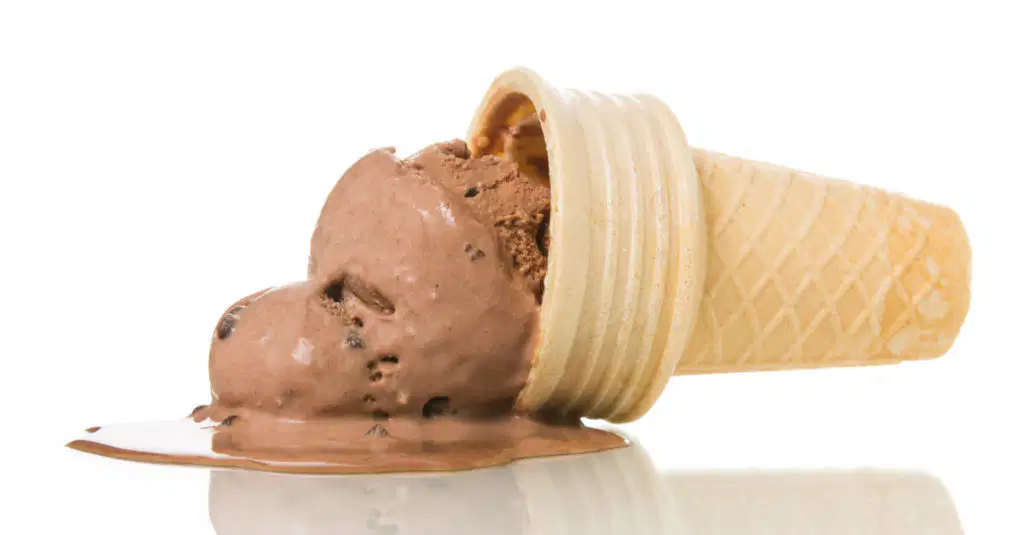
Which of the following is not a chemical change?
rusting
igniting
melting
burning
0.25 g is equivalent to
250 kg
250 mg
.025 mg
.025 kg
These values were recorded as the mass of products when a chemical reaction was carried out three separate times: 8.83 g; 8.84 g; 8.82 g. The mass of products from that reaction is
8.60 g. The values are
accurate, but not precise
precise, but not accurate
both accurate and precise
neither accurate or precise
The number of significant figures in the measurement 0.000 305 kg is
2
3
6
7
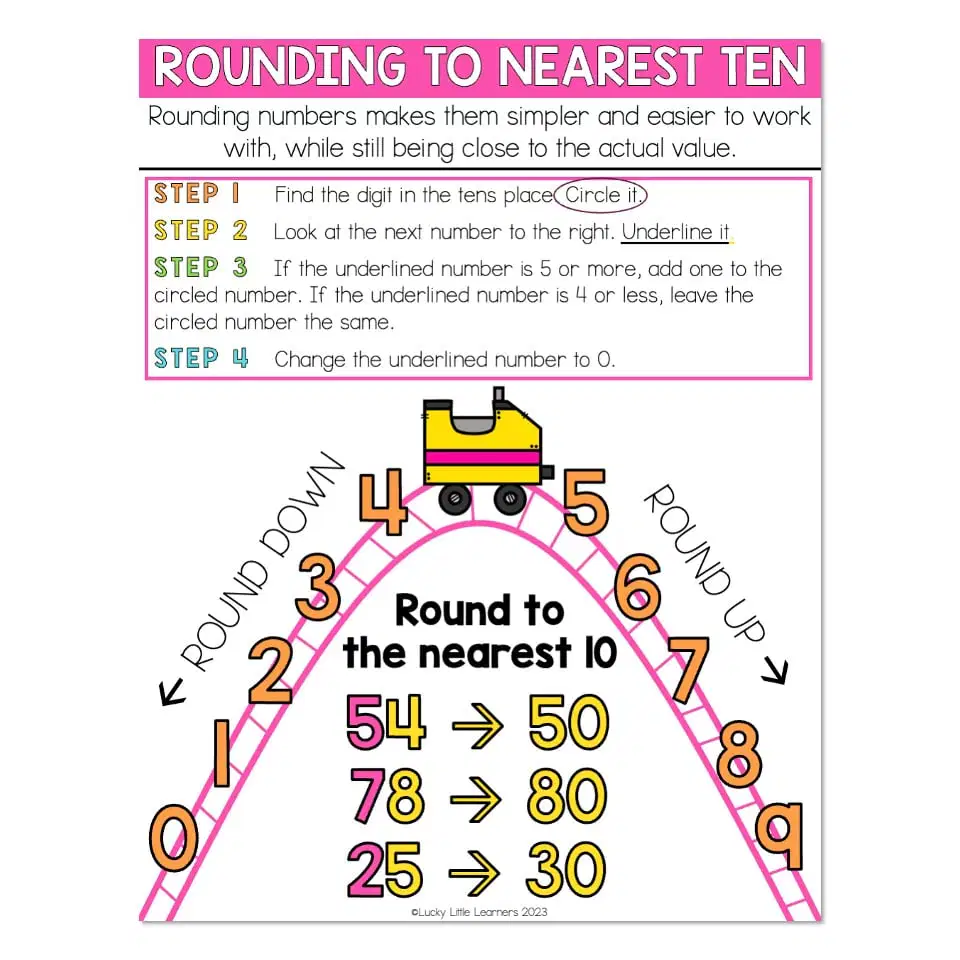
The measurement 0.035550 g rounded off to two significant figures would be
0.03
0.35
0.036
3.5 x 10^-2
A sample of gold has a mass of 96.5 g and a volume of 5.00 cm3. The density of gold is
0.0518 g/cm3.
19.3 g/cm3
101.5 g/cm3.
483 g/cm3

Which of these is a measure of Earth's gravitational pull on matter?
density
weight
volume
mass

Isotopes are atoms of the same element that have different
principle chemical properties
masses
numbers of protons
numbers of electrons

Whose series of experiments identified the nucleus of the atom?
Rutherford
Dalton
Chadwick
Bohr

According to Dalton's atomic theory, atoms
are destroyed in chemical reactions.
can be divided.
of each element are identical in size, mass, and other properties.
of different elements cannot combine.
A prospector finds 39.39 g of pure gold (atomic mass 196.9665 amu). She has
1.204 ´ 1023 atoms of Au.
2.308 ´ 1023
atoms of Au.
4.306 ´ 1023 atoms of Au.
6.022 ´ 1023 atoms of Au.

Chlorine has atomic number 17 and mass number 35. It has
17 protons, 17 electrons, and 18 neutrons.
35 protons, 35 electrons, and 17 neutrons.
17 protons, 17 electrons, and 52 neutrons.
18 protons, 18 electrons, and 17 neutrons.
How many moles of atoms are in 50.15 g of mercury (atomic mass 200.59 amu)?
0.1001
0.1504
0.2500
0.4000
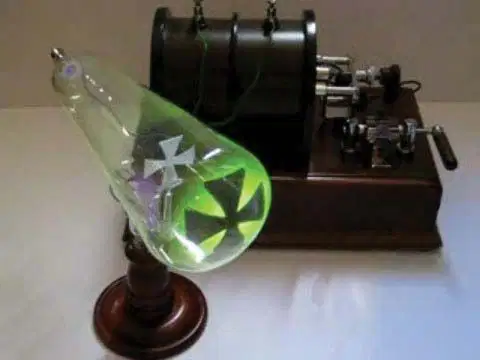
Experiments with cathode rays led to the discovery of the
proton
nucleus
neutron
electron
The molar mass of NO2 is 46.01 g/mol. How many moles of NO2 are present in 114.95 g?
.4003 mol
1.000 mol
2.498 mol
114.95 mol

Atoms naturally move
toward high potential energy
toward low potential energy
toward less stability
away from each other

The mixing of two or more atomic orbitals of similar energies on the same atom to produce new orbitals of equal energies is called
VSEPR theory
Hybridization
Malleability
Dipole-Dipole Interaction

A positive ion is known as a(n)
anion
ionic radius
valence electron
cation
The electrons available to be lost, gained, or shared when atoms form compounds are called
ions
d electrons
valence electrons
electron clouds
What values can the angular momentum quantum number have when n = 2?
+1/2, -1/2
0, 1, 2
0, 1
1/2, -1, -2
The product of 13 cm and 5.7 cm is correctly reported as
74 cm2
74.0 cm2
74.1 cm2
75 cm2
What is the formula for aluminum sulfate?
AlSO4
Al2SO4
Al2(SO4)3
Al(SO4)3

The molar mass of CCl4 is 153.81 g/mol. How many grams of CCl4 are needed to have 5.000 mol?
5 g
30.76 g
769 g
796 g
What is the percentage composition of CuCl2?
33% Cu, 66% Cl
50% Cu, 50% Cl
65.50% Cu, 34.50% Cl
47.27% Cu, 52.73% Cl

