wayground logo

Free Printable Worksheets

NEW

Font size

S
M
L
XL
Worksheets

Semester 1 Final Exam Review

Total questions: 50

Worksheet time: 1hrs 18mins

Name
Class
Date
1.

How many sig figs are in the following measurement:

100.00 cm

a)

1

b)

3

c)

4

d)

5

2.

How many sig figs are in the number below:

100000000

a)

1

b)

9

c)

10

d)

infinite

3.

How many sig figs are in the number below?

0.00400

a)

1

b)

3

c)

5

d)

6

4.

Solve. Round using SigFig math rules.

12.5 mL + 20.05 mL + 2.69 mL = ?

a)

35 mL

b)

35.2 mL

c)

35.24 mL

d)

35.240 mL

5.

Solve. Round using SigFig math rules.

98.7°C - 97.25°C = ?

a)

1°C

b)

1.5°C

c)

1.45°C

d)

1.450°C

6.

Calculate 1.23 m x 0.89 m = ?

Give your answer with the correct number of significant figures.

a)

1.0 m2

b)

1.1 m2

c)

1.0947 m2

d)

1.095 m2

7.
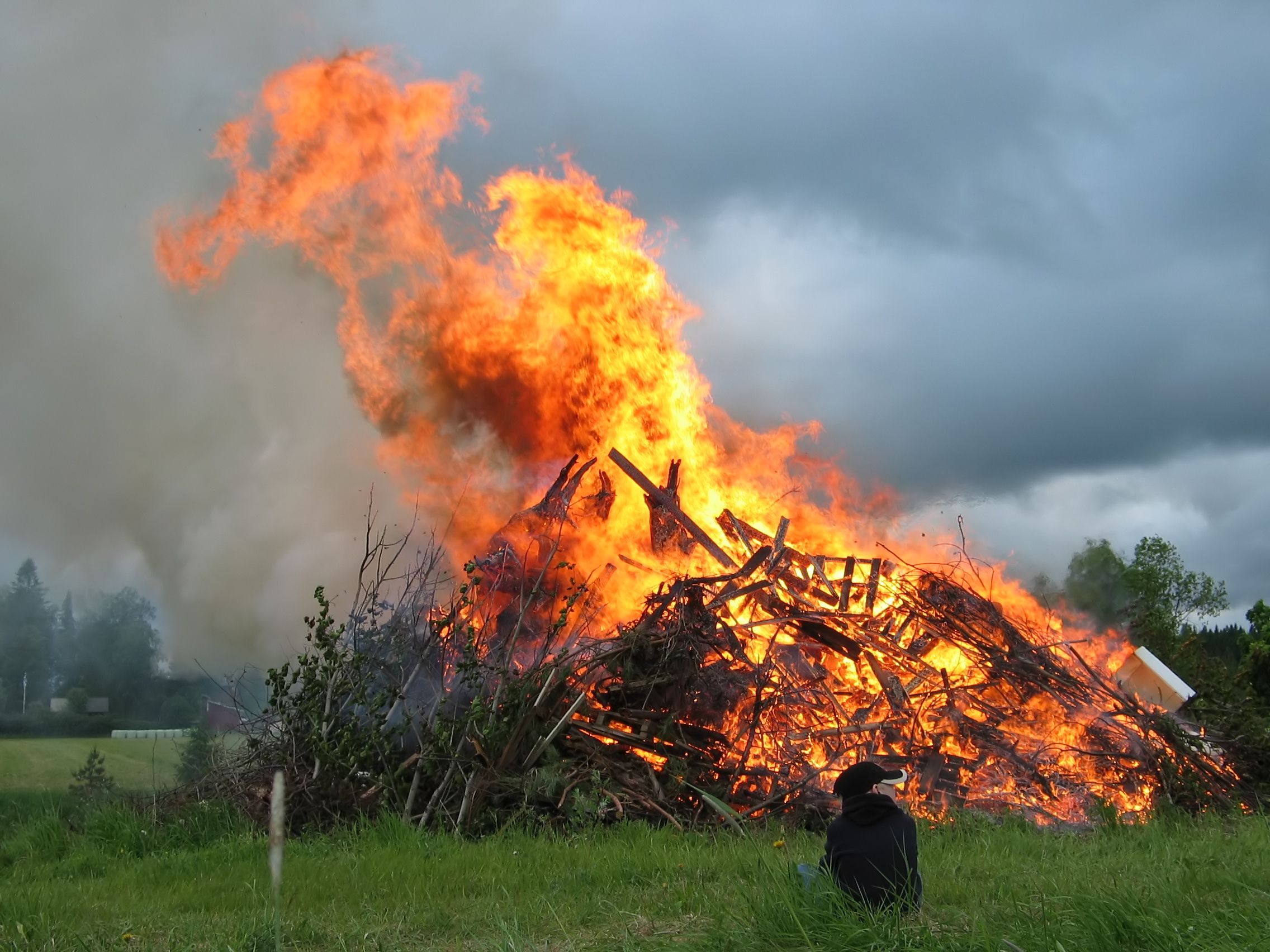
Is wood burning a physical or chemical change?
a)
Physical 
b)
Chemical
8.
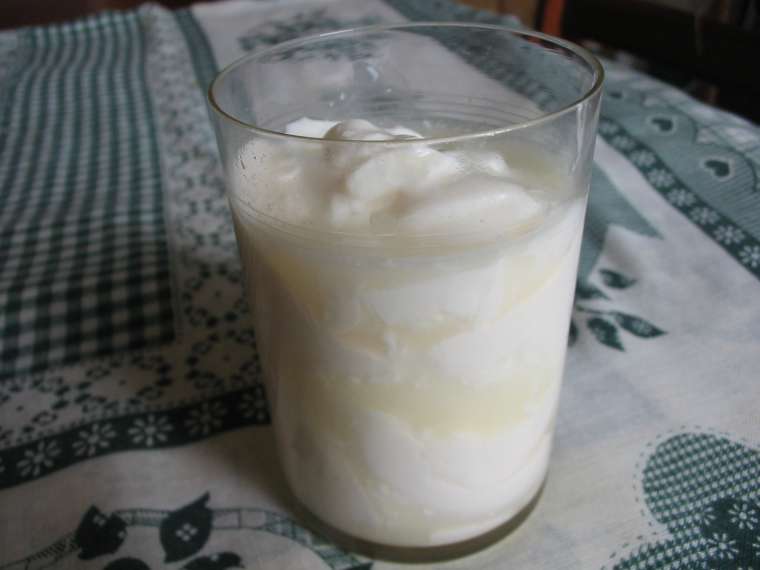
Is milk going sour a physical or chemical change?
a)
Physical 
b)
Chemical
9.
a)
element
b)
compound
c)
mixture of elements and compounds
d)
mixture of compounds
10.
a)
element
b)
compound
c)
mixture of elements
d)
mixture of compounds
11.
When the temperature of matter increases the particles...
a)
speed up and move closer
b)
speed up and move farther apart
c)
slow down and move closer together
d)
slow down and move farther apart
12.
5. What is it called when a solid turns directly into a gas?
a)
Sublimation
b)
Condensation
c)
Liquid
13.
Mixture, such as mixed nuts or dry soup mix, in which different materials are unevenly distributed and are easily identified.
a)
suspension
b)
homogeneous mixture
c)
heterogeneous mixture
d)
colloid
14.

Classify this matter: Blood (as viewed with the naked eye)

a)

pure substance: element

b)

pure substance: compound

c)

homogeneous mixture

d)

heterogeneous mixture

15.

Classify this matter: sand, salt, and iron filings stirred together

a)

pure substance: element

b)

pure substance: compound

c)

homogeneous mixture

d)

heterogeneous mixture

16.
Discovered the nucleus of the atom through the Gold Foil Experiment
a)
Rutherford
b)
Chadwick
c)
Thomson
d)
Dalton
17.
Discovered the electron within the atom
a)
Thomson
b)
Chadwick 
c)
Schrodinger & Heisenberg
d)
Dalton
18.
Place the following scientists in order, from earliest to latest: 
Rutherford, Dalton, Bohr, Thomson
a)
Dalton, Rutherford, Bohr, Thomson
b)
Thomson, Dalton, Rutherford, Bohr
c)
Dalton, Thomson, Rutherford, Bohr
d)
Bohr, Dalton, Rutherford, Thomson
19.
How many neutrons are in a Gold atom?
a)
79
b)
196
c)
118
d)
275
20.

What does top most number (47) represent?

a)

Number of protons

b)

Number of neutrons

c)

Number of electrons

d)

Number of protons and neutrons

21.
subatomic particles found on the outermost shell & responsible for the atom's reactivity
a)
neutrons
b)
valence electrons
c)
isotopes
d)
ions
22.

Think fast! An element has 25 protons and 22 electrons. It has a charge of...

a)

3+

b)

3-

c)

2+

d)

1-

23.

What type of atom is this?

a)

Normal Atom

b)

Cation

c)

Anion

d)

Isotope

24.

How many electrons does this magnesium ion have?

a)

24

b)

12

c)

10

d)

14

25.
Solve this equation for alpha decay.
20985At = ___ + 42He
a)
20583Bi
b)
20986Rn
c)
20781Tl
d)
20885At
26.
Solve this equation for beta decay.
6027Co = ___ + 0-1e
a)
5625Mn
b)
6028Ni
c)
5823V
d)
5927Co
27.
If we start off with element 5024X after an alpha decay we get another element Y that looks like
a)
5022Y
b)
4622Y
c)
4820Y
d)
5426Y
28.

Who arranged the elements by increasing atomic number?

a)

John Newlands

b)

Lothar Meyer

c)

Dmitri Mendeleev

d)

Henry Moseley

29.
As you move down the periodic table atoms get bigger.  This is because ____________.
a)
The atoms have more mass.
b)
The atoms have more protons.
c)
The atoms have more energy levels
d)
The atoms have more nuetrons
30.

Which atom has the largest atomic radius?

a)

potassium

b)

rubidium

c)

francium

d)

cesium

31.
What atom matches this electron configuration?
1s22s22p63s23p64s23d10
a)
Zinc
b)
Copper
c)
Nickel
d)
Germanium
32.
What is this element? 
1s22s22p63s23p6
4s23d104p6
a)
Argon
b)
Krypton
c)
Selenium
d)
Bromide
33.
What atom matches this electron configuration?
[Xe] 6s2 4f14 5d9
a)
Mercury
b)
Gold
c)
Platinum
d)
Thallium
34.
How many valence electrons does phosphorus have?
a)
5
b)
2
c)
8
d)
15
35.
Which element is pictured?
a)
neon
b)
fluorine
c)
magnesium
d)
argon
36.

This Lewis dot structure for Oxygen is accurate

a)

True

b)

False

37.
Which of the following is a p block element?
a)
Ca
b)
Ar
c)
Re
d)
Au
38.

Which family is the LEAST reactive on the Periodic Table?

a)

Alkali metals

b)

Alkali earth metals

c)

Halogens

d)

Noble gases

39.

CO2 (Type of bond)?

a)

Ionic

b)

Covalent

c)

Polyatomic Ion

d)

Metallic

40.

NaCl (Type of bond)?

a)

Ionic

b)

Covalent

c)

Metallic

d)

Polyatomic Ion

41.
The chemical formula of dinitrogen textroxide is
a)
Ni₂O₄
b)
NiO
c)
N₂O₄
d)
NiO₂
42.

The name of the compound Ca3(PO4)2

a)

calcium phosphate

b)

tricalcium diphosphate

c)

calcium phosphorus oxide

d)

calcium phosphide

43.

What is the name of the compound Na2(SO4)?

a)

Sodium sulfate

b)

Sodium sulfide

c)

Sodium sulfite

d)

Sodium sulfuroxide

44.
What is the correct formula for the compound, lithium oxide?
a)
LiO
b)
Li2O
c)
LiO2
d)
Li2O2
45.
Which of the following combinations would need roman numerals in the name?
a)
potassium + fluorine
b)
beryllium + oxygen
c)
boron + iodine
d)
silver + oxygen
46.
The formula of calcium phosphate is 
a)
CaPO4
b)
Ca2(PO4)3
c)
Ca3PO4
d)
Ca3(PO4)2
47.
The chemical formula of Iron (III)bromide is
a)
FeBr
b)
Fe(III)Br
c)
FeBr₃
d)
Fe₂Br₃
48.
diphosphorus pentoxide
a)
P2O5
b)
PO5
c)
P5O2
d)
P2O6
49.
The chemical formula of carbon tetrachloride is
a)
CCl
b)
C₄Cl
c)
CCl₄
d)
C(IV)Cl
50.
What's the formula for chlorine dioxide
a)
ClO2
b)
CLO
c)
ClO3
d)
HClO2