wayground logo

Free Printable Worksheets

Font size

S
M
L
XL
Worksheets

ESPS Semester 1 Final

Total questions: 79

Worksheet time: 3hrs 36mins

Name
Class
Date
1.
A large cloud of gas and dust in interstellar space; the predecessor to stars...
a)
Constellation
b)
Black hole
c)
Nebula
d)
Galaxy
2.
As a whole, Giants are considered hotter than White Dwarfs.
a)
True
b)
False
3.
In the diagram given, what happens as we move to the left?
a)
Stars Get Larger
b)
Stars get Colder
c)
Stars get hotter
4.
Which category is our Sun located in?
a)
White Dwarfs
b)
Supergiants
c)
Main Sequence
d)
Giants
5.
The category that contains the most stars is...
a)
Main Sequence
b)
Supergiants
c)
Giants
6.

How does the sun produce energy?

a)

By burning sulfur

b)

By making carbon from water and oxygen

c)

By fusing hydrogen into helium

d)

By the fission of uranium atoms

7.

Only high mass stars have this in their life cycle.

a)

A red giant

b)

A nebula

c)

A white dwarf

d)

A supernova

8.

How might a high mass star's life cycle end? (check all that apply)

a)

white dwarf

b)

neutron star

c)

black hole

d)

red giant

9.

A low mass star life cycle will end as ___.

a)

a supernova

b)

a white dwarf

c)

a neutron star

d)

a black hole

10.

A Hertzsprung Russell diagram compares which of the following star characteristics? (check all that apply)

a)

color

b)

temperature

c)

brightness

d)

size

11.

Which radiations are produced by the sun? (check all that apply)

a)

ultraviolet (UV)

b)

infrared (IR)

c)

gamma rays

d)

radio waves

12.

Sunspots undergo a cycle typically lasting how many years?

a)

2

b)

7

c)

11

d)

100

13.
Planets orbit the Sun in a shape called a(n)
a)
circle
b)
ellipse
c)
focus
d)
perihelion
14.
An ellipse is drawn around two points called
a)
aphelion
b)
perihelion
c)
foci
d)
axis
15.
When a planet orbits the Sun, one of the foci of the elliptical orbit is 
a)
the axis
b)
the perihelion
c)
the center
d)
the Sun
16.
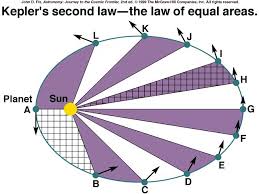
Where is the planet moving faster
a)
Position A to B
b)
Position B to C
c)
Position H to I
d)
Position I to J
17.
What is true about the area between points A, B and the Sun, and the area between points H, I and the Sun?
a)
The area between A, B and the Sun is the largest.
b)
The area between H, I and the Sun is the largest
c)
Both areas are equal in size
d)
There is not enough information to determine the areas
18.
A planet moves __________ when it is farthest from the sun.
a)
faster
b)
slower
19.
Kepler's first law states that the orbits of the planets are oval in shape or 
a)
ellipses
b)
perfect circles
20.

Which is needed to determine the amount of gravitational force between two objects?

a)

distance and mass

b)

weight and time

c)

area and weight

21.

The gravitational force exerted by an object depends on its

a)

volume

b)

mass

c)

weight

22.
What is gravitational force?
a)
It makes objects at rest start moving.
b)
It makes objects that are moving stop.
c)
The force of attraction between two objects.
d)
It pulls you into space.
23.
As the product of two objects' masses increases, the pull of gravity
a)
Increases
b)
Decreases
c)
Stays the same
24.
The SI units of force are measured in 
a)
Grams
b)
Newtons
c)
Pounds
d)
Kilograms
25.
Complete the following statement: The farther away two planets are the _______ the gravitational force between them.
a)
more
b)
same
c)
dosen't matter
d)
less
26.
Write 0.00000707 in scientific notation.
a)
7.07 x 10⁻⁶
b)
7.07 x 10⁶
c)
707 x 108
d)
707 x 10-8
27.
Write 7.8 x 10⁻³  in standard form.
a)
0.0078
b)
7,800
c)
78
d)
0.078
28.
Write 6,700 in scientific notation.
a)
6.7 x 10³
b)
6.7 x10⁻³
c)
67 x 102
d)
67 x 10-2
29.
Write 52,300,000 in scientific notation.
a)
5.23 x 10⁷
b)
5.23 x 10⁻⁷
c)
52.3 x 10⁶
d)
52.3 x 10⁻⁶
30.
Why do we experience the changing of the season on the earth?
a)
distance from the sun
b)
rotation of the earth
c)
change in solar output
d)
tilt of the earth's axix
31.
At position A, in the Northern hemisphere it would be _____?
a)
Summer
b)
Winter
c)
Spring
d)
Fall
32.
At position C, in the Northern hemisphere it would be _____?
a)
Summer
b)
Winter
c)
Spring
d)
Fall
33.
What elements make up most of the sun’s mass?
a)
carbon and oxygen
b)
carbon and hydrogen
c)
helium and nitrogen
d)
hydrogen and helium
34.

Particles thrown off the sun’s corona that can affect Earth’s magnetic field and form auroras are called

a)

a coronal mass ejection.

b)

a coronal mass reflection

c)

nuclear fusion

d)

sunspots

35.
In which area of the sun does gas rise as it heats up, then fall back down as it cools?
a)
the core
b)
the radiation zone
c)
the convection zone
d)
the corona
36.
When we look at the sun, what layer are we viewing?
a)
photosphere
b)
chromosphere
c)
corona
d)
convection zone
37.

What are the types of waves that reach the earth's surface from the sun. Select all that apply

a)

microwave

b)

infrared

c)

visible light

d)

UV

38.
The Independent/Manipulated Variable goes on the ___ axis
a)
x
b)
y
39.
The Dependent/Responding Variable goes on the ___ axis
a)
x
b)
y
40.
Which would go on the y-axis?
a)
Time
b)
# of Bacteria 
41.

Which SI unit is used to measure length?

a)

mol

b)

m

c)

kg

d)

m2

42.

When converting between SI prefixes, what should you do if you are moving from smaller to larger units?

a)

move the decimal to the left

b)

move the decimal to the right

c)

do not move the decimal

d)

use dimensional analysis

43.
When experimenting with the growth of a plant, a scientist uses three (of the same type of) plants, two different fertilizers, equal light, and equal water. What type of variable is the fertilizer?
a)
Dependent
b)
Independent
c)
Control
d)
Compound
44.
An experiment is performed on plants to see how different liquids affect plant growth. Each plant in the experiment is given a different liquid; water, apple juice, or milk. Each plant has the same amount of soil, sunlight, and listens to the same music. In this investigation, what is the dependent variable?
a)
Type of plant
b)
Water, apple juice, milk
c)
Plant growth
d)
Color of the plant's leaves
45.

What are the three main layers of the sun? Select all that apply.

a)

Core

b)

Photosphere

c)

Radiation Zone

d)

Convection Zone

46.
Who is the scientist who proposed Continental Drift Theory?
a)
Albert Einstein
b)
Alfred Wegener
c)
Isaac Newton
d)
John Dalton
47.
What do you call the supercontinent landmass formed million years ago?
a)
Pangea
b)
Asia
c)
Pantallasa
d)
Eurasi
48.

What are the 3 pieces of evidence supporting Continental Drift Theory?

a)

Coastlines

b)

Fossils

c)

Landforms

d)

Sea floor spreading

49.
one tectonic plate moves under another
a)
convergent plate boundary
b)
divergent plate boundary
c)
transform plate boundary
d)
subduction
50.
What type of boundary is in this image?
a)
convergent plate boundary
b)
divergent plate boundary
c)
transform plate boundary
d)
subduction
51.
What new feature forms at a convergent plate boundary where two continental plates collide?
a)
mid-ocean ridge
b)
trench
c)
mountain range
d)
none of these features form
52.
What feature is formed on the continental crust at an oceanic-continental convergent boundary?
a)
volcanoes
b)
mid-ocean ridge
c)
ocean trench
d)
none of these features are formed at a oceanic-continental convergent boundary
53.
What type of boundary is in this image?
a)
convergent plate boundary
b)
divergent plate boundary
c)
transform plate boundary
d)
subduction
54.

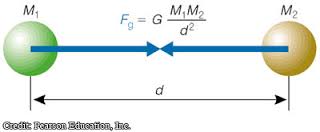
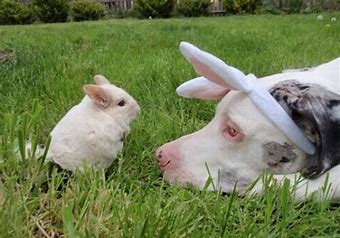
Calculate the gravitational force between a 15-kg chinchilla and a 65-kg dog which are separated by 0.30 m.

a)

Fg = 3.7*10-8 N

b)

Fg = 1.3*1012 N

c)

Fg = 1.1*105 N

d)

Fg = 7.2*10-7 N

55.

What would the gravitational force be between the Sun and Mars if they were 2.3*1011 m apart? The masses for the Sun and Jupiter are 1.99*1030 kg and 6.42*1023kg, respectively.

a)

Fg = 3.8*1015 N

b)

Fg = 2.8*10-42 N

c)

Fg = 1.6*1021 N

d)

Fg = 4.6*10-75 N

56.

What does the variable G in the gravitational force equation represent? Fg = G m1 m2r2F_g\ =\ G\ \frac{m_1\ m_2}{r^2}  

a)

Universal gravitational constant

b)

Combined masses of the two objects

c)

Gravitational force

d)

Dielectric constant

57.

What is 4cm in mm?

a)

0.4

b)

4

c)

400

d)

40

58.

What is 4000g in kg?

a)

400

b)

40

c)

0.4

d)

4

59.
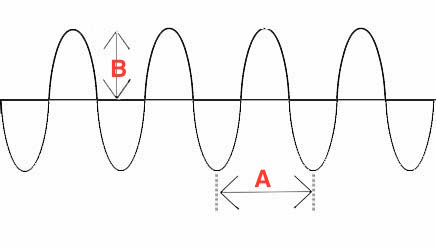
What property of this wave is represented by the letter "A"
a)
amplitude
b)
crest
c)
trough
d)
wavelength
60.
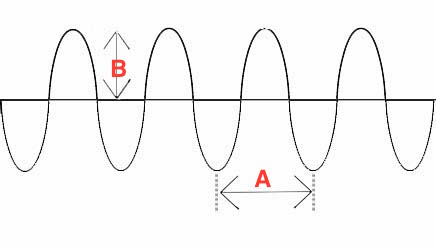
What property of the wave is represented by the letter "B"?
a)
amplitude
b)
crest
c)
trough
d)
wavelength
61.
The highest point on a wave is:
a)
the crest
b)
the trough
c)
the top
d)
the coast 
62.
The lowest point on a wave is the:
a)
Amplitude
b)
Crest
c)
Trough
d)
Wavelength
63.
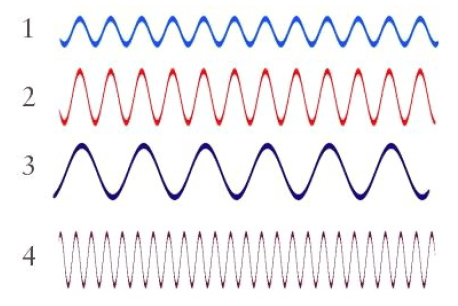
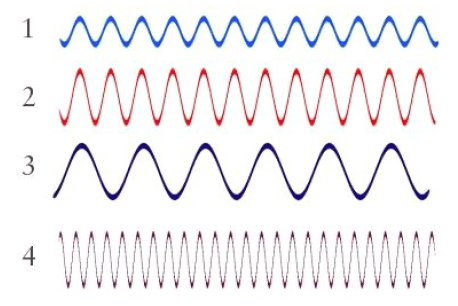
Which wave in the diagram has the greatest frequency?
a)
1
b)
2
c)
3
d)
4
64.
Which wave in the diagram has the greatest wavelength?
a)
1
b)
2
c)
3
d)
4
65.
Electromagnetic waves include the following except
a)
radio waves
b)
X-rays
c)
doing the wave at a football game
d)
microwaves
66.
If the frequency gets higher, the wavelength gets 
a)
longer
b)
shorter
67.
Which EM wave has the lowest frequency?
a)
radio
b)
xray
c)
gamma
d)
infrared
68.
Which color has the lowest frequency?
a)
red
b)
green
c)
blue
d)
violet
69.
Which color has the highest frequency?
a)
blue
b)
yellow
c)
orange
d)
violet
70.
The Doppler effect is seen when a wave-making source moves toward an observer. 
a)
True
b)
False
71.
What do the light waves of a galaxy that is moving AWAY from us look like?
a)
red shifted
b)
blue shifted
c)
green shifted
d)
yellow shifted
72.
How does the Big Bang Theory explain observations of the Doppler effect in the universe?
a)
Galaxies make lots of sound waves. 
b)
Galaxies are blue shifted and moving toward us.
c)
Galaxies are redshifted and moving away from us. 
d)
No connection. Light waves aren't visible in the universe. 
73.
When an ambulance move TOWARD you it sounds ________ pitched. 
a)
high
b)
low
c)
medium
74.

How does Cosmic Microwave Background Radiation support the Big Bang Theory?

a)

Microwaves are found everywhere in the universe.

b)

Microwaves occurred at the time of the Big Bang

c)

Microwaves are useful in our everyday lives
75.
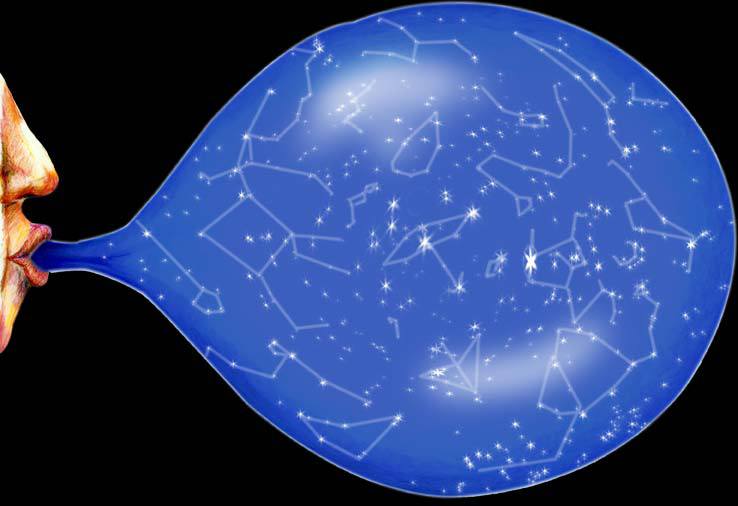
What does the Big Bang theory suggest?
a)
The universe was just there
b)
The Milky Way is the only solar system
c)
The universe is continually expanding
d)
The universe is collapsing in toward a single point
76.
What were the original two elements in our universe?
a)
Lithium and Carbon
b)
Hydrogen and Neon
c)
Helium and Chlorine
d)
Hydrogen and Helium
77.

The number of waves that pass a fixed point in a given amount of time is...

a)

frequency

b)

wave speed

c)

amplitude

d)

wavelength

78.
The unit of frequency is ___.
a)
meters
b)
nanometers (nm)
c)
m/s
d)
Hertz
79.

Using the equation V = f x λ . Calculate the frequency of a wave with a speed of 20 m/s and a wavelength of 4 m.

a)

5 Hz

b)

0.4 Hz

c)

5 s