
 Worksheets
Integrated Physical Science Unit 6 Review
Total questions: 56
Worksheet time: 48mins
What will be observed if two magnetic NORTH poles come close together?
The poles will attract each other.
The poles will repel each other.
The poles will not interact.
The poles will literally explode!
What will be observed if a magnetic NORTH pole and a SOUTH pole come close together?
The poles will attract each other.
The poles will repel each other.
The poles will not interact.
The poles will literally explode!

If you broke this magnet in half, which picture would accurately describe the outcome?


If a NORTH and SOUTH magnetic pole came together, what will the magnetic field lines between the poles look like?
The field lines will connect together, showing attraction.
The field lines will block each other, showing repulsion.
The field lines will connect together, showing repulsion.
The field lines will block each other, showing attraction.
If two SOUTH magnetic poles came together, what will the magnetic field lines between the poles look like?
The field lines will connect together, showing attraction.
The field lines will block each other, showing repulsion.
The field lines will connect together, showing repulsion.
The field lines will block each other, showing attraction.
If the distance between two magnets DECREASES, what happens to the magnetic force?
The force will increase.
The force will decrease.
The force will remain the same.
The force will create new magnetic poles.
If the strength of the magnetic poles INCREASES, what happens to the magnetic force between the magnets?
The force will increase.
The force will decrease.
The force will remain the same.
The force will create new poles.
According to Faraday's Law if you DECREASE the number of coils of wire, what will happen to the voltage?
The voltage will increase.
The voltage will decrease.
The voltage will increase, then decrease.
The voltage will remain the same.
According to Faraday's Law if you INCREASE the speed of the magnet moving through a coil of wires, what will happen to the voltage?
The voltage will increase.
The voltage will decrease.
The voltage will increase, then decrease.
The voltage will remain the same.
How can you increase the strength of a magnetic field?
decrease the number of electrons spinning in the same direction
increase the number of electrons spinning in the same direction
increase the number of protons spinning in the same direction
increase the number of electrons not moving
Which of the following is NOT an example of technology that relies on Faraday's Law?
magnetic strips on credit cards
metal detectors at the airport
traffic lights
wall clocks
What type of force is created when most of the electrons in a material have the same spin?
electric
magnetic
gravitational
balanced
What is the charge on an electron?
positive
negative
neutral
What is the charge on a proton?
positive
negative
neutral
What is the charge of a substance when the number of electrons equals the number of protons?
positive
negative
neutral
The electric force between two or more charged objects depends on which of the following quantities?
charge and distance between the charged objects
mass and distance between the charged objects
charge and mass of charged objects
quantity of charges and their masses
Which object does NOT conduct electricity?
copper wire
iron nail
salt water
wood
Which of the following would be a good conductor of electricity?
plastic
rubber
cotton
iron

What is the only subatomic particle that moves?
electrons
protons
neutrons
quarks

Where is the strongest part of a magnet located?
the bars
the force field
the poles
the middle
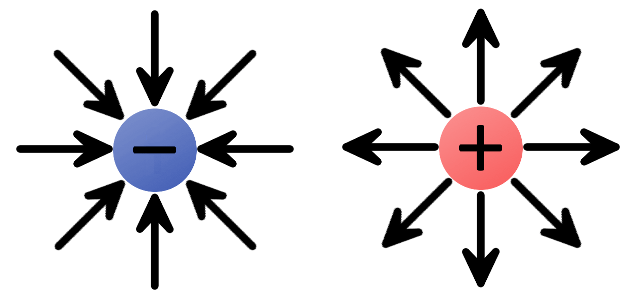
Two atoms, each with a different charge (+ and -), are brought near each other. What would you observe?
The atoms would attract each other.
The atoms would repel each other.
The atoms would create static discharge.
The atoms would not interact.

What method of charging occurs by walking across a carpeted floor in your socks?
contact
induction
static electricity
friction
A neutral metal comb is held near an object with a negative charge and an attractive force is observed? What method of charging occurred in the comb?
static discharge
contact
friction
induction
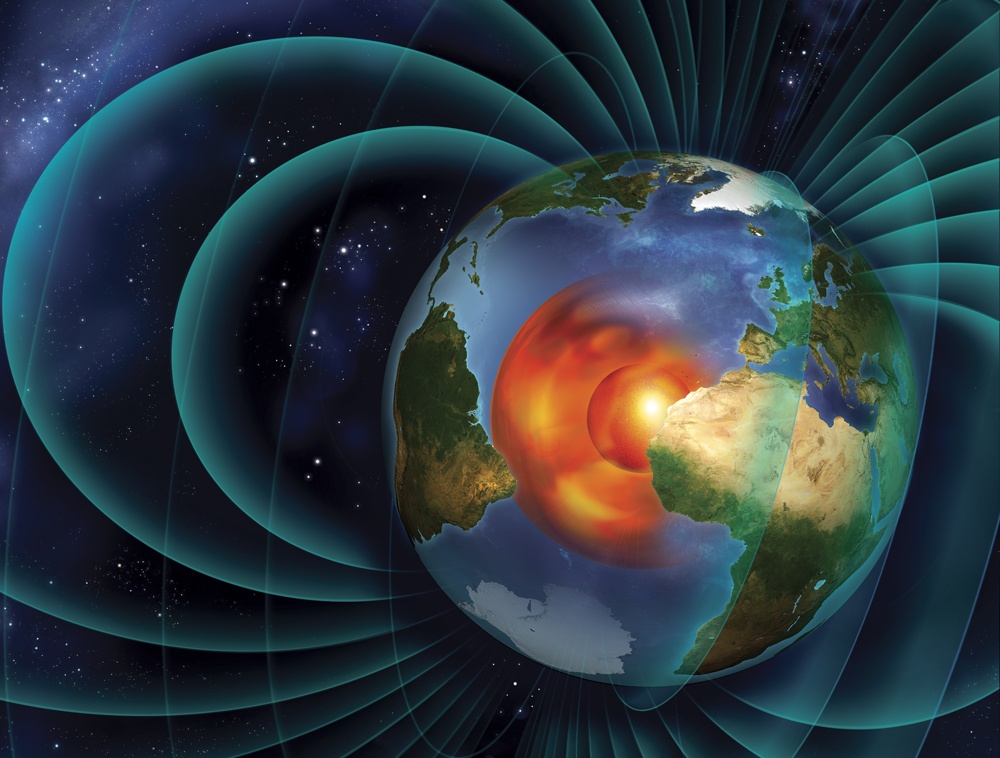
What creates a magnetic field?
charged particles that do not move
moving electric charges
gravity
an isolated magnetic pole
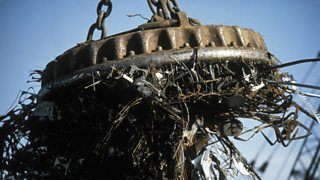
A temporary magnet that only works when electricity is passed through wires surrounding an iron core is called:
electromagnet
galvanometer
induction
super conductor magnet

What creates Earth's magnetic field?
gravity
solar flares from the sun
the molten iron outer core
satellites in space

How can the poles of an electromagnet be reversed?
decreasing the voltage of the coil
increasing the number of coils
changing the direction of current flow
altering the material used to make the coils
What would happen if you broke a bar magnet into 8 pieces?
You would have 8 half magnets
You would have 4 complete magnets
You would have 8 complete magnets
They wouldn't be magnets anymore

What type of transformer is shown in the diagram?
step-up
step-down
current transformer
isolation transformer

How does this simple electric motor work?
The current from the battery induces a magnetic field in the copper loop, turning it into an electromagnet that repels from/attracts to the permanent magnet
The electromagnet on top of the battery pulls on the magnetic copper wire
The magnet induces a current in the copper loop which makes it rotate.
The magnetic field from the battery induces an electric current in the copper loop, turning it into an electromagnet that repels from/attracts to the permanent magnet

Based on this picture, which coil in the transformer will have a higher voltage?
Secondary
Primary
Both sides have the same voltage
Cannot be determined
The end of an unlabeled magnet sticks to the North magnetic pole of a labeled magnet. What is the pole of the unlabeled magnet?
North
South
East
West
What type of device is shown in the image?
Step- Up Transformer
Step- Down Transformer
Motor
Generator

What device is shown in the simple set-up above?
magnet
electromagnet
electric motor
jumper cables
How can a magnet be used to produce an electric current?
Hold a magnet next to a piece of wire.
Wrap wire around a magnet.
Move the magnet around inside a coil of wire.
It's not possible to use a magnet to produce an electric current.
What will be observed when two objects with LIKE static charges come near each other?
The objects attract each other.
The objects do not interact.
The objects repel each other.
A spark is created between the objects.
What is the charge on an object that has the same number of positive and negative charges?
positive
negative
neutral
opposite
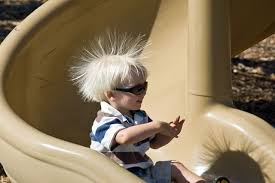
What subatomic particle is gained or lost to create a charged atom?
neutrons
protons
electrons
quarks
What method of charging occurs when you bring a charged object near an electrically neutral surface without allowing the object to touch the surface?
friction
convection
induction
conduction
Which term is defined as a region around a charged particle that can exert a force on another charged particle?
electric pulse
electric charge
electric force
electric field
What method of charging occurs when electrons are transferred from one object to another by direct contact.
reduction
induction
conduction
friction
What does the symbol "Q" stand for in the Coulomb's Law equation?
FE = d2kQ1Q2
the mass of charges objects.
the distance of charged objects.
the force of charged objects.
the charge of charged objects.
How are electric field lines drawn?
from negative to positive
from positive to negative
from positive to positive
from negative to negative
Where are protons found in an atom?
in the atom's nucleus
in the cloud around the nucleus
What is the charge on a neutron?
positive
negative
neutral
How are magnetic field lines drawn?
from north pole to south pole
from south pole to north pole
from south pole to south pole
from north pole to north pole
Where are neutrons found in an atom?
in the atom's nucleus
in the cloud around the nucleus
Where are electrons found in an atom?
in the atom's nucleus
in the cloud around the nucleus

What type of magnetic force is observed between the magnets in the picture?
A repelling force because the field lines are connecting
An attracting force because the field lines are connecting
A repelling force because the field lines are not interacting
An attracting force because the field lines are not interacting

What type of magnetic force is observed between the magnets in the picture?
A repelling force because the field lines are connecting
An attracting force because the field lines are connecting
A repelling force because the field lines are not interacting
An attracting force because the field lines are not interacting
What quantity has the SI label of Volts?
Resistance
Current
Voltage
Force
What quantity has the SI label of Amperes (amps)?
Resistance
Current
Voltage
Force

