wayground logo

Free Printable Worksheets

Font size

S
M
L
XL
Worksheets

9th Grade Biology Final Exam

Total questions: 58

Worksheet time: 1hrs 1mins

Name
Class
Date
1.
W=white hair
w= non-white hair
If you cross a horse with WW and a horse with ww what fraction of the offspring would be expected to have white hair?
a)
none
b)
3/4
c)
1/2
d)
all
2.
What is the genotype for a pea plant heterozygous for round seeds (R), and homozygous recessive for green seeds (y)?
a)
Ry
b)
RRyy
c)
RrYy
d)
Rryy
3.
What is the functions of lipids?
a)
Quick source of energy
b)
Builds muscles, skin, enzymes
c)
Stores genetic information
d)
Stores energy, insulation, protection
4.
What is structure C?
a)
Substrate
b)
Active site
c)
Enzyme
d)
Products
5.
The graph shows how enzymes affect reactions in cells. Which statement best summarizes the information shown in the graph?
a)
Enzymes increase the energy of the reactants.
b)
Enzymes decrease the energy level of the products.
c)
Enzyme decrease the activation energy of the reaction.
d)
Enzymes reverse the direction of the reaction.
6.
Which is true of prokaryotic and eukaryotic cells?
a)
Prokaryotic cells are larger than eukaryotic cells.
b)
Eukaryotic cells do not have nuclei, and prokaryotic cells do have nuclei.
c)
Prokaryotic cells lack membrane-bound organelles, and eukaryotic cells contain membrane-bound organelles.
d)
Eukaryotic cells are simpler than prokaryotic cells.
7.
Which is true about active transport?
a)
It requires energy
b)
it does not require energy
c)
It moves substances down the concentration gradient
d)
it moves material from high to low concentration
8.
Which of the following is the correct equation for PHOTOSYNTHESIS?
a)
6CO2 + 6H2O --> 6O+ C6H12O6
b)
6CO+ C6H12O6 + 6H2O --> O
c)
6O2 + 6H2O --> 6CO+ C6H12O6
d)
C6H12O6 + 6O2 ---> 6H2O + 6CO2 
9.
Which sequence of DNA bases would pair with this partial strand
ATG TGA CAG
a)
ATG TGA CAG
b)
TAC ACT GTC
c)
GTA AGT GAC
d)
CAT TCA CTG
10.
The enzyme that unzips the DNA to prepare for replication
a)
helicase
b)
replicase
c)
polymerase
d)
synthase
11.
What process is going on in this photo? 
a)
Transcription 
b)
Translation 
c)
Replication 
d)
All the above 
12.
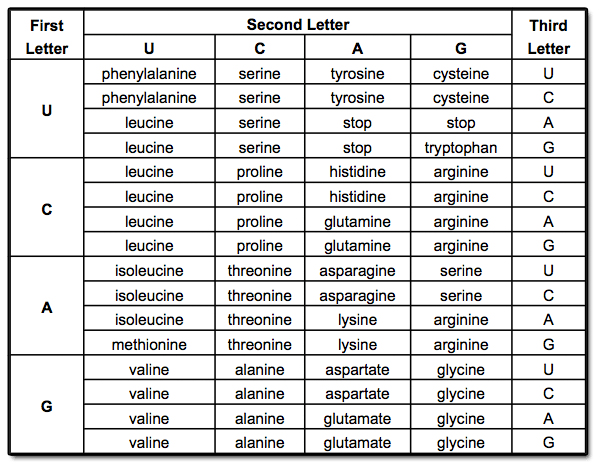
What amino acid is represented by the codon UUA?
a)
Phenylalanine
b)
Tyrosine
c)
Leucine
d)
Stop codon
13.
Which process and type of resulting cells are represented?
a)
mitosis, gametes
b)
mitosis, body cells
c)
meiosis, gametes
d)
meiosis, body cells
14.
DNA molecule segment is : TTACGCAAG
The mutated DNA segment is TTCGCAAG. This is an example of ______ mutation.
a)
Substitution
b)
Deletion
c)
Insertion
d)
Inversion
15.
Which is NOT true of MEIOSIS?
a)
Produces two cells
b)
Allows for genetic recombination
c)
Produces gametes
d)
Includes crossing over
16.
SPEED QUESTION!!  I am the control center of a cell.
a)
Nucleus
b)
Mitochondria
c)
Ribosome
d)
Plasma membrane
17.
Which of the following is true of NUCLEIC ACIDS?
a)
Examples include enzymes and hormones
b)
Function is transmitting information
c)
Monomer is amino acid
d)
Used for long-term energy storage
18.
If the diploid number of an organism is 36, how many chromosomes are found in a gamete?
a)
36
b)
72
c)
18
d)
Not enough information
19.
Which process creates an identical copy of DNA?
a)
Mutation
b)
Replication
c)
Transcription
d)
Translation
20.
Transcribe this sequence:  ACTGTTC
a)
UGACAAG
b)
TGACAAG
c)
TGUCUUG
d)
AGUCUUG
21.
In a cross of two heterozygous parents, what proportion of the offspring will also be heterozygous?
a)
50%
b)
100%
c)
0%
d)
75%
22.
Cell membrane allows nutrients to enter the cell and wastes to leave but prevents unwanted materials from entering or needed things from leaving.  What does this describe?
a)
Selective permeability
b)
Metabolism
c)
Respiration
d)
Photosynthesis
23.
When Mendel crossed two green pea plants, some of the offspring produced yellow peas.  What does this tell us about the parent plants?
a)
They must have been homozygous dominant
b)
They must have been heterozygous
c)
They must have been homozygous recessive
d)
One was dominant and one was recessive
24.
What do you call a change in an organism's DNA?
a)
Replication
b)
Mutation
c)
Codon
d)
Phenotype
25.

Photosynthesis uses CO2 to create

a)

O2

b)

Sugar / glucose

c)

Water

d)

ATP

26.

In cellular respiration, what is needed in order to create the MOST ATP?

a)

O2

b)

Water

c)

CO2

d)

ATP

27.

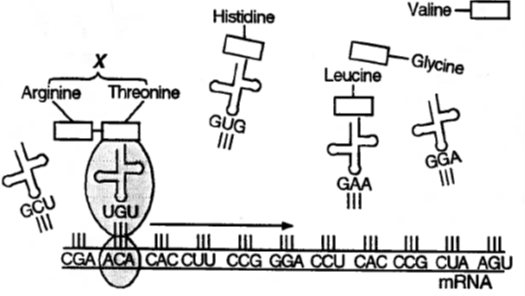
What process is pictured?

a)

Transcription

b)

Translation

c)

DNA replication

d)

Cloning

28.

What is labeled 8 in the picture?

a)

tRNA

b)

mRNA

c)

amino acid

d)

ribosome

29.

Why is water moving OUT of the cell?

a)

The cell is surrounded by a hypotonic environment

b)

The cell is surrounded by a hypertonic environment

c)

The cell is hypertonic

d)

Water always moves out of cells

30.

Chromosomes with the genes for the same traits arranged in the same order - one from mom / one from dad

a)

Alleles

b)

Sister chromatids

c)

Homologous chromosomes

d)

Gametes

31.

Every 3 bases on mRNA is a codon and represents a single

a)

protein

b)

amino acid

c)

ribosome

d)

nucleotide

32.

When movement of a solute from high to low concentration occurs through a transport (carrier) protein

a)

Facilitated diffusion

b)

Active transport

c)

Simple diffusion

d)

Exocytosis

33.

If two parents both do not have a certain inheritable disease but their child does, the disease is most likely

a)

recessive

b)

a mutation

c)

dominant

d)

X-linked

34.

Organelle with ribosomes attached to its surface - helps to create / transport protein in eukaryotic cells

a)

Golgi apparatus

b)

Rough ER

c)

Mitochondria

d)

Chloroplast

35.

Which has more ENERGY?

a)

ATP

b)

ADP

c)

AMP

d)

None of these

36.

When you have 2 different alleles for a trait (such as Aa), that means you....(multiple answers possible)

a)

Are heterozygous

b)

Show the recessive form of the trait AND dominant form

c)

Are homozygous

d)

Show only the dominant form of the trait

37.
Polymers are made up of...?
a)
Monosaccharides
b)
Monomers
c)
Proteins
d)
None of the above
38.
The picture shown shows which class of biomolecule?
a)
Protein
b)
Nucleic Acid
c)
Carbohydrate
d)
Lipid
39.
What are the monomers of DNA?
a)
glycerols
b)
amino acids
c)
fatty acids
d)
nucleotides
40.

Which group of organic molecules speed up chemical reactions and serve as immune defense mechanisms?

a)

proteins

b)

carbohydrates

41.
Enzymes are capable of increasing the rate of a chemical reaction within a living cell.  Enzymes accomplish this through which of the following means?
a)
reducing the number of products   
b)
reducing the activation energy
c)
increasing the temperature of the cell
d)
increasing the concentration of reactants 
42.
Based on the graph, at what temperature does this enzyme work best? 
a)
15 C
b)
40 C
c)
30 C
43.
What is the optimal pH for this enzyme?
a)
2
b)
4
c)
8
d)
12
44.
What is true regarding the information in the graph?
a)
Pepsin metabolizes best at pH 3.5
b)
Sucrase and Trypsin work at pH 7
c)
Trypsin works in highly acidic areas
d)
Sucrase metabolizes lactose
45.

What is the process that gets energy from food when oxygen is present?

a)

ATP synthase

b)

cellular respiration

c)

photosynthesis

d)

synthesis

46.
What is created as a product of cell respiration?
a)
energy (ATP)
b)
glucose (C6H12O6)
c)
oxygen (O2)
d)
sodium chloride (NaCl)
47.
During this process, glucose (C6H12O6) is created in the chloroplasts of plant cells.
a)
Cell respiration
b)
Photosynthesis
c)
Diffusion
d)
Mitosis
48.
A saltwater fish is accidentally placed in a freshwater aquarium in a few short hours it sadly died. Which explains why this occurred?
a)
The cells of the fish body were dehydrated by the quick loss of water. 
b)
The cells of the fish quickly absorbed massive amounts of water and it ended up killing the fish.  
c)
The fish hated the new decor in the freshwater tank. 
d)
It was just its time. 
49.
What type of transport is this?
a)
facilitated diffusion
b)
active transport
c)
diffusion
d)
osmosis
50.
The cell below is in a _________ solution.
a)
Hypotonic
b)
Hypertonic
c)
Isotonic
51.
The cell below is in a _____________ solution.
a)
Hypertonic
b)
Hypotonic
c)
Isotonic
52.

A cell in a hypotonic solution will...

a)

swell

b)

shrink

c)

stay the same size

d)

impossible to tell

53.

Special proteins help move particles, but NO energy is needed. This is...

a)

facilitated diffusion

b)

exocytosis

c)

active transport

d)

equilibrium

54.
Where will molecule X try to move to?                                                                                                                                                        
a)
Side A
b)
Side B
c)
Out of the box
d)
Stuck in the membrane
55.
Which type of transport requires no input of energy?
a)
Passive Transport
b)
Osmosis
c)
Simple Diffusion
d)
All of the above
56.
Which type of transport requires an input of energy?
a)
Passive Transport
b)
Osmosis
c)
Simple Diffusion
d)
Active Transport
57.
What is embedded in the phospholipid bilayer?
a)
proteins
b)
salt
c)
water
d)
trapped animals
58.
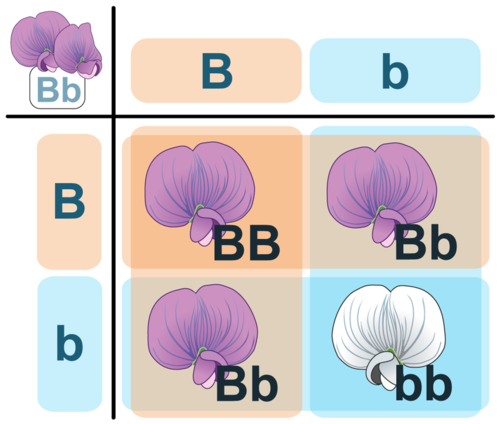
In this diagram, which is the dominant trait?
The B stands for bud.
a)
purple flower bud
b)
white flower bud
c)
dominant
d)
recessive