wayground logo

Free Printable Worksheets

NEW

Font size

S
M
L
XL
Worksheets

Water Cycle

Total questions: 46

Worksheet time: 1hrs 7mins

Name
Class
Date
1.
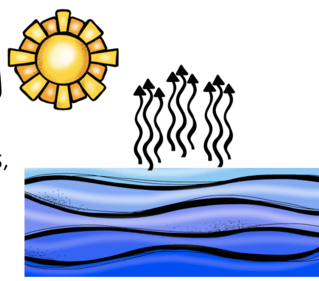
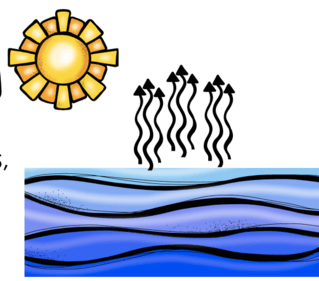
What part of the water cycle does this picture show?
a)
condensation
b)
precipitation
c)
evaporation
d)
transpiration
2.
Which of these is an example of precipitation?
a)
snow
b)
air
c)
clouds
d)
vapor
3.
What is it called when plants give off water vapor as a waste product?
a)
condensation
b)
evaporation
c)
sublimation
d)
transpiration
4.
Evaporation happens when the sun ___________ water and turns it into vapor.
a)
cools
b)
heats up
c)
freezes
d)
lights up
5.
When water condenses, the water vapor in the air gets ___________ and changes back into liquid.
a)
cold
b)
hot
c)
warm
d)
solid
6.
Precipitation happens when clouds of water droplets are too ______________.
a)
cold
b)
light
c)
heavy
d)
hot
7.
What is water that flows in rivers and streams into the oceans and lakes?
a)
evaporating
b)
condensing
c)
precipitating
d)
runoff
8.
Where is most water found on Earth?
a)
glaciers
b)
lakes
c)
rivers
d)
oceans
9.
What source of energy evaporates the most water from Earth’s surface?
a)
volcanoes
b)
the sun
c)
lightning
d)
wind
10.
Snow, sleet, hail, and rain are all examples of  ________________. 
a)
evaporation
b)
condensation
c)
accumulation
d)
precipitation
11.
What is A?
a)
Evaporation
b)
Condensation
c)
Precipitation
d)
Runoff
12.
What is B?
a)
Evaporation
b)
Condensation
c)
Precipitation
d)
Runoff
13.
What is precipitation?
a)
The part of the water cycle when the sun heats up water, turning it from a liquid into water vapor or steam. It rises from the ground into the air.
b)
The part of the water cycle when the water vapor in the air gets cold. The water turns back into a liquid and forms clouds.
c)
The part of the water cycle when clouds get heavy and can no longer hold the liquid water. This causes the water to fall from the sky to the earth as rain, snow, sleet, or hail.
14.
What is condensation?
a)
The part of the water cycle when the sun heats up water, turning it from a liquid into water vapor or steam. It rises from the ground into the air.
b)
The part of the water cycle when the water vapor in the air gets cold. The water turns back into a liquid and forms clouds.
c)
The part of the water cycle when clouds get heavy and can no longer hold the liquid water. This causes the water to fall from the sky to the earth as rain, snow, sleet, or hail.
15.
What is evaporation?
a)
The part of the water cycle when the sun heats up water, turning it from a liquid into water vapor or steam. It rises from the ground into the air.
b)
The part of the water cycle when the water vapor in the air gets cold. The water turns back into a liquid and forms clouds.
c)
The part of the water cycle when clouds get heavy and can no longer hold the liquid water. This causes the water to fall from the sky to the earth as rain, snow, sleet, or hail.
16.
What is water that flows in rivers and streams into the oceans and lakes?
a)
evaporating
b)
condensing
c)
precipitating
d)
runoff
17.
On which kind of day would you expect the most evaporation from the surface of a pond?
a)
cold, rainy
b)
cold, sunny
c)
warm, rainy
d)
warm, sunny
18.
What is      D?
a)
Evaporation
b)
Condensation
c)
Precipitation
d)
Runoff
19.
What is water vapor doing when it changes to water?
a)
evaporating
b)
condensing
c)
precipitating
d)
runoff
20.
Which of these is not an example of precipitation?
a)
rain
b)
clouds
c)
sleet
d)
snow
21.
Evaporation is...
a)
When water changes from a solid to a liquid.
b)
When water changes from a gas to a liquid.
c)
When water changes from a liquid to a gas.
d)
None of the answers.
22.
When is the best time for water to evaporate?
a)
When it is cold and snowy.
b)
When it is hot and dry.
c)
When it is raining.
d)
None of the answers.
23.
What do we call it when water evaporates, condenses, then precipitates to the earth and then repeats?
a)
A Bicycle.
b)
The Life Cycle of a butterfly.
c)
The Water Cycle.
d)
All of the answers.
24.
What is water doing when it is changing to a gas?
a)
Condensing. 
b)
Evaporating.
c)
Gravitating.
d)
Precipitating.
25.
Which of these is an example of precipitation?
a)
snow
b)
air
c)
clouds
d)
vapor
26.
During which stage do clouds form?
a)
condensation
b)
evaporation
c)
precipitation
27.
Which stages does liquid water from the ocean turn into water vapor?
a)
condensation
b)
evaporation
c)
precipitation
d)
run off
28.
Which stage does ground water try to return to the ocean or soak into the ground?
a)
condensation
b)
evaporation
c)
precipitation
d)
run off
29.

Water in its gas form is called ____________________,

a)

water vapor

b)

precipitation

c)

ice

d)

air

30.

This provides the power to keep the water cycle running.

a)

The Sun

b)

The Earth

c)

The wind

d)

living things

31.
Precipitation happens when clouds of water droplets are too ______________.
a)
cold
b)
light
c)
heavy
d)
hot
32.
Evaporation happens when the sun ___________ water and turns it into vapor.
a)
cools
b)
heats up
c)
freezes
d)
lights up
33.
During which stage do clouds form?
a)
condensation
b)
evaporation
c)
precipitation
34.

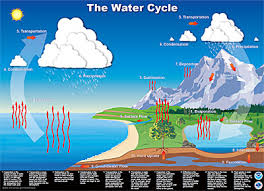
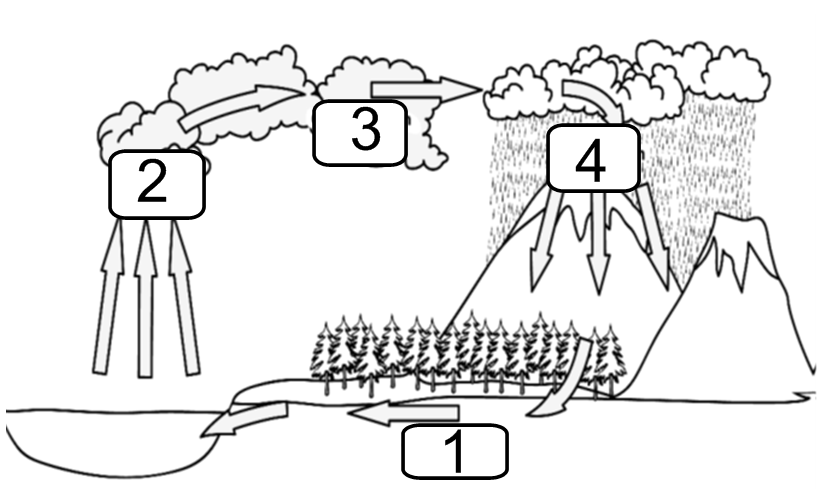
Which stage does the arrow below #2 show in the diagram?

a)

condensation

b)

evaporation

c)

precipitation

d)

run off

35.
Which stage does the #3 show in the diagram?
a)
condensation
b)
evaporation
c)
precipitation
d)
run off
36.
The water cycle has no start or end
a)
true
b)
false
37.

What is precipitation?

a)

Sweat from our bodies on hot days

b)

Warm rain but not cold snow or sleet

c)

Gas that we use in furnaces or ovens

d)

Any form of water that falls from the sky

38.

What is the energy source that drives the water cycle?

a)

The moon T

b)

The heat from our home in the winter all around the world

c)

The sun

d)

he heat generated solely from the core of the earth

39.

What are formed when water vapor condenses?

a)

Clouds

b)

Mountains

c)

Transpiration

d)

Valleys

40.

The act of turning from a gas into a liquid. ________________________

a)

Condensation

b)

Evaporation

c)

Transpiration

d)

Precipitation

41.

The act of turning from a liquid into a gas. ___________________

a)

Transpiration

b)

Condensation

c)

Evaporation

d)

Precipitation

42.
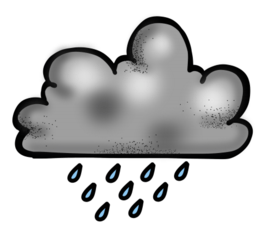
What part of the water cycle does this picture show?
a)
condensation
b)
precipitation
c)
evaporation
43.
More evaporation occurs 
a)
at night 
b)
during the day 
44.

Clouds are mostly made of

a)

snow

b)

dust

c)

water droplets

d)

smog

45.

Condensation is when

a)

the sun heats up water and turns it into water vapor

b)

water droplets become too heavy and fall from the atmosphere

c)

water gathers in rivers or streams and then flows into the ocean and lakes.

d)

water vapor turns into water droplets forming clouds

46.

What are the three states of matter?

a)

gas, liquid, and solid

b)

ice, water, and condensation

c)

condensation, precipitation and evaporation

d)

snow, fog, and rain