Wayground logo

Free Printable Worksheets

Font size

S
M
L
XL
Worksheets

Fossil & Superposition Study Guide Review Game2019

Total questions: 42

Worksheet time: 33mins

Name
Class
Date
1.
Which of the following orders the rock layers accurately from youngest to oldest?
a)
1, 2, 3, 4, 5
b)
5, 4, 3, 2, 1
c)
2, 3, 4, 5, 1
d)
1, 2, 3, 5, 4
2.
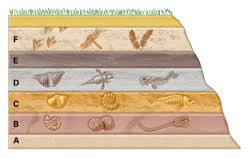
Which of the following orders the rock layers accurately from oldest to youngest?
a)
F, E, D, C, B, A
b)
A, B, C, D, E, F
c)
D, A, B, C, E, F
d)
F, E, A, B, C, D
3.
Which of the following rock layers is relatively the oldest?
a)
H
b)
P
c)
L
d)
M
4.
Which of the following occurred relatively most recently?
a)
A
b)
B
c)
C
d)
D
5.
Which of the following does the law of superposition tell scientists?
a)
Absolute age
b)
Relative age
c)
Exact age
d)
All of the answer choices
6.
What is the law of superposition?
a)
a precise plan to teleport  
b)
a method to find where you are
c)
a principle used to determine relative age of rocks 
7.
The law of superposition helps scientists to determine what?
a)
The age of fossils
b)
The absolute age of rock layers
c)
the relative age of rock layers
d)
Shrek memes
8.
According to the law of superposition, the oldest fossils are found 
a)
At the top of the rock layers
b)
Near the bottom of the rock layers
c)
In the middle of the rock layers
d)
Somewhat near the surface
9.
According to the law of superposition, which layer is the youngest?
a)
A
b)
B
c)
C
10.

A(n) ______ is the preserved or mineralized remains (teeth, bones, etc.) or imprint of an organism that lived long ago.

a)

Fossil

b)

index

c)

mineral

d)

trace

11.

The fossil record gives us _____.

a)

accurate data on the number of life-forms that lived.

b)

accurate insight on how animals reproduced.

c)

information on past life and environments on Earth.

d)

information on past life and environments on Earth.

12.

A fossil of a fern and other large-leafed plants were found in an area of Alaska. What does this suggest about this area in Alaska?

a)

A forest is now covered with snow.

b)

A farm was once located in the area.

c)

The area once had a warmer climate.

d)

Prehistoric man ate large-leafed plants.

13.

Where would you find the oldest fossils?

a)

at the top

b)

at the bottom

c)

in the middle

14.

Which fossil is oldest?

a)

the crab

b)

the fish

c)

the frog

d)

the plant

15.

The idea that the oldest fossils are at the bottom is called ____________.

a)

The Law of Superposition

b)

The Law of the Land

c)

Relative Dating

d)

Absolute Dating

16.

Fossils that were common but lived for only a short time are used as ____________

a)

toothpicks

b)

hammers

c)

index fossils

d)

paperweights

17.

Index fossils are used to _____________

a)

fill up big holes in the ground.

b)

make students feel sad

c)

hold open doors.

d)

help scientists figure out how old other rocks and fossils are.

18.

Knowing whether a fossil is older or younger than another fossil is _____________.

a)

just being smart.

b)

Absolute Dating.

c)

Relative Dating.

d)

Saturday night Dating.

19.

Knowing exactly how old someone or something is is called __________.

a)

Relative Dating

b)

Absolute Dating

c)

Strata

d)

The Law of Superposition

20.

About how old is the earth?

a)

4.5 billion years old

b)

6 million years old

c)

4.5 million years old

d)

6 billion years old

21.

Scientists do not find trilobite fossils in rock layers newer than the Permian period. This means...

a)

trilobites are extinct.

b)

trilobites are hiding.

c)

Mrs. Weiland has a pet trilobite named Wiggly.

22.
According to the law of superposition, the oldest fossils are found 
a)
At the top of the rock layers
b)
Near the bottom of the rock layers
c)
In the middle of the rock layers
d)
Somewhat near the surface
23.
An archaeologist made the following diagram of a dig site. What can be said about the pottery as compared to the skull found in the site?
a)
The rock layer with the pottery is more recent than the rock layer with the skull.
b)
The rock layer with the skull is more recent than the rock layer with the pottery.
c)
The rock layer with the skull is approximately the same age as the rock layer with the pottery.
d)
The rock layer with the skull has an absolute date of 17,000 years.
24.

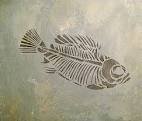
If scientists found this fossil, what could they infer?

a)

what fish are like today

b)

that this fish lacked oxygen

c)

that water once covered the area where this fossil was found

25.
Which of the following orders the rock layers accurately from oldest to youngest?
a)
F, E, D, C, B, A
b)
A, B, C, D, E, F
c)
D, A, B, C, E, F
d)
F, E, A, B, C, D
26.

A rock deep within the Earth experiences extreme temperature and pressure. After a long period of time it becomes which rock?

a)

Magma

b)

Igneous

c)

Metamorphic

d)

Sedimentary

27.
Rock that forms when sediment from older rocks get pressed and cemented together.
a)
Sedimentary Rock
b)
Metamorphic Rock
c)
Igneous Rock
28.

Which type of rock is made from lava or magma cooling?

a)

igneous

b)

sedimentary

c)

metamorphic

29.
Which type of rock is made from a rock being changed by heat and pressure?
a)
Smooshed Rock
b)
igneous
c)
metamorphic
d)
sedimentary
30.
According to the law of superposition, which layer is the youngest?
a)
A
b)
B
c)
C
31.
Which is an example of a trace fossil?
a)
animal tracks
b)
coprolite
c)
burrows
d)
all of the answers given here
32.
What is a fossil?
a)
the remains or physical evidence of an organism preserved by geologic processes
b)
fossils can be preserved in rock, amber, asphalt, or ice
c)
any naturally preserved evidence of animal activity
d)
fossil of an organism that lived during a relatively short period of time
33.
Fossilized tracks or other evidence of activity of an organism.
a)
trail 
b)
trace 
c)
index
d)
absolute 
34.
Which rock layer contains the newest fossils?
a)
F
b)
E
c)
B
d)
C
35.
What does each layer of rock represent?
a)
a period of time
b)
a different type of stone
c)
an intrusion
d)
a fault
36.
Which layer is the oldest?
a)
A
b)
B
c)
C
d)
D
37.
Which is younger: A or D?
a)
A
b)
D
c)
Both are the same
38.
Why is D younger than B?
a)
D had to be there for B to intrude
b)
D and B happened at the same time
c)
B was laid on top of D
d)
B had to be there for D to intrude
39.
What is the law that states why F is younger than G?
a)
law of uniformitarianism
b)
law of superposition
c)
law of cross-cutting
d)
law of Memorial Jags
40.
Does the picture represent relative or absolute dating?
a)
relative
b)
absolute
41.
Absolute age is determined by...
a)
the other rocks around it
b)
the law of superposition
c)
radiometric dating
42.
What can we say about all of the fossil 2s?
a)
they are all about the same age
b)
they are all found in the same place