wayground logo

Free Printable Worksheets

NEW

Font size

S
M
L
XL
Worksheets

Semester Review 2020 - IPC

Total questions: 45

Worksheet time: 1hrs 3mins

Name
Class
Date
1.
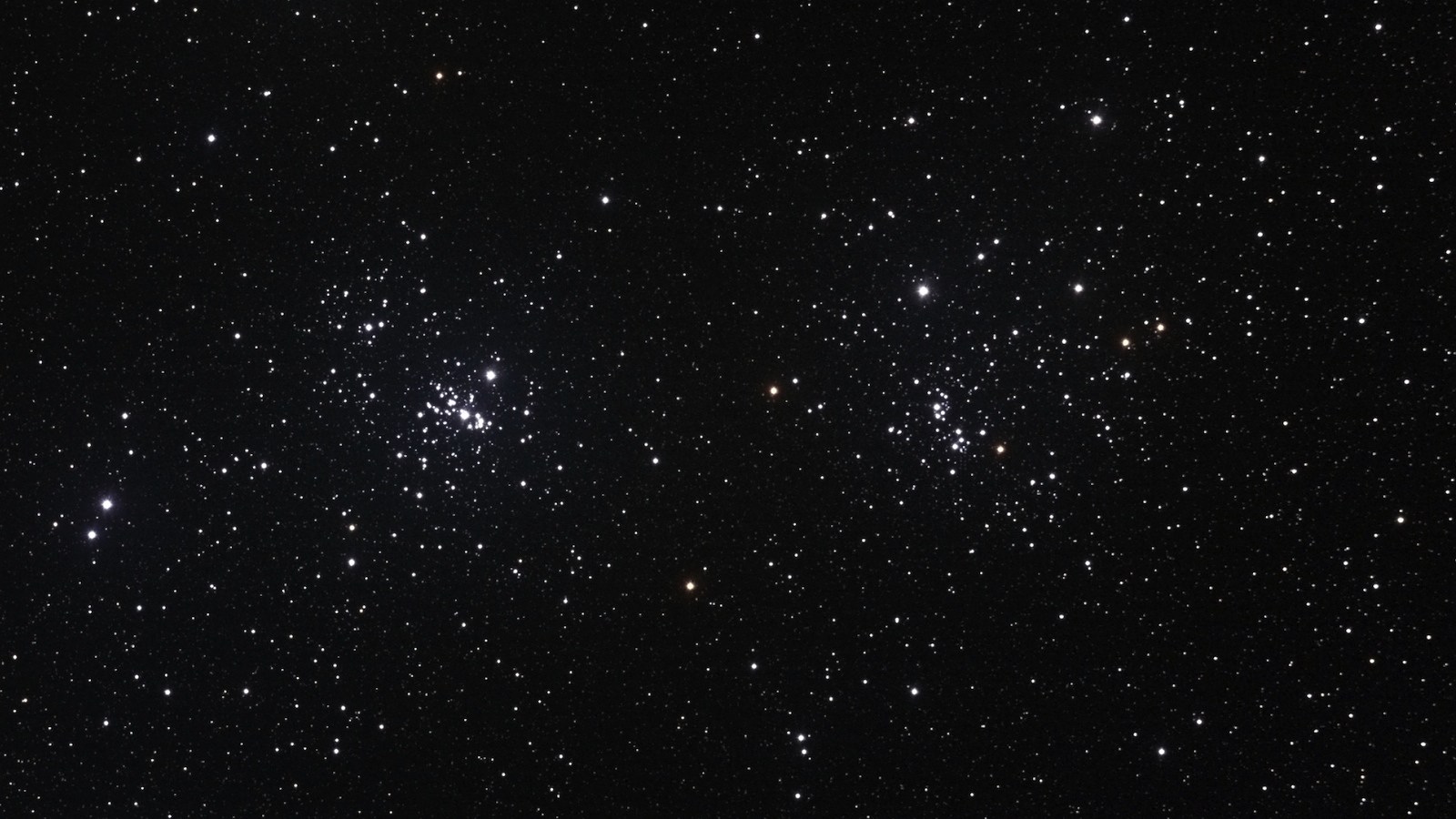
What type of galaxy is this?
a)
Spiral
b)
Elliptical
c)
Irregular 
d)
Irrational
2.
Why do other stars appear so much smaller than the sun?
a)
They are much smaller
b)
They are so far away
c)
They are not as bright
d)
They are dwarf stars
3.
When is a star born?
a)
when the nebula starts spinning
b)
nuclear fusion starts
c)
when gas and dust starts to contract
d)
when x rays get emitted
4.
In the diagram given, what happens as we move to the left?
a)
Stars Get Larger
b)
Stars get Colder
c)
Stars get hotter
5.
Compared to the rest of the stars, our sun is considered...
a)
Extremely Large and Cold
b)
Small with a medium temperature
c)
Medium size with medium temperature
6.
Which body has the greater effect on Earth's tides?
a)
Sun
b)
Saturn
c)
Moon 
d)
Venus
7.

Wha type of tide would this arrangement of earth-moon-sun create?

a)

full moon tide

b)

new moon tide

c)

neap tide

d)

spring tide

8.
What type of tides would this arrangement of earth-moon-sun create?
a)
neap tide
b)
spring tide
c)
new moon tide
d)
full moon tide
9.
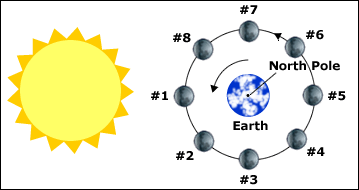
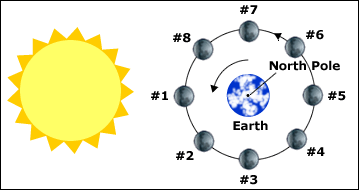
 In what phase is the moon when in position #3?
a)
First Quarter
b)
New Moon
c)
Waxing Gibbous
d)
Waning Crescent
10.
What phase is the moon when in position #6?
a)
Waning Gibbous
b)
Waxing Gibbous
c)
Waning Crescent
d)
Waxing Crescent
11.

What comes directly after this moon phase?

a)

First Quarter

b)

waning gibbious

c)

New Moon

d)

Full Moon

12.

Use the calendar to predict the moon phase on March 30th.

a)

New Moon

b)

Full Moon

c)

Third Quarter

d)

First Quarter

13.

Use the calendar to predict the moon phase on March 9th.

a)

New Moon

b)

Full Moon

c)

Third Quarter

d)

First Quarter

14.
Balance this equation
_N+ _H--> _NH3
a)
1,2,3
b)
1,3,2
c)
1,1,2
d)
2,1,1
15.

What is the goal of the Lewis Dot Structure?

a)

To determine the electron position.

b)

To show the element's valence electrons & bonding capabilities.

c)

To find the atomic mass of an element.

d)

To search for the number of electrons in an individual atom.

16.
What type of bond is this? Lithium with Fluorine?
a)
ionic
b)
covalent
17.
Which type of bond has a transfer of an electron from on atom to another?
a)
Polar Covalent 
b)
Non Polar Covalent
c)
Ionic
d)
Metallic
18.
If an atom loses two electrons what charge will it have?
a)
+ 2
b)
 - 2
c)
+1
d)
-1
19.
Covalent compounds
a)
Share electrons
b)
transfer electrons
c)
contain a sea of electrons
d)
conduct electricity
20.
A tiny but very dense, positively charged portion of the atom that holds most of the atomic mass
a)
Electron Shells
b)
Orbitals
c)
Electron Cloud
d)
Nucleus
21.

Calculation used to find the number of neutrons in an atom

a)

Mass # - Atomic #

b)

Atomic # - Mass #

c)

Atomic #- Electrons

d)

none of these

22.
This could be the dot diagram of
a)
P
b)
Ar
c)
Na
d)
B
23.
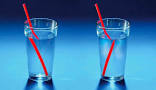
What is this called?
a)
refraction
b)
reflection
c)
reconstroction
d)
retraction
24.
Which of the following is NOT formed by a covalent bond?
a)
K2S
b)
H2O
c)
I2
d)
CO2
25.

In an ionic compound ________ accept electrons

a)

metals

b)

non-metals

26.
Which season is taking place in the Northern Hemisphere in Position 1?
a)
Winter
b)
Spring
c)
Summer
d)
Fall
27.
Which season is taking place in the Northern Hemisphere in Position 3?
a)
Winter
b)
Spring
c)
Summer
d)
Fall
28.
What are the reasons for the season?
a)
Earth's tilt & rotation
b)
Earth's tilt & revolution
c)
Earth's rotation & size
d)
Earth's tilt & resolution
29.
What happens when the area in which you live tilts away from the sun?
a)
It is summer.
b)
It is spring.
c)
It is winter.
d)
It is fall.
30.

Where are we, Earthlings, located in the Milky Way Galaxy?

a)

precisely at the center

b)

near the center

c)

halfway out from the center in an arm

d)

at the outer edge of an arm

31.

Which star is brighter than the sun?

a)

Sirius B

b)

Procyon B

c)

Van Maanan's Star

d)

Aldebaran

32.
Which type of radiation has a frequency closest to 105?
a)
Radio
b)
Infrared
c)
Ultraviolet
d)
X-Ray
33.
Which type of electromagnetic radiation has a wavelength near 10-8?
a)
Microwave
b)
Infrared
c)
Visible
d)
Ultraviolet
34.

Which of the following types of radiation has the shortest wavelength and the highest frequency?

a)

Radio Waves

b)

Infrared

c)

Visible

d)

gamma rays

35.
What do waves carry from place to place?
a)
Energy, but not matter or particles
b)
Energy and matter or particles
c)
Matter or particles but not energy
d)
Neither energy nor matter or particles
36.
Which wave is pictured?
a)
Transverse
b)
Longitudinal
c)
Both
d)
Neither
37.
The bouncing off of light rays from the surface of an object such as a mirror or other shiny surface is called:
a)
mirror
b)
laser
c)
reflection
d)
refraction
38.

Which elements are to the LEFT of the zigzag?

a)

metals

b)

nonmetals

c)

metalloids

39.

Which elements have the most similar chemical properties?

a)

boron and carbon

b)

oxygen and sulfur

c)

aluminum and bromine

d)

argon and silicon

40.
Describe this element.
a)
Highly reactive metal
b)
Highly reactive nonmetal
c)
Stable
d)
Less stable non metal
41.

What part of the atom determines the identity of an atom?

a)

Electrons

b)

Neutrons

c)

Protons

d)

Nucleus

42.
CH4 +2O2  →  CO2 +2H2
How many atoms are there on the left side of the equation compared to the right side? 
a)
The left side has more atoms than the right side. 
b)
The right side has more atoms than the left side. 
c)
The left and right side have the same number of atoms. 
d)
It is impossible to know because it depends on the reaction speed. 
43.

All of the following are evidence of a chemical change EXCEPT – (6.5D)

a)

Change in state of matter.

b)

Formation of a gas.

c)

Color change.

d)

Precipitate forms.

44.
Which pair of elements have the same number of valence electrons?
a)
Lithium and Beryllium
b)
Magnesium and Sodium
c)
Lithium and Sodium
d)
Magnesium and Lithium
45.
In which of the following examples has a chemical reaction occurred?
a)
After putting liquid batter into a hot pan, the batter solidifies and begins to turn brown.
b)
After turning on a blender filled with fruits, the fruit is chopped up and mixed together.
c)
After taking a tray filled with ice cubes out of the freezer, the cubes begin to melt.
d)
After adding a spoonful of sugar to a mug of hot coffee, the sugar dissolves completely.