wayground logo

Free Printable Worksheets

Font size

S
M
L
XL
Worksheets

Bio 1 Semester Review

Total questions: 55

Worksheet time: 1hrs 19mins

Name
Class
Date
1.

What type of factors represent the living organisms in an environment?

a)

Abiotic

b)

Biotic

c)

Viruses

d)

Natural Disasters

2.

When an environment has reached its carrying capacity for a certain population, which of the following is true?

a)

The population will continue to grow steadily

b)

The population will decrease

c)

The population will have reached logistic growth

d)

The population will have reached exponential growth

3.
What is it called when a group of the same organisms living together in the same place at the same time?
a)
An organism
b)
A population
c)
A community
d)
A biome
4.
What are groups of different populations living togther in the same place at the same time called?
a)
An organism
b)
A population
c)
A community
d)
A biosphere
5.
What is it called when you have groups of different populations along with their abiotic factors?
a)
An organism
b)
A population
c)
A community
d)
An ecosystem
6.
What are the ecological levels of organization from smallest to the largest?
a)
organism, population, community, ecosystem, biome, biosphere
b)
organism, community, population, ecosystem, biome, biosphere
c)
organism, population, community, biome, ecosystem, ecosphere.
d)
organism, community, population, biome, ecosystem, ecosphere
7.

This type of organism hunts and eats others

a)

predators

b)

prey

c)

parasites

d)

hosts

8.

A bee eating the flower's nectar and picking up the flower's pollen

a)

predation

b)

mutualism

c)

commensalism

d)

parasitism

9.

A tapeworm living in a person's intestines

a)

predation

b)

mutualism

c)

commensalism

d)

parasitism

10.

Competition occurs when organisms attempt to use the same resources

a)

True

b)

False

11.
As a population grows, it will most likely stop growing at what size?
a)
Growth limit
b)
Exponential limit
c)
Carrying Capacity
d)
It won't stop growing
12.
Which kind of growth does the human population follow? It is described as a J-shaped curve.
a)
Exponential Growth
b)
Logistic Growth
c)
Outstanding Growth
d)
Minimal Growth
13.

Which of the following are density dependent factors?

a)

competition for resources

b)

predation

c)

disease

d)

natural disasters

14.

Age structure is

a)

the number of males and females of each age in a population

b)

the number of individuals born each year

c)

the number of males and females able to reproduce in a population

d)

the number of individuals close to life expectancy

15.

These birds are a ________ distribution

a)

uniform

b)

random

c)

clumped

16.

The number of individual organisms per area is

a)

population density

b)

geographic density

c)

per capita

d)

population structure

17.

In an energy pyramid, biomass ______ as you move up the pyramid.

a)

Increases

b)

Decreases

c)

Stays the same

d)

Changes up and down

18.
In the energy pyramid here, how much of the energy in the producers gets passed to the herbivores?
a)
10%
b)
20%
c)
80%
d)
90%
19.
Which organism do the owl and the weasel compete for in the food web?
a)
Hawk
b)
Spider
c)
Grasshopper
d)
Shrew
20.
What is a substance called if it speeds up a chemical reaction?
a)
reusable
b)
catalyst
c)
specific
d)
fragile
21.
The attraction that causes water and other liquids to form drops on thin films is called ________________. This is also water’s ability to be attraction to other water molecules.
a)
adhesion
b)
capillary action
c)
cohesion
d)
surface tension
22.
Atoms are made up of three parts...
a)
Electrons, Neutrons and Protons
b)
Electrons, Lipids and Protons
c)
Electrons, Nucleus, Protons
d)
Electrons, Ions, Cheese
23.
What is a pure substance made of only one type of atom?
a)
Element
b)
Isotope
c)
Compound
d)
Molecule
24.
What is the basic unit of matter?
a)
compound 
b)
atom
c)
molecule
d)
macromolecule 
25.
Which is considered neutral?
a)
pH of 4
b)
pH of 9
c)
pH of 14
d)
pH of 7
26.

What subatomic particle is negatively charged?

a)

electrons

b)

protons

c)

neutrons

d)

solution

27.
The energy needed to get a reaction started is the 
a)
adhesion energy
b)
activation energy
c)
cohesion energy
d)
chemical energy
28.

The positively charged particle in an atom is called the

a)

neutron

b)

ion

c)

proton

d)

electron

29.
Where are the electrons found in an atom?
a)
inside the nucleus
b)
outside the nucleus
c)
next to the  protons
d)
there are no electrons in an atom
30.
Bleach is a strong base, what is the pH level of bleach?
a)
13
b)
14
c)
1
d)
2
31.

The property of water that allows it to stick (or adhere) to other substance is

a)

cohesion

b)

adhesion

c)

capillary action

d)

specific heat

32.

Look at the bar graph. Can you tell what the bar graph measures?

a)

Kilowatts used by appliances per day

b)

Average Hours appliances were used per day

c)

Number of hours each appliance was used per day

d)

Hours appliance used monthly

33.
Tina spends the largest portion of her income on...
a)
rent
b)
food
c)
clothing
d)
bus fare
34.
Largest number of individuals of a population that the environment can support...  
a)
carrying capacity
b)
population crash
c)
lag phase
d)
mutualism
35.

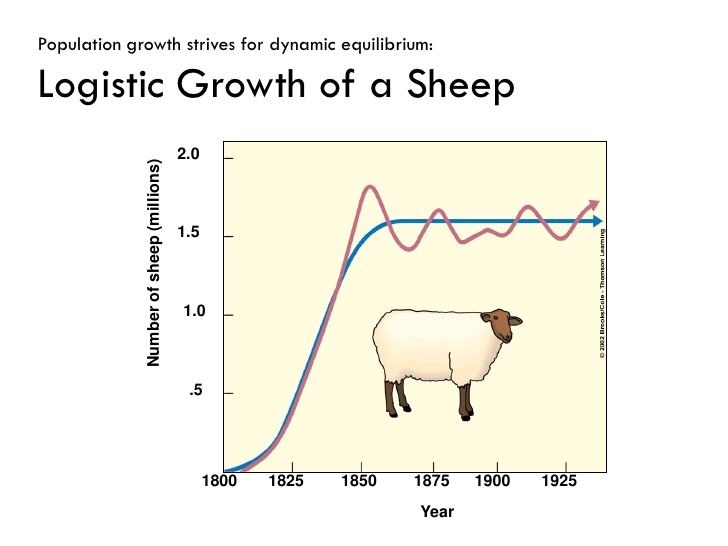
What type of population growth is depicted in this graph?

a)

exponential growth model

b)

logistic growth model

c)

performance curve

36.
The largest number of individuals in a species that an environment can support long term
a)
carrying capacity
b)
emigration
c)
immigration
d)
population density
37.

7,000 g = ____ kg

a)

70

b)

700

c)

7

d)

0.07

38.

648 g = ____ mg

a)

6,480

b)

64,800

c)

648,000

d)

64.8

39.

240 cm = ___________ m

a)

2400

b)

24

c)

2.4

d)

0.24

40.

Using the conversion chart, as the units move to the left, the decimal place moves to the ____________.

a)

Right

b)

Sometimes to the right, sometimes to the left

c)

Left

d)

The decimal place doesn't change between units

41.
What is the most basic unit of life?
a)
cell
b)
tissue
c)
organ
d)
organ system
42.
It is hot outside. You start sweating. In this case, the hot weather is the...
a)
stimulus
b)
response
c)
cause and effect
d)
responder
43.

The combination of chemical reactions through

which an organism builds up or breaks down

materials as it carries out its life processes is called ...

a)

absorption

b)

metabolism

c)

digestion

d)

consumption

44.

Maintaining a stable internal

environment is called

a)

homeostasis

b)

equilibrium

c)

balance

d)

evenness

45.

Green plants produce their own food through the process of photosynthesis. Which characteristic of life does this represent?

a)

All living things use energy

b)

All living things contain cells

c)

All living things maintain homeostasis

d)

All living things grow

46.
When a baby kitten becomes an adult cat, this is an example of...
a)
energy metabolism
b)
growth and development
c)
response to stimuli
d)
having cells
47.

What word describes a trait that helps an organism survive in its environment?

a)

natural selection

b)

mutation

c)

camouflage

d)

adaptation

48.

Natural Selection is driven by a change in the environment and survival of the

a)

Earth

b)

Fastest

c)

Fittest

d)

Biggest

49.
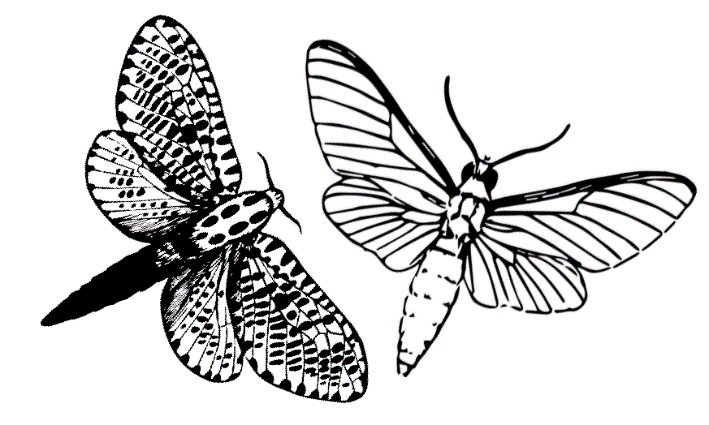
What process is being shown in this image?
a)
Variation
b)
Natural Selection
c)
Selective Breeding
d)
Homeostasis
50.

According to natural selection, light colored tree trunks would favor

a)

light colored moths

b)

dark colored moths

c)

red colored moths

d)

red and light colored moths

51.
Structures with the same parts have different functions; suggests that organisms share a common ancestry
a)
vestigial structures
b)
homologous structures
c)
adaptive radiation
d)
fossil
52.
Study of embryos of various organisms to show a common ancestor because of similarities in development
a)
natural selection
b)
embryology
c)
speciation
d)
evolution
53.
Two organisms that are closely related would have
a)
very similar DNA sequence
b)
exactly the same DNA sequences
c)
no proteins in common
d)
completely different DNA sequence
54.

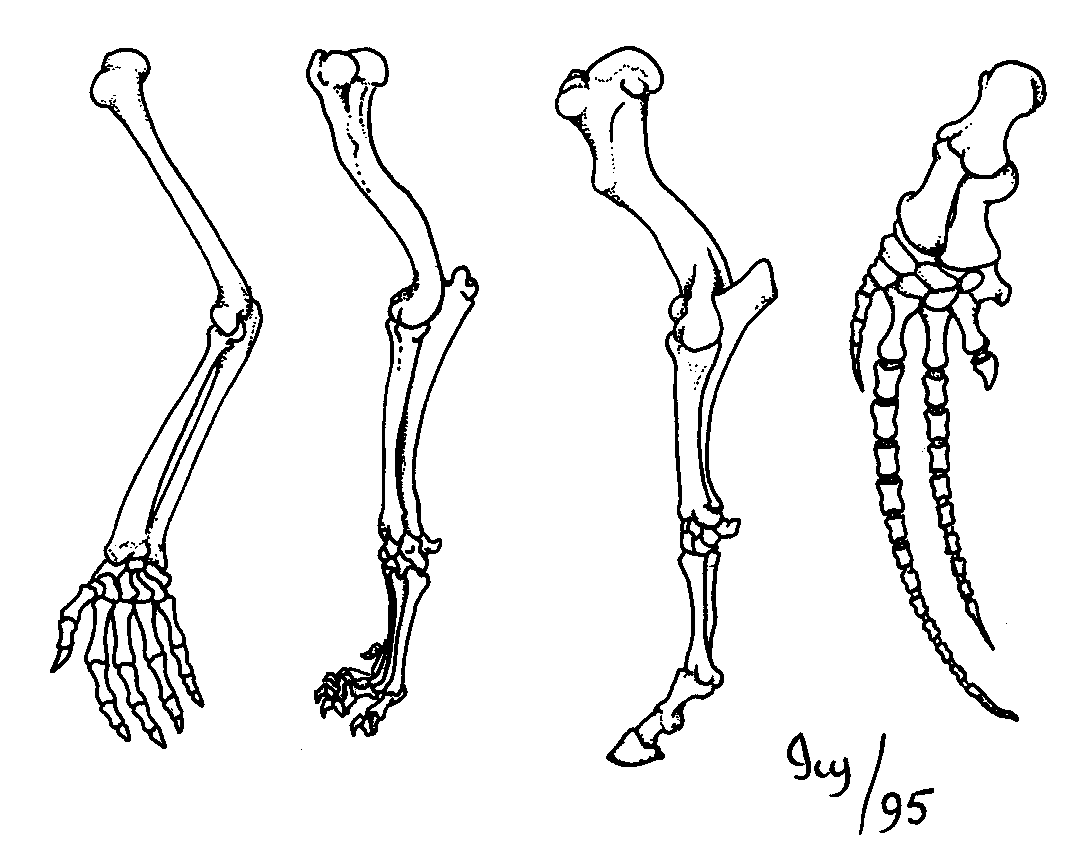
The picture shows a/an ___________

a)

homologous structure

b)

vestigial structure

55.

What is this an example of?

a)

Homologous structure

b)

Analogous structure

c)

Vestigial organs

d)

Functional adaption