wayground logo

Free Printable Worksheets

Font size

S
M
L
XL
Worksheets

Exam Review

Total questions: 123

Worksheet time: 2hrs 11mins

Name
Class
Date
1.
The first permanent English settlement in North America was
a)
Jamestown
b)
Massachusetts
c)
New Amsterdam
d)
New Spain
2.

Which European country was more respectful of Native Americans than other Europeans who explored the Americas?

a)

Spain

b)

France

c)

England

d)

the Netherlands

e)

Italy

3.

What is a plantation?

a)

a group of people who leave their native country to form a settlement in a new land

b)

a large farm where cash crops are grown

c)

A document that gives the holder the right to organize settlements in an area

d)

a Spanish community for the religious conversion and training of Native Americans

4.
Which European country's empire is pictured?
a)
Portugal
b)
Spain
c)
Great Britain (UK)
d)
France
5.
Which European country's empire is pictured
a)
Portugal
b)
Spain
c)
Great Britain (UK)
d)
France
6.
Which European country's empire is pictured?
a)
Portugal
b)
Spain
c)
Great Britain (UK)
d)
France
7.
Whaich European country's empire is pictured in RED?
a)
Portugal
b)
Spain
c)
Great Britain (UK)
d)
France
8.
What was a lightweight ship designed by Portuguese shipbuilders?
a)
astrolabe
b)
caravel
c)
compass
d)
rudder
9.
What enabled Europeans to conquer people in foreign lands?
a)
lanteen sails
b)
caravels
c)
advanced weapons
d)
better maps
10.
What enabled explorers to determine their direction while at sea?
a)
astrolabe
b)
caravel
c)
compass
d)
rudder
11.
What enabled explorers to determine their latitude while at sea?
a)
astrolabe
b)
caravel
c)
compass
d)
rudder
12.

Which of the following was a primary reason France sought to colonize North America?

a)

To create communities founded on religious tolerance

b)

to profit from trading furs and other goods

c)

to create joint ventures with other European powers

d)

to reduce overpopulation in Europe

13.

Caravels were different from traditional ships because they

a)

used larger oars.

b)

had triangular sails.

c)

used deeper hulls.

d)

had larger crews.

14.

What does it mean to circumnavigate the globe?

a)

to sail from one continent to another

b)

to sail all the way around the world

c)

to sail from one hemisphere to another

d)

to sail to an unexplored part of the world
15.

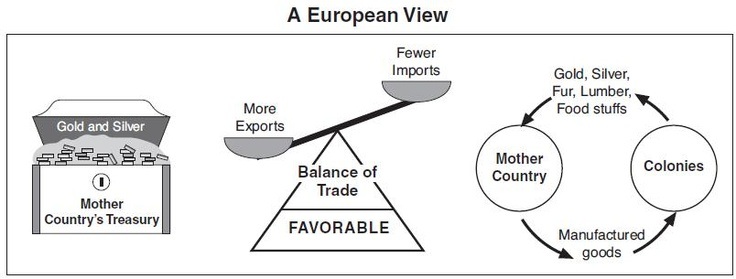
What is mercantilism?

a)

A system where a mother countries gains money and power from natural resources that come from its colonies.

b)

where colonies trade gold and silver with each other.

c)

Wars that start over money.

d)

Plantation colonies trading slaves for money.

16.

True or False? Great Britain wanted to create wealth by importing more goods than it exported.

a)

True

b)

False

17.

Which term means a good to sold another country?

a)

Import

b)

Export

18.

The impact of mercantilism was that

a)

The rate of slavery in the Americas went down

b)

Trade was limited in the Atlantic

c)

The Colony grew wealthy

d)

The Mother Country grew wealthy

19.
Wood, water, bricks, corn - are all from the earth. These are called: ____________.
a)
finished products
b)
mercantilism
c)
plants
d)
raw materials
20.
A favorable balance of trade is achieved when:
a)
You import and export the same amount.
b)
You export more than you import
c)
You import more than you export
21.
in Mercantilism the colony makes (1)____ which the mother country turns into (2)___
a)
(1) technologies (2) raw materials
b)
(1) raw materials (2) finished products
c)
(1) finished products (2) raw materials
d)
(1) raw materials (2) technologies
22.
The business endeavors in the English colonies in America led to the emergence of an economic system where most of the production was privately owned. What is the system called?
a)
socialism
b)
communism
c)
mercantilism
d)
capitalism
23.
To meet the massive demand for slaves, where did the Europeans look for slaves?
a)
Europe
b)
Spain
c)
Africa
d)
Asia
24.

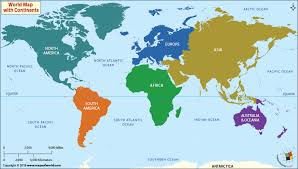
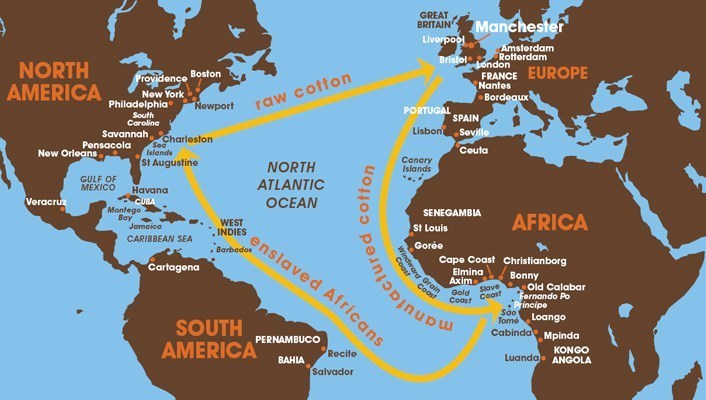
What continents did the Atlantic Slave Trade include?

a)

North America, South America, and Brazil

b)

North America, South America, Europe, and Africa

c)

North America, Europe, and Africa

d)

South America, Asia, and Europe

25.

What continents are in the New World?

a)

North America

b)

South America

c)

Europe

d)

Asia

e)

Africa

26.

What was the journey from Africa to the New world called?

a)

Old Passage

b)

New Passage

c)

Middle Passage

d)

Slave Passage

27.

What was the route of the Triangle Trade Route?

a)

England to Africa, Africa to the Americas, the Americas back to England.

b)

China to North America, North America to India, India back to China.

c)

England to South America, South America to China, China back to England.

d)

South America to England, England to India, India back to South America.

28.

What main activity did the Europeans use Asia and Africa for, once international trade had begun?

a)

Settlement colonies

b)

Plantation colonies

c)

Trading post colonies

d)

Storage facilities

29.
Had a master
a)
Slave
b)
Indentured Servant
c)
Both
30.
Signed a contract agreeing to work for a specific length of time
a)
Slave
b)
Indentured Servant
c)
Both
31.

Europeans who signed a contract with an American colonists to gain passage to North America.

a)

Native Americans

b)

Slaves

c)

Indentured Servants

d)

Colonists

32.
This unpopular monarch was the reason for the English Civil War
a)
Edward I
b)
Charles I
c)
Charles II
d)
James I
33.
Two sides fighting in the English Civil War were the
a)
Brits vs Scots
b)
Broncos vs Stallions
c)
Squarepants vs Colts
d)
Cavaliers vs Roundheads
34.
Before restoration, this parliamentarian took control with a "New Model Army"
a)
Benjamin Banneker
b)
Prince Charles II
c)
Oliver Cromwell
d)
Pippi Livingstone
35.
William and Mary came to power during a period known as the
a)
Holy Restoration
b)
Glorious Revolution
c)
Graceful Transition
d)
Hostile Takeover
36.
 _______________________ was the belief that absolute monarchs were appointed by God.
a)
Mandate of Heaven
b)
Divine right 
c)
Religious accord
d)
Pragmatic sanction
37.
Who led the Parliament during the English Civil War?
a)
Oliver Cromwell
b)
King Charles
c)
Royalists
d)
John Locke
38.
The English legislative government is called. 
a)
Congress
b)
Parliament
c)
Monarchial
d)
Patrilineal
39.

______________________: the idea that the monarch (king/queen) is God’s representative on earth

a)

Divine Right

b)

Absolutism

c)

Traditionalism

d)

Catholicism

40.

After King Charles I is beheaded, who becomes the dictator of England?

a)

Oliver Cromwell

b)

William & Mary

c)

Charles I

d)

Peter the Great

41.

Who takes the throne during the Glorious Revolution?

a)

Maximilian Robespierre

b)

James II

c)

Prince Henry

d)

William & Mary

42.
What happened to King Charles I after the English Civil War?
a)
He was put on trial, found guilty and executed
b)
He was punished by a  citizen army
c)
He was sentenced to house arrest for the remainder of his life
d)
He was exiled to an island off the coast of Spain.
43.
What type of monarchs were William and Mary?
a)
absolute monarchs
b)
unlimited monarchs
c)
limited monarchs
d)
divine right monarchs
44.
  What does "geo-" mean?
a)
Earth
b)
sun
c)
Center
45.
This image shows the:
a)
Geocentric Solar System
b)
Heliocentric Solar System
46.
The sun centered view of the universe
a)
Galaxy
b)
Geocentric
c)
Astonomy
d)
Heliocentric
47.
Copernicus' view of the universe
a)
Galaxy
b)
Geocentric
c)
Astonomy
d)
Heliocentric
48.
Ptolemy's view of the universe
a)
Galaxy
b)
Geocentric
c)
Astonomy
d)
Heliocentric
49.

What is the name of this model?

a)

Heliocentric Model

b)

Geocentric Model

c)

Circle Model

d)

Aristotle Model

50.

Who came up with this model?

a)

Copernicus

b)

Kepler

c)

Galileo Galilee

d)

Ptolemy

51.
A series of steps used by scientists to solve a problem or answer a question. 
a)
scientific method
b)
recipe
c)
data collection
d)
metric system
52.
Which is NOT a step in the scientific method?
a)
Make observation
b)
Form a theory
c)
Collect data
d)
Form a hypothesis
53.
Galileo was tried for heresy because he argued  
a)
That heaven did not exist
b)
That Earth revolved around the sun
c)
Against the law of gravity
d)
That the sun revolved around the Earth
54.
According to Copernicus, the sun  
a)
Revolved around the earth
b)
Was the center of the Universe
c)
Was the biggest star
d)
 Had many moons
55.
The idea that the earth is the center of the universe is the ___________ theory.
a)
geocentric
b)
heliocentric
c)
earthcentric
d)
world's worst
56.
The idea that the sun is the center of the universe is the ____________ theory.
a)
geocentric
b)
heliocentric
c)
solar
d)
sunny
57.
Which of the following was developed by Isaac Newton?
a)
the heliocentric theory
b)
the scientific method
c)
the theory of scientifc rationalism
d)
the theory of universal gravitation
58.
Which of the following quotes did Voltaire say?
a)
"I think, therefore, I am."
b)
"I do not agree with what you say, but I will defend to the death your right to say it."
c)
"Education begins the gentleman, but reading, good company and reflection must finish him."
d)
"Patience is bitter, but its fruit is sweet."
59.
A time period, mostly in the 1700's, where philosophers and thinkers thought science and reason could improve all humanity.
a)
Enlightenment
b)
Great Awakening
c)
American Revolution
d)
French Revolution
60.
People in a society give up some of their rights in exchange for protection.
a)
Social Contract
b)
Enlightenment
c)
State of Nature
d)
Revolution
61.
French writer who believed in freedom of speech, religious tolerance, and the separation of church and state.
a)
Voltaire
b)
Locke
c)
Rousseau
d)
Montesquieu
62.
John Locke believed people were born with certain rights than no-one could take away. 
a)
Life, liberty, property
b)
Life , liberty, and the pursuit of happiness
c)
Freedom of speech, religion, and property
d)
Social Contract
63.
Life, liberty, property
a)
natural rights
b)
social contract
c)
state of nature
d)
enlightenment
64.
This thinker believed in the separation of powers within a government.  Each part should have check and balances over the other parts.
a)
Montesquieu
b)
Wollstancraft
c)
Locke
d)
Voltaire
65.
This thinker wrote "The Social Contract." He believed that government was a contract between the ruler & the people.
a)
Rousseau
b)
Locke
c)
Montesquieu
d)
Voltaire
66.
What type of government has its power limited by the people?
a)
Unlimited
b)
Limited
c)
Absolute Monarchy
d)
Dictatorship
67.
What type of government has a leader or a small group of leaders with no limits to their power
a)
Limited
b)
Unlimited
c)
Democracy
d)
Republic
68.
Government leaders are not held accountable for the well-being of the citizens in their country
a)
Limited
b)
Unlimited
69.
People who disagree with the policies and ideas of the government are often treated harshly.
a)
Limited
b)
Unlimited
70.
People have few rights to privacy.
a)
Limited
b)
Unlimited
71.
People can assemble peacefully, request policy changes by the government and expect a positive government response.
a)
Limited
b)
Unlimited
72.
People can choose to work where they want.
a)
Limited
b)
Unlimited
73.
People have a choice in the religion they choose practice or not practice. 
a)
Limited
b)
Unlimited
74.
Citizens are allowed to vote for people running for office.
a)
Limited
b)
Unlimited
75.
What is a government ruled by a king or queen called?
a)
Absolute
b)
Constitutional
c)
Monarchy
d)
Dictatorship
76.
What type of monarchy has a king or queen that holds all of the power?
a)
Absolute
b)
Constitutional
c)
Totalitarian
d)
All-powerful
77.
The Second Estate was composed of 
a)
Church leaders
b)
Nobility
c)
Peasants
d)
none of the above
78.
Most of the people of France belonged to the 
a)
1st 
Estate
b)
2nd Estate
c)
3rd Estate
d)
4th Estate
79.
The First Estate was made up of this group.
a)

clergy

b)
common people
c)
nobles
d)
kings and queens
80.
What do these pie charts reveal about the causes of the French Revolution?
a)
all the estates were taxed equally
b)
the upper classes paid the most taxes
c)
the poorest classes paid all the taxes
d)
the third estate was the wealthiest
81.
What happened at the Storming of the Bastille? 
a)
When French women stormed the palace. 
b)
A period of mass executions. 
c)
Storming of the French prison.End of the French Revolution. 
d)
Peasants storm a French prison. Beginning of French Rev. 
82.
The Bastile was
a)
A fortified fort in Paris for the kids to play in
b)
A prison that also held weapons and gun powder
c)
A new place for Marie and Louis to go to have dinner
d)
Where King Louis XVI and Marie Antoinette lived
83.
 How could the absolute monarchy of Louis XVI best be described? 
a)
democracy
b)
constitutional government
c)
limited government
d)
unlimited government
84.
 All of the following fueled French desires to revolt against the monarchy except the __________.
a)
American Revolution
b)
Reign of Terror
c)
Declaration of Independence
d)
ideas of the Enlightenment 
85.
What was the final outcome of the French Revolution? 
a)
the declaration of the Edict of Nantes
b)
Napoleon naming himself Emperor of France
c)
unification of French city­ states
d)
the restoration of Louis XVI 
86.
Napoleon Bonaparte used his power to change France into an empire. What other change did he bring to France? 
a)
He created a bureaucracy based on social class or birth.
b)
He devised a new legal code for France.
c)
He ended European wars.
d)
He raised taxes. 
87.
Otto von Bismark, the leader of the revolution to unite Germany, followed a policy of ___. 
a)
pacifism
b)
socialism
c)
constitutionalism
d)
realpolitik
88.
Napoleon created a great empire across Europe in the early 1800s. Why was he also responsible for the growth of nationalism?
a)
His taxes helped build majestic palaces throughout Europe. 
b)
His family members were installed on European thrones.
c)
Napoleon’s defeat led to freed countries, and people showing pride in their culture.
d)
He was a great military leader who everyone admired.
89.

The French Revolution was inspired by _______________ thinkers.

a)

Scientific Revolution

b)

Clergy

c)

Enlightenment

d)

Revolutionary

90.
Which estate did the nobles belong to?
a)
1st Estate
b)
2nd Estate
c)
3rd Estate
91.

About what portion of France's population belonged to the Third Estate?

a)

2 percent

b)

50 percent

c)

75 percent

d)

97 percent

92.

Which estate did the clergy belong to?

a)

1st Estate

b)

2nd Estate

c)

3rd Estate

93.

Who were the bourgeoisie?

a)

The middle class professionals

b)

The 1st Estate

c)

The peasant farmers

d)

The nobles

94.

What charter, passed by the National Assembly, officially destroyed the inequality of the Old Regime?

a)

The Declaration of the Rights of Man and of the Citizen

b)

Constitution of 1791

c)

Tennis Court Oath

d)

Declaration of Independence

95.

The Reign of Terror was a time when

a)

Marie Antoinette was executed

b)

The Committee of Public Safety used terror to keep the Republic safe

c)

Thousands of French people were sent to the guillotine

d)

all of these

96.

The TERROR ended when...

a)

Marie Antoinette was executed.

b)

Louis XVI was executed.

c)

Marat was murdered in his bath.

d)

Robespierre was executed.

97.

One goal of the Congress of Vienna was to

a)

establish a new balance of power in Europe

b)

protect Europe from Ottoman advances

c)

end abuses within the Catholic Church

d)

redraw the boundaries of Africa

98.
At what battle was Napoleon defeated once and for all?
a)
Battle of Nations
b)
Battle of Trafalgar
c)
Battle of Waterloo
99.
What is Nationalism?
a)
A sense of unity based upon shared characteristics: language, culture, religion, and geography
b)
Advocates legitimate, tradition government in order to preserve the status quo
c)
Advocates limited government in order to protect individual liberties
100.
After his initial defeat, Napoleon was exiled to the island of ______; his second exile was to the island of _________.
a)
St. Helena; Elba
b)
Elba; Corsica
c)
Elba; St. Helena
d)
Corsica; St. Helena
101.
Who was a French general, made himself consul & then emperor of France? He conquered most of Europe by 1812 & was finally defeated at Waterloo in 1815 & exiled to St. Helena.
a)
Robespierre
b)
George Washington
c)
Adolf Hitler
d)
Napoleon
102.

One goal of the Congress of Vienna was the -

a)

restoration of Napoleon

b)

execution of Napoleon

c)

restoration of monarchies

d)

abolishment of monarchies

103.
what is nationalism?
a)
belief that loyalty is to your shared culture NOT a leader
b)
loyalty of people toward a ruler
c)
building up of a nation by creating colonies
d)
when the government owns and controls all of the means of production
104.
which of the following is NOT an aspect of nationalism?
a)
common history
b)
common language
c)
common religion
d)
common job
105.
what were the 2 main aspects of nationalist movements in the 1800s?
a)
unification of groups and colonization of new lands
b)
unification of groups and separation from large empires
c)
colonization of lands and separation of groups from large empires
d)
separation of groups from large empires and discovering new trade routes
106.
Nationalist movements began in Europe on the Balkan Peninsula in _________________ who were seeking independence from the Ottoman Empire
a)
Turkey
b)
Chile
c)
Spain
d)
Greece
107.

what event marks the end of the French Revolution?

a)

the Reign of Terror

b)

Napoleon's coup d'etat

c)

the execution of King Louis XVI

d)

the execution of Robespierre

108.

This Latin American social class could not hold a political office, but could be soldiers.

a)

Peninsulares

b)

Creoles

c)

Mestizos

d)

Mullattos

109.

Latin American social class who’s ancestry is of mixed white (European) and African descent?

a)

Peninsulares

b)

Creoles

c)

Mestizos

d)

Mulattos

110.

_______________ led the Haitian slave rebellion.

a)

Simon Bolivar

b)

Jose de San Martin

c)

Toussaint Louverture

d)

Father Miguel Hildalgo

111.

The Haitian slave rebellion is the first time _________________.

a)

France was defeated

b)

A slave rebellion was victorious

c)

Haiti had a rebellion

d)

France colonized a country

112.

Creole general who liberated his home country of Venezuela.

a)

Simon Bolivar

b)

Jose de San Martin

c)

Toussaint Louverture

d)

Father Miguel Hildalgo

113.

He teamed up with Simon Bolivar to liberate Peru.

a)

Father Miguel Hildalgo

b)

Francisco Pizarro

c)

Toussaint Louverture

d)

Jose de San Martin

114.

Latin American leaders such as Jose de San Martin and Bolivar were fighting to liberate Latin American countries from _____________.

a)

France

b)

America

c)

Germany

d)

Spain

115.

The term “Father” in front of Miguel Hidalgo’s name implies that he was the following?

a)

Military Leader

b)

Catholic Priest

c)

Government Official

d)

King

116.

Father Miguel Hidalgo led the independence movement for which country?

a)

Spain

b)

Austria

c)

Prussia

d)

Mexico

117.

Haiti was originally a colony of which European country?

a)

Spain

b)

Austria

c)

Prussia

d)

France

118.

Latin American social class who’s ancestry is of mixed Spanish and American Indian descent?

a)

Peninsulares

b)

Creoles

c)

Mestizos

d)

Mullattos

119.

Latin American social class which held the highest positions

a)

Peninsulares

b)

Creoles

c)

Mestizos

d)

Mulattos

120.
  • Appointment of Otto von Bismarck as Chancellor
  • Austro-Prussia War, 1866
  • Franco-Prussian War, 1870–1871


These events led directly to

a)

the unification of Germany

b)

foreign rule in Italy

c)

the rebellion of the Sepoys

d)

an alliance between Serbs and Russians

121.
Unification is…
a)
The belief that one should be loyal to the ruler of a country
b)
The belief that one should be loyal to the country, not ruler
c)
The process of uniting separate areas into one country
d)
The process of gaining new colonies
122.
Why did the 39 German states decide to unify in to one powerful nation?
a)
communism
b)
capitalism
c)
imperialism
d)
nationalism
123.
Bismark explained that his decisions would not be made by speeches, but rather by:
a)
blood and iron
b)
water and ice
c)
blood and sweat
d)
wool and steel