wayground logo

Free Printable Worksheets

Font size

S
M
L
XL
Worksheets

Physical Science Final Exam Review

Total questions: 80

Worksheet time: 2hrs 46mins

Name
Class
Date
1.

Subatomic particles with a negative charge

a)

Electrons

b)

Neutrons

c)

Protons

d)

Quarks

2.
Most of the mass in an atom is made up of _____________________?
a)
protons and electrons
b)
protons and neutrons
c)
neutrons and electrons
d)
electrons and quarks
3.
Water is an element
a)
true
b)
false
4.
DIFFERENT kinds of atoms chemically combined to form a substance are
a)
Mixture
b)
Element
c)
Compound
d)
Substance
5.

In which way are protons and electrons the same in an atom?

a)

same mass

b)

same number of particles

c)

same charges

6.
The mass number of an isotope is equal to the number of ______ in an atom.
a)
Protons
b)
Neutrons
c)
Protons + Neutrons
d)
 Electrons
7.

Which subatomic particle determines the identity of an element?

a)

protons

b)

neutrons

c)

electrons

8.

Which subatomic particle determines the charge of an atom?

a)

protons

b)

neutrons

c)

electrons

9.

Which subatomic particle determines the identity of an element?

a)

protons

b)

neutrons

c)

electrons

10.

Which subatomic particle determines the charge of an atom?

a)

protons

b)

neutrons

c)

electrons

11.

The electron is not included in the calculations for the atomic mass because

a)

It has negative charge

b)

It is located in the outer energy levels of the atom

c)

Its mass is basically zero

d)

It attracts neutral particles

12.

What is the number of protons that the element in this image contains?

a)

14

b)

7

c)

15

d)

18

13.

Which are of the following are subatomic particles. Select three:

a)

Protons

b)

Neutrons

c)

Electrons

d)

Nucleus

14.

The atomic number will tell me... (select three)

a)

Number of Protons

b)

Number of Electrons

c)

Number of Neutrons

d)

What element is it

15.

The nucleus of an atom contains which of the following subatomic particles: (Select two)

a)

protons

b)

Neutrons

c)

Electrons

d)

Shells

16.

Hydrogen has an atomic number of 1. How many electrons does hydrogen have?

a)

1

b)

2

c)

4

d)

0

17.

Silicon has an atomic number of 14 and an atomic mass of 28. How many neutrons does it have?

a)

14

b)

28

c)

2

d)

10

18.

Silicon has an atomic number of 14 and an atomic mass of 28. How many neutrons does it have?

a)

14

b)

28

c)

2

d)

10

19.

Which of the following are properties of a metal: (you should select more than one)

a)

Good conductor of heat and electricity

b)

Brittle (break easily)

c)

Malleable (able to bend without breaking)

d)

Luster (shiny)

e)

Dull

20.

This element is found in group 2, period 3:

a)

Li

b)

Mg

c)

Be

d)

B

21.

Valence electrons are:

a)

Just the electrons on the last energy level (outer shell)

b)

All the electrons in the atom

22.
An element with a mass number of 10 and an atomic number of 6 has how many protons?
a)
5
b)
8
c)
6
d)
10
23.
Group 18 elements are known as the _____ _____ and have full valence shells.
a)
royal gases.
b)
supreme solids.
c)
noble gases.
d)
legit liquids.
24.
What period and group is Silver (Ag)? 
a)
Period 2, Group 1
b)
Period 3, Group 16
c)
Period 5, Group 11
d)
Period 2, 14
25.
Which elements have the most similar chemical properties?
a)
K and Na
b)
K and Ca
c)
K and Cl
d)
K and S
26.
Rows on the period table are called _____ while columns are called _____.
a)
groups, families
b)
groups, periods
c)
periods, groups
d)
families, groups
27.
 Why does group number 18 have the least reactive elements?
a)
They all have an odd number of protons.
b)
They all have an even number of protons. 
c)
They have the largest masses.
d)
Their electron shells are the most filled and do not need to be very reactive.
28.
Beryllium is in group number______.
a)
Group 2
b)
Group 3
c)
Group 4
d)
Group 7
29.
How many Valance electrons does Iodine Have?
a)
6
b)
16
c)
7
d)
17
30.
The elements in a column of the periodic table...
a)
have similar atomic numbers
b)
start with the same letter
c)
have similar properties
d)
are not related in any way
31.
Which of the following has six valence electrons?
a)
Sodium
b)
Iodine
c)
Oxygen
d)
Neon
32.

Which of the following will have a larger radius than Zinc?

a)

Gallium

b)

Aluminum

c)

Magnesium

d)

Strontium

33.
Which atom has the largest atomic radius?
a)
potassium
b)
rubidium 
c)
francium
d)
cesium
34.
As you move down the periodic table atoms get bigger.  This is because ____________.
a)
The atoms have more mass.
b)
The atoms have more protons.
c)
The atoms have more energy levels
d)
The atoms have more nuetrons
35.
As you move across the periodic table atoms tend to get smaller because, ______________.
a)
the atoms have more mass.
b)
the atoms have less mass
c)
the atoms have more protons.
d)
the atoms have less electrons.
36.
Which periodic group has the smallest atomic radius?
a)
Alkali metals
b)
Halogens
c)
Noble Gases
d)
Transition metals
37.

A measure of the size of an atom, and is generally defined as the distance from the nucleus to the outermost electron orbit

a)

chemical reactivity

b)

atomic radius

c)

energy levels

d)

orbit

38.
Which element has the smaller atomic radius: potassium (K) or bromine (Br)?
a)
potassium (K)
b)
bromine (Br)
39.
All elements found on the left side of the Periodic Table of the Elements have what properties in common?
a)
They conduct heat and electricity 
b)
They are all gases 
c)
They are brittle and dull
d)
They are radioactive
40.
The number of valence electrons in an element affects the reactivity of that element. Which element listed has the fewest valence electrons?
a)
beryllium (Be)
b)
sodium (Na) 
c)
oxygen (O) 
d)
neon (Ne)
41.
According to the Periodic Table of the Elements, which set of elements has similar properties?
a)
H, C, I
b)
He, H, Al
c)
He, Ne, Ar
d)
Na, Ca, Al
42.
What is the family name of this group of elements? 
a)
Alkali metals 
b)
Halogens 
c)
Noble Gases 
d)
Alkali Earth Metals 
43.
Which element has 2 valence electrons? 
a)
cesium (Cs) 
b)
magnesium (Mg)
c)
boron (B)
d)
argon (Ar) 
44.

Which element is the most reactive metal?

a)

Mg

b)

Ca

c)

Sr

d)

Ba

45.

What is the most reactive nonmetal?

a)

P

b)

N

c)

O

d)

C

46.

What is the most reactive nonmetal?

a)

P

b)

N

c)

O

d)

C

47.
Which type of radiation has the greatest penetrating power?
a)
Alpha
b)
Beta
c)
Gamma 
d)
Microwaves
48.
The technetium-99 isotope has a half-life of 6.0 hours. If 100.0 mg were injected into a patient how much remains after 18 hours?
a)
33.0 mg
b)
12.5 mg
c)
.33 mg
d)
15.8 mg
49.
Arrange in order of increasing ability to penetrate matter.
a)
Beta, gamma, alpha
b)
Alpha, gamma, beta
c)
Gamma, beta, alpha
d)
Alpha, beta, gamma
50.
Balance the following equation:
146C --> 0-1e + ________
a)
145B
b)
146C
c)
147N
d)
42He
51.

In the symbol 167N what the 7 stand for?

a)

Mass number

b)

Atomic number

c)

Atomic mass

d)

Number of neutrons

52.
The half life of Thorium-234 is 24 days. What fraction of the element remains after 96 days
a)
1/2
b)
1/4
c)
1/8
d)
1/16
53.
Complete the nuclear equation and determine the type of decay that is occurring in this reaction. 
a)
alpha
b)
beta
c)
gamma
d)
none
54.
Alpha particles have a _____ charge.
a)
+2
b)
0
c)
+1
d)
-1
55.
Barium-122 has a half-life of 2 minutes. A fresh sample weighing 80 g was obtained. If it takes 10 minutes to set up an experiment using barium-122, how much barium-122 will be left when the experiment begins?
a)
0.25g
b)
2.5g
c)
25g
d)
80g
56.
What is the missing isotope that will balance the following nuclear equation?
94Be  +  11H →  _____  +  42He
a)
105B
b)
105Ne
c)
63Li
d)
63C
57.
The time taken for half of an amount of radioactive atoms to decay.
a)
Nuclear fusion
b)
Full-life
c)
Dead time
d)
Half-life
58.
In what part of an atom can protons be found? 
a)
Inside the electrons
b)
Inside the neutrons 
c)
Inside the atomic nucleus 
d)
 Inside the electron shells
59.
Has the symbol
a)
Alpha
b)
Beta 
c)
Gamma
d)
electron
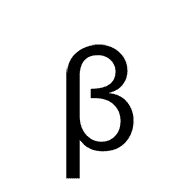
60.
Has the symbol
a)
Alpha
b)
Beta
c)
Gamma
d)
proton
61.
Has the symbol
a)
Alpha
b)
Beta
c)
Gamma
d)
neutron
62.
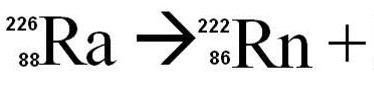
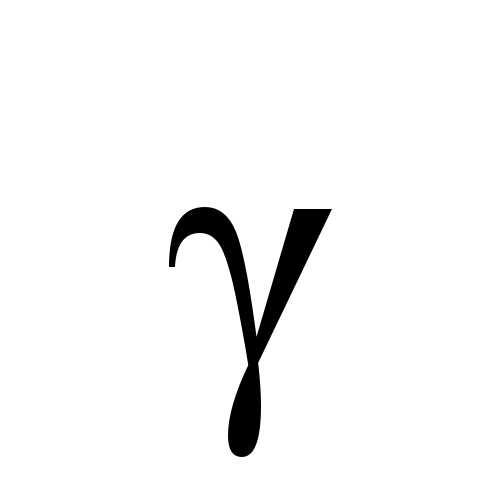
Which type of nuclear radiation is being emitted here?
a)
Alpha
b)
Beta
c)
Gamma 
d)
none
63.
This is an example of...
a)
Fission  reaction
b)
Fusion reaction
c)
Decomposition reaction
d)
Combustion
64.
Which of the following best describes the process of nuclear fission? 
a)
Splitting an atom's nucleus apart 
b)
Separating an atom's electrons from its nucleus 
c)
Fusing two atomic nuclei together 
d)
Splitting an atom's electrons in half 
65.
What do carbon-12 and carbon-14 have in common? 
a)
They have the same number of protons
b)
They have the same number of neutrons
c)
 They have the same atomic mass
d)
They have the same atomic weight
66.
Nuclear power uses ____ for fuel.
a)
steel
b)
coal
c)
uranium
d)
hydrogen
67.
Nuclear energy uses _____ to turn turbines to power a generator.
a)
wind
b)
water
c)
steam
d)
solar
68.
Splitting a uranium atom is called - 
a)
fission
b)
fusion
69.
Energy is stored in the ___ of an atom.
a)
proton
b)
neutron
c)
electron cloud
d)
nucleus
70.
Uranium is found in 
a)
the sun
b)
hydrogen
c)
rocks in the ground
d)
xrays
71.
All of the following are problems of nuclear energy except ---
a)
storage of radioactive fuel
b)
pollution
c)
security concerns
d)
natural disasters (tsunamis, earthquakes, etc.)
72.

What is the most reactive nonmetal?

a)

P

b)

N

c)

O

d)

C

73.

10 m = _____ mm

a)

10,000 mm

b)

100 mm

c)

1 mm

d)

1,000 mm

74.

987 mm = _____ cm

a)

98.7 cm

b)

9,870 cm

c)

9.87 cm

d)

0.987 cm

75.

4.5 m = _____ cm

a)

45 cm

b)

450 cm

c)

0.45 cm

d)

4,500 cm

76.

2.7 L = _____ mL

a)

0.27 mL

b)

270 mL

c)

2,700 mL

d)

27 mL

77.

8,400 mL = _____ L

a)

840 L

b)

84 L

c)

0.84 L

d)

8.4 L

78.

345 cm = _____ m

a)

3.45 m

b)

0.345 m

c)

34.5 m

d)

3,450 m

79.

18 kg = _____ g

a)

180 g

b)

1,800 g

c)

1.8 g

d)

18,000 g

80.

Which of the following is NOT a possible UNIT for the phrase "King Henry Died By Drinking Chocolate Milk?"

a)

meter

b)

liter

c)

gram

d)

foot