wayground logo

Free Printable Worksheets

Font size

S
M
L
XL
Worksheets

WHAP Midterm Review 2019

Total questions: 178

Worksheet time: 2hrs 7mins

Name
Class
Date
1.

German monk who initiated the Protestant Reformation in 1517.

a)

Jean Calvin

b)

John Locke

c)

Martin Luther

d)

Vasco da Gama

2.

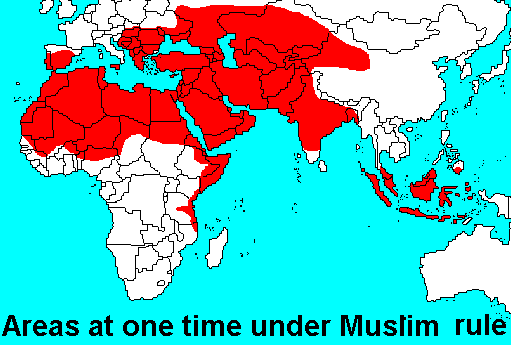
Turkic people who were unified under Mehmed I and established an empire that included most of the Arab world.

a)

Safavids

b)

Ottomans

c)

Persians

d)

Sikhs

3.

Empire established in India by Babur

a)

Mughal Empire

b)

Sikh Empire

c)

Safavid Empire

d)

Ottoman Empire

4.

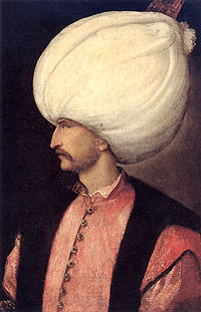
Ottoman sultan who was responsible for the conquest of Constantinople

a)

Mehmed II

b)

Abu Bakr

c)

Muhammad ibn Qasim

d)

Mahmud II

5.

Nomadic group that had origins in the Sufi mystic group and created a kingdom in the area of modern Iran

a)

Mughal

b)

Safavid

c)

Janissaries

d)

Ottomans

6.

Location of a major battle between Safavids and Ottomans where the Safavids were badly defeated

a)

Chaldiran

b)

Akbar

c)

Macao

d)

Canton

7.

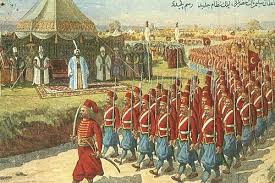
Infantry divisions of the Ottoman military who were forced into military service

a)

Janissaries

b)

Red Heads

c)

Imams

d)

Sikhs

8.

Famous architectural achievement built of Mughal India; originally built as a mausoleum for the wife of the Shah

a)

Taj Mahal

b)

Burj Khalifa

c)

Temple of Babur

d)

Aurangzeb Temple

9.

Ruler of the Mughal Empire who attempted to create a new religion to bind the Muslim and Hindu populations

a)

Akbar

b)

Mehmed II

c)

Humaya

d)

al-Mahdi

10.

Concept of government where the monarchs in power controlled all aspects of governing

a)

Absolute monarchies

b)

Totalitarianism

c)

Theocracy

d)

Oligarchy

11.

Opulent example of Monumental Architecture that emerged from the rule of King Louis XIV in France

a)

Palace of Versailles

b)

Cathedral of Notre Dame

c)

Eiffel Tower

d)

The Louvre

12.

Individual who introduced moveable type to the people of western Europe, greatly increasing the availability of books

a)

Johannes Gutenberg

b)

Martin Luther

c)

Niccolo Machiavelli

d)

Jean Calvin

13.

Document that ended the Thirty Years' War; granted individual rulers the right to choose the religion in their land

a)

Treaty of Versailles

b)

Treaty of Westphalia

c)

Magna Carta

d)

95 Theses

14.

What some specific examples of the technological causes of increased trade along the Indian Ocean?

a)

caravenserai, flying cash and banking houses

b)

lateen sails, maps, compass and dhow ships

c)

compass, astrolabe, maps and camel saddles

d)

dhow ships, maps and saddles

15.

What some specific examples of the technological causes of increased trade along the silk road?

a)

caravenserai, flying cash and banking houses

b)

lateen sails, maps, compass and astrolabe

c)

compass, astrolabe, maps and camel saddles

d)

dhow ships, maps and compass

16.

lower population in urban areas, peasant revolts and the end of the middle ages were all effects of

a)

The Black Death

b)

Mongol invasions

c)

Turk invasions

d)

The expansion of Islam

17.

The policy or practice of acquiring full or partial political control over another country, occupying it with settlers, and exploiting it economically.

a)

Colonialism

b)

Federal System

c)

Reign of Terror

d)

The Intolerable Acts

18.
What did the European slave traders trade for enslaved African people?
a)
Guns
b)
Gold
c)
Beads
d)
Food
19.
A disease brought by Europeans to the New World in the 1500s was ________.
a)
cancer
b)
syphilis
c)
smallpox
d)
black plague
20.
In the Spanish castas system, Creoles are
a)
Pure Spanish blood born in Spain
b)
Pure Spanish blood born in the Americas
c)
Mixed indigenous and Spanish blood born in Americas
d)
Mixed African and Spanish blood born in Americas
21.
In the Spanish Castas system, Mestizos
a)
people with pure native blood
b)
people with pure Spanish blood
c)
people with pure African blood
d)
people with mixed Amerindian and Spanish blood
22.

In the long term, the Columbian exchange

a)

brought a lasting decline in population because of the ravages of diseases such as smallpox.

b)

led to economic instability because of a glut of Chinese silver

c)

barely broke even financially.

d)

increased world population because of the spread of new food crops.

23.

Lateen sails had the advantage of

a)

allowing for faster travel than anything available in the Islamic world.

b)

working better in cross-winds.

c)

being able to take full advantage of a wind blowing from behind.

d)

being cheaper because their basic component was jute.

24.

What is one factor that would explain the demographic change in the chart ?

a)

Natives being killed by Asians coming over to dominate the new world

b)

Old world diseases being introduced to the new world

c)

Europeans conquering North America and having bad relations with the Natives

d)

Maroons rebelling against old world Europeans

25.

The Spanish conquer regions such as the Aztecs and Incas in the Americas, and begin doing what TWO (2) things with those people?

a)

Enslaving them to create a labor source for the newly created colonies

b)

Forcing indigenous people to convert to Christianity

c)

Preserving the religious beliefs and ideas of such people

26.

Which of the following would be most useful in establishing the reliability of an account that showed the Spanish conquest of the Inca Empire?

a)

An account by a Spanish conquistador conquering the Aztec Empire

b)

An account by an Inca who was present at the conquest in Peru

c)

An account by a European living in Madrid that reported on the event

27.

Which of the following economic conditions was most important in creating the global trade network illustrated in this diagram that shows the spread of silver throughout the world?

a)

American demand for labor and African supply of slaves

b)

Japanese supply of silver and Middle Eastern demand for spices

c)

Western European demand for industrial raw materials and American/South Asian cash crops

d)

Chinese & Indian demand for precious metals and European demand for Asian luxury goods

28.

Which of the following best explains the relative volume of slave trading to different destinations as shown on the map?

a)

The need for labor in new mining centers

b)

The traditional use of enslaved soldiers by the Ottoman Empire

c)

The growing desire for household servants among emerging commercial elites

d)

The increasing demand for labor on cash crop plantations

29.
Practice:
Renaissance is a Franco-Latin phrase that approximates to what?
a)
New Beginning
b)
Art
c)
Rebirth
d)
Growth
30.
This Japanese political office ruled as effective dictator of Japan through military might:
a)
Shogun
b)
Samurai
c)
Emperor
d)
Manchu
31.
Name this German monk credited with beginning the protestant schism/reformation
a)
Pope Pius
b)
Henry VIII
c)
Jean Calvin
d)
Martin Luther
32.
Identify the recipients of African slaves in 'The Triangle Trade'
a)
Mainland Europe
b)
Colonies in America
c)
China
d)
Coastal Africa
33.

What was the most significant factor that directly contributed to the expansion of the Ottoman Empire?

a)

Ottomans use of gunpowder & elite military forces

b)

Ottomans use of Spanish silver to fund imperial courts

c)

Ottomans use of black pepper to improve their culinary techniques

34.

Mercantilism places great emphasis on

a)

Slavery

b)

A Free Market

c)

Trade

d)

Parliament

35.

The view of Copernicus is the first attempt at suggesting a

a)

Geocentric Universe

b)

Round Earth

c)

Heliocentric Universe

d)

Mechanistic view of the universe

36.

The Middle Passage refers to

a)

The IOB Trade Route

b)

The section of Triangle Trade connecting Africa to the Americas

c)

The circular route taken through the Trans Saharan Region

d)

The narrow waterway which Constantinople is built next to

37.

Which of the following represents a spanish system of land distribution and forced labor system in the New World?

a)

Peninsulares

b)

Mit'a System

c)

Akbar

d)

Encomienda system

38.

T/F . Mughal rulers portrayed themselves as champions of religious harmony

a)

True

b)

False

39.

T/F The Qing dynasty was created from the powerful Manchus in the north who seized power from an unstable Ming leadership.

a)

True

b)

False

40.

Mit'a was a labor system most connected to

a)

Indian Cotton Fields

b)

Peruvian Mines

c)

Spanish Haciendas

d)

Feudal Japan under the Shogunate

41.

What was the Devshirme system?

a)

Christian boys were recruited by force to serve the Ottoman government often as jannesaries.

b)

A trade system popularized along the Silk road utilizing Gold Bullion.

c)

A system associated with the japanese Daimyo

d)

none of the above

42.

A caravel, carrack and fluyt are all

a)

currencies

b)

navigational tools

c)

ships

d)

tribal leaders

43.

One major Renaissance technology that helped spread humanist ideas was

a)

Vellum

b)

Ship Postal System

c)

Gutenberg Press

d)

The Diet of Worms

44.

The following was not an effect of the Columbian Exchange System

a)

new crops were introduced to the Old World like tomatoes and potatoes

b)

diseases killed 100's of the New World population

c)

rat and sad flea infestation in the New World

d)

The Old World was hit with new diseases such as small pox

45.

Martin Luther's 95 Thesis addressed abuses within the Catholic Church including:

a)

selling indulgences

b)

immorality of the clergy

c)

selling church positions

d)

all choices are correct

46.

One of the Protestant movements that developed during the reformation that centered on the idea of predestination was known as:

a)

Puritan

b)

Anabaptist

c)

Anglican

d)

Calvinism

47.

Which of the following reasons is most responsible for King Henry VIII separating from the Catholic Church?

a)

his lifelong feud with pope Leo X

b)

he was one of Martin Luther's first supporters

c)

his disagreement with Catholic doctrine

d)

his desire to produce a male heir

48.

How did Prince Henry the Navigator help Portugal lead the way in sea exploration?

a)

he created maps while on many of his expeditions to the new world

b)

he was the first person to sail around the horn of Africa

c)

he ordered the Portuguese navy to sail to India by going around Africa

d)

he brought together cartographers and astronomers to study navigation

49.

Which two monarchs backed the voyages of Christopher Columbus?

a)

Louis and Joan of France

b)

Frederick and Eleanor of Italy

c)

Henry and Catherine of England

d)

Ferdinand and Isabella of Spain

50.

What was the purpose of the Line of Demarcation?

a)

it allowed Spain and Portugal to peacefully travel within each others territory

b)

it created the Prime Meridian found on modern day maps

c)

all choices are correct

d)

it divided the control of newly discovered lands to Spain and Portugal

51.

Which explorer successfully found a water route at the southern tip of South America to reach the Pacific?

a)

Prince Henry the Navigator

b)

Vasco da Gama

c)

Bartholomew Diaz

d)

Ferdinand Magellan

52.

The east coast of North America in the 17th century was settled by:

a)

England and France

b)

France and the Netherlands

c)

England and the Netherlands

d)

England, France, and the Netherlands

53.

Which of the following is not an element of the Columbian Exchange?

a)

new crops going from the Americas to Europe

b)

colonists and animals going from Europe to the Americas

c)

new species going from the Americas to Europe

d)

slaves going from Europe to the Americas

54.

The Aztecs were conquered by ______ in modern-day ______ while the Incas were conquered by ______ in modern-day ______.

a)

Cortes/Peru; Pizarro/ Mexico

b)

Pizarro/Peru; Cortes/Mexico

c)

Pizarro/Mexico; Cortes/Peru

d)

Cortes/Mexico; Pizarro/Peru

55.
An important reason for China's rapid population increase in the seventeenth and eighteenth centuries was
a)
the introduction of new crops from the Americas
b)
the end of the bubonic plague in Asia
c)
the widespread adoption of the European three-field system
d)
unprecedented immigration from the Mughal and Ottoman empires
56.
Why are the 1600s and early 1700s in Europe considered a period of Scientific Revolution?
a)
Isaac Newton and other scientists developed a unified system of physics and mathematics.
b)
The scientific method was revived and used widely.
c)
The telescope and other scientific instruments were invented.
d)
all of these answers are correct
57.
Which eigteenth-century war in Europe spun off so many conflicts elsewhere and had so many global effects that it is sometimes considered a "world war"?
a)
the Thirty Years' War
b)
the War of the Spanish Succession
c)
the Seven Years' War
d)
the War of the Polish Succession
58.
The medieval state, which originated in the Classical Era, and whose fall in 1453 marked the end of the postclassical ear was -
a)
Song China
b)
the Abbasid Caliphate
c)
Kievan Rus
d)
the Byzantine Empire
59.
In order to facilitate colonization, settlement, and exploration, the British, French, and Dutch -
a)
chartered companies and created commercial monopolies in given regions.
b)
paid mercenaries to conquer desired lands.
c)
negotiated with peoples and states to peacefully acquire holding and trade concessions abroad.
d)
encouraged private initiative because national governments were uninterested in overseas expeditions.
60.
All of these were examples of the Columbian Exchange EXCEPT -
a)
the spread of smallpox and measles in the Americas.
b)
domesticated animals such as the horse spread to the Americas.
c)
Muslim and Chinese merchants came to monopolize Atlantic trade.
d)
Africans and Europeans migrated or were forcibly settled in the Americas.
61.
In Africa during the Early Modern Period, Europeans
a)
controlled the slave trade.
b)
had to negotiate with African leaders, who controlled the slave trade.
c)
settled widely in West Africa.
d)
exported gold and raw minerals.
62.
The most important basic commodity traded in the Early Modern Period was
a)
gold
b)
tobacco
c)
cotton
d)
sugar
63.
Which of the following statements is NOT directly related to the major socioeconomic transformation in Europe between the mid-1400s and the late 1700s?
a)
Protestant forms of worship emerged.
b)
Europe's population grew.
c)
Europeans invented gunpowder.
d)
Agricultural techniques improved.
64.
The Holy Inquisition was created to
a)
track down and punish heretics and religious nonconformists.
b)
canonize followers of Christ.
c)
build great cathedrals in capital cities of Europe.
d)
fight the Muslims in the Middle East.
65.
Which of the following was NOT a policy of Russia's Peter the Great?
a)
Increased foreign trade
b)
Introduced Western style of dress
c)
Used Western Enlightenment ideas in the government
d)
Extended serfdom throughout Russia
66.
The purpose of the encomienda system was to
a)
eliminate the Native American population.
b)
prevent the Atlantic slave trade from increasing.
c)
supply Europeans with a steady supply of labor.
d)
give Native Americans economic opportunities.
67.
Which of the following was NOT exchanged from the Americas to Europe?
a)
tobacco
b)
tomatoes
c)
cattle
d)
potatoes
68.
Which of the following accurately describes the treatment of the Chinese by the Manchus?
a)
Chinese were forbidden from engaging in trade with the outside world.
b)
Chinese men were forced to wear their hair in a queue (ponytail).
c)
Chinese women were encouraged to marry Manchus.
d)
Confucian scholars were removed from government positions.
69.
Which of the following statements most accurately describes the silver trade in the time period 1450 to 1750?
a)
Chinese demand for silver drove the trade.
b)
Spain was unable to attin the needed supply of silver.
c)
The Ottoman Empire served as the middleman in the trade.
d)
Silver mines in South Africa produced most of the world's silver.
70.
During the time period 1450 to 1750, England rose as a dominant power in the Indian Ocean primarily because
a)
the English has defeated their major competitor, the Chinese, in the Opium War.
b)
of the use of joint-stock companies, allowing private investors to take risks and benefit from trade in the Indian Ocean.
c)
the Ottoman Empire had great difficulty retaining its position as the dominant power in the Indian Ocean.
d)
the Portuguese voluntarily withdrew their economic interests in the region.
71.
The Spanish were able to conquer the Incan Empire in part because
a)
there was internal strife among the leadership.
b)
Incan animistic religious beliefs existed.
c)
other native groups helped them in the defeat.
d)
no silver was found in South America.
72.
All of the following describe major global developments that occurred between 1450 and 1750 EXCEPT
a)
the Colombian Exchange of goods, disease, and cultures spread throughout the world.
b)
improvements in and the spread of shipping technologies and gunpowder weapons allowed European countries to begin their dominance of the world.
c)
the inclusion of the Americas in the global trade network allowed a truly global economy to develop.
d)
industrialization spread throughout Europe, changing the pace of work, the prices of goods, and the family unit.
73.
In the 15th century, European innovations in mapmaking, navigation, and shipbuilding were based on knowledge developed in earlier civilizations in all of the following regions EXCEPT
a)
the Mediterranean
b)
the Indian Ocean
c)
the Americas
d)
China
74.
Which of the following describes the demographic implications of three centuries of Spanish rule in Peru and Mexico?
a)
A mestizo population emerged.
b)
The majority of the population was Spanish.
c)
Spanish women outnumbered indigenous women.
d)
Racial identity was defined as either Spanish or indigenous.
75.
All of the following represent forms of labor servitude in Spanish-ruled Mexico and Peru EXCEPT the
a)
encomienda system.
b)
repartimiento system.
c)
factory system.
d)
hacienda system.
76.
What accounts for the greater dependence on African slave labor in Brazil and the Caribbean than in Mexico and Peru?
a)
Large-scale sugar production
b)
Dependence on mining
c)
The infertility of the soil
d)
The strength of labor unions
77.
All of the following empires gave opportunities to conquered peoples to serve in the bureaucracy and military EXCEPT the
a)
Qing Dynasty
b)
Russian Empire
c)
Mughal Empire
d)
Ottoman Empire
78.
Which of the following pairs reflects a division within the Spanish community in the Americas during the colonial ear that was based solely on birth?
a)
Creoles and peninsulares
b)
Conquaistadores and immigrants
c)
Landowners and merchants
d)
Missionaires and friars
79.
Which of the following is most similar to the power struggle between the monarchy and the nobility in early modern Europe?
a)
The Hindus and the Sikhs in Mughal India
b)
The Manchus and the Chinese in the Qing Dynasty
c)
The plebeians and the patricians in the Roman Empire
d)
The shogun and the daimyo in Tokugawa Japan
80.
How did the Qing Dynasty and Inca Empire treat local elites in the regions they conquered?
a)
They executed them to instill fear in the population.
b)
They formed marriage alliances with them.
c)
They used them to govern the regions.
d)
They signed formal treaties with them.
81.
All of the following Islamic empires accommodated the different religions of their subject populations EXCEPT the
a)
Ottoman Empire
b)
Safavid Empire
c)
Songhay Empire
d)
Mughal Empire
82.
The major impact of the Delhi Sultanate on India was the
a)
introduction of a new religion into Indian culture
b)
decline in importance of sub-Saharan trade routes
c)
elimination of the caste system
d)
rise of a decentralized government system
83.
Which advancement from the Scientific Revolution is matched correctly with its inventor?
a)
Morgagni: philosphy
b)
Copernicus: chemistry
c)
Newton: physics
d)
Kepler: botany
84.
The only nation that did NOT engage in mercantilism druing the 1600s and 1700s was -
a)
Portugal
b)
Italy
c)
Spain
d)
France
85.
The English Bill of Rights of 1689 contained all of the following provisions EXCEPT
a)
the king could not maintain an army without Parliamentary approval
b)
only members of the Protestant church could rule England
c)
people had a right to petition the king to redress grievances
d)
jury trials were guaranteed to accused criminals
86.
Which of the following choices supports a major motivation for European exploration and expansion in the 15th century?
a)
The desire to trade directly with Africans and Asians
b)
The desire to spread democracy
c)
The need for suitable land to establish settler colonies
d)
The need for industrial resources
87.
Which of the following is a difference between the Ottoman Empire and the Mughal Empire?
a)
The Mughals practiced religious tolerance toward non-Muslim subjects, but the Ottomans did not.
b)
The Ottomans ruled over a predominately Muslim population, but the Mughals did not.
c)
The Mughals used gunpowder weapons to expand their territory, but the Ottomans did not.
d)
The Ottmans made Shia Islam the official state religion, but the Mughals made Buddhism the official state religion.
88.
Which of the following statements about the development of religions between 1450 and 1750 is accurate?
a)
Christianity became more unifrom as it spread through the Americas
b)
Buddhism spread widely in Africa.
c)
Syncredit forms of religion such as Vodun developed.
d)
Splits in Islam became less intense.
89.
Which of the descriptions below best describes the purpose of the mit'a system of the Inca Empire?
a)
To gain tribute in the form of prisoners of war for ritual sacrifice.
b)
To raise a mercenary army to fight the Aztec Empire and Maya city-states.
c)
To compel Inca subjects to work on various state projects for a fixed term each year.
d)
To replace the nuclear family as the basic social unit of Inca society.
90.
Between 1450 and 1750, what commodity was most responsible for transforming the global economy?
a)
salt
b)
tea
c)
opium
d)
silver
91.
Which of the following statements accurately describes a similarity between the Ottoman Empire and China between 1450 and 1750?
a)
Dependence on trade as the main basis for the economy.
b)
An elite fighting force made up primarily of slaves.
c)
The use of a large bureaucracy to support the government.
d)
Continual military campaigns against European armies.
92.
Which of the following was NOT a reason for the decline of the Mughals under Aurangzeb?
a)
the land-grant system
b)
resistance in the southern provinces
c)
alienation of the Sikhs
d)
disputes over cotton trading with Europe
93.
Conquered the Inca Empire
a)
Francisco Pizarro
b)
Hernando Cortes
c)
Vasco da Gama
d)
Galileo Galilei
94.
Proposed the Heliocentric Theory
a)
Isaac Newton
b)
Galileo Galilei
c)
John Locke
d)
Nicolaus Copernicus
95.
First European to sail around Africa and reach India
a)
Christopher Columbus
b)
Francisco Pizarro
c)
Hernando Cortes
d)
Vasco da Gama
96.
Renaissance art was notable for:
a)
showing religious themes for the first time
b)
focusing on humans and their emotions
c)
including many military scenes
d)
having flat backgrounds with figures up front
97.
The Middle Passage was the name for the journey from 
a)
Europe to Africa
b)
Americas to Europe
c)
Africa to the Americas
d)
Americas to Africa
98.
What was the Protestant Reformation?
a)
an attempt to overthrow the Pope and replace him with a Frenchman.
b)
an attempt to reform practices by the Catholic church considered corrupt.
c)
a call for Christian Europe to reclaim the Holy Land from the Arabs.
d)
an attempt to win Catholics back to the religion
99.
The racial system of which of the following regions was characterized by less racial
mixing and less willingness to recognize the offspring of interracial unions than occurred
in the other regions?
a)
Brazil
b)
British North America
c)
The Caribbean
d)
Mexico
100.
Which of the following is a reason why Portugal, Spain, France, and Britain were the first
to expand into the New World?
a)
These lands had a long tradition of distant exploration.
b)
These lands were Muslim.
c)
These lands were on the Atlantic coast.
d)
These lands believed in ancient legends of a lost world across the ocean.
101.
Why did some Native Americans aid the Spanish in their initial invasion of the New
World?
a)
A desire to learn about European culture
b)
A shared Christian faith
c)
No Native Americans helped the Spanish.
d)
To gain an advantage against their own enemies
102.
The Spanish Empire in former Aztec and Inca lands
a)
relied primarily on the import of African slaves for labor.
b)
failed to set up an elaborate administrative bureaucracy.
c)
possessed an economy based on commercial agriculture and mining.
d)
possessed strict social boundaries between races which made mixed race people rare.
103.
What happened to Native Americans’ religious beliefs in Mesoamerica and Peru when
confronted with Catholicism?
a)
They rejected Catholicism completely.
b)
They blended their old customs easily into Catholic practices.
c)
They only pretended to be Catholic when Europeans were around.
d)
They completely abandoned their old religions, and embraced Catholicism entirely.
104.
What is one major reason for the higher literacy rates in British colonies than in
Spanish/Portuguese colonies?
a)
Protestantism, which encouraged the reading of the Bible, was the dominant form of
Christianity in the British colonies.
b)
Paper was harder to maintain in the warm, humid Spanish/Portuguese colonies.
c)
The British government invested massive funds into building libraries throughout North
America.
d)
Spanish/Portuguese colonizers did not attempt to teach Native Americans to speak or
read Spanish/Portuguese.
105.
Akbar’s policy toward the Hindus of India is best described as
a)
extermination.
b)
religious tolerance and incorporation of Hindu elites.
c)
massive efforts to convert Hindus to Islam.
d)
holy war against Hindus.
106.
What was the religious outcome of Ottoman rule in Christian Southeastern (Balkan)
Europe?
a)
The elimination of Christianity and massive conversion to Islam
b)
No impact at all as tolerant Ottoman policies encouraged Christianity
c)
Conversion to Islam of about 20 percent of the population
d)
Persistent religious warfare between Muslims and Christians
107.
What was one main difference between the Spanish colonization of the Philippines and
the Portuguese strongholds in the Indian Ocean Basin?
a)
The Spanish converted Filipinos to Christianity while the Portuguese often blended into
the local populations.
b)
The Spanish only established coastal outposts while the Portuguese conquered inland
areas.
c)
The Portuguese killed large numbers of natives, but the Spanish did not use violence to
enforce their rule.
d)
The Portuguese were only interested in spreading Christianity while the Spanish were
only interested in getting rich.
108.
What was one main difference between the establishment of the British East India
Company in Mughal India and the establishment of the Dutch East India Company in
Indonesia?
a)
The British learned the local languages while the Dutch did not.
b)
The British used treaties with local Mughal rulers while the Dutch conquered their
Indonesian colonies.
c)
The British encouraged intermarriage with elite local women while the Dutch took local
women only as concubines.
d)
The British had to send 50 percent of their profits back to the government in London, yet
the Dutch only had to send a small percentage of money back to their government.
109.
Which of the following statements best describes the relationship of the new European
presence in the Indian Ocean to already existing Asian commercial networks?
a)
Europeans created a network that became just one among a number of thriving Asian
commercial networks.
b)
Europeans destroyed almost all Asian commercial networks, bringing trade largely to a
halt.
c)
Europeans gained access to commercial markets only where the local population
converted to Christianity.
d)
Europeans ended up gaining little for their efforts, eventually leaving Asia empty-handed.
110.
The global silver trade
a)
fundamentally transformed the Spanish economy, making it one of the most productive
and commercialized kingdoms in the world.
b)
was the first direct and sustained link between the Americas and Asia.
c)
brought the downfall of the Tokugawa shoguns.
d)
was monopolized by the British.
111.
Which of the following was not a result of the fur trade in North America?
a)
The near extinction of squirrels in North America
b)
The early displacement of Native American hunters by large numbers of European
trappers and hunters
c)
The growing dependence of Native Americans on European trade goods
d)
An end to warfare among Native Americans as they devoted their time and energies to
trapping
112.
An important difference between the Siberian and North American fur trades was that
a)
only in North America did indigenous peoples suffer from exposure to European
epidemic diseases to which they had little immunity.
b)
only in Siberia did the local population become dependent on European trade goods.
c)
only in North America did competition between European traders mean that furs were
obtained largely through commercial negotiations.
d)
only in Siberia were some species of animal hunted to near extinction.
113.
Within the Islamic world,
a)
most slaves were male.
b)
some slaves acquired prominent military or political status.
c)
nearly all slaves were drawn from southern Russia.
d)
slavery was equated strongly with blackness.
114.
What were the most common destinations in the Americas for West African slaves?
a)
British North America and the United States
b)
The Caribbean and Brazil
c)
Mexico
d)
Chile and Argentina
115.
Which of the following is true of the Protestant Reformation?
a)
It maintained its unity as it spread.
b)
The invention of the printing press facilitated its spread.
c)
The movement began in France.
d)
It discouraged independent reading of the scriptures.
116.
Which of the following had the greatest success in converting peoples to Christianity?
a)
Jesuit missionaries in China
b)
Spanish Catholic missionaries in the Philippines
c)
Puritan missionaries in New England
d)
Portuguese missionaries in Africa
117.
Which of the following was a major difference between Protestants and Catholics in
European colonies?
a)
Catholics generally built churches while Protestants never did.
b)
Catholics were generally more intent on converting native peoples than Protestants.
c)
Catholics were generally more opposed to slavery than Protestants.
d)
Catholics were focused on getting rich while Protestants generally were not.
118.
The Wahhabi movement
a)
began with a slave revolt in Brazil.
b)
was a series of jihads in West Africa.
c)
opposed religious blending or syncretism in Arabia.
d)
supported the policies of religious tolerance and accommodation enacted by the Mughal
emperor Akbar.
119.
Which of the following contributed most to the Scientific Revolution occurring in Europe
rather than in China or the Islamic world?
a)
The relative independence of European universities
b)
The superior libraries of Western Europe
c)
Europe’s leadership in the fields of mathematics and medicine after 1000 C.E.
d)
The refusal of European scholars to separate the study of the natural order from that of
philosophy and theology
120.
How was Wang Yangmin’s Confucianism most similar to Martin Luther’s Christianity?
a)
They lived during the same time period.
b)
They both sought to reform their respective religions.
c)
They both sought to reform their respective religions.
d)
They both saw truth as innately accessible for every human being.
121.
How might the Hindu practice of bhakti have threatened the social order in India?
a)
It sought to revive Hinduism.
b)
It set aside caste distinctions.
c)
It encouraged foot-washing.
d)
It emphasized the differences between Islam and Hinduism.
122.
Why did Sikhism evolve from a peaceful religion into a militant community?
a)
Violence was more effective at gaining converts.
b)
Punjab, where Sikhism was founded, was torn apart by a civil war.
c)
The British military trained them to be militants.
d)
They had to defend themselves against both Mughal and Hindu hostility.
123.
How does the Enlightenment compare to the Scientific Revolution?
a)
The Enlightenment applied the idea of natural laws to human affairs rather than the
physical universe.
b)
The Enlightenment refers to people’s growing awareness of the Scientific Revolution.
c)
The Enlightenment inspired the Scientific Revolution.
d)
The Enlightenment was more mystical than the Scientific Revolution.
124.
Which of the following was true only of the Western European empires among all the
early modern empires?
a)
They were the largest empires in the world.
b)
They spread diseases to which conquered peoples had little immunity.
c)
They were initiated by maritime expansion.
d)
They were created by merchants rather than governments.
125.
Why did Thomas Hobbes believe that an absolute monarchy is the best form of government?
a)
Absolute monarchy was the only government strong enough to keep humanities cruel impulses under control
b)
Absolute monarchy was the only government able to make people happy
c)
Absolute monarchy was the only  government that had one ruler
126.
The Edict of Nantes settled civil war in
a)
Spain between heretics and Charles V.
b)
England between Elizabeth I and Mary I.
c)
France between Catholics and Protestants.
d)
the Spanish Netherlands between the Netherlands and Belgium.
127.
The system known as "Triangular Trade" involved what three countries?
a)
Europe, Africa, and Asia
b)
Asia, Africa, and Australia.   
c)
Africa, Asia, and North America.   
d)
North America, Europe, and Africa.   
128.
The Columbian Exchange began after this explorer made trips to the Americas. Who is this explorer?
a)
Vasco de Gama
b)
Leif Eriksson
c)
John Cabot
d)
Christopher Columbus
129.
Which of the following are the gunpowder empires?
a)
Ottoman Empire, Mughal Empire, and Safavid Empire
b)
Roman Empire, Han Dynasty
c)
Mongols, Persian Empire, Ottoman Empire  
d)
Mughal Empire, the Safavids, and the Romans
130.
Which Mughal Emperor allowed for religious freedom in India?
a)
Abba II
b)
Abas
c)
Oba
d)
Akbar
131.
How did the Qing/ Manchu legitimize their rule in China?
a)
Through imperial portraits 
b)
Adoption of the Chinese examination system
c)
Public performance of Confucian rituals 
d)
All of the Above
132.
Wrote the book, "The Social Contract"
a)
John Locke
b)
Thomas Hobbes
c)
Martin Luther
d)
Jean Jacques Rousseau
133.
Proposed the Heliocentric Theory
a)
Isaac Newton
b)
Galileo Galilei
c)
John Locke
d)
Nicolaus Copernicus
134.

How were Europeans first able to travel to other parts of the world in 1450?

a)

Using knowledge and tech from prior societies

b)

Creating new types of navigational tools

c)

Using boats invented by the English

135.

Which of the following was a cause of increased European travel? (More than 1)

a)

Government sponsorship

b)

Desire to end monarchies in the New World

c)

Spread of maritime technology and ideas from older societies

d)

Interest in spreading trade and religion

136.

Which empire had a trading post empire throughout Asia and Africa?

a)

France

b)

England

c)

Portugal

d)

Spain

137.

How did some Asian countries like Japan respond to expanded European travel?

a)

By becoming more isolationist and restricting trade

b)

By increasing trade opportunities with Europe

138.

Which of the following is NOT a component of mercantilism?

a)

Keeping as much gold and silver as possible

b)

The sharing of collective resources

c)

The attempt to buy as little as possible from other countries

d)

The use of colonies to grow cash crops and then sell them

139.

How did joint stock companies affect European countries?

a)

They hurt European economies because they caused nations to lose most of their gold

b)

They led to Asian countries developing monopolies

c)

They helped to expand empires by funding overseas exploration and trade opportunities

140.

Which of the following are examples of new elites (more than 1)

a)

The Manchu in the Qing dynasty

b)

The Han Chinese in the Qing Dynasty

c)

The Spanish or people of Spanish descent in the Casta System

d)

The boyars in Russia

141.

How did the Ottomans treat cultural diversity in their empire?

a)

They banned all Christians

b)

They allowed religious tolerance and cultural diversity

c)

They destroyed Jewish places of worship

d)

They limited women's rights

142.
Muslim empires were characterized by all of the following EXCEPT:
a)
New military technology
b)
Strong armies
c)
Cultural diffusion
d)
Democratic governments
143.
Why was Suleyman the Magnificent so magnificent?
a)
He created a new law code.
b)
He reduced taxes.
c)
He gave religious freedom.
d)
All of the other answers are correct.
144.
Under the Devshirme System, male children of what type of conquered territories were trained and educated so they could fight in Suleyman's army later?
a)
Christian
b)
Jewish
c)
Muslim
d)
Hindu
145.
The Ming Emperor wanted more tributaries so he gave his trusted adviser, ___________ the title "Admiral of the Western Seas" and told him to sail to "the countries beyond the horizon"
a)
Zheng He
b)
Marco Polo
c)
Ahmed
d)
Jamal al-Din
146.
What does it mean for a King to have Divine Right? 
a)
Rules by the power and blessing of God. 
b)
Rules by the suggestions of the people.
c)
Rules by listening to the Church to make decisions.
d)
The King is not really in power at all. 
147.
Who is or was one example of an absolute monarchy? 
a)
Abraham Lincoln
b)
Louis XIV of France
c)
Justin Trudeau
148.
Which of the following is a characteristic of the English philosopher Thomas Hobbes?
a)
Loves others. 
b)
Has a positive outlook. 
c)
Advocates for freedom in Government.
d)
Believes people are naturally bad and need to be controlled by a strong central government. 
149.
What was a result of the signing of the Magna Carta?
a)
His power was increased to include the ability to raise taxes.
b)
The king was no longer above the law.
c)
The legislative body of England was dissolved.
d)
He enlisted the military to enforce his policies.
150.
Who was forced to signed the Magna Carta?
a)
Louis XIV
b)
Peter the Great
c)
King John
d)
William the Conqueror
151.
What statement is true of a limited government?
a)
There is virtually no ability to limit the actions of the government.
b)
There are restraints placed upon the power and authority of government.
c)
There is no ability to prevent the government from being authoritarian.
d)
The citizens are expected to display total obedience to the government as the ruler makes decisions.
152.
Which of the following occurred when France and Russia created absolutist systems?
a)
Power was concentrated in the hands of the monarch.
b)
Limited governments were created in each country.
c)
Rights and freedoms were increased among its citizens.
d)
The idea of divine right was crushed.
153.

We call this era the "Age of Reason" because people began to apply __________ to society and government.

a)

Logic

b)

Tyranny

c)

Tradition

d)

Religion

154.

What era most inspired people in the Enlightenment to apply reason to society and government?

a)

The Protestant Reformation

b)

The Age of Exploration

c)

The Scientific Revolution

d)

The Renaissance

155.

John Locke believed the government should protect the life, liberty, and property of its citizens. We call these things:

a)

Natural Rights

b)

Reason

c)

Right to Rebel

d)

Laws

156.

When the government agrees to protect natural rights and citizens agree to abide by the laws and respect their leaders, they have a:

a)

Separation of Church and State

b)

Separation of Powers

c)

Social Contract

d)

Right to Rebel

157.

Citizens have a right to rebel if the government:

a)

Raises taxes

b)

Makes you mad

c)

Gets a new leader you don't like

d)

Breaks the social contract

158.

The idea that religion should not be involved with government is called:

a)

Separation of Powers

b)

Separation of Church and State

c)

Religious Tolerance

d)

Natural Rights

159.

Which one of the following is not a natural right?

a)

Life

b)

Money

c)

Liberty

d)

Property

160.

Which Enlightenment idea ensures no one leader has too much authority?

a)

Separation of Powers

b)

Separation of Church and State

c)

Divine Right

d)

Natural Rights

161.

The idea that it is OK for others to believe differently than you, and all people should get the same treatment despite their beliefs is called:

a)

Religious Tolerance

b)

Separation of Church and State

c)

Natural Rights

d)

Divine Rights

162.

Which Enlightenment thinker pushed for all men and women to have equal opportunities in education?

a)

Locke

b)

Voltaire

c)

Rousseau

d)

Wollstonecraft

163.
Who banned Christianity in China
a)
Matteo Ricci
b)
Francis Xavier
c)
Tokugawa Ieyasu
d)
Kangxi
164.
One of the results of the peace in the Tokugawa period was
a)
a resurgence in daimyo authority
b)
a greater political role for the samurai
c)
tripling of the Japanese population between 1600 and 1850
d)
a reduction in status for the samurai and daimyo
165.
The Treaty of Tordesillas was an agreement between Portugal and what other country?
a)
Great Britain
b)
Spain
c)
America
d)
India
166.
Military leaders of Japan during its feudal era and the actual powers behind the emperor
a)
Bushido
b)
Daimyo
c)
Shogun
d)
Confucian
167.
The Tokugawa Shogunate was a type of:
a)
commercial partnership
b)
military government
c)
religious authority
d)
cultural institution
168.
Who completed the process of unifying Japan?
a)
Matsuo Basho
b)
Oda Nobunaga
c)
Toyugawa Ieyasu
d)
Tokugawa Hideyoshi
169.
What was the samurai code of conduct called?
a)
bushido
b)
Shinto
c)
chivalry
d)
daimyo
170.
Japanese warlords and great land owners
a)
Bushido
b)
Daimyo
c)
Shogun
d)
Confucian
171.

Muslim empire based in Turkey, the Balkans, North Africa that lasted from the 1300s to 1922

a)

Ottoman Empire

b)

Byzantine Empire

c)

Persian Empire

d)

Anatolia Empire

e)

Akbar Empire

172.

Ottoman leader who expanded the land area, known as the “law giver” he restructured the system of law in the Balkans and eastern Mediterranean.

a)

Suleiman the Magnificent

b)

Akbar the Great

c)

Taj Mahal

d)

Anatolia the Moor

e)

Janissari the Persian

173.

Turkish-ruled kingdom in Iran (Persia), established by Ismail who declaring it a Shi’ite state.

a)

Safavid Empire

b)

Byzantine Empire

c)

Ottoman Empire

d)

Zamindar Empire

e)

Suleiman Empire

174.

“people of the book”, Jews and Christians who were given special status in Muslim controlled territories

a)

Dhimmis

b)

Jizya

c)

Janissaries

d)

Shi'as

e)

Mahalis

175.

Tax paid by Christians and Jews who lived in Muslim communities to allow them to continue to practice their own religion

a)

Jizya

b)

Dhimmis

c)

Devshirme

d)

Mughals

e)

Sunni

176.

“blood tax”: “selection” Turkish tribute system by which boys from Christian communities were taken by the Ottoman state to serve as Janissaries

a)

Jizya

b)

Akbar

c)

Devshirme

d)

Zamindar

e)

Anatolia

177.

“new soldier” in Turkish, elite infantry unit made up of Christian boys who were given as tributes and converted to Islam that served as the Sultan’s household troops and bodyguards.

a)

Janissaries

b)

Harems

c)

Suleimans

d)

Moors

e)

Safavids

178.
Which of the following is a similarity between the Ottomans and the Mughals?
a)
Both used cannons and gunpowder
b)
Both allowed European trade
c)
Both used the Devshirme system
d)
Both interacted with Hindu princes