
 Worksheets
Ancient Indus River and China
Total questions: 176
Worksheet time: 2hrs 35mins
Huang He leaves __ when it floods.
loess, fertile silt
loess, fertile cresent
Ancient China had to be self-sufficient due to __ and lack of __.
isolation; trade
selfishness; trade
Ancient China had several dynasties and __ was the first.
Xia
Shang
Zhou
In Ancient China, the ___ dynasty, left the first written records.
Xia
Shang
Zhou
The Ancient Indus River valley wrote using ___ while the ancient Chinese used ___.
cuneiform; oracle bones
an unknown script; oracle bones
___ is a landmass that is a distinct part of a continent, especially in India.
Harappa
monsoon
subcontinent
___ is a seasonal wind.
Tornado
Hurricane
Monsoon
The Indus River Civilization include modern day __, __, and __.
India, Pakistan and Bangladesh
India, Persia and Bangladesh
Since floods, rainfall, and monsoons were unpredictable, the Harappans created ___ ___.
planned cities.
planned irrigation.
both
none
The Harrapan civilization created ___.
cities with a grid system.
plumbing and sewage systems.
planned cities.
all of the above.
none of the above.
The Harappan civilization had toys which suggest ___.
poverty
prosperity
both
none
Harappans had a thriving trade with other regions, including the ___river valley.
Nile
Tigris/Euphrates
Indus
Huang He
All of the above.
According to the Mandate of Heaven, the people could revolt if the emperor led the people during a time of poverty, war, and famine.
True
False
This was true in Indus River Valley but not Ancient China.
This was true in China but not Indus River Valley.
More than one answer is correct.
This river had a nickname, "China's Sorrow".
Nile
Indus
Ganges
Huang He
Tigris
China had several dynasties, but the first was ___.
Xia
Shang
Qin
Zhou
When the first river valley civilizations of Mesopotamia, Egypt, and the Indus fell to invaders, a people called the __ rose in power in northern China.
Xia
Qin
Shang
Zhou
People in China called outsiders ___ and called China ___ because the Chinese viewed China as the center of the civilized world.
barbarians; New Kingdom
barbarians, Middle Kingdom
barbarians; Old Kingdom
foreigners; China
none of the above
According to the Mandate of Heaven, the ___ overthrew the ___dynasty due to bloodshed.
Zhou; Shang
Zhou; Qin
Zhou; Xia
___ is a political system in which nobles, or lords, are granted use of lands that legally belong to the king. In return, they owe military services.
Feudalism
Kingdom
Democracy
Republic
None of the above.
According to the Caste System, the ___ are the rulers.
Priests
Untouchables
Sudras
Brahmins
More than one answer is correct
The Indian Caste system is important to the ____ religion.
Christian
Muslim
Hindu
Buddhist
All of the above.
The Indian Caste System embraces karma. Karma is when
you complete your journey and come back in another level of the caste system.
see cause and effect by putting good or bad out into the world and seeing good or bad return to you.
you get reincarnated.
you go to heaven
The Great Wall of China would be a great destination if you flew into
Hong Kong
Beijing
Myanmar
Thailand
Washington, D.C.
According to the Great Silk Road video, the Chinese rode __ in a caravan to trade from China to ___.
camels; Rome
horses; Rome
camels; Greece
horses; Greece
The Silk road included other valuables, such as ___.
gold goblets
silk scarves of purple for royalty and nobles
spices
all of the above
none of the above
The Indian Caste System had a group called Dalits or ___, who ___.
Brahmins; ruled.
Untouchables; cleaned latrines.
Sudras; served others.
Vaishyas; grew vegetables.
Kshihatryias; fought as warriors.
The Great Wall of China had a ___, or watch tower, to see when nomads were approaching.
citadel
pass
bridge
staircase
basement
The ancient writing system of the Chinese included, ___, which revealed their ancestor worship and respect for their ___.
oracle bones; dead
hieroglyphics; dead
cuneiform; dead
sanskrit; dead
___ river valley used planned cities, baths, sewers, and plumbing before the Romans.
Nile
Tigris/Euphrates
Indus
Huang He
Advanced cities of the __ river valley include __ and ___.
Indus; Harappa/Mohenjo Daro
Huang He; Beijing/ Hong Kong
Nile; Memphis/Nashville
Tigris/Euphrates; Babylon/Atlanta
What is a dynasty?
A series of rulers from the same family
A series of rulers from the same continent
A series of rulers from the same country
A series of rulers
How is Ancient China's government SIMILAR to Ancient Egypt's?
They both have governments
They both use dynasties to rule.
They both were developed near a great river
They both are civilizations
What do all four Early River civilizations have in common about their religion?
They are all polytheistic
They are all monotheistic
They all believe in Buddhism
They all believe in Hinduism
What was the purpose of the Great Wall of China
To look really cool.
To protect their civilization from invasions
To make others notice how great they are.
None of the above
How did the silk road benefit China?
They discovered other civilizations
They received new resources
They gained wealth
All of the above
Economics means how resources/money are used and traded
True
False
In which of the following countries is a Diwali celebration most likely to be found?


What can you conclude about the Hindu calendar from the fact that Diwali always starts during the new moon?
It's a solar calendar
It's a lunar calendar
It's a stellar calendar
It's a maritime calendar
How is wearing new clothes for Diwali most similar to the planting of new flowers each spring?
Both customs can only be done once a year
Both customs are only performed by farmers
Both customs signify the renewal of life
Both customs involve the color green
What can you conclude from the fact that Diwali is celebrated in Hinduism, Sikhism, Buddhism, and Jainism?
Diwali must be more of a secular holiday than a religious holiday
Diwali can be celebrated in any religion
These four religions must have some shared beliefs
These four religions must be very old
Chinese New Year is called the _____ New Year.
Solar
Lunar
Planet
Comet
The lunar calendar has 12 full cycles of the _____.
sun
moon
tides
The spring festival celebrates the end of _____.
summer
winter
spring
fall
The Lunar New Year is all about _____.
yourself
friends
family
strangers
This is a great time to wear new _____ or get a haircut.
clothes
shoes
gloves
bracelets
Fireworks are used to scare off evil
people
animals
spirits
Lion dances bring _____ and chase away evil spirits.
anxiety
happiness
good luck
You might also see a _____ dance during the Lunar New Year.
tiger
dragon
leopard
panther
The holiday ends with the _____ festival.
temple
lantern
fireworks
tree
The lantern festival stands for letting go of the _____.
past
present
future
Place the following events in sequence: A) The Trojan War ends; B) Odysseus reaches Ithaca; C) Odysseus fights the Cyclops
A, C, B
C, B, A
C, A, B
A, B, C
What does the "Iliad" have in common with the "Odyssey?"
Both poems are about the battles of the Trojan War
The gods play major roles in both poems
In both poems, characters must fight fearsome monsters
Achilles is the main character of both poems
What is the most likely subject of an epic poem?
The intense love the poet feels for his spouse
A hero who embarks on a quest
A celebration of the beauty of nature
A humorous look at politics
"No one is sure whether or not Homer was a mythical figure." In this sentence, what does "mythical" mean?
Poetic
Greek
Ancient
Made-up
Which of the following is an opinion about the "Iliad?"
It is less exciting than the "Odyssey"
Most of its characters are male
It begins with an account of ships sailing over the sea
It was composed before the "Odyssey"

If you were Odysseus, how might you defend yourself against the Sirens?
You'd cover your ears
You'd cover your eyes
You'd cover your nose
You'd cover your mouth
In the "Odyssey," what causes the hero to spend 10 years traveling home?
His men mutiny and set him adrift
He lives very far away
His ships have been destroyed in the Trojan war
The sea god Poseidon is angry at him
If you lived in Homer's time, how would you have read the "Odyssey?"
It would have been written in ink on parchment.
It would have been inscribed on clay tablets
You wouldn't have read it; you'd have listened to it spoken aloud
You wouldn't have read it; you'd have seen it performed as a play.
What event causes the war in the "Iliad?"
A Greek woman is kidnapped by a Trojan prince.
The god Poseidon becomes angry at the Greeks.
Hundreds of ships sink in the Aegean Sea
A Greek prince is assassinated.

What can you conclude from the fact that Homer's works have been studied for thousands of years?
They're the best-selling books of all time
They're considered major achievements of Western culture
They contain true accounts of Ancient Greek history
They're the best poems that have ever been written
The ancient Greeks were polytheistic. Keeping in mind that the root word "theos" means "god," what can you infer about the prefix "poly?"
It means "spiritual"
It means "male"
It means "one"
It means "many"
What was the significance of Mount Olympus to the Ancient Greeks?
It was the center of the Universe.
It was where the gods lived.
It was home to the Ancient Greeks' most important temple.
It was home to the oracles that interpreted the will of the gods.

Hera and Zeus had a contentious relationship. In this context, what does "contentious" mean?
Prone to fights and arguments
Peaceful
Powerful
Loving
Which of the following is most closely associated with Apollo?


If a tidal wave devastated the coast of Ancient Greece, the people would probably blame it on:
Zeus
Aphrodite
Poseidon
Ares
If you were a farmer in Ancient Greece, to which god would you pray to ensure a successful harvest?
Athena
Demeter
Hephaistos
Ares
According to Ancient Greek mythology, what would happen to you after you died?
Your soul would be comforted by Aphrodite, the goddess of love
Your soul would be gobbled up by Ares, the god of war
Athena would take your soul to the top of Mount Olympus, where you would be judged by Zeus
Hermes would take your soul to the underworld, where you'd meet Hades
If you were a soldier going to war, what might you do before battle?
Sacrifice a bull to Ares
Pray to Diana
Ask Hermes for a favor
Light a fire to honor Hades
Which of the following is a true statement about the Greek gods?
They were not part of the everyday lives of the Ancient Greeks
They had many human foibles and attributes
They are still worshiped today in Greece
Most of them were despised instead of worshiped
What did Hephaistos and Ares have in common?
They both lived far away from Mount Olympus
They were both gods of war
They were both gods of metalworking
They were both in love with Aphrodite

If you wanted to visit Athens, where would you go?
Western Asia, by the Caspian Sea
Northern Europe, by the Baltic Sea
Southern Europe, by the Mediterranean Sea
Western Europe, by the Atlantic Ocean
How were Ancient Greek city-states different from modern U.S. states?
Each city-state had its own laws; U.S. states do not
No central government united the Greek states
All Greek city-states were ruled by kings; U.S. states are run by elected officials
Each Greek city-state had its own unique language; each U.S. state does not
Why was the period between 460 and 429 B.C.E. called Athens's "Golden Age?"
Coins and weapons from that era were made from gold. b. c. . d.
Athens had conquered all of its neighboring city-states during that time, making it very rich.
At that time, most Athenians worshiped golden statues of gods and goddesses
Art, science, and philosophy flourished during that time.

In the sentence "Pericles was a charismatic leader," what does "charismatic" mean?
Dictatorial
Extremely powerful
Having personal charm and appeal
Democratically elected
If you wanted to debate with an Athenian philosopher, where would you go?
The Parthenon
The Festival of Dionysus
The Temple of Athena
The agora
If you attended the Festival of Dionysus, what would you experience?
Four days of comedy and tragedy
Chariot races and other games
A banquet honoring the Emperor
A solemn religious event
Which belief may have led to the creation of the Olympic Games?
All men are created equal
A healthy body is as important as a healthy mind
City-states should not fight wars against one another
Democracy is the greatest form of government
How was Athenian democracy different from American democracy?
Citizens were not allowed to serve on juries
People were not allowed to vote for their leaders
Women could not participate in public life
People were not allowed to criticize the government
Which of these is an opinion about Athens?
Sophocles was among the most famous Athenian playwrights
Plays were an important part of Athenian culture
Ancient Athenian drama is boring when performed today
Many Ancient Greek plays have been lost over the past 2,500 years
Which phrase best describes Ancient Athens?
The capital of Greece
A cultural and artistic capital
The birthplace of capitalism
The capital of ancient Europe

Purple dye was made from?
sea horse
sea stars
sea snail
sea plants

Phoenicia became the world's first?
selling Empire
trading Empire
manufacturing Empire
sea Empire

The Phoenicians used to live on a very narrow and long strip of land to the ______ of the Mediterranean Sea.
north
south
east
west

Which group was able to increase trade along rivers and seas, spreading their culture and alphabet?
Babylonians
Egyptians
Phoenicians
Persians

To escape slavery, Moses led the Hebrews out of
Canaan
Israel
Mesopotamia
Egypt
First group to practice monotheism
Hebrews
Phoenicians
Babylonians
Assyrians

Who is the founder or father of Judaism?
Abraham
Messiah
Canaan
Joseph
What was the "promised land" for the descendants of Abraham?
Egypt
Mesopotamia
Canaan
Ur

Zoroastrianism is what?
Form of money
Government
City
Religon
The central belief of the Persian Religion centered around the idea of what?
An eye for an eye
Good versus evil
Bad Choices
The final judgement

What physical structure connected the satraps of the Persian Empire.
The Silk Road
The Royal Road
The Byzantine Byway
The Persian Passages

How did Persian rulers treat most of the people in lands that were taken into the empire?
They forced the people to assimilate within the Persian culture.
The Persian rulers imprisoned the citizens and sentenced many to death.
They placed the citizens into slavery and worked them for the rest of their lives.
They allowed them to keep their unique cultures, languages, and religions.
Each of the following statements is true, except:
a. Viruses come in different types
b. Viruses infect living cells
c. Viruses can replicate without hosts
d. Viruses can cause illnesses
A virus infects a host in order to:
A.Take in nutrients
B.Make the host sick
C.Make copies of itself
D.Destroy the host's cells
The distinguishing feature of a coronavirus is its:
A.Size
B.Mobility
C.Shape
D.Deadliness
Coronavirus infections are likely to be more serious for:
A.Teens
B.Active adults
C.Frequent travelers
D.People with weakened immune systems
An outbreak of a virus occurs when:
A.Symptoms of the virus get worse
B.The virus spreads to more than one organ
C.Someone dies from the virus
D.The virus spreads to more and more hosts
What does it mean when a city is quarantined during a virus outbreak?
A.Everyone in the city is infected
B.No one can enter or leave the city
C.The city’s population is immune to the virus
D.Doctors in the city are developing a cure
Which practice prevents the spread of germs?
A.Washing your hands often
B.Blowing your nose
C.Reusing the same tissue
D.Coughing into your hand
A typical coronavirus infection:
A.Is extremely dangerous
B.Has mild symptoms
C.Cannot spread to humans
D.Is resistant to hand washing
Covering your mouth when you cough or sneeze is recommended to:
A.Prevent germs from entering your body
B.Get rid of germs from inside your body
C.Avoid getting other people sick
D.Warn other people that you are sick
The most reliable source of information about virus
outbreaks is:
A.News headlines
B.Social media
C.Your peers
D.The World Health Organization
How was the Roman Republic different from the Roman Empire?
The Republic was very large; the Empire was fairly small.
The Republic was ruled by elected representatives; the Empire was not.
The Republic had no army; the Empire had a massive army.
The Republic
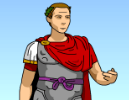
How was Julius Caesar viewed by most Roman citizens during his lifetime?
He was extremely popular.
He was feared by nearly everyone
He was despised as a ruthless dictator.
He was worshiped as a living god.
How did Caesar expand the boundaries of Rome?
Claiming unexplored territories.
Buying up all the land he could afford.
Negotiating treaties with neighboring rulers.
Military conquest.
What two jobs were held by both Caesar and his rival Pompey?
Politician and military general
Soldier and farmer
Senator and judge
Emperor and dictator
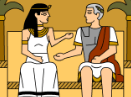
Cleopatra provided Caesar with ________ help.
. Religious
Political
Military
Financial
How did Caesar gain control of Rome?
He inherited the throne from his father.
He was appointed by the Senate
He won a civil war.
He was elected by the people.
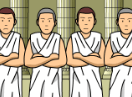
Why did the Senate assassinate Caesar?
They thought he'd added too much territory to the Empire.
They were jealous of his popularity.
They didn't like his reforms, and thought he'd become too powerful.
Caesar tried to disband the Senate, so the Senators fought back.
Which of the following is a true statement?
Augustus inherited the title of Emperor from his father, Julius Caesar.
Augustus emerged as the victor of a series of civil wars.
Augustus gained the support of the Senate by refusing absolute power.
Augustus's reign as Emperor was marked by violence and chaos.
During the reign of Augustus, the Senate:
Was basically powerless.
Ceased to exist.
Expanded its power.
Led a revolt against the Emperor.
Place the following events in sequence: A) Julius Caesar conquers Gaul; B) Caesar leads his army into Rome; C) Caesar revises the Roman calendar
C, A, B
A, C, B
C, B, A
A, B, C


Which word best describes the scope of the Silk Road?
Interminable
Intergalactic
Intercontinental
Interstate
Which of the following contributed most to the completion of the overland Silk Routes?
The growth of powerful empires in Europe and Asia
Trade between small, neighboring tribes
China's hunger for foreign goods
Competition from the maritime Silk Routes
The Silk Road was named retroactively, in the 19th century. What does "retroactive" mean?
Applying to something in the past
Having to do with trade
Arbitrary or random
Referring to foreign cultures
Historical records show that silk appeared in Rome in the 1st century B.C.E. This is ________ evidence that the Silk Routes were completed around that time.
Controversial
Indirect
Indisputable
Scientific
Which of these famous structures owes its existence at least partially to the Silk Road?
Pyramids at Giza (Egypt)
Stonehedge (England)
Great Wall of China
Parthenon (Athens, Greece)
Where would you be most likely to find a city along the Silk Road?
In the middle of a desert
On top of a high mountain
On a remote island
On the bank of a river
Which of the following examples provides the best analogy for the movement of goods along the Silk Road?
A waiter bringing food to a diner
An electric signal moving down a wire
A mail carrier delivering a package to a home
A runner passing a baton in a relay race
What kind of effect did the Mongol Empire have on the overland Silk Road?
Destructive
Incidental
Minor
Stabilizing
9. Place these empires in chronological order: A) Macedonian (Alexander the Great); B) Mongol; C) Han Dynasty
A, C, B
B, C, A
B, A, C
A, B, C
Which of the following statements is an opinion?
The Silk Road had a significant impact on the history of Asia and Europe
The Silk Road greatly benefitted the civilizations it connected
The overland Silk Road fell into disuse with the breakup of the Mongol Empire
Traffic along the maritime Silk Road eventually eclipsed traffic along the overland route
How did Venice differ from most European cities in the Middle Ages?
It was on the eastern end of the Silk Road
It had a large population of Chinese immigrants
It was a center of international commerce
It used paper money to buy and sell goods
Niccolo and Maffeo Polo first traveled to China because they were:
Curious about other cultures
Fearful of foreign invaders in Venice
Lost on Silk Road
wanting to conquer new lands.
What did Kublai Khan hope to learn from the Polos?
How to make pizza
The safest route across the Silk Road
Details of European values and beliefs
Why was The Travels of Marco Polo so popular in Europe?
It was written by a famous coauthor
It was filled with action and adventure
It was the first history book of China
The Travels of Marco Polo combines which two literary genres?
Biography and comic book
poetry and history
Nonfiction narrative and novel
Encyclopedia and science-fiction tale
Christians living under Kublai Khan's rule were:
Required to pay higher taxes
Free to practice their religion
Respected more than Buddhists
What can you infer about 13th century Europe?
It's kingdoms were smaller than Kublai Khan's
It had better roads than the Mongol Empire
It was dependent on the Silk Road for food
Polo's absence from Mongol historical records might be cited by a ________ of The Travels of Marco Polo.
Skeptic
Character
Fan
What contributed to the abandonment of the Silk Road as a trade route?
The death of Marco Polo
The discovery of America
Instability in the Mongol Empire
What goal did Christopher Columbus and Marco Polo share?
Meet Kublai Khan
Travel to Asia
Go on the Silk Road
Which word best describes the scope of the Silk Road?
Interminable
Intergalactic
Intercontinental
Interstate
Which of the following contributed most to the completion of the overland Silk Routes?
The growth of powerful empires in Europe and Asia
Trade between small, neighboring tribes
China's hunger for foreign goods
Competition from the maritime Silk Routes
The Silk Road was named retroactively, in the 19th century. What does "retroactive" mean?
Applying to something in the past
Having to do with trade
Arbitrary or random
Referring to foreign cultures
Historical records show that silk appeared in Rome in the 1st century B.C.E. This is ________ evidence that the Silk Routes were completed around that time.
Controversial
Indirect
Indisputable
Scientific
Which of these famous structures owes its existence at least partially to the Silk Road?
Pyramids at Giza (Egypt)
Stonehedge (England)
Great Wall of China
Parthenon (Athens, Greece)
Where would you be most likely to find a city along the Silk Road?
In the middle of a desert
On top of a high mountain
On a remote island
On the bank of a river
Which of the following examples provides the best analogy for the movement of goods along the Silk Road?
A waiter bringing food to a diner
An electric signal moving down a wire
A mail carrier delivering a package to a home
A runner passing a baton in a relay race
What kind of effect did the Mongol Empire have on the overland Silk Road?
Destructive
Incidental
Minor
Stabilizing
9. Place these empires in chronological order: A) Macedonian (Alexander the Great); B) Mongol; C) Han Dynasty
A, C, B
B, C, A
B, A, C
A, B, C
Which of the following statements is an opinion?
The Silk Road had a significant impact on the history of Asia and Europe
The Silk Road greatly benefitted the civilizations it connected
The overland Silk Road fell into disuse with the breakup of the Mongol Empire
Traffic along the maritime Silk Road eventually eclipsed traffic along the overland route

