
 Worksheets
Semester 1 Final
Total questions: 175
Worksheet time: 44hrs 45mins
Which element has a higher energy level?
Carbon
Sililcon
Aluminum
Selenium
Which element is the smallest?
Potassium
Germanium
Selenium
Arsenic
Which scientist termed the word "atomos" by crushing a leaf until it couldn't go smaller?
Democritus
Aristotle
Plato
Gold

This could be the dot diagram of
Mg
Cl
C
O
What are the elements (Be, Mg, Ca,...) in Group 2 called?
Alkali metals
Alkaline earth metals
Halogens
Noble Gases

This could be the dot diagram of an element with the atomic number
8
31
19
36
What is the charge of an electron?
Positive
Negative
Neutral
What is the charge of a proton?
Positive
Negative
Neutral
Which scientist came up with the original idea of electrons being in orbitals?
Niels Bohr
Ernest Rutherford
Democritus
Aristotle
Which scientist proposed the plum pudding model/ raisin bun model?
Democritus
Aristotle
Joseph John Thompson
Ernest Rutherford
1s2 2s2 2p6 3s2

__________ energy is stored (latent).
Potential
Kinetic
Chemical
Heat
What is the formula for sodium bromide?
NaBr
NaBr2
Na2Br
SoBr
What is the formula for diphosphorus pentoxide?
P2O5
PO5
P5O2
Po2O5
What is the name of P₄S₁₀?
phosphorous sulfide
phosphorus sulfite
tetraphosphorus decasulfide
tetraphosphide decasulfide
What is the formula for copper(I) sulfate?
CuSO3
CuSO4
Cu2SO3
Cu2SO4
What is the name of FeCl₂?
iron chloride
iron (II) chloride
iron (I) chloride
iron dichloride
What is the formula for copper (II) sulfide?
CuS
Cu₂S
CuS₂
CuSO₃
What is the formula for mercury (I) oxide?
HgO
Hg2O
HgO2
Hg2O2
An ionic compound forms between a _______ and _______.
metal and non-metal
two metals
two non-metals
H = 50%
H = 14.3%
H = 7.8%
H = 28.1%
02 (g)+ 2H2-------------2H20 + Energy
endothermic
exothermic
6CO2 + 6H20 + Energy --------------- C6 H12 06 + 6O2
endothermic reaction
exothermic reaction
Carbon moves from fossil fuels to the atmosphere when fuels are burned.
True
False
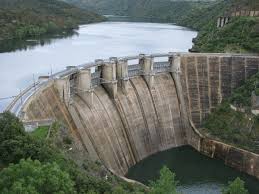
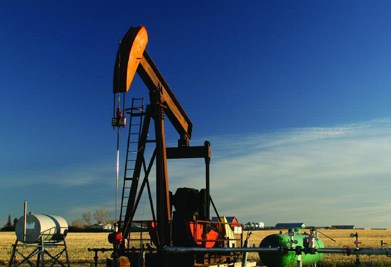
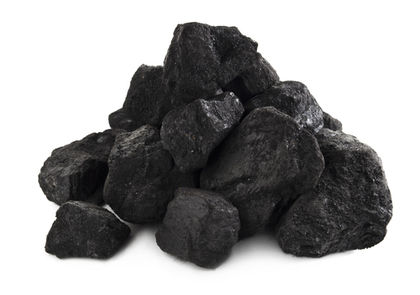
Which of the following are fossil fuels?
Coal, water, oil
Oxygen, coal, oil
Coal, Oil, Natural Gas
None of the above
The variable that responds to the changes in the other variable is the ___ variable.
Independent
Dependent
Constant
Control
The variable that the experimenter (or you) control is the ___ variable.
Independent
Dependent
Constant
Control
What type of graph is best used to compare data?
Line
Circle
Bar
Pictograph
What type of graph is best used to represent parts of a whole?
Line
Circle
Bar
Pictograph
What type of graph is best used to represent trends in data?
Line
Circle
Bar
Pictograph



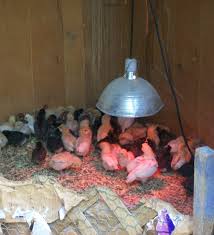
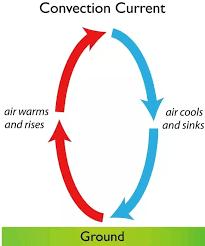
Which of the following is an example of convection?
A hair dryer is drying up your hair.
When the AC or heater changes the temperature.
When a car engine turns hot after being turned on.
When you are making soup and the water is rising and lowering.
The movement of the tectonic plates is caused by
the rotation of the Earth.
convection currents in the Asthenosphere
the gravity of the iron-nickel core.
the Moho discontinuity.
In some areas of the world, like California and Japan, earthquakes are a common occurrence. How can this best be explained?
The strong ocean currents are undermining both areas causing earthquakes.
Both areas are located near the edge of the Pacific Ocean, the unstable sand causes earthquakes.
Both areas are subjected to strong ocean wind and waves that causes earthquakes.
Both areas are on the boundary of active plates, the motion of the plates causes earthquakes.
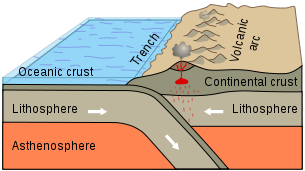
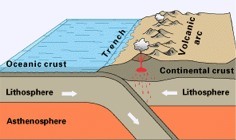
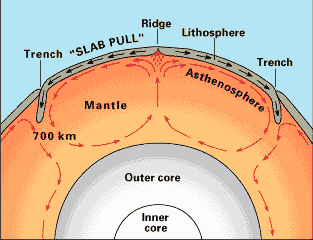
What is the source of energy that drives plate movement?
the subducton of the sea floor
the different densities of the oceanic and crustal plates
convection currents in the asthenosphere
the friction force between the plates that move past each other
Q= m c ∆T
The units for specific heat are:

If the specific heat of water is 4.184 J/g∙°C, how much heat is required to increase the temperature of 1.2 kg of water from 23 °C to 39 °C?
-80,256 J
80.256 J
80,256 J
-80.256 J
What is the specific heat of an unknown substance if 100.0 g of it at 200.0 °C reaches an equilibrium temperature of 27.1 °C when it comes in contact with a calorimeter of water. The water weighs 75. g and had an initial temperature of 20.00 °C? (Specific heat of water is 4.184 J/g°C)
0.111 J/g°C
1.29 J/g°C
0.129 J/g°C
22225.85 J
________________
N or C?

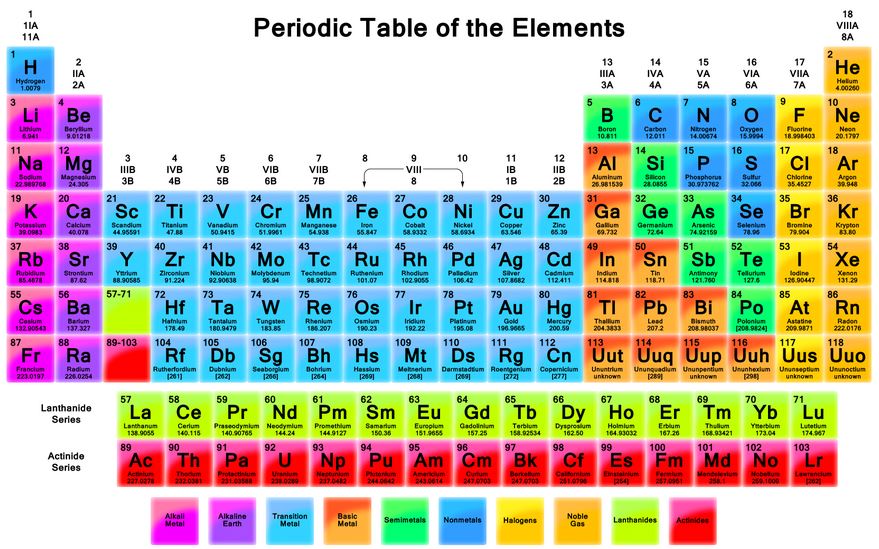
What is the name of the family that is highlighted?
Alkali Metal Family
Halogen Family
Noble Gas Family
Transition Metal Family


Which element has 3 valence electrons?
A
B
E
C


Ra, Be, Ca, Rb, H
Which group has "zero" electronegativity?
Transition Metals
Alkali Metals
Noble Gases
Halogens
Electronegativity __________ from left to right within a period and __________ from top to bottom within a group.
decreases, increases
increases, increases
increases, decreases
stays the same, increases
1s22s22p63s23p64s23d10


Which scientist discovered the electrons?
Dalton
Thomson
Atristotle
Bohr
Rutherford and his students did experiments that showed
quark
nucleus
proton
electron
Bohr discovered that electrons are located in
the nucleus
inside protons
electron cloud
circular orbits around the nucleus
Which scientist discovered that the nucleus contained neutrons?
bohr
Rutherford
Dalton
Chadwick
What is a particle with one negative charge called?
electron
proton
quark
neutron
What is a particle with one negative charge called?
electron
proton
quark
neutron
What is my first name?
Aaron
Adam
Aiden
Ausitn
What is the size of my baby right now?
Acorn Squash
Zuccini
Avocado
Lime
What is 2 + 2?
4
A circle has no ends
Slytherin is the best house
Life is but an illusion

