Wayground logo

Free Printable Worksheets

Font size

S
M
L
XL
Worksheets

8th grade Semester Test Review

Total questions: 39

Worksheet time: 1hrs 15mins

Name
Class
Date
1.
In the Southern colonies, what was the economy mostly based on?
a)
Shipbuilding
b)
producing iron and textiles in factories
c)
whaling and fishing
d)
producing cash crops on large farms
2.
Which crop grew well in the Middle colonies because of the climate?
a)
wheat
b)
cotton
c)
tobacco
d)
fish
3.
The success of large plantations in the Southern Colonies was dependent on?
a)
Native Americans
b)
Debtors
c)
Slaves
d)
Pacifists
4.

To refuse to buy items in order to show disapproval or force acceptance of terms.

a)

Propaganda

b)

Repeal

c)

Boycott

d)

Rebellion

5.

Which British Act required all printed materials to have a stamp that meant you paid a tax on them?

a)

Sugar Act

b)

Tea Act

c)

Coercive Act

d)

Stamp Act

6.

How did the British respond to the Boston Tea Party?

a)

Required colonists to clean up the mess

b)

closed the harbor and cut off supplies

c)

banned the Sons of Liberty from protesting

d)

Instigated the Boston Massacre

7.
Who was the first to die at the Boston Massacre?
a)
Wentworth Cheswell
b)
Crispus Attucks
c)
John Adams
d)
Paul Revere
8.
Who created this image as propaganda to support the Patriot movement?
a)
Benjamin Franklin
b)
Samuel Adams
c)
John Adams
d)
Paul Revere
9.
The Intolerable Acts were in response to which event?
a)
Repeal of Stamp Act
b)
Boston Massacre
c)
Boston Tea Party
d)
Olive Branch Petition
10.
What boundary did the Proclamation of 1763 establish?
a)
Ohio River Valley
b)
Mississippi River
c)
St. Lawrence River
d)
Appalachian Mountains
11.
What did the Quartering Act Do?
a)
Taxed Colonists on glass and paint
b)
Made Colonists house soldiers
c)
Forced colonists west of the Appalachian Mountains
d)
Raised the tax on sugar
12.
Which phrase became popular after passage of the Stamp Act?
a)
“The rights of Englishmen”
b)
“Give me liberty or give me death”
c)
“Life, liberty, and the pursuit of happiness”
d)
“No taxation without representation“
13.
What was the economic activity of New England?
a)
Plantations of cash crops
b)
Grain and dairy farms
c)
Timber, ship building, and trade
14.
What was the economic activity of the Southern region?
a)
Timber, ship building, and trade
b)
Plantations of cash crops
c)
Grain and dairy farms
15.
What was significant about the Mayflower Compact?
a)
First example of representative government in the Colonies
b)
Nothing
c)
First example of self-government in the Colonies
d)
Established federalism in the Colonies
16.
What was the French & Indian War about?
a)
Raw materials
b)
Land
c)
Natives
d)
Water
17.
What legislative body, comprised of 12 of the 13 colonies, was created in response to the Intolerable Acts to organize boycotts of British goods?
a)
First Continental Congress
b)
Second Continental Congress
c)
House of Burgesses
d)
Stamp Act Congress
18.
What was the result of the French and Indian War?
a)
France controlled the U.S.
b)

Britain began to tax the colonies to pay for the war debt

c)
Britain no longer owned land in America.
d)
Spain gained control of the U.S.
19.
Who wrote the first draft of the Declaration?
a)
Ben Franklin
b)
John Hancock
c)
James Madison
d)
Thomas Jefferson
20.
We hold these truths to be self-evident, that all men are created equal, that they are endowed by their Creator with certain unalienable Rights …. That to secure these rights, Governments are instituted among Men, deriving their just powers from the consent of the governed. That whenever any Form of Government becomes destructive of these ends, it is the Right of the People to alter or to abolish it, and to institute new Government…
The excerpt above is taken from the - 
a)
Magna Carta
b)
Bill of Rights
c)
Declaration of Independence
d)
U.S. Constution
21.
The Declaration of Independence states the purpose of government is 
a)
to tax and control finances
b)
to provide rules for the people
c)
to regulate trade 
d)

to protect the rights of the people

22.

What are the three natural rights that all people have?

a)
Food, Shelter, and Clothing
b)
Life, Liberty and Death
c)
Life, Liberty and the Pursuit of Happiness
23.

Thomas Paine was...

a)

The author of Common Sense

b)

Against the American Revolution

c)

Wrote propaganda against the American government

d)

Wrote propaganda for the British government

24.

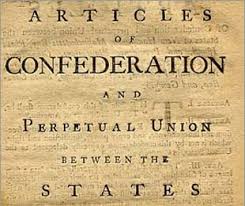
What was the name of the first constitution of the United States of America?

a)

The Fundamental Orders of Connecticut

b)

The Articles of Confederation

c)

The U.S. Constitution

d)

The Land Ordinance of 1787

25.

What did the Great Compromise create?

a)

A bicameral (two house) legislature

b)

A unicameral (one-house) legislature

c)

The Supreme Court

d)

The New Jersey Plan

26.

True OR False: The Articles of Confederation make the state governments too powerful and the Federal government not powerful enough.

a)

True

b)

False

27.

What was a reason for European exploration in Asia?

a)

Spices

b)

religion

c)

interest

d)

all

28.

What event does this picture show?

a)

Boston Massacre

b)

Boston Tea Party

c)

Committee of Correspondence

d)

The First Continental Congress

29.

What event does this drawing show?

a)

Boston Massacre

b)

Boston Tea Party

30.

What was the Tea Act of 1773?

a)

An act passed by the British Parliament granting the British East India Company a monopoly on the sale of tea in the American colonies.

b)

An act passed by the American colonies banning the sale of tea

c)

An act passed by the British Parliament reducing the tax on tea in the American colonies

d)

An act passed by the British Parliament prohibiting the importation of tea to the American colonies

31.
The Sons of Liberty were founded by John Hancock and ___.
a)
George Washington
b)
Paul Revere
c)
Sam Adams
d)
John Adams
32.
Which was NOT a reason why the Battle of Saratoga was a turning point in the American Revolution?
a)
New England would never be threatened during the War
b)
France became an ally
c)
Boost in American Morale 
d)
Made it through a cold and harsh winter
33.
After the Battle of Trenton, Washington changed his military strategy to 
a)
avoiding the British army altogether.
b)
trying to defeat the British in one huge battle.
c)
trying to negotiate with General Howe for surrender.
d)
tiring the British out by fighting a defensive war.
34.
Which of the following is an example of a weakness in the Articles of Confederation?
a)
Congress couldn't collect taxes
b)
Weak national government
c)
Provided no common currency/money for all 13 states
d)
All of the  above
35.
This plan for government was favored by large states because representation in congress was based on population.
a)
the New Jersey Plan
b)
the Virginia Plan
c)
Shays' Plan
d)
The Compromise Plan
36.
This plan for government was favored by smaller states because each state received equal representation in congress.
a)
the New Jersey Plan
b)
the Virginia Plan
c)
Shays' Plan
d)
the Compromise Plan
37.
Under the Three-Fifths compromise, which individuals counted as 3/5 of a free person when a census was taken?
a)
women
b)
Native Americans
c)
slaves
d)
children
38.
Southern States benefited from the Three-Fifths Compromise because-
a)
they had very small populations
b)
they had very large populations
c)
they had a warm climate
d)
they had large populations of slaves
39.
Both the NJ Plan and VA Plan agreed there should be ____ branches
a)
0
b)
1
c)
2
d)
3